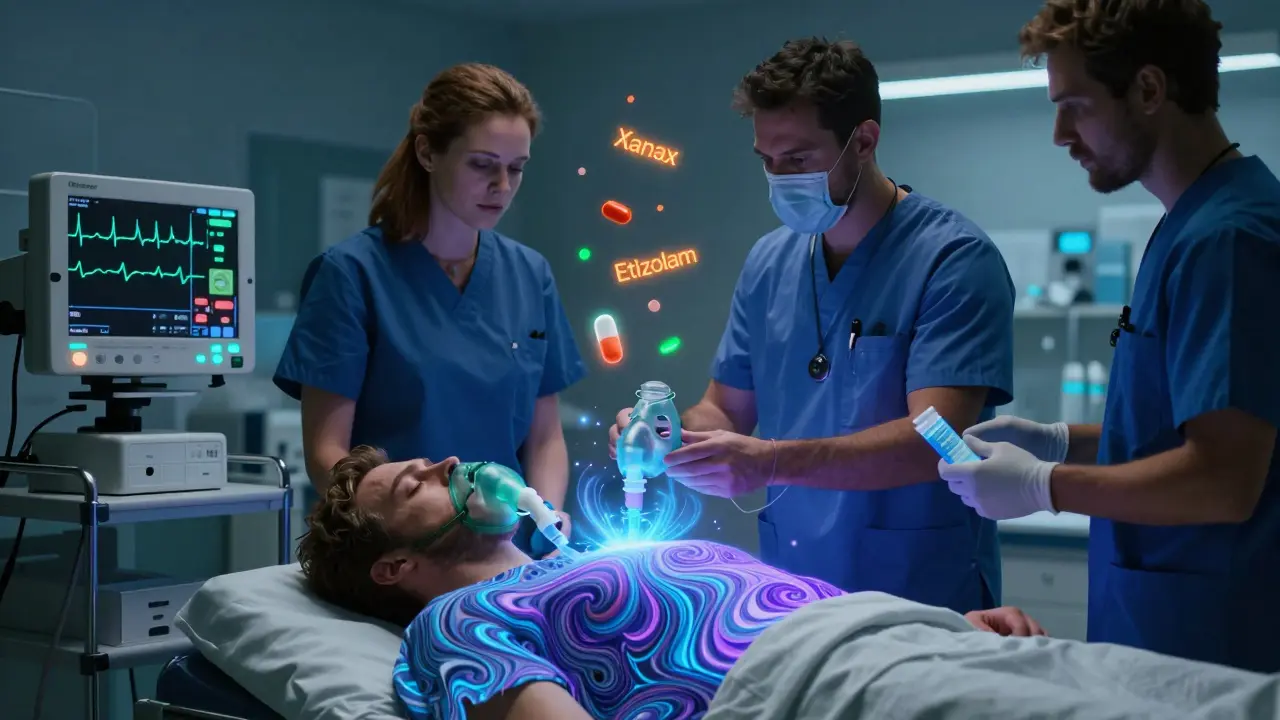
When someone overdoses on benzodiazepines, time isn’t just money-it’s life. These drugs, prescribed for anxiety, insomnia, or seizures, are safe when used as directed. But take too much, or mix them with alcohol or opioids, and the result can be deadly. Respiratory depression is the real killer here: slow, shallow breathing that can stop altogether. The good news? Most benzodiazepine overdoses aren’t fatal on their own. The bad news? They’re often mixed with other drugs, and that’s where things go sideways fast.
What Happens in a Benzodiazepine Overdose?
Benzodiazepines work by calming down the central nervous system. Too much of that calm turns into dangerous shutdown. A person might become drowsy, confused, or unresponsive. Their breathing slows. Their muscles weaken. Their reflexes disappear. In extreme cases, they slip into a coma. The Glasgow Coma Scale (GCS) is used to measure this-scores below 8 mean immediate danger. At that point, you need an anesthesiologist, not just a nurse.
Here’s the catch: isolated benzodiazepine overdose rarely kills. According to NCBI data from 2023, death rates from pure benzodiazepine overdose are between 0.01% and 0.05%. But when opioids or alcohol are in the mix? That’s when 92% of deaths happen. The CDC reports a 15-fold increase in respiratory arrest risk with these combinations. Alprazolam (Xanax) is especially dangerous-it’s 3.2 times more likely to require intubation than other benzodiazepines, per Emergency Care BC’s 2021 data.
The ABCDE Approach: Your First Move
Emergency teams don’t guess. They follow ABCDE: Airway, Breathing, Circulation, Disability, Exposure. This isn’t optional-it’s standard across the UK, US, and Europe.
- Airway: Check if the person can protect their airway. If they’re groaning or gurgling, they can’t. Suction and positioning matter. If they’re unresponsive and not breathing well, prepare for intubation now.
- Breathing: Use a non-rebreather mask at 15L/min for oxygen. If they have COPD or a history of CO2 retention, switch to a Venturi mask to avoid pushing CO2 levels higher. Count breaths. Less than 10 per minute? That’s a red flag.
- Circulation: Monitor heart rate and blood pressure continuously. Even if the patient looks stable, their heart can surprise you. ECG monitoring is non-negotiable.
- Disability: Check blood glucose immediately. Hypoglycemia mimics overdose. A simple fingerstick can rule it out in seconds. Use the GCS or Pasero Sedation Scale to track changes.
- Exposure: Strip the clothes. Look for patches, pills, or injection marks. Check their wallet or phone for clues. They might’ve taken something you haven’t been told about.
Testing: What You Need to Know
Don’t assume. Test everything.
- Point-of-care glucose: Always.
- Serum acetaminophen and aspirin: Rule out co-ingestions.
- Serum ethanol: Alcohol is the most common partner.
- Urine toxicology: Screens for opioids, cocaine, and newer synthetics like etizolam.
BMJ Best Practice recommends testing for all these in every suspected overdose. Miss one, and you might miss the real cause. In 28% of cases, co-ingestants are overlooked-often because the patient can’t tell you, or the family doesn’t know.
Flumazenil: The Drug That’s Often More Dangerous Than the Overdose
Flumazenil is the antidote. It reverses benzodiazepine effects. Sounds perfect, right? It’s not.
Flumazenil has a half-life of just 41 minutes. That means sedation can come back after it wears off-requiring repeat doses every 20 minutes. And here’s the kicker: it triggers seizures in 38% of patients with chronic benzodiazepine dependence. Why? Because their brains have adapted. Suddenly removing the drug causes rebound excitation. It’s like yanking a power cord from a system that’s been running on backup for years.
Studies show flumazenil is appropriate in less than 1% of cases. The American College of Medical Toxicology says it should only be used in pure benzodiazepine overdoses-no opioids, no alcohol, no history of dependence-and only if the patient is in a hospital with full seizure support. Most ERs stopped stocking it years ago. A 2022 survey by the American College of Emergency Physicians found 78% of departments no longer carry it. One ER nurse on Reddit described watching a patient seize 90 seconds after flumazenil was given-because they’d been taking trazodone with their Xanax. No one knew.
Activated Charcoal? Only If Given Immediately
Activated charcoal used to be standard. Now? It’s barely used.
It only works if given within 60 minutes of ingestion. After that, benzodiazepines are already absorbed. Emergency Care BC found a 45% reduction in absorption with early use-but no benefit after an hour. And it doesn’t help with IV drug use or slow-release formulations. Most guidelines now say: skip it unless the ingestion was very recent.
How Long Do You Monitor?
You can’t rush this. Symptoms don’t vanish just because the patient looks awake.
- Asymptomatic patients: Observe for at least 6 hours.
- Symptomatic patients: Monitor until all signs of CNS depression are gone. That’s usually 12 hours. But in older adults or those with liver disease? It can take 24 to 48 hours.
Ataxia-loss of muscle coordination-lasts longer than sedation. A patient might seem alert but still wobbly. Let them go home too soon, and they’ll fall, break a hip, or crash a car. That’s why discharge criteria must include full motor recovery, not just consciousness.
The New Threat: Illicit Benzodiazepines
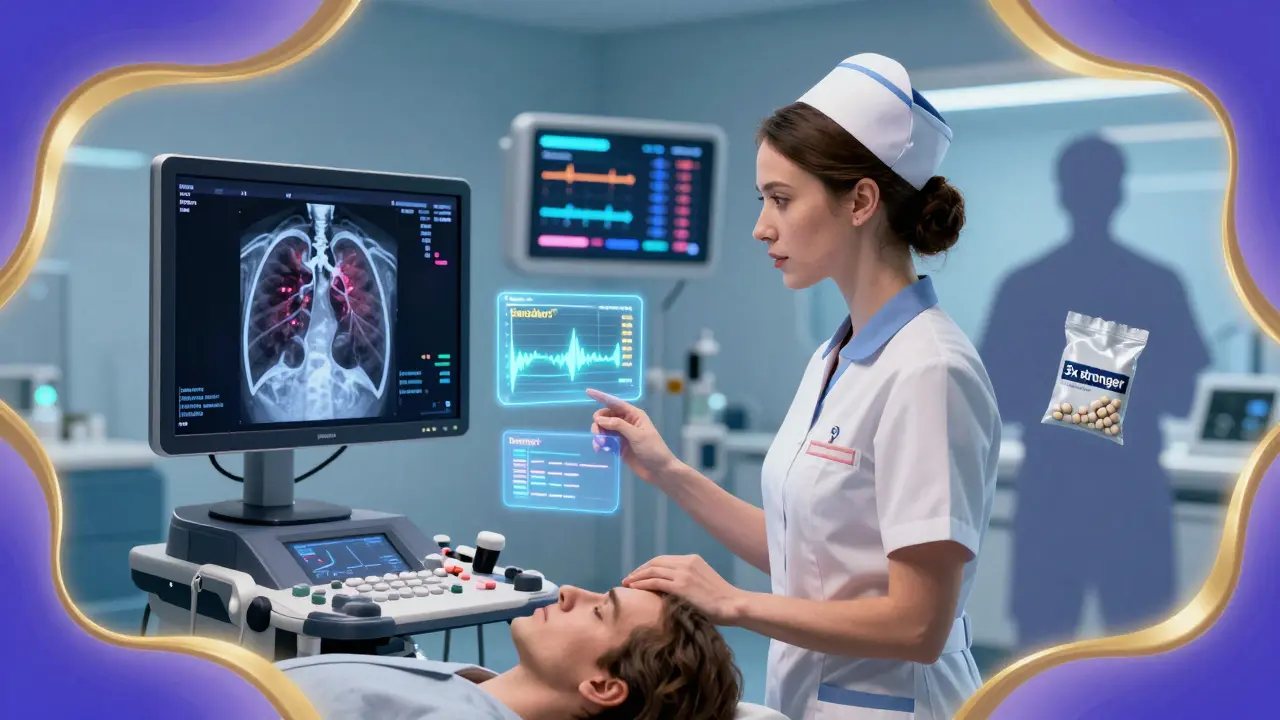
It’s not just prescription pills anymore. Illicitly made benzodiazepines like etizolam and clonazolam are flooding the market. They’re 3 to 10 times more potent than diazepam. The California Poison Control System found they account for 68% of severe overdose cases in the Western US.
These aren’t labeled. Users don’t know what they’re taking. They think they’re buying Xanax, but it’s something far stronger. That’s why overdose rates are rising even as prescriptions fall. SAMHSA’s 2023 report showed a 27% increase in overdose cases between 2019 and 2022, even as prescriptions dropped 14.3%.
What’s Changing in Emergency Care?
Guidelines are shifting fast. The European Resuscitation Council and American Heart Association no longer recommend flumazenil. The FDA now requires all benzodiazepine labels to warn about opioid interactions. The NIH is funding research into longer-acting antidotes. And in January 2023, the FDA approved the first continuous blood monitor for benzodiazepines-BenzAlert™-which showed 94.7% accuracy in predicting when sedation will wear off.
Point-of-care ultrasound (POCUS) is also changing the game. Instead of waiting for blood tests or guessing based on symptoms, ER teams can now see lung movement in real time. A 2023 study showed POCUS cuts intubation delays by 22 minutes. That’s 22 minutes where the brain isn’t being starved of oxygen.
What You Can Do
If you’re a caregiver, a family member, or someone who uses these drugs: know the risks. Never mix benzodiazepines with alcohol or opioids. Keep naloxone on hand-it won’t reverse benzos, but it can save someone if opioids are involved. Learn the signs: slow breathing, unresponsiveness, blue lips, limp body.
If you’re a medical professional: stick to ABCDE. Skip flumazenil unless you’re certain it’s safe. Document everything. Use standardized scales. Don’t discharge until motor skills return. And remember: 37 U.S. states now include benzodiazepine recognition in naloxone training. That’s a step forward. But it’s not enough. The next wave of overdoses will come from synthetic benzos. We need better detection, better education, and better tools.
Can you survive a benzodiazepine overdose alone?
Yes, many people do-especially if it’s a single-drug overdose. But survival depends on quick recognition and medical care. Unattended overdoses often lead to aspiration, prolonged hypoxia, or cardiac arrest. Never assume someone will wake up on their own. Call emergency services immediately.
Is flumazenil ever safe to use?
Only in very specific cases: a known pure benzodiazepine overdose, no history of dependence, no co-ingestants, and only in a setting where seizure management and intubation are immediately available. Even then, most experts agree the risks outweigh the benefits. The majority of emergency departments no longer stock it.
Why do some people overdose on benzodiazepines without knowing?
Illicitly manufactured benzodiazepines like etizolam and clonazolam look identical to prescription pills but are far more potent. Users think they’re taking a normal dose, but they’re actually ingesting 3-10 times the strength. These drugs are often sold online or in street markets with no labeling or dosage information.
How long does a benzodiazepine overdose last?
Symptoms usually resolve within 12 hours in healthy adults. But in older adults, those with liver disease, or those who took long-acting benzos like diazepam, effects can last 24-48 hours. Monitoring should continue until full recovery of coordination and alertness-not just when the person opens their eyes.
Can activated charcoal help after 2 hours?
No. Benzodiazepines are absorbed quickly in the gut-usually within 60 minutes. After that, activated charcoal has no effect. Giving it later doesn’t help and may even cause vomiting, which increases aspiration risk. Current guidelines recommend against its use unless ingestion occurred within the past hour.
What’s the biggest mistake in treating benzodiazepine overdose?
Missing co-ingestants. Over 28% of cases involve opioids, alcohol, or other sedatives that aren’t identified early. Assuming it’s just a benzo overdose leads to under-treatment. Always test for ethanol, acetaminophen, aspirin, and opioids-even if the patient denies use. Their behavior or appearance might not reflect the truth.
Next Steps for Patients and Providers
For patients: If you’re prescribed benzodiazepines, ask about risks with other medications. Keep naloxone if you’re on opioids. Don’t mix with alcohol. Store pills securely.
For providers: Update your protocols. Remove flumazenil from routine use. Train staff on POCUS and ABCDE. Build a clear discharge checklist: no ataxia, normal breathing, stable vitals, and a responsible caregiver. Document every step. The next overdose might be yours to manage-and you won’t have time to look it up.
Andrew Muchmore
March 18, 2026 AT 04:42SNEHA GUPTA
March 19, 2026 AT 05:49Laura Gabel
March 20, 2026 AT 16:41jerome Reverdy
March 21, 2026 AT 10:50Andrew Mamone
March 22, 2026 AT 20:23MALYN RICABLANCA
March 23, 2026 AT 15:13gemeika hernandez
March 25, 2026 AT 06:26Nicole Blain
March 26, 2026 AT 22:44Kathy Underhill
March 28, 2026 AT 13:55Srividhya Srinivasan
March 29, 2026 AT 17:00Prathamesh Ghodke
March 30, 2026 AT 16:56Stephen Habegger
March 31, 2026 AT 19:45Justin Archuletta
April 1, 2026 AT 06:43