SSRI & NSAID Interaction Risk Estimator
1. Current Medications
2. Personal Health Factors
Select any factors that apply to you:
Risk Assessment
Recommendations
Please select your medications above.
Picture this: you’re managing anxiety with a daily antidepressant and dealing with knee pain from gardening. You pop an ibuprofen for the ache and your usual pill for the mood. It sounds harmless, right? In reality, mixing these two common drug classes creates a dangerous storm inside your stomach lining. The combination of Selective Serotonin Reuptake Inhibitors (SSRIs) is a class of antidepressants that work by increasing serotonin levels in the brain and Nonsteroidal Anti-Inflammatory Drugs (NSAIDs) are pain relievers like ibuprofen and naproxen that reduce inflammation doesn’t just add risks together; it multiplies them.
Research published in Nature Scientific Reports in 2022 confirms that taking SSRIs with NSAIDs increases the risk of upper gastrointestinal (GI) bleeding by 75% compared to using NSAIDs alone. That’s not a minor side effect note buried in the fine print. It’s a significant clinical warning that affects millions of people worldwide. With about 13% of U.S. adults using antidepressants and 17% regularly using NSAIDs, the overlap is massive. Understanding why this happens-and how to stop it before it starts-is crucial for anyone on this medication regimen.
The Double Whammy: Why Your Stomach Is at Risk
To understand the danger, we have to look at what these drugs do to your blood and your stomach wall. They attack hemostasis-the body’s ability to stop bleeding-from two completely different angles.
First, let’s talk about SSRIs. These medications block the reuptake of serotonin in the brain to improve mood, but they also affect platelets. Platelets are tiny blood cells that clump together to form clots when you get a cut. Interestingly, platelets can’t make their own serotonin; they grab it from the bloodstream. When you take an SSRI, those platelets become "serotonin-starved." Without enough serotonin, they don’t stick together as well. Your blood takes longer to clot.
Now enter NSAIDs. Drugs like ibuprofen, naproxen, and diclofenac work by blocking enzymes called cyclooxygenases (COX). This stops the production of prostaglandins, chemicals that cause pain and inflammation. But prostaglandins also protect your stomach lining by promoting mucus and bicarbonate secretion. Block them, and your stomach lining becomes vulnerable to acid damage. You might develop microscopic erosions or ulcers.
When you combine them, you get a perfect storm. The NSAID damages the stomach lining, creating a potential bleed site. The SSRI ensures that if a vessel ruptures, your platelets can’t plug the hole effectively. A study in JAMA Internal Medicine found that the combined use increased the risk of upper GI bleeding by more than 12-fold compared to people taking neither drug. It’s a multiplicative effect, not an additive one.
Not All Painkillers Are Created Equal
If you need pain relief while on an antidepressant, knowing which NSAID you take matters. Not all NSAIDs carry the same weight of risk.
| Drug Type | Examples | Relative GI Risk | Mechanism |
|---|---|---|---|
| Celecoxib (COX-2 Selective) | Celebrex | Lowest among NSAIDs | Sparingly affects stomach protective prostaglandins |
| Ibuprofen (Non-selective) | Advil, Motrin | Moderate | Blocks both COX-1 and COX-2; lower dose often used |
| Naproxen (Non-selective) | Aleve | High | Strong inhibition of gastric protection |
| Diclofenac (Non-selective) | Voltaren | High | Significant mucosal damage potential |
According to research presented to the American Society for Clinical Pharmacology and Therapeutics, celecoxib shows the lowest GI bleeding risk among NSAIDs. Because it selectively targets the COX-2 enzyme involved in inflammation while sparing the COX-1 enzyme that protects the stomach, it’s a safer bet if an NSAID is absolutely necessary. However, even celecoxib isn’t risk-free, especially when paired with an SSRI.
Among traditional NSAIDs, ibuprofen generally poses a slightly lower risk than naproxen or diclofenac, largely because people tend to take lower doses of ibuprofen. But remember: dose matters. Taking more than 1,200 mg of ibuprofen equivalent per day significantly ramps up the danger.
Who Is Most Vulnerable?
The statistics paint a broad picture, but individual risk varies wildly. You aren’t just a data point; your personal health history dictates your actual danger level. Several factors turn a moderate risk into a high-risk scenario.
- Age: Patients over 65 face exponentially higher risks. Aging stomachs produce less protective mucus naturally, and older adults are more likely to have other comorbidities.
- Prior Ulcer History: If you’ve had a GI bleed or ulcer before, your recurrence risk skyrockets. The tissue is already compromised.
- Concomitant Medications: Adding low-dose aspirin (often taken for heart health) to the SSRI-NSAID mix is catastrophic. The JAMA study noted that this triple therapy increases bleeding risk dramatically. Anticoagulants like warfarin or newer agents like apixaban create similar dangers.
- H. pylori Infection: This bacteria causes ulcers. If you haven’t been tested and treated for Helicobacter pylori, adding NSAIDs and SSRIs is playing Russian roulette with your digestive tract.
- Duration of Use: Risk climbs the longer you stay on the combination. Studies show that SSRI treatment lasting longer than 90 days correlates with progressively increased bleeding events.
Dr. Darren Brenner, chair of the AGA guideline panel, notes that the bleeding risk from this combination is comparable to that of anticoagulants like warfarin in high-risk populations. Yet, many clinicians overlook this specific interaction because the drugs seem unrelated-one treats the mind, the other treats the knee.
Prevention Strategies That Actually Work
You don’t necessarily have to choose between mental health and pain management. There are proven strategies to mitigate this risk. The goal is to break the cycle of damage and poor clotting.
1. Switch the Painkiller
The safest move is often to drop the NSAID entirely. Acetaminophen (Tylenol/Paracetamol) does not inhibit platelet function and does not damage the stomach lining. A 2023 meta-analysis confirmed that acetaminophen has no significant interaction with SSRIs regarding bleeding risk. For mild to moderate pain, this is the gold standard alternative.
2. Use a Proton Pump Inhibitor (PPI)
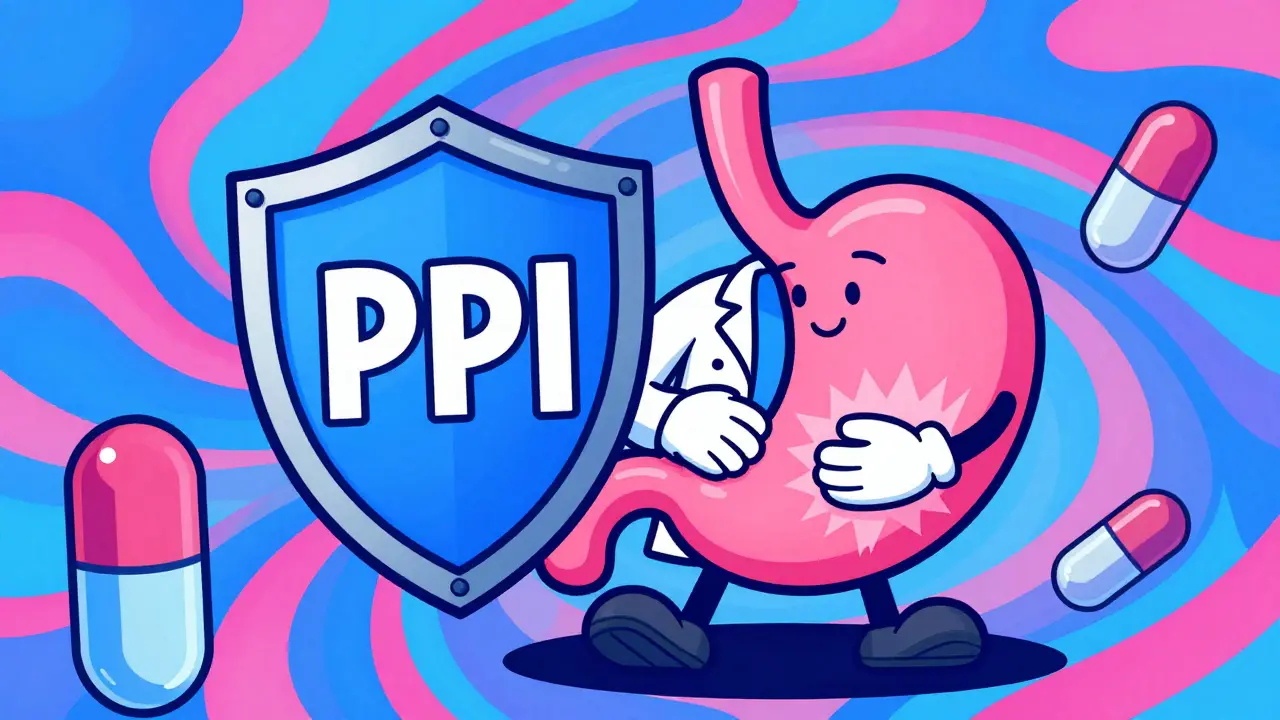
If you must take an NSAID, the American Gastroenterological Association (AGA) recommends co-prescribing a PPI. Drugs like omeprazole, pantoprazole, or esomeprazole drastically reduce stomach acid production, allowing the lining to heal and resist damage. Evidence suggests PPIs can reduce the absolute bleeding risk by approximately 70%. Think of it as putting a shield over your stomach lining.
3. Optimize the SSRI Choice
While all SSRIs carry some risk, there may be differences. Some experts suggest that sertraline or citalopram might pose slightly lower bleeding risks than paroxetine or fluoxetine, which have stronger effects on serotonin transport. However, this difference is subtle and shouldn’t override the primary benefit of the antidepressant. Never switch antidepressants without consulting your psychiatrist.
4. Test and Treat H. pylori
Before starting long-term NSAID therapy, ask your doctor for an H. pylori test. If positive, a course of antibiotics can eradicate the bacteria, significantly lowering your baseline ulcer risk.
Red Flags: When to Seek Immediate Help
GI bleeding doesn’t always announce itself with bright red blood. Sometimes it’s silent until it’s severe. You need to know what to look for.
- Black, Tarry Stools: This is digested blood. It looks like tar or coffee grounds. This is a medical emergency.
- Vomit with Blood: Bright red or "coffee-ground" appearance indicates active upper GI bleeding.
- Unexplained Fatigue or Dizziness: Chronic slow bleeding leads to anemia. If you feel unusually tired, short of breath, or pale, get your iron levels checked.
- Abdominal Pain: Persistent burning or gnawing pain in the upper abdomen, especially if it worsens when your stomach is empty.
Don’t ignore these signs. A case report in Medscape highlighted a patient who required three units of blood transfusion before the SSRI-ibuprofen interaction was recognized. Early intervention saves lives.
Talking to Your Doctor: A Script
Many patients report feeling surprised by this risk. On patient forums, dozens share stories of being unaware of the danger until after a hospital visit. You have the power to change that narrative. At your next appointment, say this:
"I’m currently taking [SSRI Name] and I use [NSAID Name] for pain. I read about the increased risk of GI bleeding. Can we review my options? Should I switch to acetaminophen, or do I need a proton pump inhibitor for protection?"
This simple conversation can trigger a review of your entire medication list. Doctors appreciate proactive patients. It opens the door to discussing safer alternatives, adjusting doses, or implementing monitoring plans.
The Future of Safety
The medical community is waking up to this issue. New tools are emerging to help catch these interactions before they cause harm. The GI-BLEED risk calculator, integrated into major Electronic Health Record systems like Epic, now analyzes 12 variables-including specific drug types and genetic markers-to predict personalized bleeding risk. Additionally, regulatory bodies like the FDA have updated labeling requirements for all SSRIs to explicitly warn about NSAID interactions.
Researchers are also exploring antidepressants with different mechanisms. Vortioxetine, for instance, has shown lower bleeding event rates in recent trials compared to traditional SSRIs. While we wait for broader adoption of these safer profiles, vigilance remains our best defense.
Your health is a balancing act. Managing depression and pain is vital for quality of life, but it shouldn’t come at the cost of your internal safety. By understanding the mechanics of this interaction and taking proactive steps, you can navigate this complex landscape with confidence and clarity.
Can I take Tylenol (acetaminophen) with my SSRI?
Yes. Acetaminophen does not interfere with platelet function or stomach lining integrity in the way NSAIDs do. Current meta-analyses confirm there is no significant increase in GI bleeding risk when combining SSRIs with acetaminophen, making it the preferred pain reliever for most patients on antidepressants.
How much does the risk increase if I take aspirin too?
The risk increases dramatically. Adding low-dose aspirin to an SSRI-NSAID combination creates a triple threat to hemostasis. Studies indicate this can increase the risk of upper GI bleeding by more than 12-fold compared to non-users. If you require aspirin for cardiac protection, discuss aggressive gastroprotection (like a PPI) with your cardiologist and GP immediately.
Which NSAID is safest if I must take one?
Celecoxib (Celebrex) is generally considered the safest NSAID regarding GI bleeding because it is a COX-2 selective inhibitor, sparing the stomach-protecting COX-1 enzyme. Among non-selective NSAIDs, ibuprofen typically carries a lower risk than naproxen or diclofenac, provided it is used at the lowest effective dose for the shortest duration possible.
Do proton pump inhibitors (PPIs) fully prevent bleeding?
PPIs significantly reduce the risk-by approximately 70% according to major guidelines-but they do not eliminate it entirely. They work by reducing stomach acid, allowing the lining to heal. However, they do not fix the platelet dysfunction caused by SSRIs. Therefore, they are a protective measure, not a cure-all, and should be part of a broader strategy including regular monitoring.
Are natural supplements safe alternatives to NSAIDs?
Be cautious. Some natural supplements like ginger, ginkgo biloba, garlic, and fish oil also have antiplatelet effects, meaning they thin the blood similarly to NSAIDs. Combining these with SSRIs can also increase bleeding risk, albeit usually less severely than prescription NSAIDs. Always disclose all supplements to your healthcare provider.