| Antibiotic Class | Risk Level | Example Drugs |
|---|---|---|
| Beta-lactam/Beta-lactamase Inhibitors | Very High | Piperacillin-tazobactam |
| Cephalosporins | High | Broad-spectrum generations |
| Carbapenems | High | Imipenem, Meropenem |
| Clindamycin | High | Lincosamides |
| Tetracyclines | Low | Doxycycline |
How Antibiotics Trigger a Colitis Crisis
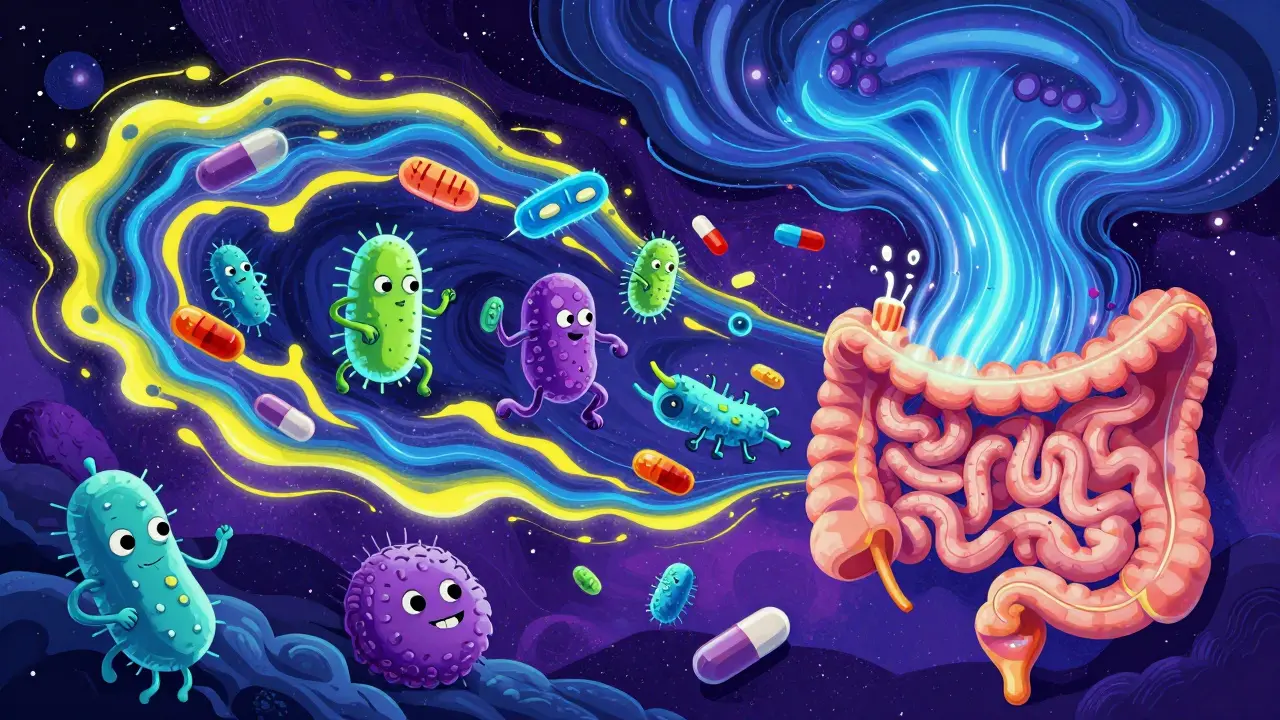
Your gut is home to trillions of bacteria that keep things running smoothly. Think of them as a security force. When you take broad-spectrum antibiotics, they don't just target the "bad" bacteria causing your illness; they wipe out the "good" ones too. This creates a vacuum in your microbiome.
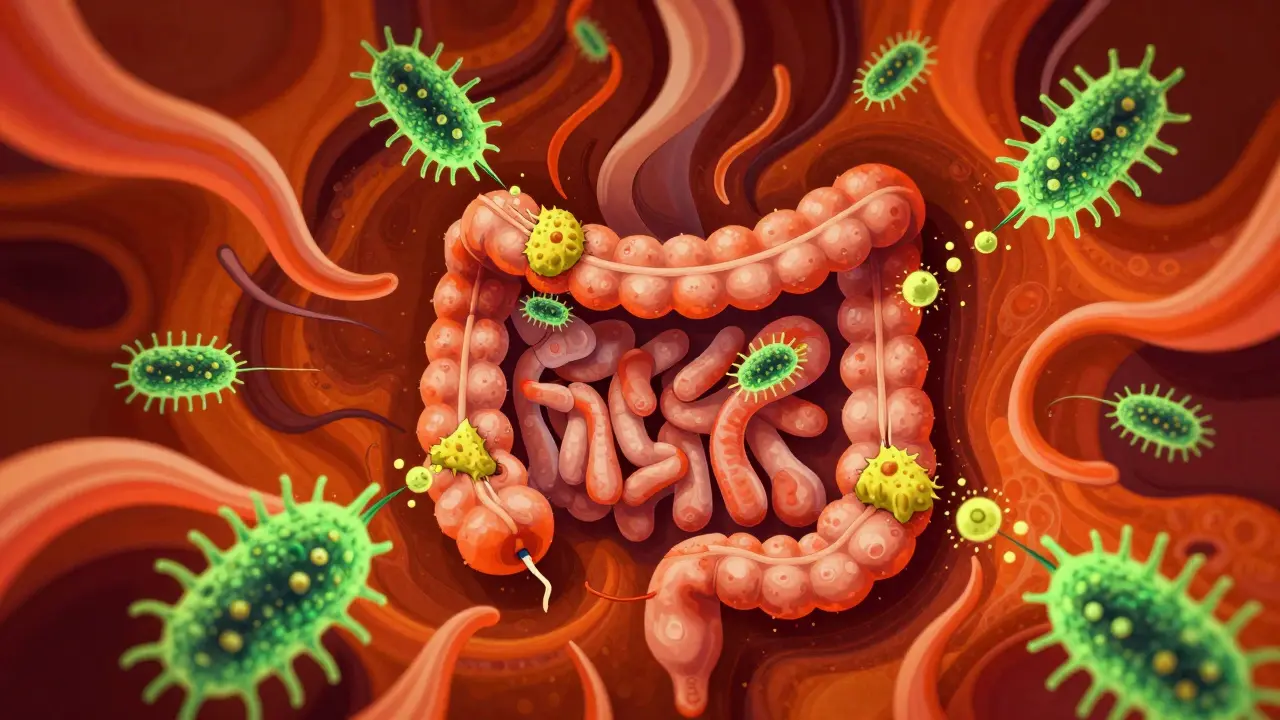
If Clostridioides difficile (or C. diff) is present-either because you picked it up in a hospital or were already an asymptomatic carrier-it seizes the opportunity. Without the good bacteria to keep it in check, C. diff multiplies rapidly and pumps out toxins that attack the lining of the colon. This leads to inflammation, severe diarrhea, and in extreme cases, a condition called pseudomembranous colitis, where the colon wall develops yellowish plaques of dead tissue and inflammatory cells.
Research shows this isn't just a random side effect. According to a study in JAMA Network Open, antibiotic exposure roughly doubles your risk of developing the infection. More concerning is the duration: every single extra day you stay on those antibiotics increases your risk by about 8%. After the 14-day mark, the risk trajectory often spikes again, making long-term antibiotic use a dangerous game for your gut health.
The High-Risk Culprits: Not All Antibiotics Are Equal
If you're worried about your current prescription, it's worth knowing that some drugs are much more likely to cause trouble than others. Beta-lactam/beta-lactamase inhibitor combinations (BLBLIs), such as piperacillin-tazobactam, have some of the highest hazard ratios for triggering CDI. Carbapenems and later-generation cephalosporins are similarly aggressive in disrupting the microbiome.
On the flip side, tetracyclines are generally seen as lower-risk options. This is why Antibiotic Stewardship is so critical. This isn't just a medical buzzword; it's a strategy where doctors carefully select the narrowest spectrum antibiotic possible and cut the treatment duration short as soon as it's safe. The goal is to kill the infection without nuking the entire gut ecosystem.
When Standard Treatment Fails: The Cycle of Recurrence
The standard approach for a first-time C. diff infection usually involves oral vancomycin or fidaxomicin. While these often work, a frustrating percentage of patients experience a relapse. You feel better for two weeks, then the diarrhea returns. This happens because while the antibiotics kill the active C. diff, they don't actually restore the missing "good" bacteria. You're left with a gut that is still vulnerable.
Continuing the very antibiotic that likely caused the infection can actually prolong the diarrhea and increase the chance of failure. This creates a vicious cycle: you take an antibiotic, get C. diff, take another antibiotic to treat the C. diff, and further damage your microbiome, making another relapse almost inevitable.
Fecal Microbiota Transplantation: The Biological Reset
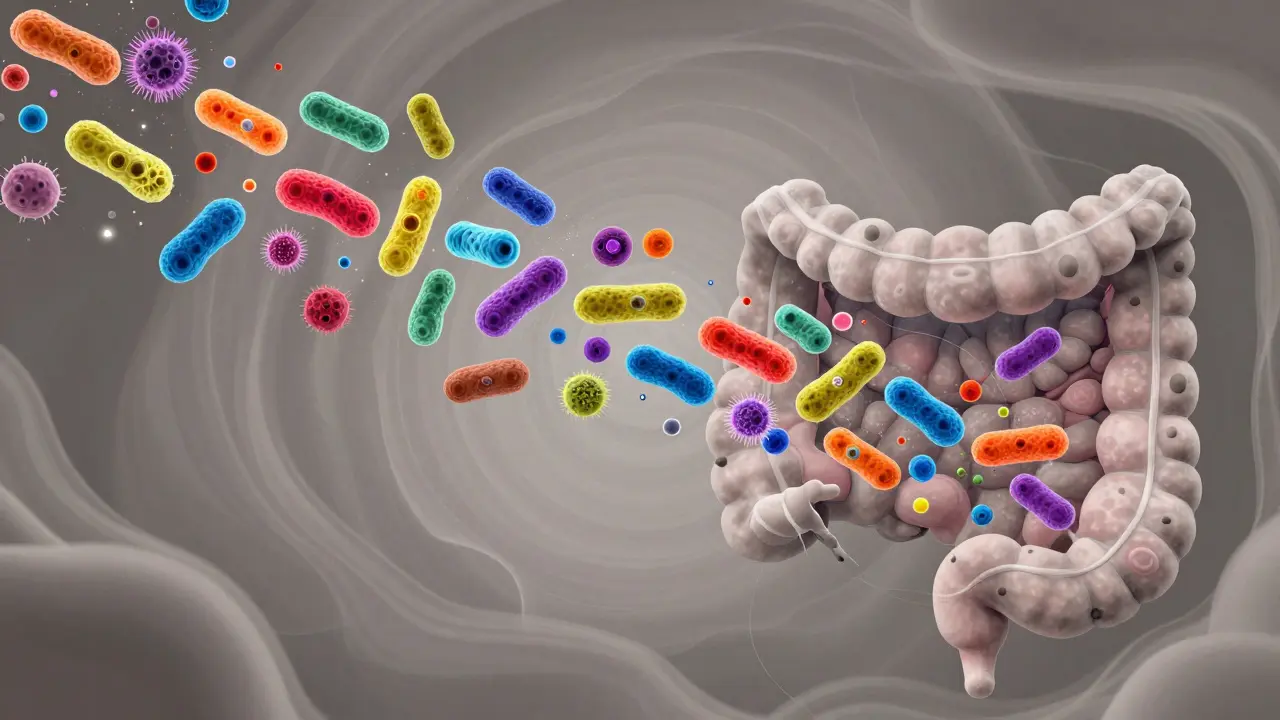
When drugs fail, we turn to Fecal Microbiota Transplantation (FMT). It sounds unappealing-essentially transferring processed stool from a healthy donor into the colon of a sick patient-but the results are staggering. Instead of trying to kill the bad bacteria, FMT focuses on crowding them out by reintroducing a diverse, healthy microbial community.
A landmark study in the New England Journal of Medicine found that FMT had a 94% cure rate for recurrent CDI, compared to just 31% for those continuing standard vancomycin treatment. It's essentially a "hard reset" for the gut. Depending on the clinic, this is done via colonoscopy, enema, or even specialized oral capsules. The FDA has recently moved toward standardized products like Rebyota and Vonjo, moving the process away from "homemade" hospital mixtures to regulated pharmaceutical-grade microbiome therapies.
Practical Recovery and Prevention Tips
Recovering from C. diff is about more than just the primary treatment; it's about supporting your gut's return to balance. While some people swear by probiotics, the Infectious Diseases Society of America warns that there isn't enough evidence to recommend them as a universal preventive measure, and they can even be risky for people with severely compromised immune systems.
Instead, focus on these concrete steps for long-term gut stability:
- Review your meds: If you are on a long-term antibiotic, ask your doctor if a narrower-spectrum drug is an option.
- Monitor for "Red Flags": Keep an eye out for fever, severe abdominal pain, or blood in the stool, which can signal a progression toward toxic megacolon.
- Hygiene is non-negotiable: C. diff spores are resistant to alcohol-based hand sanitizers. Use soap and water to physically wash the spores off your hands.
- Ask about Bezlotoxumab: For those at high risk of recurrence, this monoclonal antibody can be added to standard therapy to help prevent the infection from returning.
Can I get C. diff if I've never been in a hospital?
Yes. While hospital-acquired cases are common, community-associated CDI is on the rise. This often happens after a course of antibiotics for a common infection, like a UTI or pneumonia, which disrupts the gut flora enough for C. diff to take over.
Is a fecal transplant permanent?
For most people, it provides long-term remission by restoring the microbiome. However, it is not always a 100% permanent cure for everyone, and some may require a second infusion to reach full resolution.
Does hand sanitizer kill C. diff spores?
No. C. diff produces spores that are highly resistant to alcohol. You must wash your hands with soap and water to physically remove the spores from your skin.
Which antibiotic is the most dangerous for my gut?
While any antibiotic can cause issues, beta-lactam/beta-lactamase inhibitors (like piperacillin-tazobactam), clindamycin, and broad-spectrum cephalosporins are associated with the highest risk of triggering C. diff.
What are the symptoms of a severe C. diff infection?
Severe cases manifest as intense abdominal cramping, watery diarrhea (often 10+ times a day), high fever, nausea, and significant weight loss. If you notice a rigid, bloated abdomen, it could be a sign of toxic megacolon, which is a medical emergency.