Have you ever taken a pill and felt nothing for hours, only to wonder if it was working? Or perhaps you took one and felt its effects within minutes, but they wore off just as quickly? This difference isn't in your head-it's in the chemistry of the pill itself. The choice between extended-release (ER) and immediate-release (IR) medications is one of the most common decisions in modern healthcare, yet many patients don't fully understand what happens inside their bodies after swallowing that capsule.
The core difference lies in speed and duration. Immediate-release medications dump 100% of their active ingredients into your system within 15 to 30 minutes. Extended-release formulations, on the other hand, are engineered to trickle the drug out over 12 to 24 hours. One gives you a sprint; the other gives you a marathon. Knowing which one you need-and how to take it safely-can mean the difference between effective treatment and dangerous side effects.
How Release Mechanisms Work
To understand why these pills behave differently, we have to look at their construction. Immediate-release tablets or capsules are simple. When they hit the acid in your stomach, they dissolve rapidly. The drug enters your bloodstream quickly, reaching peak concentration in about 30 to 90 minutes. This is great for acute issues, like stopping a migraine or relieving sudden pain.
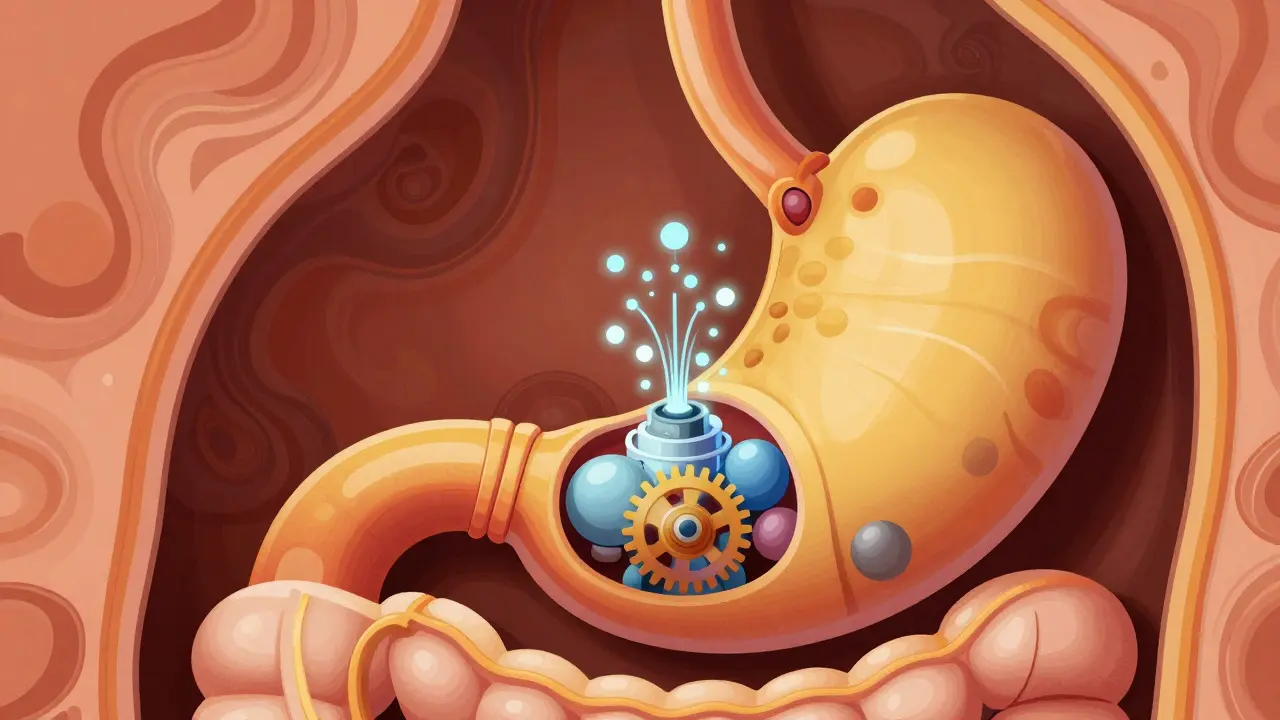
Extended-release medications are far more complex. They use sophisticated delivery systems designed to control the flow of the drug. Some use hydrophilic matrices, which form a gel-like barrier that slowly releases the medicine as it moves through your digestive tract. Others use osmotic pumps, tiny devices inside the tablet that push the drug out at a steady rate regardless of stomach contents. For example, Concerta uses OROS technology to deliver methylphenidate steadily over ten hours.
These mechanisms aim to keep drug levels in your blood within a specific "therapeutic window." This is the range between the minimum amount needed to work and the maximum amount before it becomes toxic. IR drugs create sharp peaks and valleys in this level, while ER drugs aim for a flat, stable line. This stability reduces side effects caused by high spikes in drug concentration.
Clinical Applications: When to Use Which
Your doctor will choose between ER and IR based on the condition being treated. For chronic conditions that require constant management, ER is often the gold standard. Think about hypertension (high blood pressure) or ADHD. If your blood pressure spikes every time you take an IR pill and drops dangerously low later, that’s risky. An ER formulation keeps your levels steady, protecting your organs around the clock.
In psychiatry, ER antidepressants and antipsychotics are increasingly preferred. A 2022 study in JAMA Internal Medicine tracked 15,000 hypertension patients and found that those on ER medications had a 78% adherence rate compared to 56% for IR users. Why? Because taking one pill a day is easier than remembering to take three or four. Better adherence means better health outcomes.
However, IR still has a vital role. It is essential for "titration," the process of finding the right dose for a new patient. Doctors start with low doses of IR to see how you react. IR is also critical for breakthrough symptoms. If you are on ER pain medication but suddenly feel a spike of pain, an IR rescue dose can provide immediate relief while waiting for the next scheduled ER dose to kick in.
| Feature | Immediate-Release (IR) | Extended-Release (ER/XR/SR) |
|---|---|---|
| Onset of Action | Rapid (15-30 mins) | Delayed (2-4 hours) |
| Duration | Short (4-8 hours) | Long (12-24 hours) |
| Dosing Frequency | Multiple times daily | Once or twice daily |
| Blood Level Stability | High peaks and troughs | Stable, consistent levels |
| Best For | Acute symptoms, titration | Chronic maintenance, adherence |
| Splitting/Crushing | Often safe (if scored) | Rarely safe (check label) |
Safety Risks and Common Mistakes
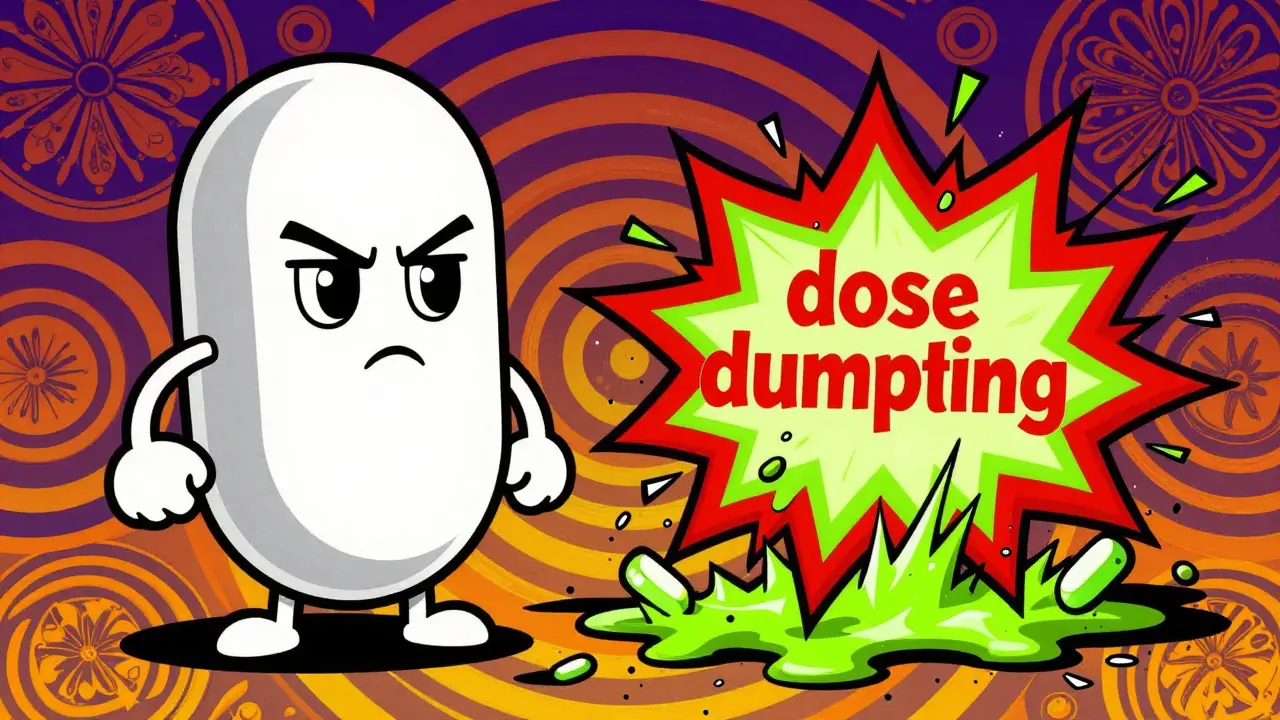
While ER medications offer convenience, they come with unique risks. The biggest danger is altering the pill. About 92% of extended-release formulations cannot be split, crushed, or chewed. Doing so destroys the release mechanism, causing the entire day's dose to flood your system at once. This "dose dumping" can lead to acute toxicity, seizures, or even death, particularly with opioids and stimulants.
For instance, bupropion XL (an antidepressant) is safe at 300mg because it releases slowly. If you crush that same 300mg dose, the rapid spike in blood concentration exceeds the seizure threshold of 350 ng/mL. Always check the bottle. If it says "do not crush" or "swallow whole," respect that warning. Even if the tablet has a score line, some ER versions are not meant to be split unless explicitly stated by the pharmacist.
Another risk is overdose duration. In an emergency, an IR overdose is intense but short-lived. An ER overdose is a prolonged crisis. Because the drug continues to release from the pill casing in your gut, patients may require hospital stays two to three times longer. Activated charcoal might clear the stomach, but the remaining drug in the GI tract keeps entering the bloodstream for up to 48 hours.
Patient expectations also play a role. A 2022 GoodRx survey found that 41% of users struggled with the delayed onset of ER drugs. Feeling no effect for the first few hours, some patients mistakenly take an extra dose. This leads to unintentional overdosing when the original pill finally kicks in. Patience is key with ER medications.
Cost and Accessibility Considerations
Money matters when choosing medication. ER formulations typically cost 15% to 25% more than their IR counterparts. For example, a 30-day supply of Adderall XR might cost $350-$450, while the equivalent IR dose could be $280-$380. Generic versions help bridge this gap, but brand-name ER drugs remain expensive.
Insurance coverage varies widely. Some plans prefer IR because it’s cheaper upfront, ignoring the long-term savings from better adherence and fewer doctor visits due to side effects. If cost is a barrier, ask your doctor if an IR alternative is clinically appropriate for your condition. Sometimes, splitting a scored IR tablet (under medical supervision) can mimic an ER effect at a lower cost, though this is not suitable for all drugs.
Practical Tips for Patients
To get the most out of your medication, follow these practical steps:
- Read the Label Carefully: Look for terms like XR, SR, CR, DR, or LA. These all indicate some form of modified release. Check for warnings about food interactions. Some ER drugs must be taken on an empty stomach; others require food to slow absorption further.
- Be Consistent with Timing: Take your ER medication at the same time every day. This maintains steady blood levels. Missing a dose disrupts the balance, leading to withdrawal symptoms or reduced efficacy.
- Don’t Double Up: If you miss a dose, wait until the next scheduled time unless your doctor advises otherwise. Doubling up increases the risk of toxicity, especially with ER drugs that linger in the system.
- Monitor Side Effects: Keep a journal. Note when you take the pill and when you feel effects or side effects. This helps your doctor adjust the dose or switch formulations if needed.
- Consult Your Pharmacist: Pharmacists are experts in drug delivery systems. Ask them if your specific pill can be split or if there are generic alternatives available.
Future Trends in Drug Delivery
The field of pharmaceutical delivery is evolving. New technologies aim to make ER drugs safer and more personalized. Abuse-deterrent formulations, like Impax Laboratories' Aversion® technology, turn pills into unappealing gels when crushed, reducing misuse potential by nearly half. Additionally, researchers are exploring 3D-printed "polypills" that can release multiple medications at precise intervals throughout the day, tailored to individual patient needs.
As our understanding of pharmacokinetics deepens, we may see more customized release profiles. Instead of a standard 24-hour release, future drugs might adjust based on your body’s natural rhythms or specific triggers. Until then, sticking to the prescribed instructions remains the safest path.
Can I cut my extended-release pill in half?
Only if the tablet is specifically scored and your doctor or pharmacist confirms it is safe. Most ER pills should not be cut, crushed, or chewed because it destroys the release mechanism, leading to a dangerous overdose of the drug all at once.
Why does my ER medication take so long to work?
ER medications are designed to release slowly over 12 to 24 hours. It can take 2 to 4 hours to reach therapeutic levels in your blood. This delay prevents sharp spikes in drug concentration, reducing side effects and providing stable, long-lasting relief.
Is immediate-release medication stronger than extended-release?
Not necessarily. The total amount of active ingredient is often the same. However, IR feels "stronger" initially because it hits your system all at once, creating a higher peak concentration. ER provides a smoother, steadier effect without the intense peak.
What happens if I overdose on an extended-release drug?
An ER overdose is particularly dangerous because the drug continues to release from the pill in your stomach and intestines for many hours. This leads to prolonged toxicity and often requires longer hospital stays and intensive monitoring compared to IR overdoses.
Are extended-release medications more expensive?
Yes, ER medications typically cost 15% to 25% more than IR versions due to the complex manufacturing processes involved. However, they may save money in the long run by improving adherence and reducing side-effect-related medical visits.
Can I switch from IR to ER medication on my own?
No, always consult your doctor. Switching formulations changes how the drug behaves in your body. Your dosage may need adjustment, and your doctor needs to monitor your response to ensure the new formulation is effective and safe for your specific condition.