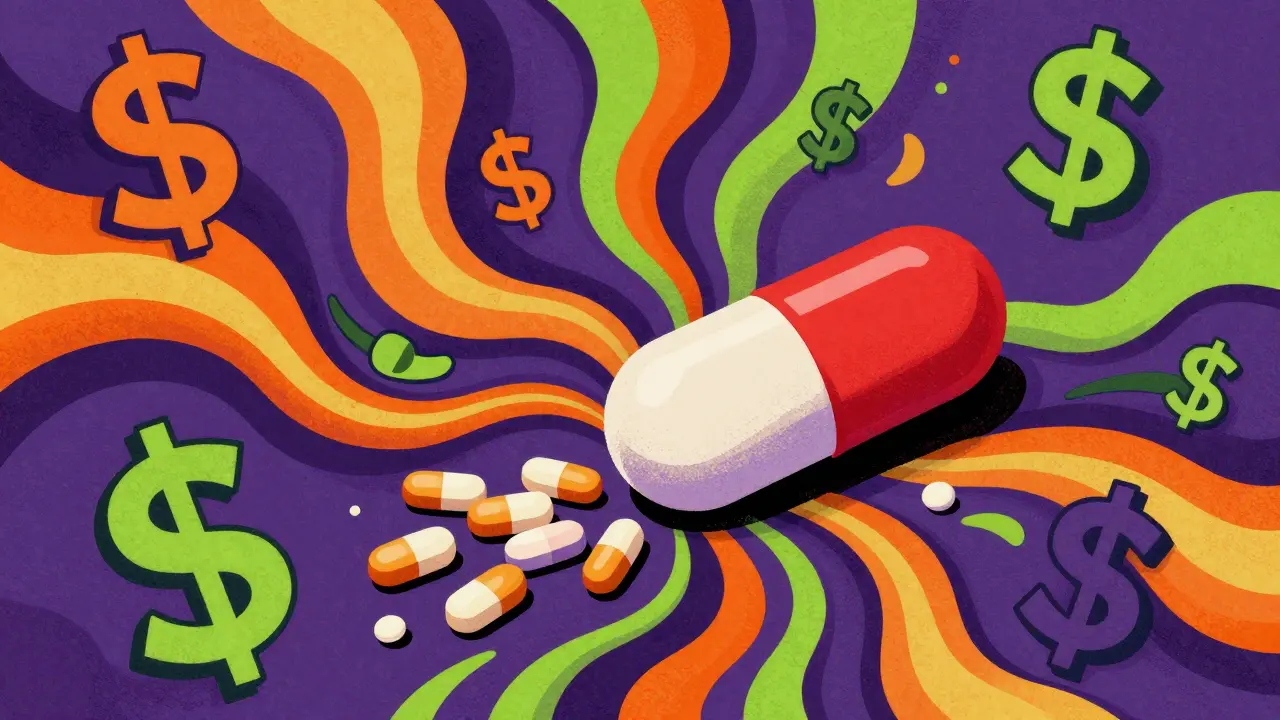
Cutting a tablet in half might seem like a simple way to save money, but doing it wrong can be dangerous. With pharmaceutical pricing often skewed-where a higher-dose pill costs nearly the same as a lower-dose one-splitting can potentially save you 25-50% on your monthly pharmacy bill. However, this isn't a one-size-fits-all solution. If you split the wrong medication, you could end up with a dose that is too low to work or a sudden release of chemicals that your body isn't prepared to handle.
Quick Guide to Safe Splitting
- Ask First: Never split a pill without a green light from your doctor or pharmacist.
- Use the Right Tool: Ditch the kitchen knife; use a dedicated pill splitter for accuracy.
- Check the Label: Only split medications that are explicitly approved for it in the package insert.
- Split on Demand: Do not split your entire bottle at once; do it right before you take the dose.
- Know the Red Flags: Never split extended-release, time-release, or enteric-coated tablets.
The Cost-Saving Logic Behind Pill Splitting
Why do people do this? It comes down to how drug companies price their products. In many cases, the cost of a medication doesn't scale linearly with the dose. For example, you might find that a 40mg tablet of Atorvastatin costs only slightly more than a 20mg tablet. By buying the higher dose and splitting it, some users have reported saving nearly 38% on their prescription costs.
This isn't just a niche habit. According to a Kaiser Family Foundation analysis, nearly 15% of Medicare Part D beneficiaries use this method to manage their healthcare expenses. While the financial incentive is clear, the risk lies in the precision. If you aren't getting an exact half, you aren't getting the dose your doctor intended, which can lead to treatment failure or adverse reactions.
Which Pills Can You Actually Split?
You've probably seen a "score line"-that little notch down the middle of a tablet. Many people assume that if a pill is scored, it's safe to split. This is a dangerous misconception. As experts from the Cleveland Clinic point out, a score line is a guide for splitting, but it doesn't automatically mean the drug is approved for it. You must check the package insert or ask your pharmacist.
Some medications have a "narrow therapeutic index," meaning the difference between a helpful dose and a toxic dose is tiny. If you're taking Warfarin (a blood thinner) or Levothyroxine (for thyroid issues), a tiny error in the split can cause your blood levels to swing wildly. In these cases, splitting is far too risky.
| Category | Examples | Why / Why Not |
|---|---|---|
| Safe (If Approved) | Some Statins, Lisinopril | Immediate release, stable when split. |
| Unsafe: Extended Release | Metformin ER, Adderall XR | Splitting destroys the slow-release coating, causing "dose dumping." |
| Unsafe: Enteric Coated | Omeprazole | Coating protects the stomach or prevents the drug from dissolving too early. |
| Unsafe: High Precision | Digoxin, Tacrolimus | Small dose variations can lead to toxicity or failure. |
The Right Way to Split: Tools and Technique
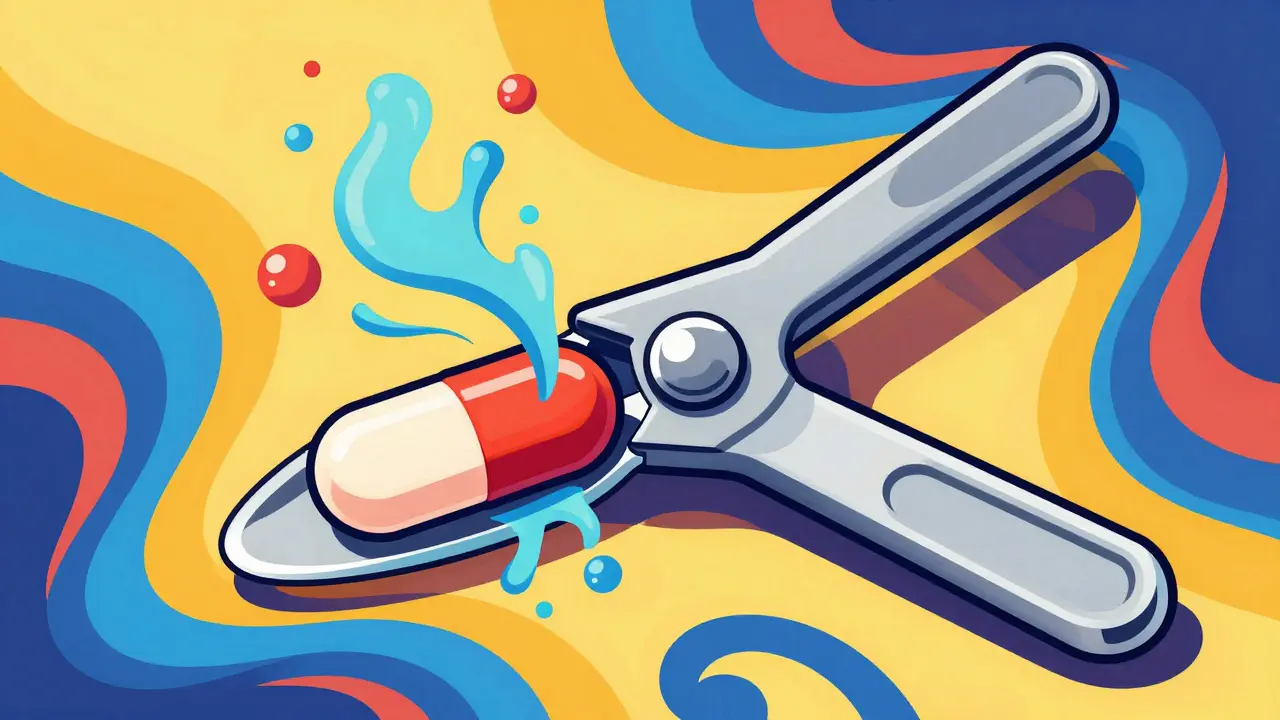
If your doctor says it's okay, put away the kitchen knife or the scissors. Using a knife can result in dose variations as high as 72%, meaning you might get way too much medicine one day and almost none the next. Instead, invest in a Pill Splitter. These are inexpensive plastic devices with a V-shaped holder and a sharp, retractable blade that ensures a clean, centered cut.
Follow this 5-step safety protocol to ensure you're getting the right dose:
- Get Professional Approval: Confirm with your pharmacist that your specific brand of medication is splittable.
- Verify the Insert: Check the official FDA-approved patient information leaflet.
- Use a Dedicated Splitter: Place the pill firmly in the V-shape holder so it doesn't slide.
- Split Right Before Use: Do not split your whole month's supply at once. Split tablets can degrade quickly when exposed to air, humidity, and light-often losing stability within 24 to 48 hours.
- Discard Crumbs: If the pill shatters or crumbles during the cut, throw that piece away. Taking a "crumbly" half means you're guessing your dose, which isn't safe.
Potential Risks and Warning Signs
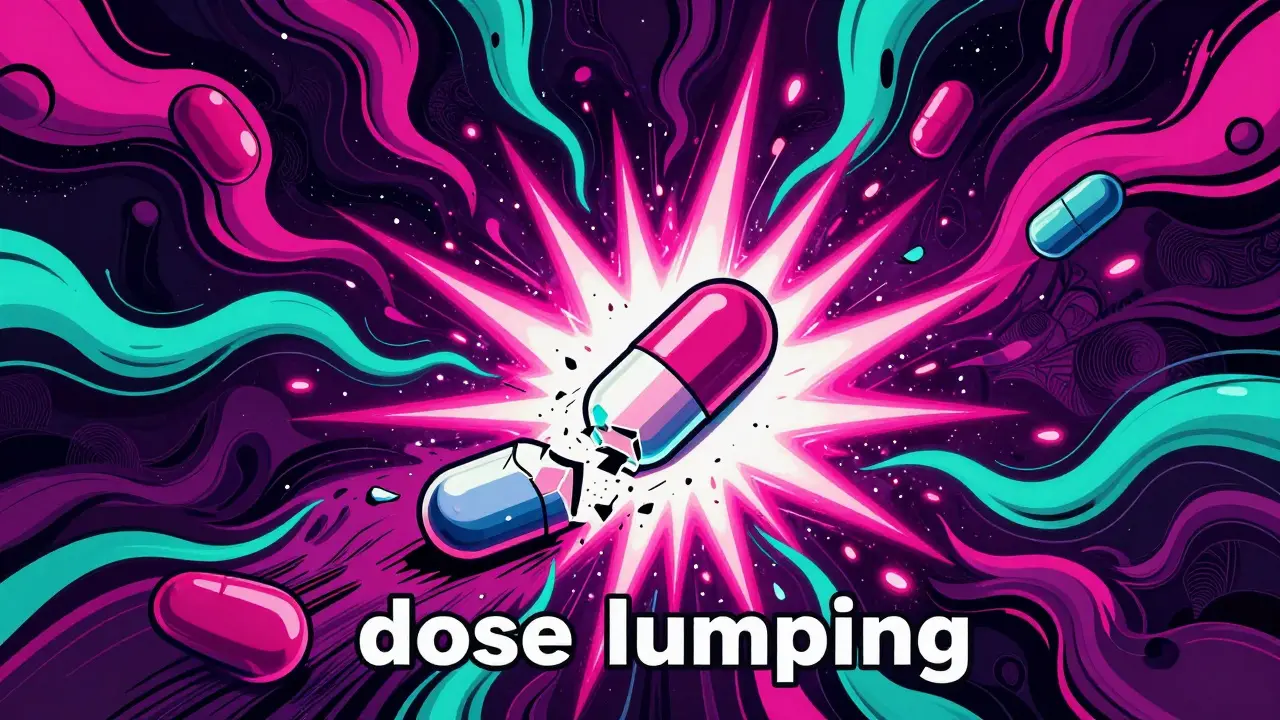
What happens when things go wrong? In the worst cases, splitting a time-release tablet can lead to hospitalization. This happens because the entire dose, which was meant to be released over 24 hours, hits your bloodstream all at once. This is known as "dose dumping."
Even with the right tools, errors happen. A study involving volunteers splitting hydrochlorothiazide tablets found that a significant number of the resulting halves deviated by more than 20% from the correct weight. If you notice your symptoms returning or feel new side effects after you start splitting your pills, stop immediately and call your doctor. It's possible you aren't getting enough of the active ingredient.
Better Alternatives to Lower Your Costs
While splitting can save money, it's not the only-or the safest-way to reduce your pharmacy bills. Before you risk your health by cutting pills, consider these options:
- Patient Assistance Programs (PAPs): Many pharmaceutical companies offer programs that provide free or deeply discounted meds to low-income patients. These can sometimes save you more than 50%.
- Pharmacy Discount Cards: Services like GoodRx provide coupons that can lower prices significantly without requiring you to modify your medication.
- Therapeutic Alternatives: Ask your doctor if there is a different, cheaper drug in the same class that would work just as well for you.
- Generic Versions: Always check if a generic equivalent is available, as these are typically a fraction of the cost of brand-name drugs.
Can I split a pill if it doesn't have a score line?
Generally, no. If a pill isn't scored, it's usually because the medication isn't distributed evenly throughout the tablet, or the coating is essential for the drug to work. Only split pills that are scored AND explicitly approved for splitting by your doctor or the manufacturer.
Why can't I split extended-release (ER/XR) tablets?
Extended-release tablets are engineered with a special matrix or coating to release the drug slowly over several hours. If you break that structure by splitting the pill, the entire dose is released instantly. This can lead to an overdose or a severe drop in the drug's effectiveness over the rest of the day.
Is it safe to split all my pills for the month at once?
No. Once a pill is split, the internal chemicals are exposed to air, moisture, and light. This can cause the medication to degrade or lose its potency. For the best results and safety, split your pill immediately before you intend to take it.
What should I do if my pill crumbles when I split it?
If the pill shatters or crumbles, you cannot accurately know how much of the dose you are receiving. Do not try to "guess" the amount by gathering the pieces. Discard the crumbled portion and try again with a fresh pill.
Will my insurance cover a higher-dose pill if I'm splitting it?
This varies. Most insurance plans cover the specific dose prescribed by your doctor. If you want to switch to a higher dose to split it, your doctor must write a prescription for that specific higher dose. You should check with your insurance provider to see if they will cover the higher-strength tablet.
Next Steps for Patients
If you're struggling with medication costs, start by making a list of all your current prescriptions. Schedule a brief appointment or a phone call with your pharmacist. Ask them specifically: "Which of my medications are safe to split using a pill splitter, and would doing so actually save me money?"
If the answer is no, don't give up. Ask about the patient assistance programs mentioned above. Your pharmacist is often the best resource for finding coupons or alternative medications that keep you healthy without breaking your budget.
Mark Dueben
April 12, 2026 AT 18:06It's really important to remember that everyone's financial situation is different, so just take your time and talk to your pharmacist to see what works for you.
Sam Dyer
April 14, 2026 AT 10:38Absolute joke that we even have to do this in the greatest country on earth! 🇺🇸 Big Pharma is just bleeding us dry with these ridiculous prices. Just buy a real splitter and stop whining about the cost! 🙄
Becca Suttmiller
April 15, 2026 AT 03:03I appreciate the reminder about the package inserts. It is much safer to stick to the official guidelines than to guess based on a score line.
S.A. Reid
April 15, 2026 AT 09:33One must wonder if the pharmaceutical industry deliberately designs these tablets to discourage splitting as a means of maintaining artificial price points. It is quite possible that the 'stability' mentioned is merely a corporate fabrication to ensure we keep purchasing the lower-dose variants. Of course, the medical establishment would never admit to such a coordinated effort to optimize profit margins over patient autonomy. It is a fascinating, albeit grim, reflection of our current socio-economic paradigm. I find it rather quaint that people trust the FDA blindly when the revolving door between regulators and executives is so well documented. Truly, the illusion of safety is the most profitable product they sell. One should always maintain a healthy degree of skepticism regarding the 'danger' of a crumbled pill. Perhaps the crumbs are where the real medicine is. It is simply a matter of perspective and a refusal to be sheep.
Ikram Khan
April 17, 2026 AT 03:52Wow! I never knew about the dose dumping thing! 😱 That sounds absolutely terrifying! Definitely going to double check my meds now!! 💊✨
rupa das
April 17, 2026 AT 17:05who cares about a score line if it cuts clean
Randy Ryder
April 18, 2026 AT 02:15The pharmacokinetic profile of an extended-release matrix is completely compromised upon mechanical cleavage. If you disrupt the polymer barrier, the zero-order release becomes a bolus dose. Definitely an area where people need more education on drug delivery systems.
David Snyder
April 18, 2026 AT 23:49This is such a helpful guide. It's great to see a way to make healthcare more affordable for everyone!
Brooke Mowat
April 19, 2026 AT 12:02Life is too short to stress over pills, but your wallet gotta be happy too!! 🌟 Just be careful out there and keep those vibes positive while saving those dollers!!
Kenzie Evans
April 20, 2026 AT 13:32Obviously you need a splitter, anyone with half a brain knows that. This whole post is just stating the obvious. Why are we acting like this is new info?
Milo Tolley
April 21, 2026 AT 13:33The sheer audacity of the price disparity between dosages is a systemic failure!!! Absolutely egregious!!! This is basically pharmacological extortion!!!
Scott Lofquist
April 23, 2026 AT 05:20Imagine thinking a kitchen knife works 🤡 Just read the instructions for once in your life. It's not that hard to follow simple safety protocols 🙄🙄
Olivia Lo
April 23, 2026 AT 19:45We must balance the immediate economic necessity with the long-term biocompatibility of the medication. It's an ethical dilemma of access versus safety.
Billy Wood
April 24, 2026 AT 20:03Get a splitter!! Save money!! Stay safe!!