Imagine taking a pill that saves your life, but if the dose is off by just a tiny fraction, it could stop your heart or cause severe bleeding. That is the reality for millions of people taking Narrow Therapeutic Index (NTI) drugs. These medications have a razor-thin margin between what works and what harms you. Unlike standard antibiotics where a slight variation in dosage might just mean a slower recovery, NTI drugs demand precision.
The term "NTI" isn't just medical jargon; it’s a warning label written in pharmacokinetics. It refers to drugs where small differences in dose or blood concentration can lead to serious therapeutic failures or life-threatening adverse reactions. If you are prescribed one of these, you aren't just a patient-you're part of a delicate balancing act involving regular blood tests, strict adherence, and often, specific brand preferences.
What Makes a Drug "Narrow Therapeutic Index"?
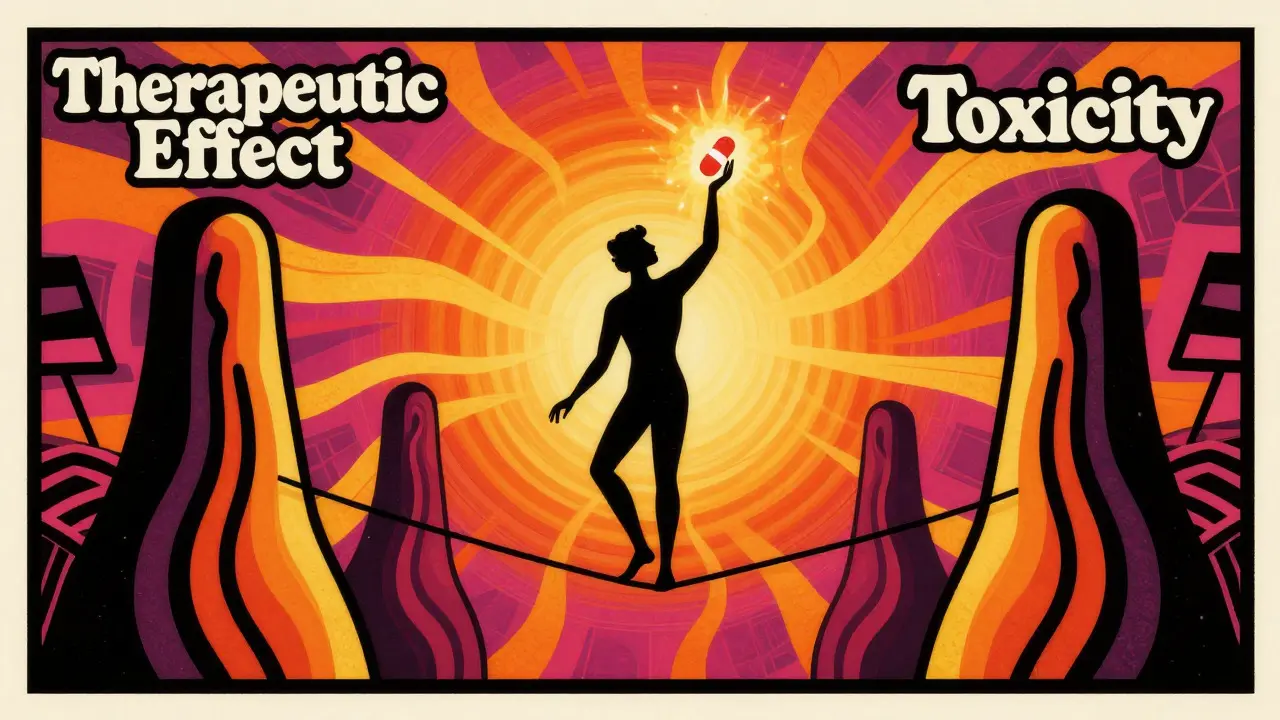
To understand why these drugs require such intense scrutiny, you need to look at the numbers. For most medications, there is a wide gap between the minimum effective concentration (MEC)-the amount needed to work-and the minimum toxic concentration (MTC)-the amount that starts causing harm. With NTI drugs, this gap is less than twofold.
Think of it like driving on a highway. A normal drug allows you to drive anywhere between 50 mph and 80 mph safely. An NTI drug requires you to maintain exactly 60 mph. Go 55, and you don’t get anywhere (therapeutic failure). Go 65, and you crash (toxicity). The U.S. Food and Drug Administration (FDA) defines these drugs specifically as those where small changes in dose may lead to serious outcomes. This narrow window means that factors like food interactions, other medications, or even switching from a brand-name drug to a generic version can disrupt your health significantly.
Bioequivalence standards for generics are stricter here. While regular drugs allow a generic to be within 80-125% of the original’s performance, NTI drugs must fall within a tighter 90-111.11% range. This is why many doctors insist on keeping patients on the same manufacturer’s product throughout their treatment.
Common NTI Drugs You Should Know
There is no single, universal list of every NTI drug because classifications can vary slightly by country and regulatory body. However, certain medications consistently appear on every major list due to their well-documented risks. Here are the most common categories and examples:
| Drug Class | Medication Name | Therapeutic Target / Range | Key Risk if Overdosed |
|---|---|---|---|
| Anticoagulant | Warfarin | INR 2.0-3.0 | Severe bleeding, hemorrhage |
| Cardiac Glycoside | Digoxin | 0.5-2.0 ng/mL | Heart arrhythmia, cardiac arrest |
| Mood Stabilizer | Lithium | 0.6-1.2 mmol/L | Kidney damage, tremors, seizures |
| Antiepileptic | Phenytoin | 10-20 mcg/mL | Dizziness, confusion, ataxia |
| Immunosuppressant | Tacrolimus | 5-15 ng/mL (trough) | Organ rejection (low), toxicity (high) |
| Thyroid Hormone | Levothyroxine | TSH 0.5-4.5 mIU/L | Heart palpitations, bone loss |
These are not the only ones. Other notable NTI drugs include Carbamazepine, Theophylline, Cyclosporine, and newer targeted cancer therapies like Ponatinib. Each of these requires a personalized approach to dosing based on your unique biology.
Why Monitoring Is Non-Negotiable
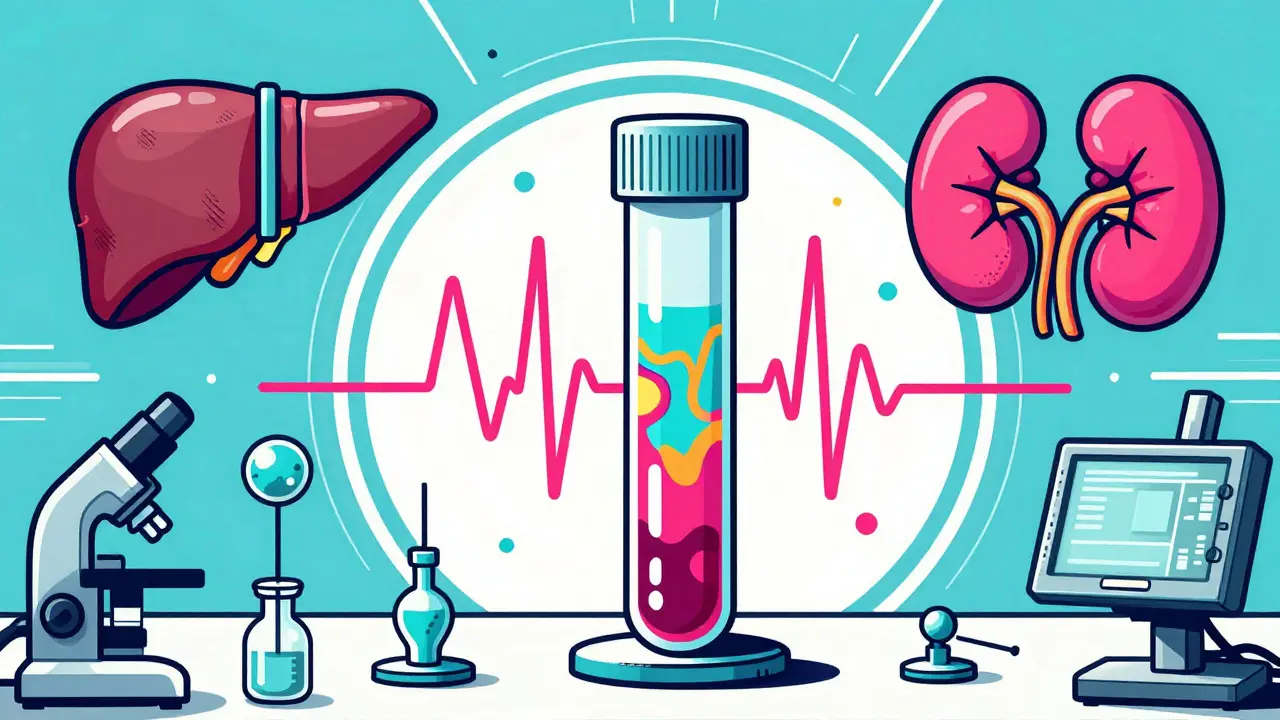
If you take an NTI drug, skipping a blood test is never a good idea. Therapeutic Drug Monitoring (TDM) is the backbone of safe usage. But why do levels fluctuate so much? Your body doesn't process drugs in a vacuum. Liver function, kidney health, age, weight, and even what you ate for dinner can change how a drug behaves in your bloodstream.
Take Warfarin as an example. It interacts with Vitamin K found in leafy greens. Eat a large salad one day and none the next, and your INR (International Normalized Ratio) could swing wildly. A study published in *Pharmacy Times* noted that a mere 10% increase in warfarin dose can elevate INR enough to increase major bleeding risk by over sevenfold. That is why guidelines recommend checking INR weekly until stable, then regularly thereafter.
For transplant patients on Tacrolimus, the stakes are equally high. Too little drug, and your body rejects the new organ. Too much, and you risk permanent kidney damage or infections due to suppressed immunity. The American Society of Transplantation recommends trough level checks three times a week during initial therapy. This frequency drops over time, but the vigilance never ends.
The Generic vs. Brand Debate
This is perhaps the most controversial topic surrounding NTI drugs. Can you switch from a brand name to a generic, or between different generic manufacturers? The answer is: it depends, and usually, it’s risky without doctor approval.
While generics are required to meet strict bioequivalence standards, individual bodies react differently to minor variations in fillers, binders, or absorption rates. In a widely discussed case on professional pharmacy forums, a patient switched brands of Levothyroxine, resulting in TSH levels spiking from a healthy 1.2 to a dangerously high 8.7 mIU/L. It took three months of adjustments to stabilize.
Regulations reflect this concern. In the U.S., 47 states have laws restricting automatic substitution of NTI drugs. Many require a physician’s explicit notation to allow a pharmacist to swap brands. In Europe, the European Medicines Agency (EMA) mandates product-specific bioequivalence studies for all NTI-designated medications. The bottom line? Never switch your NTI medication source without telling your doctor and planning for extra monitoring.
Red Flags: Signs of Toxicity or Under-Dosing
Between blood tests, you need to know your body. Because NTI drugs affect vital systems, symptoms of imbalance often show up quickly. Here is what to watch for based on common drug classes:
- Warfarin/Anticoagulants: Unusual bruising, nosebleeds that won't stop, red/pink urine, or dark/tarry stools. Conversely, signs of under-dosing include swelling in legs or shortness of breath (potential clots).
- Lithium: Fine hand tremors are common, but coarse tremors, slurred speech, drowsiness, or muscle weakness signal toxicity. Nausea and diarrhea are also early warnings.
- Digoxin: Visual disturbances like seeing yellow or green halos around lights, nausea, vomiting, and irregular heartbeat.
- Phenytoin/Carbamazepine: Dizziness, unsteady gait (ataxia), double vision, or excessive sleepiness. Seizure breakthrough indicates under-dosing.
- Tacrolimus/Cyclosporine: High blood pressure, headaches, tingling sensations, or fever/infection signs.
If you notice any of these, do not wait for your next scheduled appointment. Contact your healthcare provider immediately. Early intervention can prevent hospitalization.

Future Trends: Precision Medicine and AI
The landscape of NTI drug management is evolving rapidly. We are moving away from "one-size-fits-all" dosing toward personalized medicine. Pharmacogenomics-the study of how genes affect a person's response to drugs-is playing a huge role. For instance, genetic testing can predict how fast someone metabolizes Warfarin or Phenytoin, allowing doctors to start closer to the right dose.
A recent NIH-funded study demonstrated a 40% reduction in time to reach therapeutic ranges using pharmacogenomic-guided dosing. Additionally, artificial intelligence is being integrated into hospital systems to predict adverse events. Pilot programs using AI-driven monitoring protocols have reported a 28% drop in NTI-related adverse events. Wearable biosensors that continuously monitor biomarkers related to drug levels are also in development, promising real-time alerts instead of monthly blood draws.
Practical Tips for Patients
Living with an NTI drug prescription requires discipline, but it doesn't have to be overwhelming. Follow these steps to stay safe:
- Stick to One Pharmacy: This ensures you receive the same manufacturer’s product consistently. If your local pharmacy runs out, ask them to order from the usual supplier rather than grabbing a substitute.
- Keep a Log: Record your doses, any missed pills, and symptoms. Bring this log to every doctor visit. It helps identify patterns that blood tests alone might miss.
- Be Honest About Lifestyle Changes: Starting a new diet, exercise routine, or supplement regimen? Tell your doctor. Even herbal supplements like St. John’s Wort can drastically alter NTI drug levels.
- Understand Your Test Results: Don’t just accept the number. Ask your doctor, "Is this in the middle of the range, or near the edge?" Being near the edge might mean you need more frequent monitoring.
- Never Self-Adjust: If you feel fine, don’t skip doses. If you feel bad, don’t double up. Always consult your prescriber before making changes.
NTI drugs are powerful tools that manage some of the most serious conditions we face-from heart failure to bipolar disorder to organ transplantation. They demand respect and attention. By understanding what they are, knowing the risks, and staying proactive about monitoring, you turn potential danger into controlled, effective care.
What does NTI stand for in medications?
NTI stands for Narrow Therapeutic Index. It describes drugs where the difference between a helpful dose and a harmful dose is very small, requiring careful monitoring to ensure safety and effectiveness.
Can I switch between generic and brand-name NTI drugs?
It is generally recommended to stay on the same brand or manufacturer for NTI drugs. Switching can cause fluctuations in blood levels, leading to side effects or reduced efficacy. Always consult your doctor before making any changes.
How often should I get blood tests for NTI drugs?
Frequency varies by drug and stability. Initially, tests may be weekly or daily. Once stable, monitoring might drop to every few weeks or months. For example, Warfarin users often check INR weekly until stable, while Lithium users may check levels every 3-6 months.
Are all antidepressants considered NTI drugs?
No, most modern antidepressants like SSRIs (e.g., Sertraline) are not NTI drugs. However, older tricyclic antidepressants like Nortriptyline and Desipramine are often classified as NTI due to their narrow safety margins and cardiac risks.
What happens if I miss a dose of an NTI drug?
Missing a dose can cause your blood levels to drop below the therapeutic range, potentially leading to disease recurrence (like seizures or clotting). Do not double the next dose unless instructed by your doctor. Take it as soon as you remember, unless it’s close to the next scheduled dose.