Imagine trying to prove that a generic pill works exactly the same way as the brand-name version without giving it to thousands of volunteers. For decades, that was the only option. But today, the landscape of bioequivalence testing is a scientific process evaluating whether generic drugs perform identically to branded counterparts in terms of absorption rate and extent is changing fast. New technologies are cutting study times in half and slashing costs by nearly 40%. If you work in pharma or follow drug development, these shifts aren't just incremental-they’re revolutionary.
The Rise of AI in Drug Approval
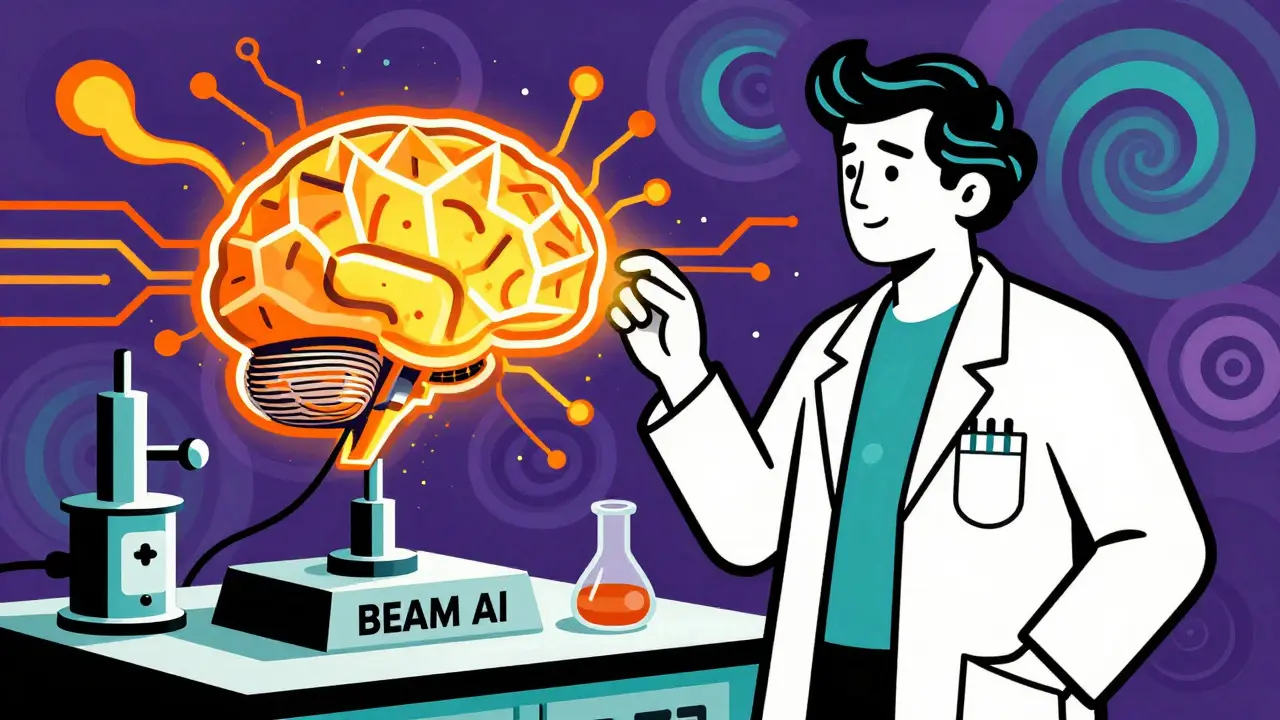
Artificial intelligence has moved from buzzword to backbone in regulatory science. The FDA’s Office of Generic Drugs launched BEAM (Bioequivalence Assessment Mate), a data analysis tool automating labor-intensive tasks in bioequivalence assessment in Q2 2024. This isn’t just another software update-it’s a game-changer. According to internal metrics, BEAM reduced reviewer workload by 52 hours per application during its pilot phase. By Q2 2026, the system will be fully implemented across the agency.
Why does this matter? Because faster reviews mean quicker access to affordable generics. In fiscal year 2024 alone, about 20% of all NDA approvals were influenced by GDUFA science initiatives. With AI now handling routine data checks, regulators can focus on complex cases where human judgment matters most.
New Tools for Complex Formulations
Not every drug dissolves like a simple tablet. Inhalers, patches, and injectables pose unique challenges. That’s why the FDA is investing heavily in advanced tools like the Dissolvit system, which mimics real-world conditions more accurately than traditional dissolution tests. Published research from March 2025 shows how this technology helps overcome hurdles in developing orally inhaled products-where even small differences in particle size can affect delivery.
Imaging techniques have also evolved dramatically. Scanning electron microscopy (SEM), atomic force microscopy infrared spectroscopy, and optical coherence tomography allow scientists to see what’s happening at the microscopic level. These methods don’t replace clinical trials-they complement them, offering deeper insights into how formulations behave before they ever reach patients.
Virtual Models Replace Some Clinical Studies
Here’s something surprising: we may soon need fewer people to test new drugs. Virtual bioequivalence platforms, funded by the FDA since August 2024, simulate how drugs move through the body using mathematical models. Combined with in vitro-in vivo correlation (IVIVC) methods, these tools could reduce the need for comparative clinical endpoint studies by up to 65% for certain complex products.
This doesn’t mean skipping safety checks entirely. Instead, it means smarter prioritization. Simple small-molecule generics still rely on conventional pharmacokinetic (PK) studies because they remain cost-effective. But for biosimilars and novel delivery systems, virtual approaches offer precision without the overhead.

Global Standards Are Finally Aligning
For years, companies faced conflicting requirements between regions. The EMA had one set of rules; the FDA had another. Now, thanks to the ICH M10 guideline, adopted by the FDA in June 2024 and endorsed by WHO in August 2024, there's a unified framework for bioanalytical method validation reducing discrepancies between regulatory regions. Market.us reported a 62% drop in method validation conflicts after implementation.
This harmonization saves time and money. No more duplicating experiments for different markets. It also builds trust among global stakeholders who previously struggled with inconsistent standards.
Cost vs. Benefit: When Technology Makes Sense
Let’s talk numbers. Traditional bioequivalence studies typically cost $1-2 million. Tech-enhanced versions run closer to $2.5-4 million. So why adopt them?
- Faster timelines: AI-driven analysis cuts study duration by 40-50%.
- Better accuracy: Data quality improves by 28%, leading to fewer rejections.
- Scalability: Automated workflows increase throughput by 37% and precision by 29%.
It’s not always cheaper upfront-but over multiple submissions, the ROI becomes clear. Especially when you consider that biosimilar approvals are accelerating globally. As of October 2025, the FDA had approved 76 biosimilars, driving demand for robust yet efficient testing strategies.

Challenges Remain for Specialized Products
Despite progress, some areas lag behind. Transdermal systems still struggle with irritation and adhesion assessments. Orally inhaled products require standardized charcoal block PK studies that haven’t been fully optimized yet. And topical semisolids demand integrated modeling plus Q3 compositional analysis-a combination few labs handle smoothly.
Dr. Michael Cohen, President of ISMP, warned against over-relying on in vitro models without proper clinical correlation, especially for narrow therapeutic index drugs. Patient safety remains paramount, no matter how sophisticated our tools become.
Regional Shifts and Future Outlook
Growth isn’t limited to North America. GCC nations are boosting bioanalytical capabilities through Saudi Arabia’s Vision 2030 goals and UAE partnerships with international CROs. Meanwhile, Middle Eastern and African markets expand rapidly due to government-backed biotech parks and WHO-supported vaccine projects.
Looking ahead, MetaTech Insights predicts AI will manage 75% of standard generic applications by 2030. Complex products will increasingly depend on virtual platforms and high-resolution imaging. Yet regulatory frameworks must evolve too-especially for emerging therapies like oligonucleotides and peptide-based treatments.
| Feature | Traditional Approach | Emerging Technologies |
|---|---|---|
| Average Cost | $1-2M | $2.5-4M |
| Study Duration | Standard timeline | Reduced by 40-50% |
| Data Accuracy | Baseline | +28% improvement |
| Throughput Increase | N/A | +37% |
| Precision Gain | N/A | +29% |
What is bioequivalence testing?
Bioequivalence testing determines if a generic drug delivers the active ingredient into the bloodstream at the same rate and extent as the original brand-name product. It ensures patient safety and efficacy without requiring full-scale clinical trials.
How does BEAM improve bioequivalence assessments?
BEAM automates repetitive data analysis tasks, freeing reviewers to focus on critical decisions. During its pilot, it cut processing time by 52 hours per application, significantly speeding up approval cycles.
Are virtual bioequivalence studies reliable?
Yes-for specific use cases. Virtual platforms combined with IVIVC models can predict drug behavior accurately enough to replace some clinical endpoint studies, particularly for complex formulations where physical testing falls short.
Why did the FDA adopt ICH M10?
To create a single, globally accepted standard for bioanalytical method validation. Before ICH M10, companies often duplicated efforts to meet differing regional requirements, wasting resources and delaying launches.
Which types of drugs benefit most from new technologies?
Complex products like inhalers, transdermal patches, and biosimilars gain the most. Their formulation intricacies make traditional PK studies less effective, while advanced imaging and simulation provide clearer answers.
Is AI replacing human experts in bioequivalence?
No-not completely. AI handles routine calculations and pattern recognition, but final judgments still require experienced professionals. Think of it as an assistant, not a replacement.
What are the biggest limitations of current tech?
Specialized delivery systems like topical creams and nasal sprays still lack fully validated non-clinical alternatives. Also, ensuring consistent results across diverse populations remains challenging despite improved modeling.
Will all future bioequivalence studies be digital?
Unlikely. While AI and simulations will dominate standard generics, many complex or novel therapies will continue needing hybrid approaches combining both computational and empirical evidence.
How much faster are modern bioequivalence processes?
Studies show reductions of 40-50% in overall timeline compared to older methods. Faster turnaround means quicker market entry for life-saving medications.
Where is bioequivalence testing growing fastest?
Beyond the US and Europe, growth surges in the Middle East and Africa, driven by national healthcare initiatives and investment in local laboratory infrastructure supported by WHO programs.