Medication Heartburn Risk Calculator
Which Medications Are You Taking?
Select medications from the list below to assess your heartburn risk.
Select medications to see your risk assessment
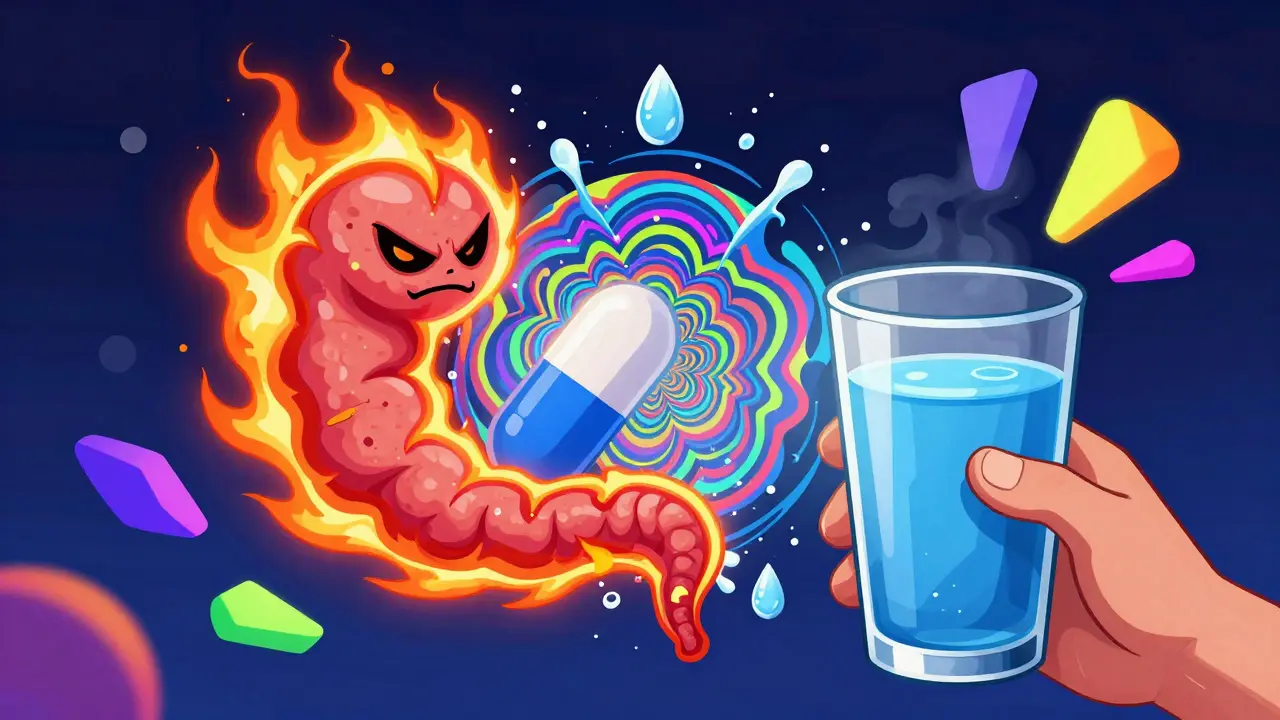
When you take a pill to feel better, the last thing you expect is to feel worse-especially in your stomach or chest. But for millions of people, common medications like ibuprofen, antibiotics, or even diabetes drugs are quietly causing heartburn, nausea, or a burning sensation that feels like acid climbing up the throat. This isn’t just "bad luck" or eating too much spicy food. It’s a real, documented side effect that happens because the medicine itself is irritating your digestive tract or weakening the valve that keeps stomach acid where it belongs.
Why Your Pills Are Causing Heartburn
Not all heartburn is the same. When it comes from medication, the cause isn’t just acid-it’s how the drug interacts with your body. Three main things happen:- Direct irritation: Some pills, especially antibiotics like doxycycline or potassium supplements, can scratch or burn the lining of your esophagus if they get stuck there. This is called pill-induced esophagitis.
- Relaxed valve: Your lower esophageal sphincter (LES) is a muscle that acts like a gate between your stomach and esophagus. Medications like calcium channel blockers (used for high blood pressure) or theophylline (for asthma) can make this muscle too loose, letting acid leak up.
- More acid production: NSAIDs like ibuprofen and aspirin block protective chemicals in your stomach lining. Without them, acid starts eating away at the tissue, causing inflammation and pain.
According to the NIH’s StatPearls (2023), drug-induced esophagitis makes up 5-10% of all esophagitis cases. And it’s not rare: Healthgrades reports that 15-20% of heartburn cases not tied to diet or lifestyle are directly linked to medications.
Which Medications Are the Worst Offenders?
Some drugs are far more likely to cause trouble than others. Here are the top culprits and what they do:- NSAIDs (ibuprofen, aspirin, naproxen): These are the most common cause. About 20-30% of people who take ibuprofen regularly get heartburn. They don’t just cause discomfort-they can lead to stomach ulcers in 15-30% of long-term users.
- Tetracycline antibiotics (especially doxycycline): If you take this without enough water or lie down right after, 12% of users develop esophagitis. In 3-5% of those cases, it leads to actual ulcers in the esophagus.
- Calcium channel blockers (nifedipine, amlodipine): Used for high blood pressure, these relax the LES and cause reflux in 10-20% of users. Beta blockers, another class of blood pressure meds, are much gentler on the stomach-only 5-10% of users report issues.
- Theophylline (asthma medication): Weakens the LES by 30-50%, leading to heartburn in 25-30% of users.
- Metformin (for type 2 diabetes): Affects 20-30% of new users with nausea, bloating, or heartburn. The good news? For 60-70% of people, these symptoms fade within 2-4 weeks.
- Bisphosphonates (alendronate for osteoporosis): These are dangerous if not taken correctly. Up to 10% of users develop severe esophageal injury if they lie down too soon after taking them.
And it’s not just these. Potassium chloride, quinidine, and even some iron supplements can trigger similar issues. The key? It’s not always the drug itself-it’s how you take it.
How to Take Pills Without Triggering Heartburn
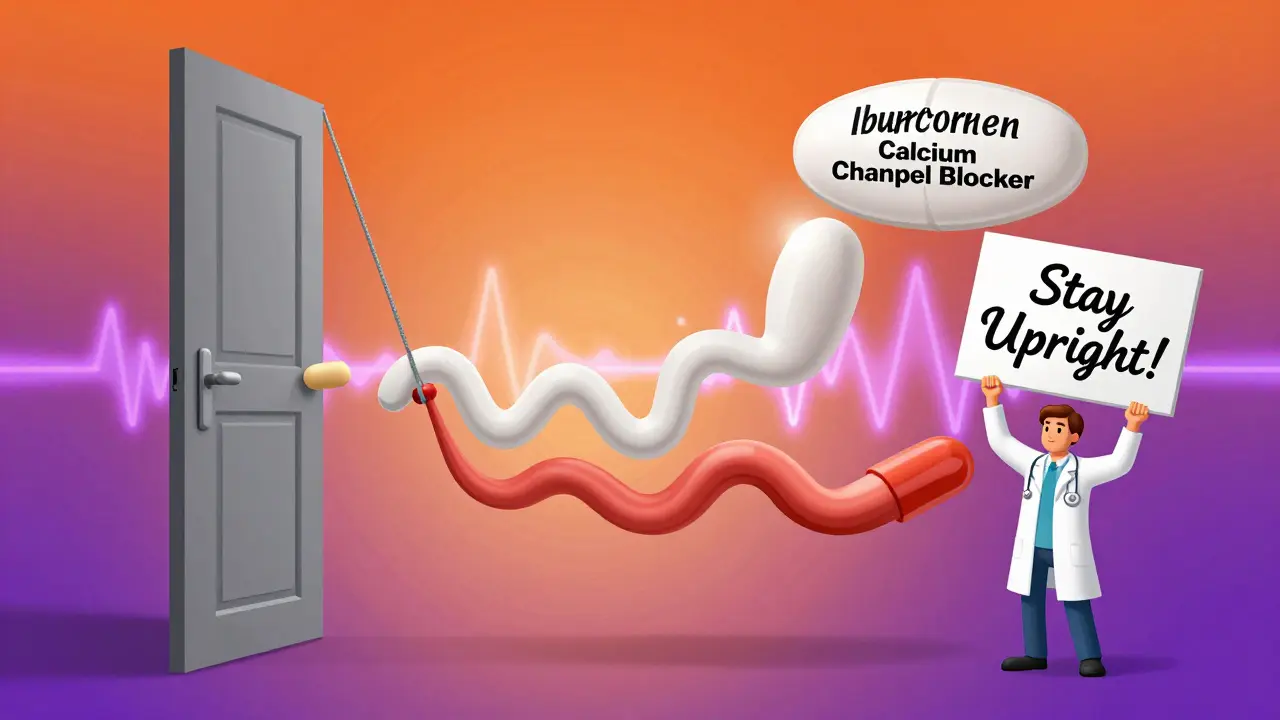
The best solution isn’t always stopping the medicine. Often, it’s changing how you take it. Here’s what works, backed by clinical data:- Take with a full 8oz glass of water. This isn’t just advice-it’s a prevention tool. For doxycycline and bisphosphonates, drinking enough water reduces esophagitis risk by 60-70%.
- Stay upright for 30-60 minutes after taking pills. Lying down right after swallowing lets the pill sit in your esophagus. Staying upright helps it drop into your stomach. This prevents 80-90% of pill-induced injuries.
- Take NSAIDs with food. Eating before or with ibuprofen or aspirin cuts heartburn risk by 40-50%. But don’t do this with antibiotics or bisphosphonates-they need an empty stomach to work.
- Use OTC antacids before NSAIDs. Taking an antacid like Tums 30 minutes before your painkiller can reduce heartburn by 30-40%.
- Ask about PPIs if you’re on long-term NSAIDs. Proton pump inhibitors like omeprazole reduce the risk of NSAID-related ulcers by 70-80% in high-risk patients.
Dr. John Smith from Cleveland Clinic says, "Pill esophagitis from doxycycline is preventable in 95% of cases through proper administration techniques." Yet, he adds, "We still see preventable complications weekly in our practice."
When to Worry: Warning Signs
Not all heartburn is harmless. If you experience any of these, call your doctor immediately:- Chest pain that feels like pressure or radiates to your arm or jaw
- Difficulty swallowing (feeling like food gets stuck)
- Blood in vomit or black, tarry stools
These aren’t normal side effects-they’re signs of serious damage. Up to 10% of untreated cases can lead to esophageal strictures (narrowing), and 1-2% of chronic cases can progress to Barrett’s esophagus, a condition that increases cancer risk.
What’s New in 2026? Better Pills, Smarter Systems
The field is changing. In 2022, the FDA approved a delayed-release version of doxycycline that reduces esophageal exposure by 40-50%. New NSAID formulations with protective coatings cut heartburn by 30-35% in recent trials.Electronic health records now flag risky drug combinations with 85-90% accuracy. If you’re on both an NSAID and a calcium channel blocker, your doctor’s system might already be warning them.
Future solutions? Genetic testing to find people who metabolize NSAIDs dangerously (affecting 15-20% of Caucasians), and drug delivery systems that bypass the stomach entirely-like patches or sprays under the tongue. These are in testing now.
Don’t Quit Your Meds-Fix the Problem
Here’s the biggest mistake people make: they stop taking their medication because of heartburn. A 2017 study in PMC found that 7% of patients discontinue essential drugs over manageable GI side effects. That’s dangerous. Stopping blood pressure meds suddenly can cause heart attacks. Stopping metformin can spike blood sugar. Stopping antibiotics can lead to resistant infections.The American Gastroenterological Association says this clearly: "Drug-induced reflux should never be dismissed as minor." The goal isn’t to avoid medicine-it’s to take it safely. With simple changes in how you swallow your pills, you can keep the benefits without the burn.
Can I take ibuprofen with food to avoid heartburn?
Yes. Taking ibuprofen with a meal or snack reduces heartburn risk by 40-50%. The food acts as a buffer, protecting your stomach lining. But avoid taking it on an empty stomach, especially if you’re prone to reflux. If you still get symptoms, ask your doctor about switching to a PPI like omeprazole alongside the NSAID.
Why does doxycycline cause heartburn?
Doxycycline is a thick, sticky pill that can get stuck in the esophagus if you don’t drink enough water or lie down too soon. When it sits there, it irritates the lining, causing chemical burns. This leads to pain, difficulty swallowing, and sometimes ulcers. Taking it with a full 8oz glass of water and staying upright for at least an hour prevents this in nearly all cases.
Is heartburn from metformin permanent?
No. About 60-70% of people who experience nausea, bloating, or heartburn from metformin find these symptoms fade completely within 2-4 weeks of continued use. The body adjusts. Taking it with food, starting with a low dose, or switching to the extended-release version can help speed up tolerance.
Can I switch to a different blood pressure pill if I get heartburn?
Yes, but only with your doctor’s guidance. Calcium channel blockers like amlodipine are common causes of reflux. Beta blockers, ACE inhibitors, or ARBs are often better tolerated and cause heartburn in only 5-10% of users. Never switch on your own-sudden changes can be dangerous. Ask your doctor if a gentler alternative exists for your condition.
Are OTC heartburn medicines safe to use with prescription drugs?
Antacids like Tums or Maalox are generally safe for occasional use alongside most meds. But proton pump inhibitors (PPIs) like omeprazole can interfere with absorption of some drugs, including certain antibiotics and iron supplements. If you need long-term relief, talk to your doctor. They can check for interactions and recommend the safest option for your specific regimen.
Medication-induced heartburn isn’t something you just have to live with. It’s preventable. Whether you’re on a daily painkiller, an antibiotic, or a life-saving chronic disease drug, small changes in how you take it can make a huge difference. Stay upright. Drink water. Eat smart. And never stop a prescription without talking to your doctor first.



Bridget Verwey
March 5, 2026 AT 08:19Also, if you’re taking doxycycline and lying down afterward? You’re not a patient. You’re a lab rat for esophagitis.
Andrew Poulin
March 7, 2026 AT 02:48Weston Potgieter
March 7, 2026 AT 04:52Vikas Verma
March 7, 2026 AT 23:36Sean Callahan
March 8, 2026 AT 16:42Jeff Mirisola
March 10, 2026 AT 11:31Ian Kiplagat
March 12, 2026 AT 00:55Amina Aminkhuslen
March 12, 2026 AT 16:00amber carrillo
March 13, 2026 AT 15:00Tim Hnatko
March 14, 2026 AT 15:57Aaron Pace
March 16, 2026 AT 14:14Joey Pearson
March 16, 2026 AT 15:47Roland Silber
March 18, 2026 AT 01:02Patrick Jackson
March 18, 2026 AT 11:06Medicine isn’t the enemy. Ignorance is. And we’re all just trying to swallow our way through life. Sometimes with a whole damn bottle of water. And that’s okay.