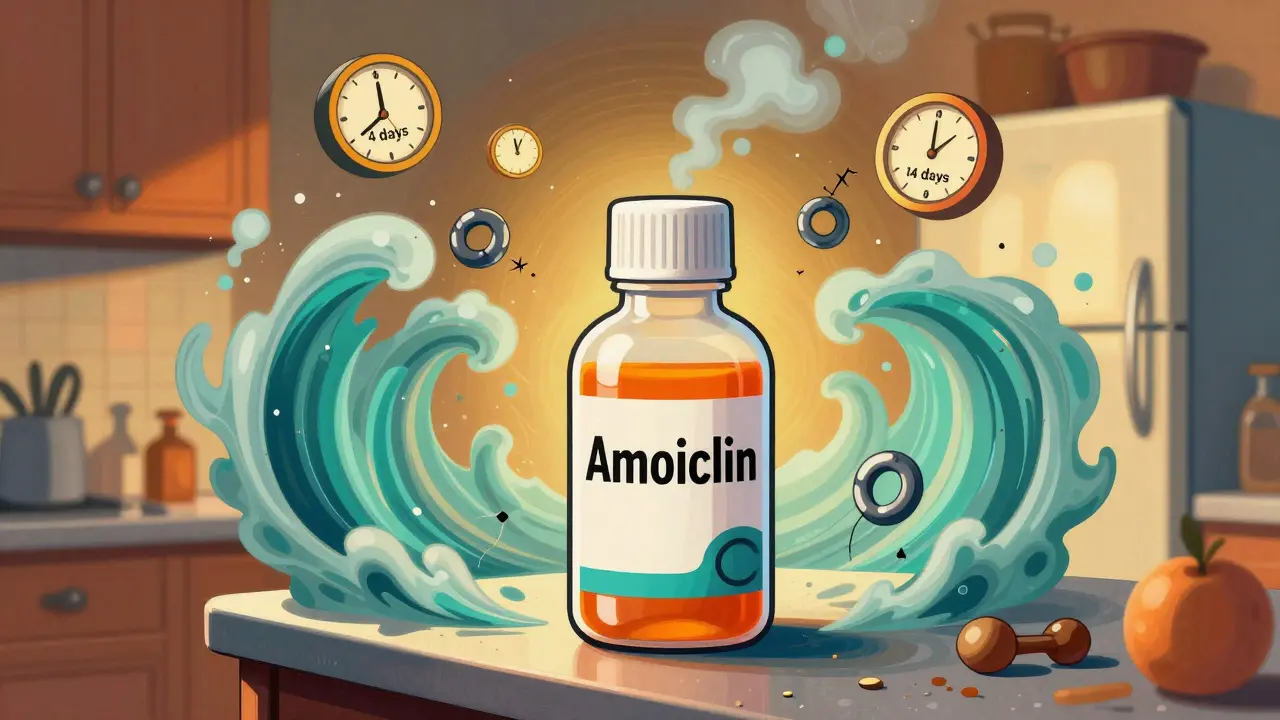
When you pick up a bottle of liquid amoxicillin for your child, it looks fresh. The label says 14 days. But what happens if you forget to finish it by day 12? Is it still safe? Does it still work? The truth is, liquid antibiotics don’t stay good for long - and it’s not because of poor storage or bad manufacturing. It’s chemistry.
Why Liquid Antibiotics Don’t Last
Powdered antibiotics like amoxicillin or amoxicillin/clavulanate are stable for years in their dry form. But once you add water, everything changes. The moment the powder mixes with liquid, chemical reactions begin. Beta-lactam rings - the core structure that makes these antibiotics work - start breaking down. This process is called hydrolysis. It’s natural. It’s unavoidable. And it’s why these medicines lose strength over time.Pharmaceutical companies don’t pick 10 or 14 days randomly. These dates come from real lab tests. The U.S. Pharmacopeia (USP) and FDA require that a reconstituted antibiotic must still deliver at least 90% of its labeled potency before it’s considered expired. Once it drops below that, it’s no longer reliable. That’s not a guess. That’s science.
Amoxicillin vs. Amoxicillin/Clavulanate: Big Difference
Not all liquid antibiotics are the same. Amoxicillin alone can last up to 14 days in the fridge. But add clavulanate - the part that fights resistant bacteria - and the clock starts ticking faster. Clavulanate is far more unstable. Studies show it loses potency after just five days at room temperature. Even when refrigerated, it only holds up for about 10 days.This creates a real problem for families. If a doctor prescribes a 14-day course of amoxicillin/clavulanate, but the medicine must be thrown out after 10 days, what happens to the last four days of treatment? Many parents end up stopping early. Others risk using medicine past its discard date. Neither option is ideal.
Storage Matters - A Lot
Refrigeration isn’t just a suggestion. It’s a requirement. Storing liquid antibiotics at room temperature (above 25°C) cuts their life in half. Amoxicillin that lasts 14 days in the fridge? At room temp, it’s only good for 5 to 7 days. Clavulanate? Down to 5 days or less.And it’s not just temperature. The container matters too. If you pour the medicine from its original bottle into an oral syringe, you’re exposing it to more air and different materials. One study found clavulanate’s stability dropped from 11 days to under 5 days just by switching containers. That’s why pharmacists always tell you to keep it in the original bottle.
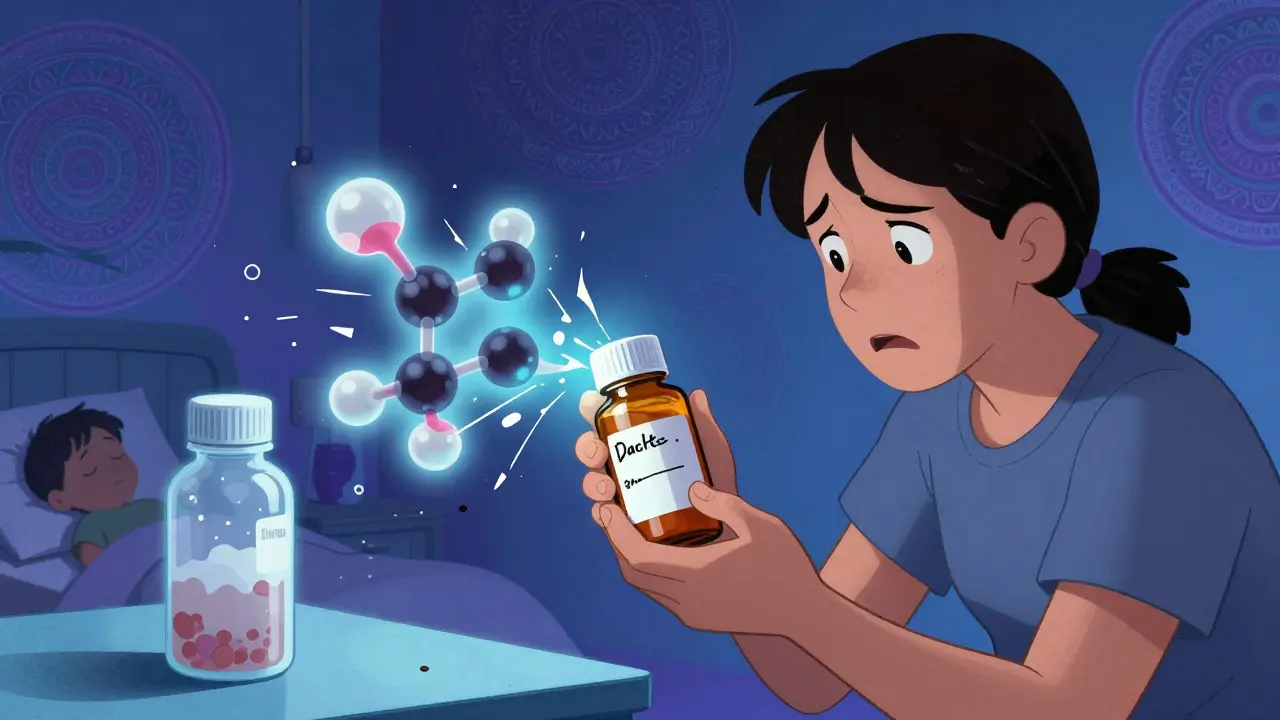
Freezing: A Hidden Option
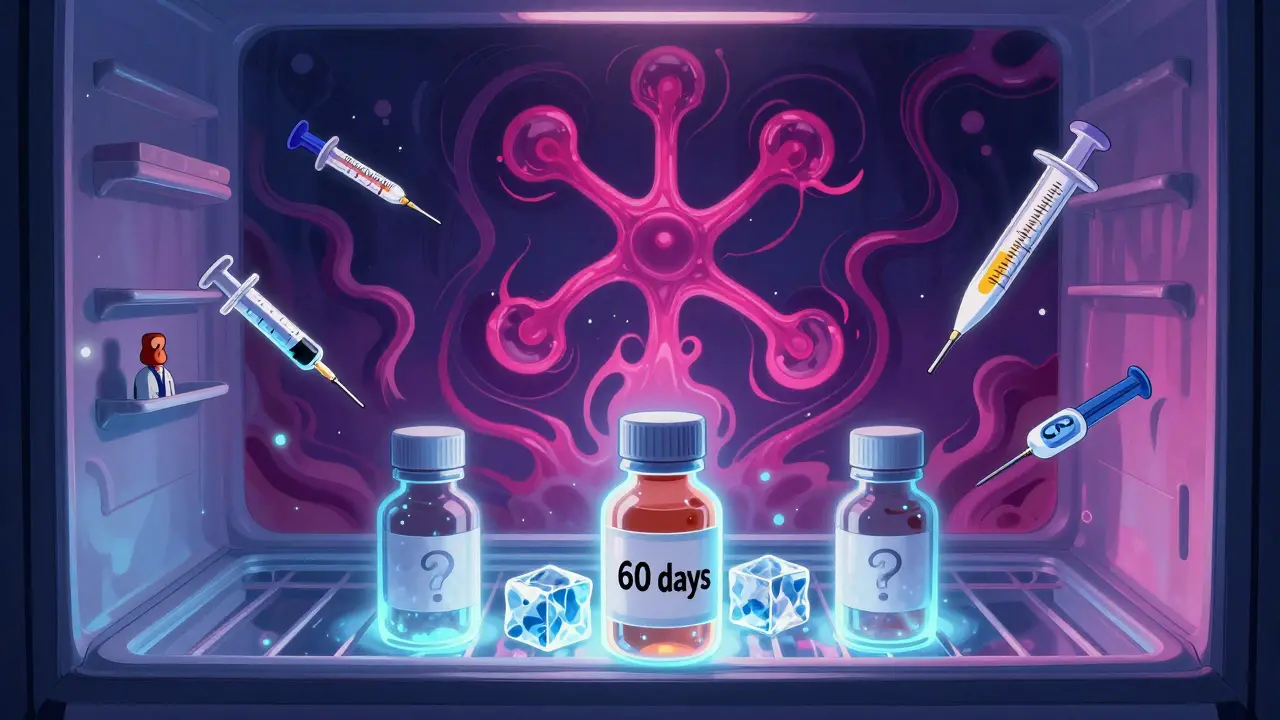
Most people don’t know this, but freezing liquid antibiotics can extend their life dramatically. Back in 1979, researchers found that amoxicillin, ampicillin, and penicillin V potassium kept over 90% of their strength for 60 days when stored at -20°C. Even at -10°C, amoxicillin still had 88% potency after two months.So why isn’t this common practice? Because freezing isn’t always practical. Thawing and re-freezing can damage the suspension. Not all pharmacies offer it. And many parents don’t have space in their freezer for a small bottle of medicine. Still, for families who need extra time - say, if a child is sick for weeks - it’s a real option. Talk to your pharmacist before freezing.
What Happens When It Goes Bad?
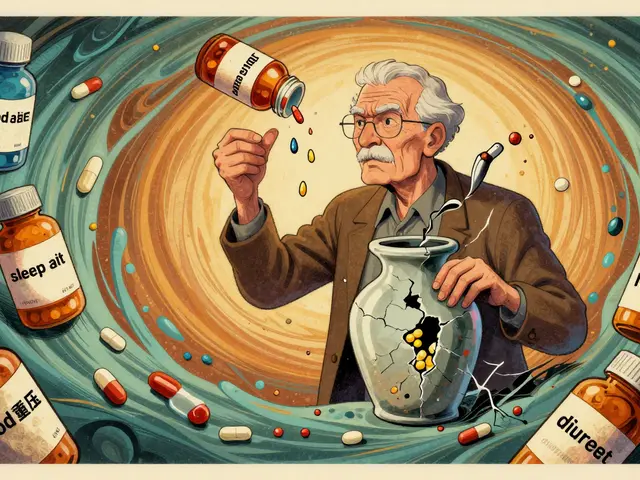
You won’t see mold. You won’t smell rot. But the medicine is weakening. The active ingredients are breaking down. That means your child might not get enough of the drug to kill the infection. That’s how antibiotic resistance starts - not from taking too much, but from taking too little.Signs of degradation? Cloudiness, strange color changes, or particles you can see when you shake the bottle. If it looks off, don’t use it. Even if it’s within the 10- or 14-day window, visual changes mean the chemistry has shifted. Trust your eyes.
Real Problems Real Families Face
Pharmacists in Leeds, Manchester, and beyond report the same thing: patients forget the discard date. They leave the bottle on the counter. They don’t write it on the label. By day 8, they’re unsure if it’s still good. Some throw it out early. Others use it anyway.One parent on a health forum said their child’s infection came back because they ran out of medicine on day 10 - even though the prescription was for 14 days. Another said they gave their kid the last 2 mL of amoxicillin on day 16 because “it still looked fine.”
These aren’t careless parents. They’re overwhelmed. They’re tired. They’re trying to do the right thing. But the system doesn’t make it easy.
What You Should Do
- Write the discard date on the bottle the moment you get it home. Use a permanent marker.
- Keep it in the fridge - between 2°C and 8°C. Don’t let it sit out.
- Don’t transfer it to syringes or cups unless you have to. If you do, use it within 24 hours.
- Check for changes in color, texture, or smell. If it looks wrong, toss it.
- Ask your pharmacist if freezing is an option - especially for longer treatments.
- Use a phone reminder. Set an alert for the discard date. Many pharmacy apps now do this automatically.
What’s Changing in the Future
The industry knows this is a problem. New formulations are in the works. One study from 2021 showed a microencapsulated version of amoxicillin/clavulanate could last 21 days in the fridge. Pfizer is testing a dual-chamber bottle called AmoxiClick - it keeps the powder and liquid separate until you press a button. That could extend the shelf life to 30 days.But until these reach the market, the rules stay the same: 14 days for amoxicillin. 10 days for amoxicillin/clavulanate. Refrigerated. Discard on time.
Why This Isn’t Going Away
The bottom line? Beta-lactam antibiotics - the most common type used for kids - are chemically unstable in water. That’s not a flaw. That’s just how they work. Manufacturers set short expiration dates not to make money, but to make sure the medicine still works. They could test for longer stability, but then they’d have to prove it’s safe for months. That’s expensive. And the risk? Giving a child a weakened dose that doesn’t cure the infection.So while we wait for better technology, the best thing you can do is treat these medicines like fresh milk. They’re not meant to sit around. Use them fast. Store them right. And when the date comes, throw it out - even if there’s some left.
It’s not waste. It’s safety.

Thomas Anderson
December 15, 2025 AT 08:51Just got my kid’s amoxicillin yesterday. Wrote the discard date on the bottle with a Sharpie like the post said. Set a reminder on my phone too. I used to ignore these dates until my daughter’s ear infection came back. Never again.
Storage matters. Refrigerator. Original bottle. No pouring into syringes unless you have to. Simple stuff, but so many people skip it.
Edward Stevens
December 16, 2025 AT 10:07So let me get this straight - we’re paying $80 for a 14-day supply of liquid medicine that expires in 10 days because the clavulanate is too delicate to survive? And the pharma companies are like, ‘Sorry, that’s just how chemistry works.’
Meanwhile, my dog’s flea meds last 30 days in a jar I left on the counter. I think we’re being scammed.
Dwayne hiers
December 16, 2025 AT 10:54Hydrolysis of the beta-lactam ring is the primary degradation pathway for penicillins in aqueous media. The rate is pH-dependent, with maximal instability around pH 6–7 - which is why many suspensions are buffered. Refrigeration slows proton transfer and reduces nucleophilic attack by water molecules.
Clavulanate’s lactam ring is even more strained than amoxicillin’s, hence its accelerated degradation. The 10-day window isn’t arbitrary - it’s derived from accelerated stability studies under ICH guidelines. If you’re seeing degradation before then, your storage conditions are off.
Rich Robertson
December 17, 2025 AT 03:42Back in South Africa, my mom used to freeze antibiotics when she couldn’t finish them. Not because she was smart - she just didn’t trust the system. Turns out, she was ahead of the curve.
Here in the States, we treat medicine like it’s a luxury item. But for families juggling three jobs and no insurance, a 10-day shelf life isn’t just inconvenient - it’s dangerous. We need better systems, not just better labels.
Natalie Koeber
December 18, 2025 AT 15:25Did you know the FDA allows this because Big Pharma lobbied to keep expiration dates short? They make more money when you buy new bottles every two weeks. They don’t want you freezing it - that’d cut into profits.
Also, the ‘original bottle’ thing? That’s because the plastic is coated with a chemical that slows degradation - but only if you don’t touch it. They don’t tell you that.
And why is there no FDA warning about the plasticizers leaching into the suspension? Hmm.
Rulich Pretorius
December 20, 2025 AT 13:05It’s funny how we treat medicine like a perishable good, but we don’t treat the system that creates it the same way.
We blame parents for forgetting dates, but we don’t fix the fact that pharmacies don’t print the discard date on the label. We lecture about refrigeration, but don’t give people fridges. We call it ‘safety’ - but safety should be built in, not begged for.
Maybe the real expiration date isn’t on the bottle. Maybe it’s on our collective patience.
Jonny Moran
December 21, 2025 AT 11:53My niece’s pediatrician gave her amoxicillin/clavulanate for strep throat. The bottle said 10 days. The script was for 14. She finished day 9, got better, and the mom didn’t want to waste it - so she saved the rest.
Two weeks later, the kid got it again. Same symptoms. Same antibiotic. This time, it didn’t work.
Don’t be that parent. Don’t be that kid. Discard on time. It’s not waste - it’s prevention.
Sarthak Jain
December 21, 2025 AT 22:29Bro i just found out my kid’s antibiotic was expired by day 8 and i had no clue 😭
we kept it on the counter bc the fridge was full and now i feel so guilty. I’m gonna write the date on the bottle next time for sure.
also freezing? That’s wild. I didn’t even know that was a thing. Gonna ask my pharmacist tomorrow.
Tim Bartik
December 22, 2025 AT 19:41So let me get this straight - we’re supposed to trust a government that can’t even keep the power grid running, but we’re supposed to believe these 14-day expiration dates are sacred? Nah.
My cousin in Texas used leftover amoxicillin for his dog’s ear infection. Dog lived. Dog’s happy. Dog’s not dead. So who’s really lying here? The science? Or the corporate overlords?
Sinéad Griffin
December 24, 2025 AT 08:36OMG YES!! I’ve been telling everyone this 😭 I wrote the date on the bottle with glitter pen so I couldn’t miss it 💖 and set a reminder for 8am every day to shake it 🤓
Also I freeze mine now!! My freezer has a whole shelf for kid meds 💊❄️
Y’all need to get with the program. This is basic parenting 101.
Daniel Thompson
December 25, 2025 AT 15:50While I appreciate the intent of this post, I must emphasize that the assumption that parents are ‘overwhelmed’ or ‘tired’ is a mischaracterization of systemic failure. The burden of responsibility should not fall on caregivers when the infrastructure fails to provide adequate labeling, education, or access to stable formulations.
Furthermore, the suggestion to freeze medications, while chemically sound, introduces uncontrolled variables - temperature cycling, container integrity, and microbial contamination risk - that are not clinically validated for home use. This is not advice. It’s a liability.
Alexis Wright
December 25, 2025 AT 23:41Let’s be real - this isn’t about chemistry. It’s about control.
They make you believe the medicine is alive. That it has a soul. That it ‘expires’ like milk. But it’s just molecules. They break down. So what?
Why don’t we just make the dose stronger? Why don’t we let people decide for themselves? Why do we infantilize parents with 14-day countdowns?
This is not safety. This is fearmongering dressed in white coats. And you’re all complicit for not asking why.
Wade Mercer
December 27, 2025 AT 14:48People who use expired antibiotics are selfish. They don’t care about the rise of antibiotic resistance. They just want to save a few bucks. This isn’t about convenience - it’s about ethics. You’re not just risking your child. You’re risking everyone’s future. Throw it out. End of story.
Daniel Wevik
December 28, 2025 AT 04:45Here’s the real issue: we treat antibiotics like they’re disposable consumer goods. But they’re not. They’re precision tools. And we’re handing them to parents who aren’t trained to handle them.
What if pharmacies offered pre-filled, single-dose vials with built-in expiration tracking? What if insurance covered a second bottle if the first was discarded early? What if we stopped blaming parents and started fixing the system?
This isn’t about chemistry. It’s about design. And right now, the design is broken.