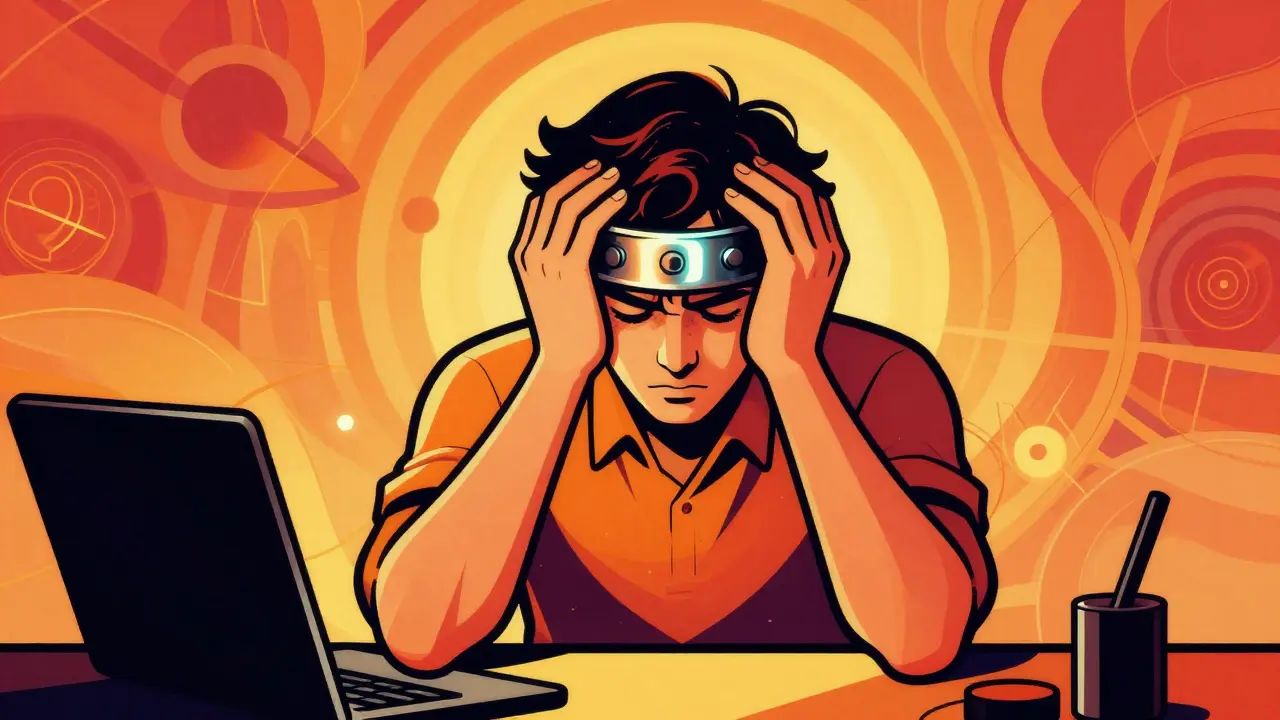
Does it feel like someone has placed a tight metal band around your forehead? You aren't imagining that pressure. If you experience this dull, squeezing pain on at least 15 days every month for three months or more, you likely have chronic tension headaches, a condition defined by the International Classification of Headache Disorders (ICHD-3). It affects roughly 2-3% of adults worldwide, with women making up about 63% of cases. This isn't just "stress." It is a distinct medical condition that can severely impact your work productivity and quality of life if left unmanaged.
Understanding What Actually Causes Chronic Tension Headaches
For decades, doctors believed these headaches were caused by muscles tightening in your neck and scalp. That idea makes sense intuitively-when we are stressed, we hunch our shoulders. However, modern neuroscience has shifted this view significantly. Research from the Mayo Clinic and other leading institutions now points to central sensitization, where the brain's pain-processing centers become overly sensitive. Essentially, your nervous system lowers its threshold for pain, meaning normal signals get amplified into headache pain. Muscle tenderness is often a secondary symptom, not the root cause.
This distinction matters because treating only the muscles often fails to stop the pain. Genetic factors also play a role; if you have a first-degree relative with chronic tension headaches, your risk is 2.3 times higher. Understanding this biological basis helps explain why simple relaxation techniques sometimes fall short without addressing the underlying nerve sensitivity.
Identifying Your Personal Triggers
While the mechanism involves central sensitization, specific daily factors can trigger flare-ups. Identifying yours is crucial for prevention. Here are the most common culprits backed by clinical data:
- Psychological Stress: Reported by 89% of patients. Interestingly, studies show that the recovery phase after stress often triggers headaches more than the acute stress event itself.
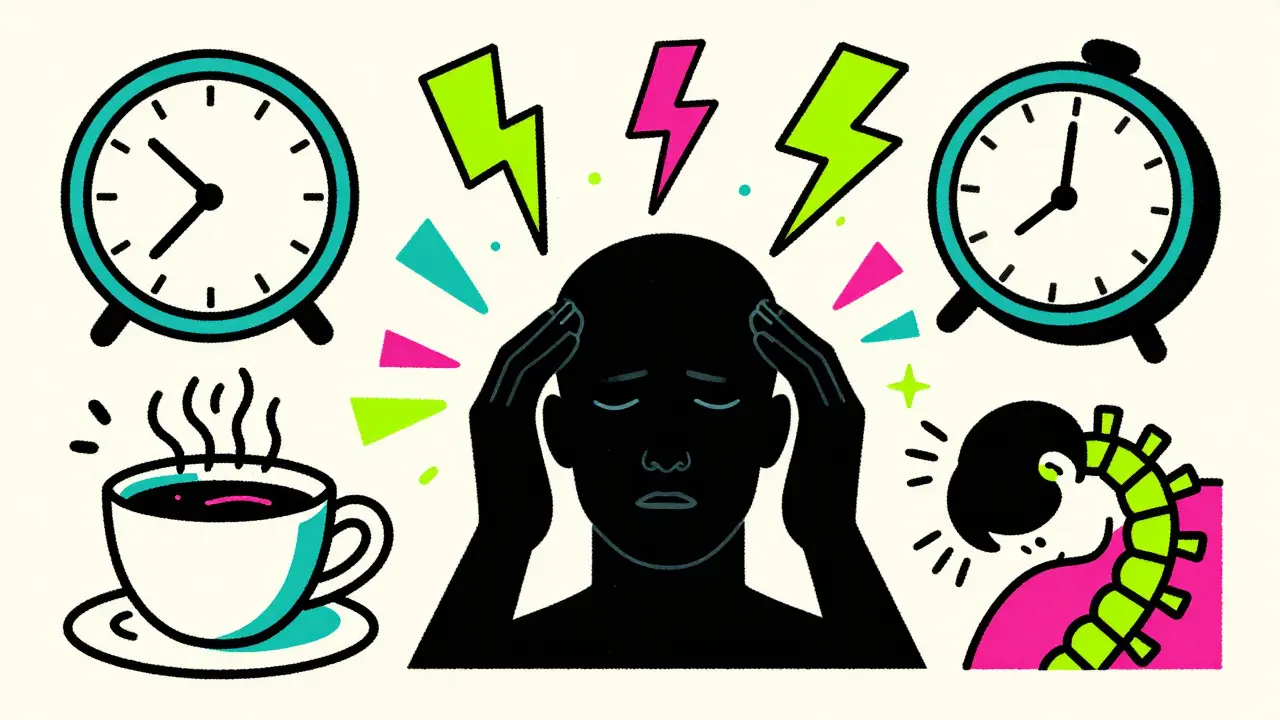
- Sleep Disruption: Getting less than six hours of sleep increases your risk by 4.2 times. Consistency matters more than duration; varying your bedtime by more than 20 minutes can disrupt circadian rhythms enough to trigger pain.
- Caffeine Fluctuations: Withdrawal from consuming over 200mg of caffeine daily for two weeks or more is a potent trigger. Even changes in timing can matter.
- Poor Posture: Holding your head forward more than 4.5cm beyond your cervical spine during computer work increases suboccipital muscle tension by 2.8 times.
- Screen Time: Spending more than seven hours a day on screens correlates with a 63% higher incidence of headaches.
- Dehydration: Serum osmolality levels above 295 mOsm/kg can trigger episodes.
Weather changes and poor vision (specifically uncorrected astigmatism greater than 1.5D) are weaker but still relevant triggers for some individuals. Keeping a headache diary using apps like Migraine Buddy can help you spot patterns that generic advice might miss.
Distinguishing Chronic Tension Headaches from Migraines
Misdiagnosis is common, occurring in 38% of chronic daily headache cases. Differentiating between chronic tension headaches and chronic migraines is essential because their treatments differ. Migraines typically feature throbbing, one-sided pain accompanied by nausea, vomiting, photophobia (sensitivity to light), and phonophobia (sensitivity to sound).
| Feature | Chronic Tension Headache | Chronic Migraine |
|---|---|---|
| Pain Quality | Pressure, tightness, non-pulsating | Throbbing, pulsating |
| Location | Bilateral (both sides) | Often unilateral (one side) |
| Nausea/Vomiting | Rare | Common |
| Photophobia | <15% of cases | >90% of cases |
| Phonophobia | 28% of cases | 85% of cases |
| Pain Intensity (Avg) | 5.2/10 | 7.5/10+ |
If you experience significant light or sound sensitivity, consult a neurologist. The diagnostic gold standard requires excluding secondary causes through a neurological exam, as there are no definitive imaging biomarkers for tension headaches.
Evidence-Based Treatments and Medications
Treatment falls into two categories: acute relief for when the headache hits, and preventive strategies to reduce frequency. For acute pain, nonsteroidal anti-inflammatory drugs (NSAIDs) are the first line of defense.
- Ibuprofen 400mg: Effective in 68% of episodes, with peak effect at 1.8 hours.
- Aspirin 900mg: Shows 52% efficacy.
Crucially, you must limit NSAID use to no more than 14 days per month. Exceeding this leads to medication-overuse headache, a vicious cycle where the treatment causes the problem. Opioids should be avoided entirely due to zero efficacy and high abuse potential.
Preventive Medications
When headaches occur 10 or more days a month, preventive medication becomes necessary. Amitriptyline remains the cornerstone of prevention. Starting at 10mg nightly and titrating to 25-50mg, it offers 50-70% efficacy within six weeks. However, side effects like dry mouth and weight gain (averaging 2.3kg) cause 28% of patients to discontinue use.
An alternative is Mirtazapine (15mg nightly). A 2022 randomized controlled trial showed it to be non-inferior to amitriptyline with better tolerability, though it may increase appetite. Note that botulinum toxin Type A, effective for migraines, has been shown to be ineffective for chronic tension headaches according to FDA labeling.

Non-Pharmacological Interventions
Medication alone is rarely enough. Integrating behavioral and physical therapies addresses the central sensitization and muscular components effectively.
- Cognitive Behavioral Therapy (CBT): Reduces headache days by 41% over 12 weeks by changing how your brain processes pain and stress.
- Physical Therapy: Twelve sessions of craniocervical flexion exercises can decrease frequency by 53%. Look for therapists certified in cervicogenic headaches.
- Mindfulness: Just 15 minutes of daily mindfulness practice lowers cortisol levels by 29% at eight weeks.
- Acupuncture: Offers modest benefits, reducing headache days by an average of 3.2 per month compared to sham treatments.
The "20-20-20 rule" for screen time-looking 20 feet away for 20 seconds every 20 minutes-is endorsed by 83% of sufferers as a top prevention tip. It reduces eye strain and encourages posture breaks.
Living with Chronic Tension Headaches
Managing this condition requires patience and a multi-faceted approach. Many patients report initial misdiagnosis, with an average delay of 2.7 years before receiving correct care. Advocating for yourself with detailed symptom trackers can expedite proper diagnosis. Community support programs, such as the American Headache Society's 'HeadWise', offer valuable resources, with 82% of users reporting reduced disability scores after six months.
Remember that while chronic tension headaches are not dangerous in terms of immediate health threats, they correlate with a 2.1 times higher risk of depression. Addressing mental health concurrently with physical symptoms is vital for long-term recovery.
How do I know if my headache is tension-related or a migraine?
Tension headaches typically present as bilateral pressure or tightness without nausea or significant light/sound sensitivity. Migraines are usually one-sided, throbbing, and accompanied by nausea, vomiting, photophobia, or phonophobia. If you have severe sensitivity to light or sound, it is more likely a migraine.
Can stress really cause chronic tension headaches?
Stress is a major trigger, reported by 89% of patients. However, research suggests that the recovery phase after stress often triggers headaches more than the acute stress event itself. Central sensitization means your nervous system remains on high alert even after the stressor passes.
Is amitriptyline safe for long-term use?
Amitriptyline is widely used and effective for prevention, but side effects like dry mouth, drowsiness, and weight gain are common. About 28% of patients discontinue use due to these effects. Always consult your doctor to monitor dosage and manage side effects.
What is medication-overuse headache?
This occurs when you take acute pain medications like ibuprofen or aspirin too frequently (more than 14 days a month). Instead of preventing headaches, the medication triggers rebound pain, creating a cycle of dependency and increased headache frequency.
Does physical therapy help with tension headaches?
Yes, particularly if poor posture or neck muscle tension contributes to your pain. Studies show that 12 sessions of specific craniocervical flexion exercises can reduce headache frequency by 53%. Ensure your therapist specializes in cervicogenic or headache conditions.
Are there any new treatments for chronic tension headaches?
While CGRP antagonists like atogepant are primarily approved for migraines, research is ongoing for their use in tension headaches. Emerging areas include occipital nerve stimulation and gut-brain axis therapies, but currently, amitriptyline, CBT, and physical therapy remain the evidence-based standards.