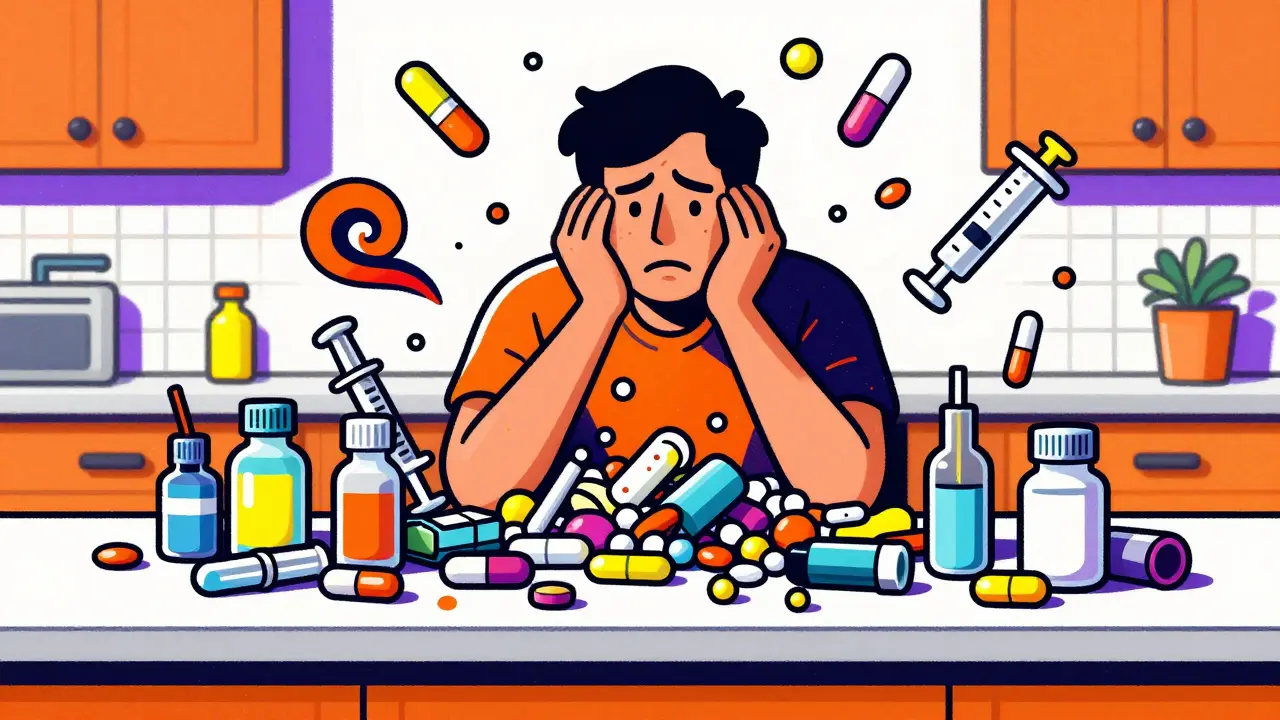
Imagine being told to take three different pills for high blood pressure, one injection for diabetes, and use a special inhaler for your asthma. Now imagine doing that twice a day, every single day. It is easy to see how someone might forget a dose or skip a step entirely. This is the reality for millions of people managing chronic conditions. The good news is that generic combination products are changing this landscape. These products merge multiple treatments or a drug with a delivery device into a single, easier-to-use package, often at a fraction of the original cost.
The core problem in modern healthcare isn't just finding effective drugs; it is getting patients to actually take them correctly. Medication non-adherence costs the U.S. healthcare system an estimated $300 billion annually in preventable hospitalizations and complications. Generic combination products address two massive barriers at once: complexity and cost. By simplifying the regimen and lowering the price tag, they offer a powerful tool for improving health outcomes without breaking the bank.
What Are Generic Combination Products?
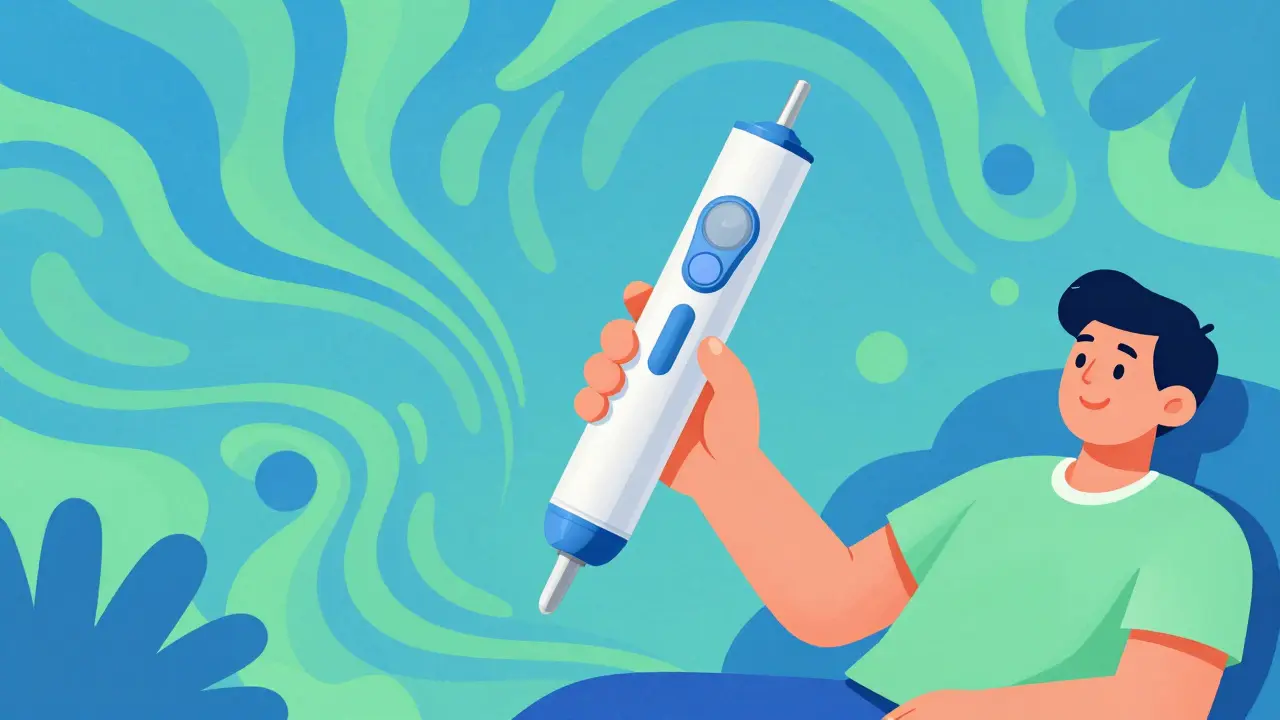
To understand why these products matter, we first need to define what they are. A combination product is a therapeutic or diagnostic item that integrates two or more regulated components-such as a drug, a biological product, and/or a medical device-into a single entity. Think of a pre-filled insulin pen. It contains the insulin (drug) and the precision dosing mechanism (device). Or consider a drug-eluting stent used in heart surgery, which combines a metallic scaffold (device) with medication that prevents scar tissue growth (drug).
A generic version of this product enters the market after the brand-name patent expires. It must prove that it works exactly like the original brand-name product. For the drug component, this means showing bioequivalence-the medicine must reach the bloodstream at similar rates and levels. For the device component, it must perform identically. If you have ever switched from a brand-name inhaler to a generic one, you know the look might change, but the way it delivers the medicine must remain consistent. The U.S. Food and Drug Administration (FDA) oversees these approvals through complex pathways that ensure safety and efficacy are never compromised.
The Compliance Advantage: Simplicity Wins
The biggest advantage of combination products is simplicity. When you reduce the number of steps required to take a medication, adherence goes up. Studies show that adherence drops by approximately 26% when a patient moves from a once-daily dose to a twice-daily schedule. Combination products often consolidate therapies into a single daily action.
- Reduced Pill Burden: Instead of swallowing four separate pills for hypertension and cholesterol, a patient takes one fixed-dose combination pill. This eliminates the stress of remembering multiple times and doses.
- Fewer Assembly Errors: Separate devices require assembly. You have to attach the cartridge to the injector, prime the needle, and dispose of waste. Integrated combination products, like auto-injectors, come ready to use. Research indicates that user assembly errors occur in 12-18% of cases with separate components. Integrated generics eliminate this risk.
- Better Dosing Accuracy: Devices like pre-filled pens ensure dose accuracy within ±5%. When patients draw their own doses from vials, human error is common. Generic versions of these pens maintain this high level of precision.
This simplicity translates directly to better health. For chronic conditions like diabetes or COPD, consistent treatment is vital. A 15-25% improvement in adherence rates can mean the difference between stable blood sugar levels and a dangerous emergency room visit.
Cost Savings Without Sacrificing Quality
Money is a huge factor in whether people stick to their prescriptions. According to FDA research, about 23.4% of patients skip doses because they cannot afford their medication. Generic combination products typically cost 30-80% less than their brand-name counterparts. This price drop makes long-term therapy accessible to far more people.
However, cost savings do not mean lower quality. Generic manufacturers must undergo rigorous testing. They prove that any differences in inactive ingredients (like dyes or binders) or minor cosmetic changes to the device do not affect safety or effectiveness. For example, an auto-injector generic must require the same amount of force to activate (typically 5-15 Newtons) and deliver the exact same volume of drug as the brand name. The failure rate in simulated use studies must be below 0.1%. You get the same clinical benefit, just without the premium price tag.
| Feature | Brand-Name Combination Product | Generic Combination Product |
|---|---|---|
| Cost | High (Full R&D recovery) | Low (30-80% cheaper) |
| Active Ingredient | Identical | Identical |
| Device Functionality | Proprietary design | Equivalent performance standards |
| Patient Adherence Impact | High (due to simplicity) | High (maintains simplicity) |
| Regulatory Pathway | Full NDA (New Drug Application) | ANDA (Abbreviated New Drug Application) |
Navigating Potential Confusion
While the benefits are clear, there is a catch. Not all generic combination products look or feel exactly the same. Different manufacturers may produce slightly different device mechanisms. One generic inhaler might have a blue mouthpiece, while another has a clear one. The breathing technique might vary slightly. This can cause confusion, especially if a patient is switched between different generic brands at the pharmacy.
Dr. Sarah Ibrahim of the FDA has noted that patients may be switched to multiple generics over the course of a year, adding to the confusion. This is particularly critical for complex devices like inhalers or injectors. If a patient doesn't use the device correctly, the medicine won't work, regardless of how cheap it is.
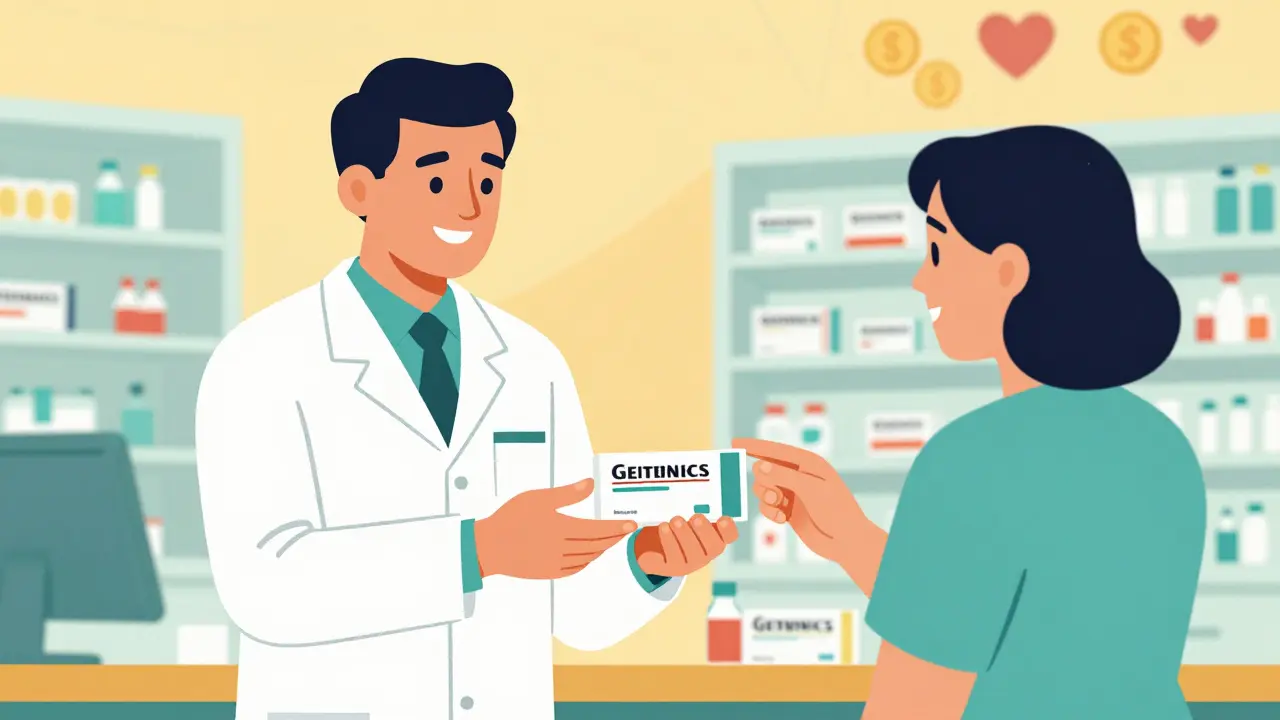
To mitigate this, patient counseling is essential. Healthcare providers should take the time to explain that while the outside might look different, the inside works the same. Proper training can increase adherence rates by 17-22%. Pharmacists play a key role here, ensuring that patients understand how to use their specific generic version before they leave the counter.
Real-World Impact on Chronic Disease Management
The impact of these products is most visible in chronic disease management. Diabetes care is a prime example. Pre-filled insulin pens have revolutionized self-administration. Users report that switching from vial-and-syringe methods to pens reduced dosing errors from several per week to almost zero. Generic versions of these pens make this convenience affordable for those without comprehensive insurance.
In cardiovascular care, drug-eluting stents release medication directly at the site of a blockage, reducing the risk of re-narrowing (restenosis) by 30-40% compared to bare-metal stents. Generic versions of these stents allow more patients to access this advanced technology. Similarly, transdermal patches for pain management or smoking cessation provide steady-state delivery of medication through the skin, avoiding the peaks and troughs associated with oral pills.
Market data supports this shift. The global combination product market reached $127.5 billion in 2022 and is projected to grow significantly. With regulations like the Inflation Reduction Act creating incentives for generic development, we expect to see a surge in affordable options. Approximately 62% of physicians prefer combination products for chronic diseases specifically because they improve adherence.
Best Practices for Patients and Providers
To get the most out of generic combination products, both patients and doctors need to be proactive. Here are some practical steps to ensure success:
- Ask Questions: If your prescription looks different from last time, ask your pharmacist. Confirm that it is a generic equivalent and ask if the usage technique has changed.
- Request Training: Never assume you know how to use a new device. Ask for a demonstration. For auto-injectors or inhalers, hands-on instruction can take 20-30 minutes but saves countless headaches later.
- Stick to One Pharmacy: Using a single pharmacy helps ensure consistency in the generic manufacturer you receive, reducing the chance of unexpected device changes.
- Monitor Outcomes: Keep track of your symptoms. If you feel your condition is worsening after a switch, contact your doctor. It might be a technique issue, not a product issue.
- Educate Yourself: Read the patient information leaflet. Look for visual guides. Understanding the "why" behind the product increases confidence and compliance.
The transition to generic combination products is not just about saving money; it is about making healthcare more humane. By removing the friction of complex regimens and high costs, we give patients a real chance at staying healthy. As the regulatory landscape evolves and more generics enter the market, these tools will become even more vital in the fight against chronic disease.
Are generic combination products as safe as brand-name ones?
Yes. Generic combination products must meet the same strict safety and efficacy standards as brand-name products. They undergo rigorous testing to prove bioequivalence for the drug component and identical performance for the device component. The FDA requires that failure rates be extremely low (below 0.1%) and that dose accuracy be maintained within tight margins.
Why do some generic devices look different?
Different manufacturers may design their devices slightly differently, such as using different colors, shapes, or activation mechanisms. However, the internal functionality and drug delivery must be equivalent. These cosmetic or mechanical variations are allowed as long as they do not compromise safety or effectiveness, but they can sometimes cause user confusion if not properly explained.
How much money can I save with generics?
Patients can typically save between 30% and 80% on their medication costs by switching to generic combination products. This significant reduction helps address the financial barrier that causes many patients to skip doses or stop treatment altogether.
What should I do if my generic inhaler feels different?
If your inhaler feels different or requires a different breathing technique, do not guess. Contact your pharmacist or doctor immediately. Ask for a demonstration of the correct usage for your specific generic brand. Proper technique is crucial for the medication to reach your lungs effectively.
Do generic combination products help with adherence?
Yes. By simplifying treatment regimens (e.g., one pill instead of three) and reducing costs, generic combination products can improve medication adherence rates by 15-25%. Simpler routines are easier to remember, and lower costs remove a major reason for skipping doses.