Breaking a pill in half or crushing it into a powder might seem like a simple way to save money or make a dose easier to swallow, but it's actually a high-risk move if you don't do it right. When you split a tablet, you're not just changing the size; you're potentially exposing the medicine to air, moisture, and bacteria. Worse, using the wrong tools or sharing equipment can lead to cross-contamination, where traces of one drug end up in another. If you're doing this for yourself or a loved one, you need a strict protocol to keep the medicine pure and the dose accurate.
Know Which Pills Are Safe to Break
Before you even touch a tool, you have to know if the medication can actually be split. Not all pills are created equal. Immediate-release tablets is a type of medication designed to be absorbed quickly by the body . These are usually the only ones safe to split, and ideally, they should have a "score mark" (that little line down the middle) to show where the manufacturer intended the break to happen.
On the flip side, you should never split or crush Enteric-coated tablets or sustained-release (SR) medications. These are engineered to dissolve slowly over hours or to survive the stomach acid to dissolve in the intestines. If you crush a sustained-release pill, you dump the entire 12 or 24-hour dose into your bloodstream all at once. This can be incredibly dangerous and is a leading cause of medication errors.
Hazardous drugs, such as certain chemotherapies, are another "no-go" for home crushing. When these are crushed, they can release microscopic particles into the air. Research has shown that improper crushing of drugs like cyclophosphamide can leave harmful residues on your hands and surfaces, putting everyone in the house at risk.
Choosing the Right Tools for the Job
Stop using kitchen knives or scissors. While it's tempting, using a knife often leads to the pill shattering, which means you lose some of the dose and contaminate the rest with crumbs. According to a study from the University of Jordan, using a dedicated splitter achieves over 92% dose accuracy, while manual breaking drops that accuracy to around 63%.
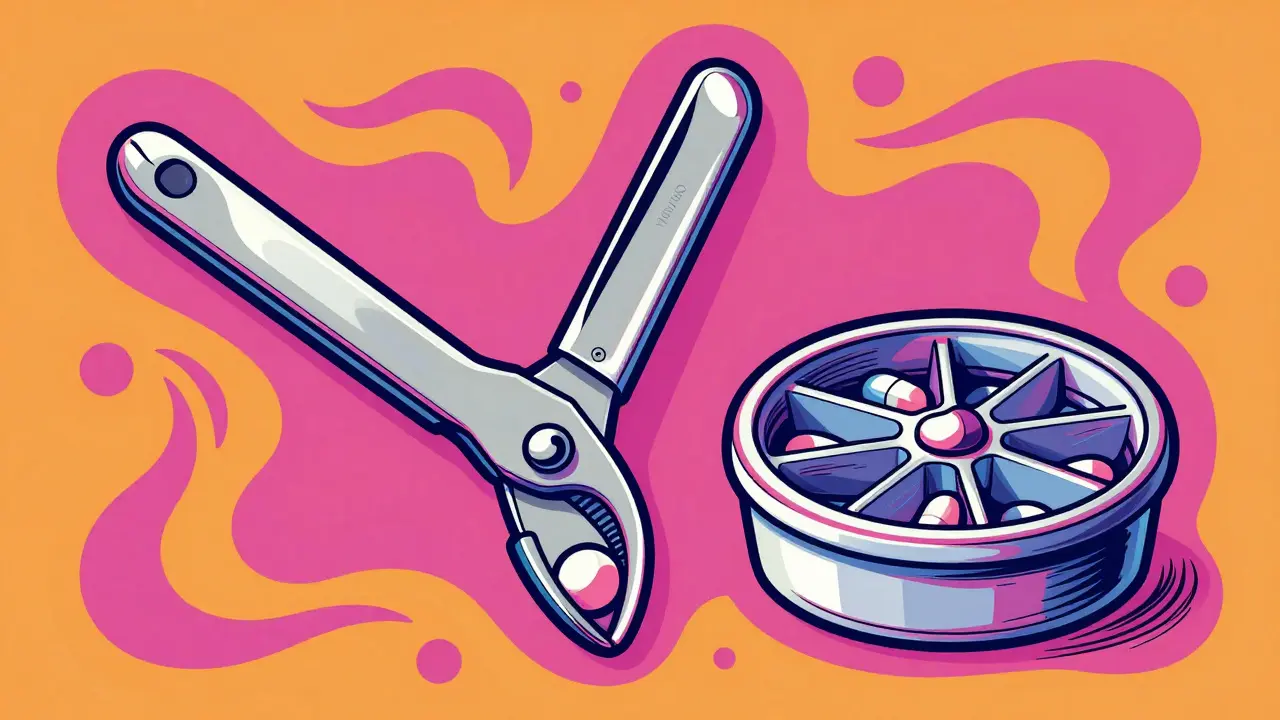
For splitting, look for a tool with a V-shaped holder and a stainless steel blade. This keeps the pill centered so the cut is even. For those who need to turn pills into powder, a closed-system pill crusher is the only way to go. Unlike open mortars and pestles, a closed system traps the medication inside a sealed container, preventing powder from flying into the air or landing on your kitchen counter.
| Method | Contamination Risk | Dose Accuracy | Best Use Case |
|---|---|---|---|
| Dedicated Splitter | Low | High (92%+) | Scored, immediate-release tablets |
| Closed-System Crusher | Very Low | Medium | Medications requiring liquid suspension |
| Scissors/Knives | High | Low (~63%) | Never recommended |
| Open Mortar & Pestle | High | Medium | Non-hazardous, non-volatile drugs |
The Step-by-Step Decontamination Protocol
Contamination doesn't just come from the air; it comes from your hands and the tools themselves. If you are managing medications for multiple people, the risk of cross-contamination spikes. To keep things safe, follow this sequence every single time:
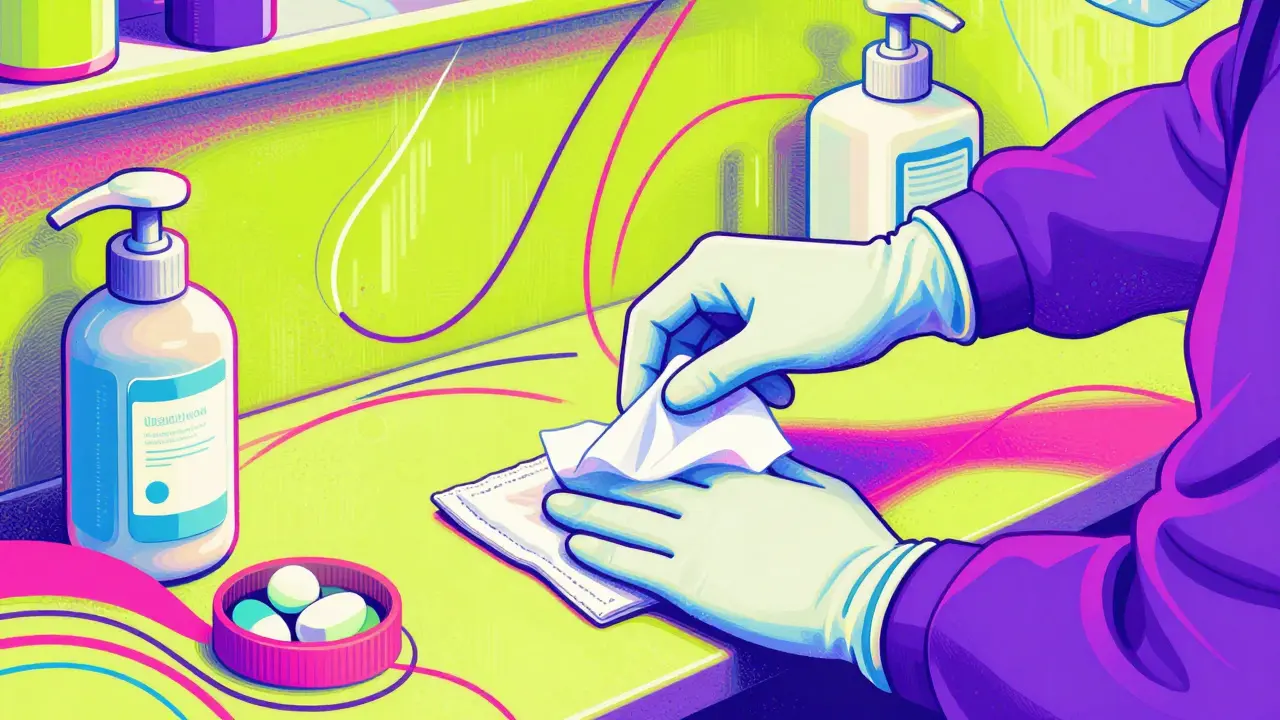
- Clean Your Space: Wipe down your preparation surface with 70% isopropyl alcohol. Don't just use a damp paper towel; you need an agent that actually kills bacteria and removes chemical residues.
- Hand Hygiene: Wash your hands thoroughly. If you're in a high-risk environment, using surgical gloves is a smart move to prevent your skin oils from touching the medication and vice versa.
- Sanitize the Tool: This is where most people fail. Clean the blade of the splitter or the inside of the crusher with an alcohol wipe between every different medication. Even a tiny amount of residue from a blood thinner like warfarin can contaminate another person's medication and cause a serious medical event.
- The Split: Place the pill firmly in the V-guide. Press down in one smooth, quick motion. If the pill shatters, discard the fragments and start over with a new pill to ensure the dose is correct.
- Immediate Use: Administer the split or crushed dose immediately. Do not split a whole month's worth of pills and store them in a bin. Exposed medication degrades faster when it hits the air, and without the protective coating, the drug can lose its potency.
Dealing with Hazardous and High-Risk Drugs
When you're dealing with drugs listed by NIOSH (the National Institute for Occupational Safety and Health) as hazardous, the rules change. You cannot use standard crushing methods because these drugs can aerosolize. This means you're literally breathing in the medication.
For these cases, professional-grade closed systems-like the Silent Knight crusher-are the gold standard. These devices are designed to contain nearly 100% of particulate matter. If you don't have access to a closed system and the drug is marked as hazardous, contact your pharmacist. They can often provide the medication in a liquid form or a different delivery method that doesn't require you to break the pill.
Common Pitfalls and How to Avoid Them
One of the biggest mistakes is trusting a "blanket order" to crush all meds. Some people think that because one pill is crushable, all of them are. This is a dangerous assumption. Always check the specific drug's insert or ask a pharmacist. A simple question like "Is this pill safe to split?" can prevent a potentially fatal dosing error.
Another issue is the "crumb factor." Many people leave the leftover powder in the splitter, thinking they'll use it for the next dose. This is a recipe for contamination. Always clear the tool completely between uses. If you see residue, it means your cleaning process isn't working.
Finally, be wary of storing split pills. The FDA explicitly advises against pre-splitting an entire supply. Once the internal core of the tablet is exposed, it begins to absorb moisture from the air, which can lead to chemical degradation. Only split the pill right before you take it.
Can I split a pill if it doesn't have a score line?
Generally, no. A score line is a signal from the manufacturer that the drug is distributed evenly throughout the tablet. Without that line, you might get too much of the active ingredient in one half and too little in the other, even if the pieces look equal in size.
Is it safe to use a pill splitter for multiple different medications?
Yes, but only if you disinfect the tool between each different medication. Use 70% isopropyl alcohol to wipe the blade and the holding area. This prevents cross-contamination, which is especially critical when dealing with high-potency drugs or blood thinners.
What happens if I crush a sustained-release pill by mistake?
Crushing a sustained-release pill destroys the mechanism that controls the drug's release over time. This can lead to "dose dumping," where the entire amount of medicine enters your system at once, potentially causing an overdose or severe side effects. If this happens, contact a healthcare provider or poison control immediately.
How often should I replace my pill splitter?
Replace your splitter as soon as the blade becomes dull or shows signs of wear. A dull blade will crush the pill rather than slice it, leading to uneven doses and more medication waste (crumbs).
Can I mix crushed pills with food to hide the taste?
You should first check with your pharmacist. Some medications interact with certain foods (like grapefruit or dairy) or may not be absorbed properly if mixed with specific textures. If approved, use a small amount of soft food like applesauce or pudding and administer it immediately.
Next Steps for Better Medication Safety
If you find that you're frequently splitting or crushing pills, it might be time to talk to your doctor about alternative formulations. Many medications that come in tablets are also available as liquids, drops, or disintegrating tablets that don't require any processing.
For caregivers, creating a dedicated "medication station" can help. This is a specific area with its own set of cleaning supplies and a dedicated splitter for each resident or patient. This virtually eliminates the risk of cross-contamination and makes the process much more organized.
If you're unsure about a specific medication, look for the "DO NOT CRUSH" warning on your pharmacy label. If you don't see one but the pill is a capsule or a hard-coated tablet, err on the side of caution and call your pharmacist before proceeding.