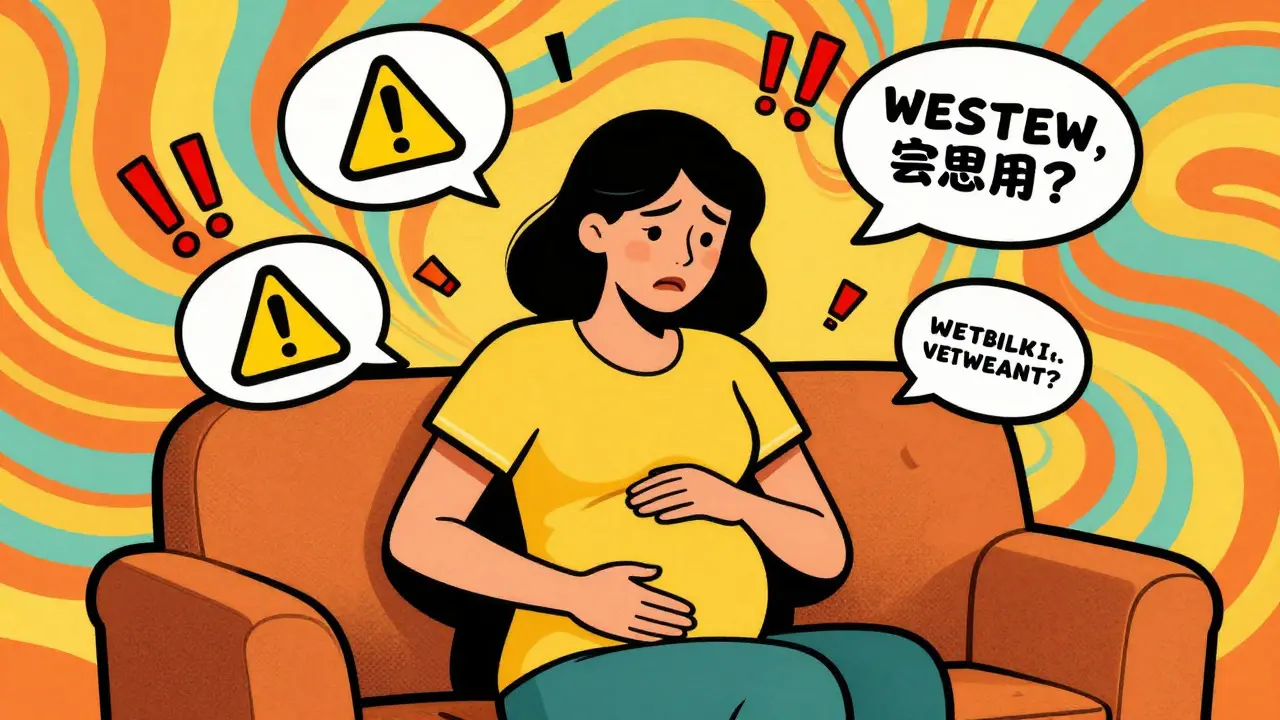
You are three months pregnant, your morning sickness is unbearable, and you find a popular blog post claiming that a common anti-nausea drug causes birth defects. Your heart sinks. You stop taking the medication prescribed by your doctor. Two weeks later, your dehydration forces an emergency hospital visit. This scenario isn’t fiction; it is a documented reality for thousands of expectant parents who trust internet anecdotes over clinical evidence.
Searching for pregnancy medication advice online has become a rite of passage. According to Pew Research data from 2024, nearly 90% of pregnant women consult online sources before making healthcare decisions. But here is the catch: only about half of those women can correctly distinguish between evidence-based medical guidance and well-meaning but dangerous misinformation. The stakes are incredibly high because stopping necessary medications-like antidepressants or asthma inhalers-can harm both you and your baby just as much as taking an unsafe one might.
Why is online pregnancy medication advice so unreliable?
Online advice often relies on anecdotal experiences rather than clinical data. Social media algorithms prioritize engagement over accuracy, meaning sensational claims about drug risks get shared far more often than nuanced, scientific explanations. Additionally, many websites lack transparency about their funding sources, leading to biased information that either promotes unnecessary fear or pushes commercial products without proper safety verification.
The Hidden Danger of 'Natural' and Anecdotal Advice
We tend to trust personal stories more than statistics. If someone says, "I took this herb and my baby was fine," it feels reassuring. But if another person says, "This supplement caused issues," it triggers immediate fear. The problem is that individual experiences do not prove cause and effect. A study published in *Pharmacoepidemiology and Drug Safety* analyzed over 1,400 medication scenarios discussed online and found that only 57% aligned with professional teratology classifications. For prescription drugs, the error rate jumped to 60%.
This discrepancy happens because social media users rarely control for other variables. Did the birth defect occur because of the medication, or was it due to genetics, environmental factors, or the underlying condition being treated? For example, women often link morning sickness medications to developmental issues without realizing that severe nausea itself carries health risks. Misinformation thrives in these gray areas. In fact, research shows that 63% of women incorrectly believe herbal supplements undergo rigorous FDA approval for pregnancy use. In reality, less than 0.3% of herbal products go through pre-market safety reviews for pregnant populations.
When you read a forum post or a viral tweet, ask yourself: Is this a single story or a pattern supported by large-scale studies? One woman’s experience is valuable for empathy, but it is terrible data for medical decision-making. Always look for sample sizes. A study involving 95,000 pregnancies, like the 2021 JAMA Internal Medicine research on paracetamol, provides far more reliable insight than a Reddit thread with 50 comments.
Understanding the Gold Standard: Teratology Information Services
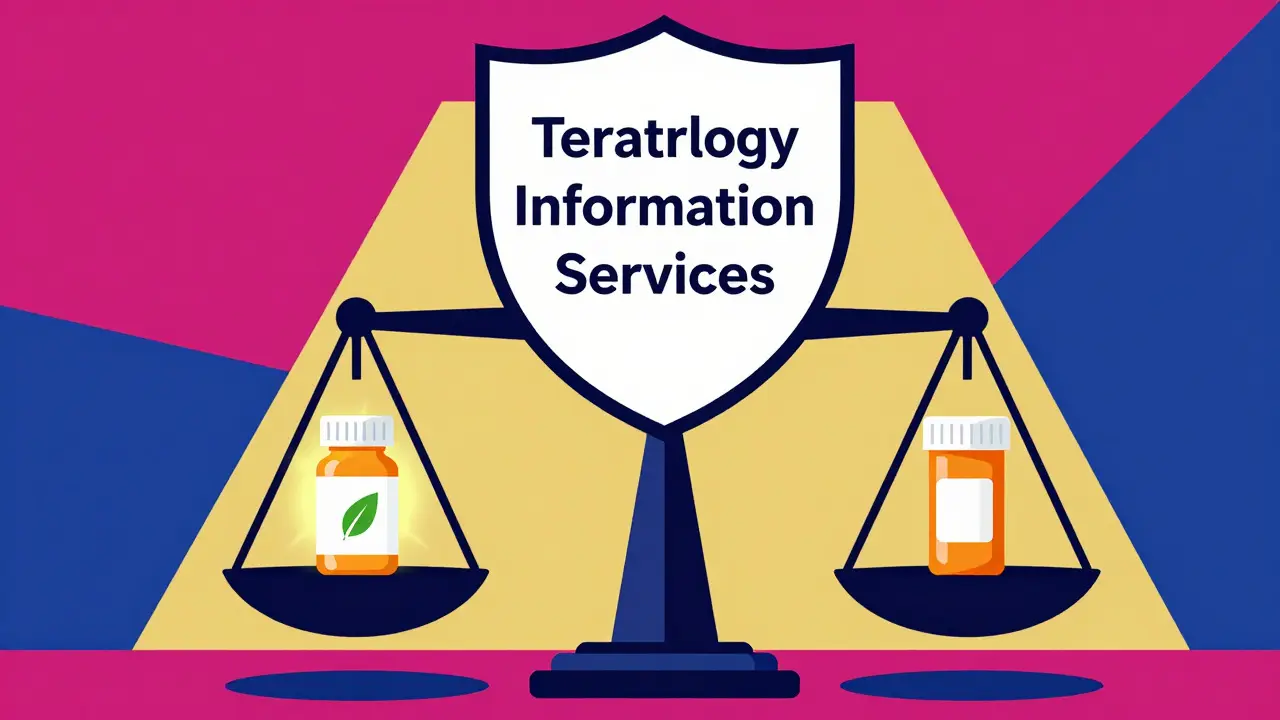
To evaluate any online claim, you need a benchmark. That benchmark is Teratology Information Services (TIS), which are specialized centers that provide evidence-based counseling on medication safety during pregnancy and breastfeeding. TIS operates globally, with major hubs like MotherToBaby in the United States. These services categorize medications into four clear groups: safe, contraindicated, used only on strict indication, or insufficient knowledge available.
Most online blogs ignore these categories entirely. They tend to label everything as either "totally safe" or "toxic." This binary thinking is dangerous. Many medications fall into the "strict indication" category, meaning they carry some risk but are necessary when the benefit outweighs that risk. For instance, certain epilepsy medications or asthma controllers are vital for maternal health. Stopping them based on vague online warnings can lead to seizures or respiratory failure, which directly threatens the fetus.
When evaluating a source, check if it references TIS guidelines or organizations like the Organization of Teratology Information Specialists (OTIS). OTIS updates its resources quarterly and maintains a 92% accuracy rate in validation studies. If a website does not mention these authoritative bodies, treat its advice with extreme skepticism. Reliable sources will acknowledge uncertainty, using phrases like "current evidence suggests" rather than definitive statements like "this drug causes defects." As Dr. Kenneth Jones, co-founder of OTIS, notes, acknowledging uncertainty is the single most reliable indicator of accurate medical information.
The Five-Step Verification Protocol
You do not need a medical degree to vet online advice, but you do need a systematic approach. Experts recommend a five-step protocol that takes about 20 minutes but can save you from making costly health errors. Here is how to apply it:
- Check the Source Affiliation (5-7 minutes): Look for HONcode certification from the Health on the Net Foundation or .gov/.edu domain extensions. Commercial sites often disguise themselves as educational platforms. Search the FDA Warning Letters database to see if the site has been flagged for false claims.
- Verify Author Credentials (3-5 minutes): Who wrote the article? Are they a board-certified obstetrician, pharmacist, or pharmacologist? Check their credentials via the American Board of Medical Specialties. Beware of "wellness coaches" or influencers selling supplements while giving medical advice.
- Analyze Evidence Citations (8-10 minutes): Does the article cite primary literature? Look for specific details: author names, journal titles, publication years, and sample sizes. Vague references like "studies show" are red flags. Accurate advice will link to peer-reviewed journals like *Reproductive Toxicology* or reference the FDA’s Pregnancy and Lactation Labeling Rule (PLLR).
- Validate the Date (2 minutes): Medical knowledge evolves rapidly. Information older than three years should be treated as potentially obsolete. New cohort studies frequently update our understanding of teratogenicity. If an article cites data from 2015 without mentioning newer findings, it may be misleading.
- Cross-Reference Authoritative Databases (5 minutes): Never rely on a single source. Cross-check the medication against at least two of the following: the National Library of Medicine’s LactMed database (updated weekly), the OTIS website, or ACOG guidelines. Consistency across these sources confirms accuracy.
This process might feel tedious, but consider the alternative. A 2024 study on Reddit’s r/BabyBumps community documented 87 cases where women discontinued necessary antidepressants after reading inaccurate posts, resulting in 29 requiring emergency psychiatric care. Taking twenty minutes to verify information could prevent such crises.
Navigating Conflicting Information and Bias
Even when you follow the protocol, you may encounter conflicting advice. This often stems from differing philosophical approaches to medicine. For example, some experts emphasize pharmaceutical efficacy, while others advocate for natural alternatives. Dr. Sarah Buckley, author of *Gentle Birth Choices*, argues that pharmaceutical information is inherently biased toward medication use. While this perspective highlights the importance of considering non-drug interventions, it can also lead to the misconception that all drugs are dangerous and all natural remedies are safe.
To navigate this, focus on the data, not the ideology. Ask: What is the magnitude of the risk? Is it a theoretical risk based on animal studies, or a proven risk in human populations? Animal studies often show effects at doses hundreds of times higher than human therapeutic levels. Human correlation is key. For instance, early animal studies raised concerns about certain painkillers, but large human cohort studies later showed no significant neurodevelopmental risks at standard doses.
Bias also exists in commercial content. A 2024 Frontiers study found that 42% of "educational" pregnancy websites contained undisclosed pharmaceutical sponsorships. These sites may downplay side effects or promote specific brands. Always check the "About Us" or "Sponsors" section. If a site sells supplements while advising against prescription meds, assume there is a financial conflict of interest.
| Source Type | Accuracy Rate | Common Pitfalls | Best Use Case |
|---|---|---|---|
| Teratology Info Services (e.g., MotherToBaby) | 92% | May seem technical; requires patience | Verifying specific drug risks |
| Physician Consultations | Variable (58% report inadequate info) | Time constraints; inconsistent communication | Personalized treatment plans |
| Social Media Forums | Low (43% alignment with TIS) | Anecdotal bias; emotional contagion | Emotional support, not medical facts |
| Commercial Health Websites | 38.7% complete risk analysis | Undisclosed sponsorships; SEO-driven content | General wellness tips, not drug safety |
| Peer-Reviewed Journals | High | Dense language; hard to interpret for laypeople | Deep dive into specific mechanisms |

Emerging Tools and Future Trends
The landscape of verifying pregnancy medication advice is changing. In 2025, the NIH launched the PRISM initiative, funding browser extensions that automatically cross-reference online claims against OTIS databases. Similarly, the FDA piloted an AI scanner in late 2024 that flags 83% of inaccurate medication claims, though it still produces a 12% false-positive rate. These tools promise to make verification easier, but they are not yet foolproof.
For now, human critical thinking remains essential. The University of Washington’s Pregnancy Medication Accuracy API, released in beta in Q4 2025, offers instant credibility scoring, but it requires technical integration. Until these technologies become mainstream, your best tool is a skeptical mindset and access to primary databases like LactMed and OTIS.
Regulatory bodies are also stepping up. The European Medicines Agency established a 17-criteria quality framework for pregnancy medication information in 2023, and the US FDA implemented the Digital Health Software Precertification Program in 2026. These efforts aim to reduce misinformation by standardizing quality, with projections suggesting a 60% drop in inaccurate claims within five years. However, social media’s business model-which rewards engagement over accuracy-remains a persistent challenge. Misinformation posts still receive 3.7 times more shares than corrections, according to a 2024 JAMA study.
Practical Next Steps for Expectant Parents
If you are currently pregnant or planning to be, start building your verification toolkit today. Bookmark the LactMed database and the OTIS website. Join a reputable prenatal education program, such as the WeChat-based trial that improved medication literacy scores by 15.7%. When you encounter alarming advice online, pause before reacting. Apply the five-step protocol. Discuss your findings with your healthcare provider, bringing the specific sources you found. Most doctors appreciate informed patients who ask questions backed by data.
Remember, the goal is not to achieve perfect certainty-medicine rarely offers that-but to minimize avoidable risks. By distinguishing between anecdote and evidence, you empower yourself to make confident, safe choices for your family. Your health journey is complex, but with the right filters, you can navigate the noise of the internet with clarity and calm.
Is it safe to take any medication during pregnancy?
Many medications are safe and necessary during pregnancy. Untreated conditions like hypertension, diabetes, or depression can pose greater risks to the baby than the medications themselves. Always consult your doctor before starting or stopping any drug. Refer to Teratology Information Services (TIS) for specific drug classifications, which range from "safe" to "contraindicated." Never rely solely on internet forums for this decision.
What is the difference between FDA pregnancy categories and current labeling?
The old FDA letter categories (A, B, C, D, X) were replaced in 2015 by the Pregnancy and Lactation Labeling Rule (PLLR). PLLR requires detailed narrative summaries of risk rather than simple letters, providing more nuanced information. Older articles citing "Category C" may be outdated. Look for sources that discuss PLLR frameworks or recent clinical data for the most accurate assessment.
Are herbal supplements safer than prescription drugs during pregnancy?
Not necessarily. Herbal supplements are largely unregulated, with less than 0.3% undergoing pre-market safety review for pregnancy use. Many herbs interact with medications or have unknown teratogenic effects. Prescription drugs undergo rigorous clinical trials. Always verify herbal supplement safety with a pharmacist or TIS, and disclose all supplement use to your healthcare provider.
How can I tell if a health website is trustworthy?
Look for HONcode certification, .gov or .edu domains, and transparent author credentials. Check if the site cites primary literature with specific study details (author, journal, year). Avoid sites that sell supplements while giving medical advice, as this indicates a potential conflict of interest. Cross-reference information with authoritative sources like LactMed or OTIS.
What should I do if I accidentally took a medication thought to be unsafe?
Do not panic. Contact your healthcare provider or a Teratology Information Service hotline immediately. Single exposures to many medications often carry minimal risk. Professional counselors can assess the specific drug, dosage, and timing of exposure to provide accurate risk assessment. Avoid searching online for worst-case scenarios, which often exaggerate rare outcomes.