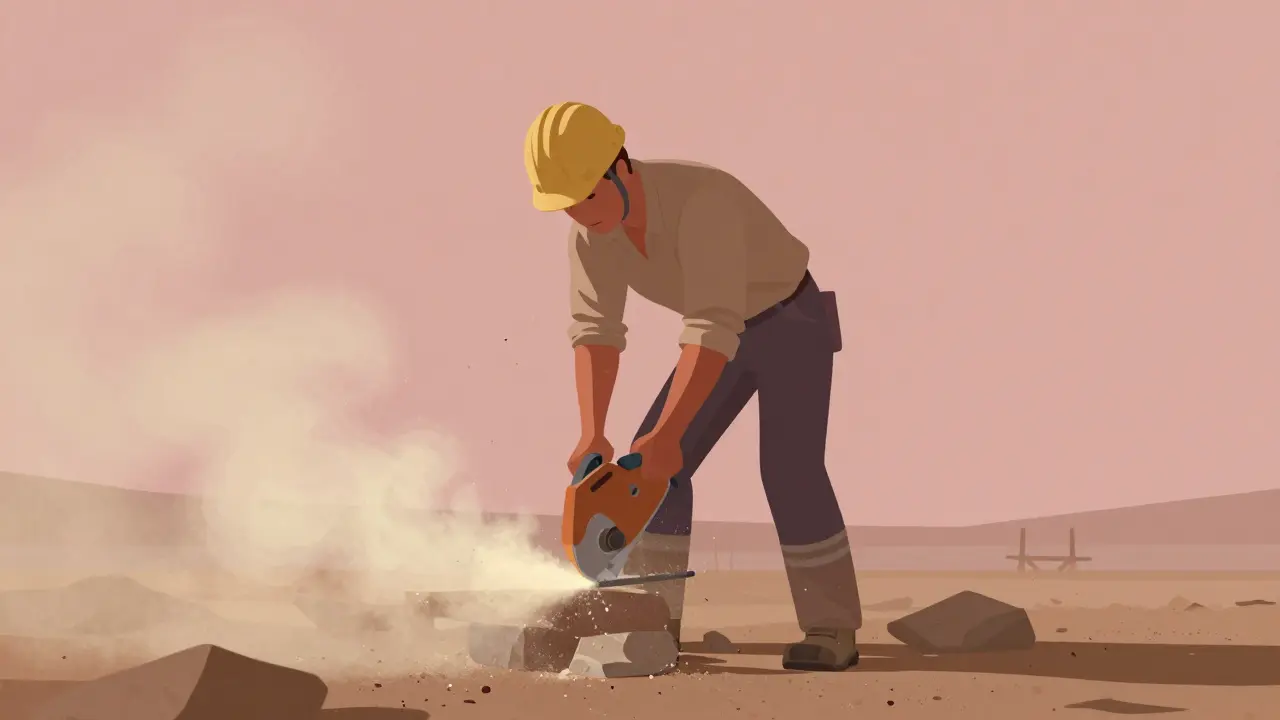
Imagine breathing in invisible particles that slowly turn your lungs into stone. It sounds like a horror movie plot, but for millions of workers around the world, this is a daily reality. Occupational lung diseases are respiratory conditions caused by inhaling hazardous substances in the workplace. Among these, silicosis and asbestosis stand out as two of the most devastating-and entirely preventable-health crises facing modern industry.
You might think these are relics of the past, diseases from the era of unregulated mines and factories. But the data tells a different story. In the United States alone, approximately 1,200 workers die annually from silicosis, and between 2004 and 2014, 1,163 workers died from asbestosis. These aren't just statistics; they represent lives cut short by dust and fibers that could have been controlled. The good news? We know exactly how to stop this. The bad news? Implementation remains inconsistent across industries like construction, mining, and manufacturing.
Understanding Silicosis: The Disease of Dust
Silicosis is not a single event; it is a progressive scarring of lung tissue caused by inhaling crystalline silica dust. When you breathe in these tiny particles, they embed themselves deep in your lungs. Your body tries to fight them off, sending immune cells to attack the invaders. This battle creates inflammation and scar tissue, known as fibrosis. Over time, this scarring makes it harder for oxygen to pass into your bloodstream.
The history of silicosis goes back centuries. Ancient stone workers suffered from what was then called "miner's phthisis." It wasn't until 1870 that Dr. Achille Visconti formally described the condition in Italian medical literature. Today, we see it primarily in jobs involving cutting, grinding, or drilling stone, concrete, and brick. Construction sites are particularly high-risk environments because dry cutting methods release massive amounts of fine silica dust into the air.
There are three main types of silicosis, defined by the intensity and duration of exposure:
- Chronic silicosis: Develops after 10-20 years of low-level exposure. Symptoms include coughing and shortness of breath.
- Accelerated silicosis: Occurs after 5-10 years of high-level exposure. Progresses more rapidly than the chronic form.
- Acute silicosis: Happens within months to a few years of very high exposure. It causes severe fluid buildup in the lungs and can be fatal quickly.
Once lung scarring occurs, it is permanent. There is no cure, only management of symptoms. This is why prevention is the only real solution.
Asbestosis: The Legacy of Fibers
While silicosis comes from dust, asbestosis comes from fibers. Asbestos was once hailed as a miracle material because it is fire-resistant, durable, and cheap. It was used everywhere-in insulation, roofing, flooring, and brake pads. However, when asbestos-containing materials are disturbed, they release microscopic fibers into the air. When inhaled, these sharp fibers lodge in the lung lining and cause chronic inflammation and scarring.
The clinical identification of asbestosis happened in 1906, when Dr. H. Montague Murray performed an autopsy on a 33-year-old asbestos factory worker in London. He noted the extensive lung damage and linked it directly to his occupation. Despite this early warning, asbestos use continued for decades due to industry lobbying and lack of regulation.
Today, the primary risk isn't new asbestos production-it's aging infrastructure. The Environmental Protection Agency (EPA) estimates that 733,000 public buildings in the US still contain asbestos-containing materials. Workers involved in renovation, demolition, and maintenance are at significant risk if proper abatement protocols aren't followed. Unlike silicosis, there is no safe level of asbestos exposure. The International Agency for Research on Cancer (IARC) classifies all forms of asbestos as carcinogenic to humans.
| Feature | Silicosis | Asbestosis |
|---|---|---|
| Cause | Crystalline silica dust | Asbestos fibers |
| Primary Industries | Construction, mining, sandblasting | Shipbuilding, construction, manufacturing |
| Latency Period | Months to 20+ years | 10-40 years |
| Key Symptom | Dry cough, shortness of breath | Persistent dry cough, chest tightness |
| Cure Available? | No (scarring is permanent) | No (scarring is permanent) |
The Hierarchy of Controls: How to Prevent Exposure
If these diseases are so dangerous, why do they still happen? Often, it’s because companies rely too heavily on personal protective equipment (PPE) instead of addressing the source of the hazard. Public health experts use a framework called the Hierarchy of Controls to prioritize safety measures. It ranks interventions from most effective to least effective.
- Elimination: Physically remove the hazard. For example, stop using silica-heavy materials if alternatives exist.
- Substitution: Replace the hazard with something safer. Use quartz-free abrasives instead of silica sand for blasting.
- Engineering Controls: Isolate people from the hazard. Install local exhaust ventilation systems that capture dust at the source.
- Administrative Controls: Change the way people work. Rotate workers to reduce individual exposure time and provide training.
- Personal Protective Equipment (PPE): Protect the worker with gear. Wear respirators when other controls aren't enough.
According to CDC NIOSH data, engineering controls can reduce exposure by 80-90% when properly implemented. Administrative controls offer 50-70% reduction, while PPE provides 40-60% reduction assuming perfect usage-which rarely happens in real-world conditions. Relying solely on masks is a flawed strategy because human error, discomfort, and improper fit compromise protection.

Engineering Controls and Technology Solutions
Let’s talk about what actually works on the job site. For silica dust, wet cutting methods are incredibly effective. By adding water to saws and drills, you suppress dust before it becomes airborne. Studies show wet cutting reduces silica exposure by up to 90% compared to dry cutting. Another powerful tool is local exhaust ventilation (LEV). These systems must maintain an air velocity of 100-150 feet per minute at the source to effectively capture particles. OSHA standard 1910.94 mandates these specifications for LEV systems.
For asbestos, containment is key. Sealing systems for hazardous tasks must enclose operations to contain at least 95% of generated dust, according to NIOSH guidelines. Negative air pressure machines keep contaminated air from escaping work zones. While installing these systems costs $2,000-$5,000 per workstation, the return on investment comes within 18-24 months through reduced workers' compensation claims and fewer sick days.
Technology is also evolving. Wearable sensors now provide real-time dust exposure data, allowing supervisors to adjust controls instantly. NIOSH launched the 'Prevent eTool' digital platform in 2023, offering industry-specific guidance for 15 high-risk sectors. Early data shows a 40% reduction in respiratory incidents among participating companies within six months.
Personal Protective Equipment: The Last Line of Defense
When engineering controls can’t eliminate all risk, PPE becomes essential. Not all masks are created equal. An N-95 respirator filters out 95% of particles 0.3 microns in size. A P-100 respirator filters out 99.97% of those same particles. For asbestos abatement, P-100 respirators are typically required due to the extreme toxicity of the fibers.
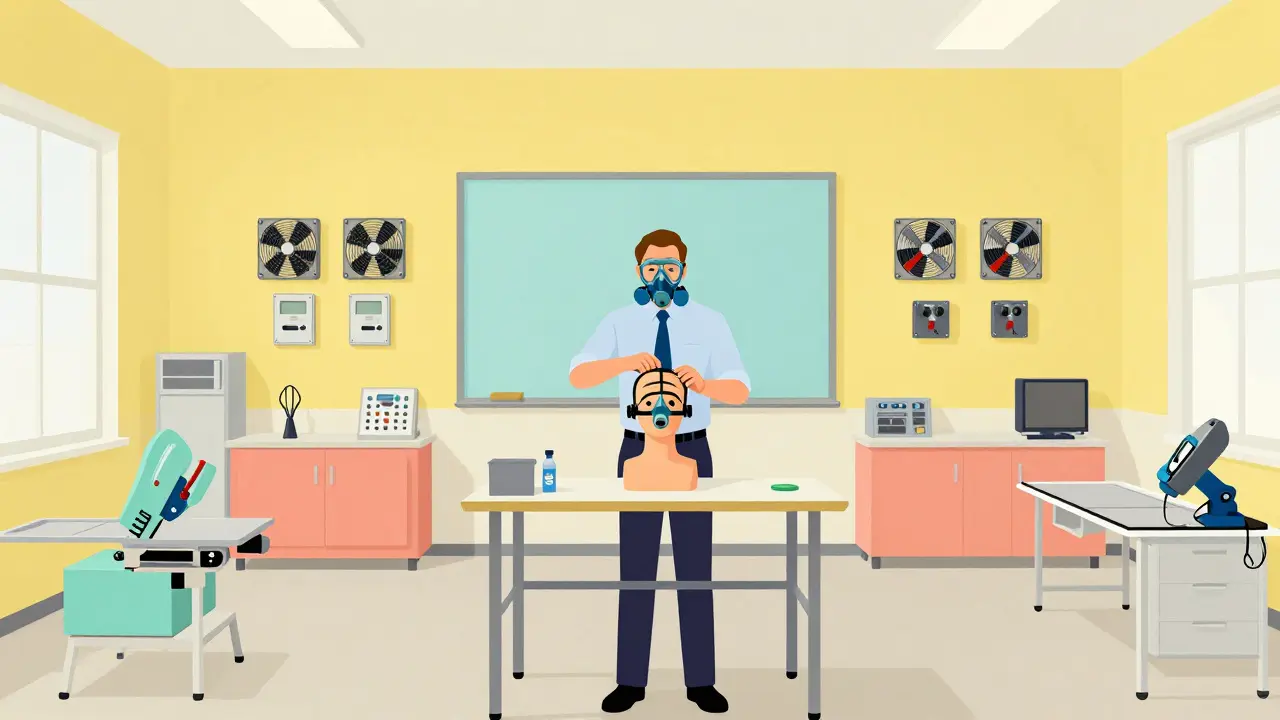
However, having the right mask isn't enough. OSHA standard 1910.134 mandates annual fit testing for all respirator users. If a mask doesn't seal perfectly against your face, contaminants leak in. According to a 2022 NIOSH report, 68% of worker complaints about respiratory protection were related to improper fit or discomfort. Many workers modify their respirators to make them more comfortable, which compromises their effectiveness. In hot weather, compliance drops significantly-one industrial hygienist reported that P-100 usage fell to 40% during summer months on construction sites.
To improve compliance, employers should:
- Provide multiple sizes and styles of respirators to ensure a good fit.
- Train workers on proper donning and doffing techniques.
- Create a culture where wearing PPE is normalized and expected.
- Store respirators in clean containers to prevent contamination.
Health Monitoring and Early Detection
Prevention isn't just about stopping exposure; it's also about catching problems early. Regular health monitoring allows doctors to detect lung function decline before symptoms appear. The American Thoracic Society recommends spirometry testing-a simple breath test-at baseline and at least every five years for workers exposed to respiratory hazards. Those with pre-existing conditions should be tested annually.
Early detection can slow disease progression by 30-50%, according to longitudinal studies cited in ATS guidelines. Spirometry measures how much air you can exhale and how fast. A drop in forced expiratory volume (FEV1) over time may indicate early lung damage. Combining this with chest X-rays or CT scans helps distinguish between normal aging and occupational disease.
Smoking exacerbates the risks dramatically. The American Lung Association notes that smoking increases the risk of developing occupational lung diseases by 50-70%. Therefore, creating tobacco-free workplaces is a critical part of any prevention program.
Regulatory Landscape and Enforcement Challenges
Government agencies play a vital role in protecting workers. In the US, OSHA enforces the Respiratory Protection Standard (1910.134), which applies to 5.9 million workplaces. The 2016 Silica Standard was designed to save 900 lives and prevent 1,600 new cases of silicosis annually. Yet enforcement remains uneven. In 2021, OSHA cited 1,025 construction companies for silica violations, issuing $3.2 million in fines. While these penalties send a message, they don't undo the harm done to workers.
Small businesses face unique challenges. Data from the Wisconsin Department of Health shows that 78% of businesses with fewer than 20 employees lacked comprehensive respiratory protection programs, compared to 32% of larger companies. Resources, knowledge gaps, and cost concerns often hinder smaller firms from implementing robust safety measures.
In Europe, the Carcinogens and Mutagens Directive sets binding occupational exposure limits for 12 carcinogens, including asbestos. The EU has phased reductions to stricter limits by 2025. The European Respiratory Society calls for global elimination of occupational lung diseases by 2030 through coordinated action across 30 countries. Pilot programs in Germany have already shown a 55% reduction in new cases through mandatory health surveillance and exposure monitoring.
Building a Culture of Safety
Technology and regulations matter, but culture matters more. Successful implementation requires buy-in from all levels of an organization. Supervisors must model proper PPE use 100% of the time. If workers see managers ignoring safety rules, they will too. Case studies from 15 construction companies showed that those who prioritized leadership engagement reduced respiratory incidents by 65% over three years.
Training is another cornerstone. OSHA mandates a minimum of two hours for respiratory protection programs, but the American Lung Association recommends four to six hours of initial training with annual refreshers. Training should cover not just how to wear a mask, but why it matters. Workers need to understand the long-term consequences of exposure to stay motivated.
Finally, workers must feel empowered to speak up without fear of retaliation. OSHA’s Whistleblower Protection Program emphasizes this right. When employees report unsafe conditions, it allows employers to fix problems before someone gets sick. Creating open lines of communication fosters trust and improves overall safety performance.
What are the early signs of silicosis?
Early signs of silicosis include a persistent dry cough, shortness of breath, and fatigue. In many cases, symptoms don't appear until significant lung damage has occurred. This is why regular spirometry testing is crucial for early detection.
Can asbestosis be cured?
No, asbestosis cannot be cured. The scarring of lung tissue is permanent. Treatment focuses on managing symptoms, such as using bronchodilators to ease breathing and oxygen therapy for advanced cases. Prevention through avoiding asbestos exposure is the only way to stop the disease.
How effective are N-95 masks against silica dust?
N-95 respirators filter out 95% of airborne particles, including silica dust, when fitted correctly. However, they are considered the last line of defense. Engineering controls like wet cutting and ventilation are far more effective at reducing overall exposure levels.
Which industries are at highest risk for occupational lung diseases?
Construction, mining, manufacturing, and shipbuilding are the highest-risk industries. Specifically, jobs involving stone cutting, sandblasting, demolition, and asbestos abatement carry the greatest danger due to high levels of airborne dust and fibers.
Is there a safe level of asbestos exposure?
No, there is no safe level of asbestos exposure. All forms of asbestos are classified as carcinogenic by the International Agency for Research on Cancer (IARC). Even minimal exposure can lead to serious health issues like asbestosis, lung cancer, and mesothelioma over time.
How often should workers get spirometry tests?
Workers exposed to respiratory hazards should undergo spirometry testing at baseline and at least every five years. Those with pre-existing respiratory conditions or higher exposure levels should be tested annually to monitor for early signs of lung function decline.



Tumble Farm
June 19, 2026 AT 09:38The hierarchy of controls is the only framework that actually makes sense when you look at the data. Relying on PPE as a primary defense is statistically negligent because human error rates in high-stress environments are simply too high to ignore. We need to push for engineering controls like wet cutting and LEV systems because they remove the hazard entirely rather than just masking it.
Charlotte Stuart
June 20, 2026 AT 06:09It is truly disheartening how many workers still lack basic respiratory protection despite decades of clear medical evidence. The industry's refusal to implement simple engineering solutions speaks volumes about their prioritization of profit over human life.
krystal Live
June 21, 2026 AT 01:40hey everyone! i totally agree with the point about culture mattering more than rules. if bosses dont wear masks then nobody else will either lol. we gotta make safety cool again so people actually care about not getting sick later in life!!
Tucker Brown
June 22, 2026 AT 06:12You don't see them talking about the new 'sensors' being backdoors for corporate surveillance. They want your biometric data just as much as they want your labor. Trust no one.
Stephanie Cree
June 23, 2026 AT 05:41I cannot stress enough!!! How critical it is to follow protocols exactly!! If you skip a step, you are literally killing yourself and others!! It is morally reprehensible to cut corners!! 😡🚫
Bruno Sarri
June 24, 2026 AT 15:34I hear where you're coming from regarding the moral weight of these decisions. It’s important to remember that fear-based messaging often leads to resistance rather than compliance. We should focus on empowering workers with knowledge instead of shaming them for potential mistakes.
Hema Khimasia
June 25, 2026 AT 22:35The ontological shift required to view occupational health not merely as regulatory compliance but as an existential imperative remains largely unaddressed by current industrial paradigms. We must deconstruct the hegemonic narrative that positions efficiency above biological integrity. The epistemological gap between scientific consensus and practical implementation necessitates a rigorous phenomenological examination of workplace dynamics.
ankit agarwal
June 26, 2026 AT 16:02Let's synergize our efforts to leverage the paradigm shift towards proactive health monitoring. By harnessing the power of real-time data analytics, we can optimize our risk mitigation strategies and drive exponential growth in safety outcomes. It is imperative that we align our core competencies with the evolving landscape of occupational hygiene.
Frank Polster
June 27, 2026 AT 22:58Oh great, another article telling us to buy expensive sensors and wear uncomfortable masks. Because clearly, the last fifty years of OSHA regulations haven't been enough. I'm sure the CEOs are losing sleep over this.
Alyssa Smith
June 28, 2026 AT 23:05We have so much potential to create safer workplaces if we just work together. Imagine a world where every worker goes home healthy every single day. That starts with small steps like proper training and open communication. Let's support each other in making that vision a reality.
Dez Johnston
June 30, 2026 AT 15:00I appreciate the perspective on collaboration. It is quiet but powerful when teams take ownership of their own safety. Small changes in daily routines can lead to significant improvements in long-term health outcomes.
Ashley Jacelyn
July 2, 2026 AT 09:27It is really important to listen to those who have experienced these issues firsthand. Their stories highlight the urgent need for better enforcement and education. We must ensure that every voice is heard in the pursuit of healthier work environments.
Jake Kitzmiller
July 3, 2026 AT 10:10Here is the deal: most folks think a mask is enough, but it ain't. You gotta stop the dust at the source. Wet cutting is cheap and works wonders. Don't let your boss talk you into thinking a paper mask saves you from silica. It doesn't. Get the right gear, get trained, and demand better conditions. Your lungs are worth more than a quick paycheck.