What if you’re doing everything right - eating better, moving more, sleeping well - but the number on the scale hasn’t budged? You might feel like you’re failing. But here’s the truth: weight isn’t the only, or even the best, way to measure progress. In fact, focusing only on the scale can make you miss the real wins happening in your body and life.
Why the Scale Lies
The scale doesn’t know the difference between fat loss and muscle gain. It doesn’t know if your blood sugar is steadier, your joints feel lighter, or you’re finally sleeping through the night. It just shows a number that changes every day for reasons you can’t control - like how much water you drank, how salty your dinner was, or where you are in your menstrual cycle. A 2- to 5-pound daily fluctuation is normal and has nothing to do with actual health progress. In clinical nutrition, experts have been saying for years that weight alone tells only part of the story. A study referenced by the National Institutes of Health found that people in obesity treatment programs considered non-scale victories just as important as weight loss itself. That’s not a coincidence. It’s science.What Are Non-Scale Victories?
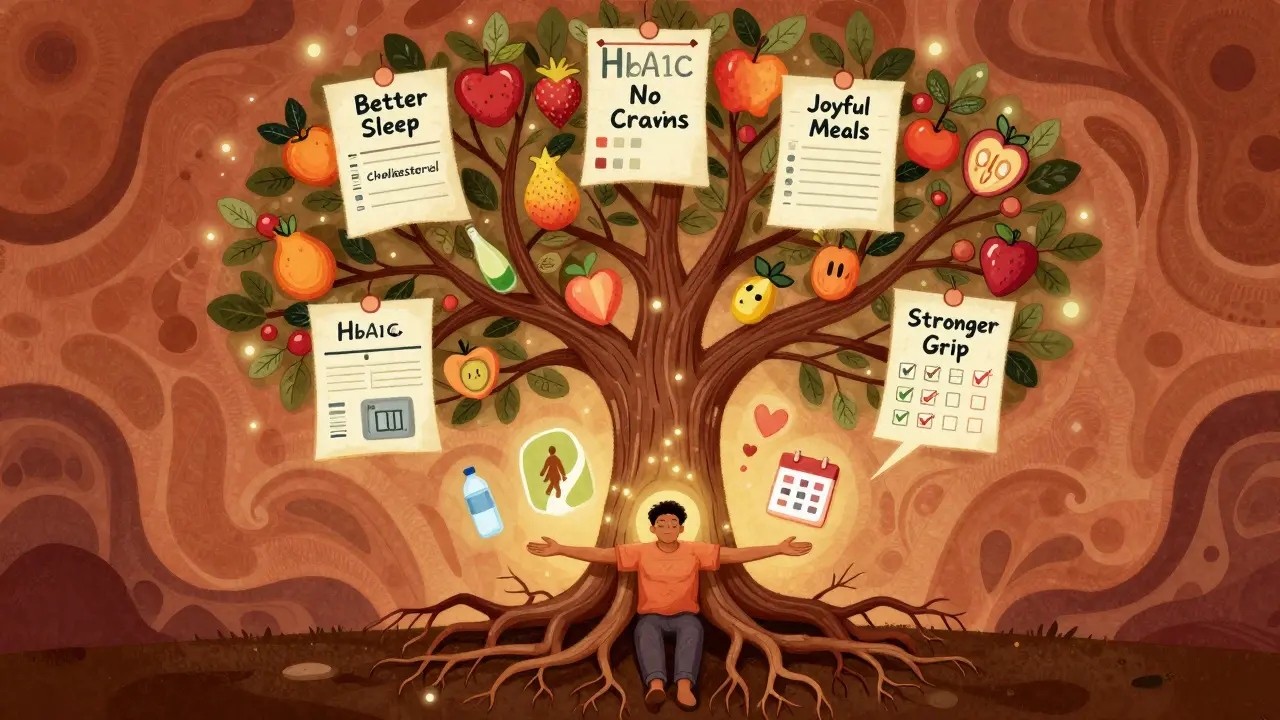
Non-scale victories are measurable improvements in your health that don’t show up on a scale. They’re the quiet, everyday changes that add up over time: better energy, fewer cravings, improved mood, or simply being able to climb stairs without getting winded. These victories fall into four main categories, backed by dietitians and health researchers:- Biochemical: Your lab results are improving. Hemoglobin A1C is dropping. Blood pressure is normalizing. Cholesterol levels are moving in the right direction. These changes happen because of what you’re eating and how you’re living - not because you lost five pounds.
- Functional: Your body is working better. You can tie your shoes without struggling. You no longer need a seat belt extender on flights. You can carry groceries up the stairs without stopping. Your grip strength is improving. These are signs your muscles, joints, and endurance are getting stronger.
- Behavioral: You’re making sustainable choices. You cook dinner at home four nights a week. You drink water instead of soda. You’re tracking your meals without obsessing. You’re listening to your hunger cues. These habits are the foundation of long-term health.
- Psychosocial: Your mental and emotional health is shifting. You feel less anxious around food. You enjoy meals without guilt. You’re sleeping more deeply. You feel calmer, more confident, or more in control. These changes often come before the scale moves.
Real-Life Examples You Can Relate To
Think about these real stories from people managing their health:- A woman in her 50s stopped checking her blood sugar every morning because her levels stabilized - not because she lost weight, but because she started eating balanced meals with protein and fiber.
- A man who used to rely on caffeine to get through the afternoon now feels energized naturally after swapping sugary snacks for nuts and fruit.
- A teenager who used to avoid gym class because of discomfort now joins a weekly walking group because she can move without joint pain.
- A man with type 2 diabetes got off his medication after six months of consistent movement and mindful eating - even though his weight stayed the same.
- A woman who used to cry over food now laughs while trying new recipes. She says, “I finally feel like food is my friend, not my enemy.”

How to Start Tracking Non-Scale Victories
You don’t need fancy tools. You just need to pay attention. Here’s how to begin:- Write down one win every week. It could be as simple as “I drank water instead of soda at lunch” or “I slept 7 hours straight.”
- Use the SMART method. Make your goals specific, measurable, achievable, relevant, and time-bound. For example: “I will cook three home-cooked meals per week for the next month” or “I will walk 20 minutes after dinner four days a week for the next six weeks.”
- Track how you feel. Keep a quick journal: “Energy level today: 7/10,” “Mood: calm,” “Digestion: better.” You don’t need to write essays - just a few words.
- Notice your clothes. If your jeans feel looser, your belt has a new hole, or you can sit cross-legged without discomfort - that’s progress.
- Ask yourself: “What’s easier now?” Is it easier to get out of bed? To say no to snacks? To walk up the hill? Those are victories.
Why This Works Better Than the Scale
The scale is a single, unstable number. Non-scale victories are a pattern. Patterns tell stories. They show consistency. They reveal habits that stick. When you focus on non-scale victories:- You stop punishing yourself for daily fluctuations.
- You celebrate progress instead of waiting for perfection.
- You build habits that last because they’re tied to how you feel - not a number.
- You reduce food anxiety and shame.
- You stay motivated even when the scale stalls.
What to Do When You Hit a Plateau
It’s normal. Progress isn’t linear. If the scale stops moving, don’t panic. Look back at your non-scale victories list. Maybe you’ve gained strength. Maybe your sleep improved. Maybe you’ve cut out late-night snacking. Those are huge wins. Plateaus aren’t failures - they’re feedback. They tell you to look deeper. To focus on behavior, not body size. To trust the process, not the number.How Healthcare Providers Are Using This
Dietitians and nutritionists are now using structured checklists to track non-scale victories in clinical settings. Mather Hospital, for example, trains staff to ask patients: “What’s something you’ve noticed that’s better since you started?” They don’t ask, “How much weight did you lose?” In diabetes care, a drop in HbA1C is valued more than weight loss. In heart health, lower blood pressure matters more than a smaller waistline. These are the markers that predict long-term outcomes - not scale numbers. Even insurance companies are starting to notice. The trend is shifting from paying for weight loss alone to supporting behaviors that improve health: better sleep, consistent movement, reduced stress, and improved lab values.Final Thought: Progress Is More Than a Number
You don’t need to lose weight to get healthier. You need to live better. The scale is just one tool. A flawed one. And it’s not your enemy - it’s just not the whole story. Celebrate the mornings you wake up without an alarm. The walks you take without thinking about calories. The meals you enjoy without guilt. The energy you have to play with your kids or walk your dog. These are the victories that change your life - not just your weight. Your body is not a math problem to solve. It’s a living system that responds to care, consistency, and kindness. Start noticing. Start celebrating. And stop waiting for the scale to give you permission to feel proud.What if I’m not losing weight but I feel better - is that enough?
Yes, absolutely. Feeling more energy, sleeping better, having steadier blood sugar, or enjoying food without guilt are all signs your body is healing. Weight is just one small part of health. Many people improve their health markers - like blood pressure, cholesterol, and insulin sensitivity - without losing weight. That’s not a failure. That’s progress.
Can non-scale victories help me stick to healthy habits long-term?
Yes. When you focus on how you feel instead of how you look, you’re more likely to keep going. Losing weight often feels like a short-term goal. But improving your sleep, reducing stress, or cooking more meals at home? Those are habits you can keep for life. Non-scale victories turn health into a lifestyle, not a diet.
How do I know if I’m making real progress if I’m not tracking weight?
Look for patterns over time. Are you moving more? Sleeping better? Eating more vegetables? Feeling calmer? These are clues. Keep a simple weekly log: “I walked 3 days this week,” “I drank water instead of soda,” “I didn’t stress about food at dinner.” After a few months, you’ll see the story - and it’s probably better than you think.
What if my doctor only talks about weight?
It’s common, but outdated. You can say, “I’m focusing on how I feel and my lab results - like my blood sugar and blood pressure. Can we track those too?” Many doctors are starting to listen. If they don’t, consider finding a provider who uses a holistic approach. Health isn’t just about pounds - it’s about function, energy, and quality of life.
Are non-scale victories only for people trying to lose weight?
No. They’re for anyone who wants to improve their health. Someone with prediabetes, someone managing anxiety, someone recovering from illness, or someone just wanting more energy - all of them benefit from focusing on non-scale wins. Health isn’t one-size-fits-all. Progress shouldn’t be either.