
When your kidneys aren't working well, even common medications can turn dangerous. A simple painkiller like ibuprofen might send your creatinine soaring. A diabetes pill you’ve taken for years could suddenly put you at risk of lactic acidosis. This isn’t scare tactics-it’s reality for the 37 million Americans living with chronic kidney disease (CKD). And it’s happening because most people don’t realize that kidney disease changes how your body handles every drug you take.
Why Kidneys Matter More Than You Think
Your kidneys don’t just make urine. They filter your blood, remove waste, and clear out most medications. When kidney function drops, those drugs stick around longer. Too much of a good thing becomes too much of a bad thing. That’s why a dose that’s safe for someone with healthy kidneys can be toxic for someone with CKD.Doctors use eGFR-estimated glomerular filtration rate-to measure kidney function. It’s not just a number on a lab report. It’s your personal dosing guide. Once your eGFR falls below 60 mL/min/1.73 m², you’re in CKD stage 3. That’s when most medications need a closer look. Below 30, it’s critical. Below 15? You’re in end-stage kidney disease. Each drop changes what’s safe.
Drugs That Can Hurt Your Kidneys (Nephrotoxins)
Some drugs are like sandpaper on your kidneys. They don’t just sit there-they actively damage kidney cells. The worst offenders? Nonsteroidal anti-inflammatory drugs (NSAIDs) like ibuprofen, naproxen, and celecoxib. These are the most common cause of preventable acute kidney injury in people with CKD.One patient in a kidney support forum took two Advil for a headache and ended up in the hospital with his creatinine jumping from 3.2 to 5.7 in just two days. That’s not rare. It’s routine. The NIDDK reports 68% of CKD patients don’t know which over-the-counter meds are risky. And pharmacies? Many don’t flag them unless you’re on dialysis.
Other nephrotoxins include:
- Aminoglycosides (like gentamicin)-used for serious infections but can wreck kidney tubules
- Vancomycin-needs careful monitoring; too much = kidney damage
- Contrast dye-used in CT scans; can trigger contrast-induced nephropathy
- Sodium phosphate bowel prep-used before colonoscopies; linked to acute kidney injury
There are safer alternatives. For pain, acetaminophen (Tylenol) is usually fine at low doses. For bowel prep, polyethylene glycol (PEG) is the go-to for CKD patients now. And for infections? Your doctor should avoid aminoglycosides unless absolutely necessary.
Which Diabetes Meds Are Safe-and Which Are Not?
Diabetes and kidney disease often go hand in hand. But not all diabetes drugs are created equal when your kidneys are failing.Metformin used to be off-limits for anyone with CKD. Now, we know better. The rule is simple: stop metformin if your eGFR drops below 30. Between 30 and 45, use it with caution. Above 45? It’s still one of the best options. Why? Because it doesn’t cause low blood sugar, and it helps your heart.
But sulfonylureas like glipizide or glyburide? Avoid them. They stay in your system too long and can cause dangerous hypoglycemia. Your blood sugar can crash without warning.
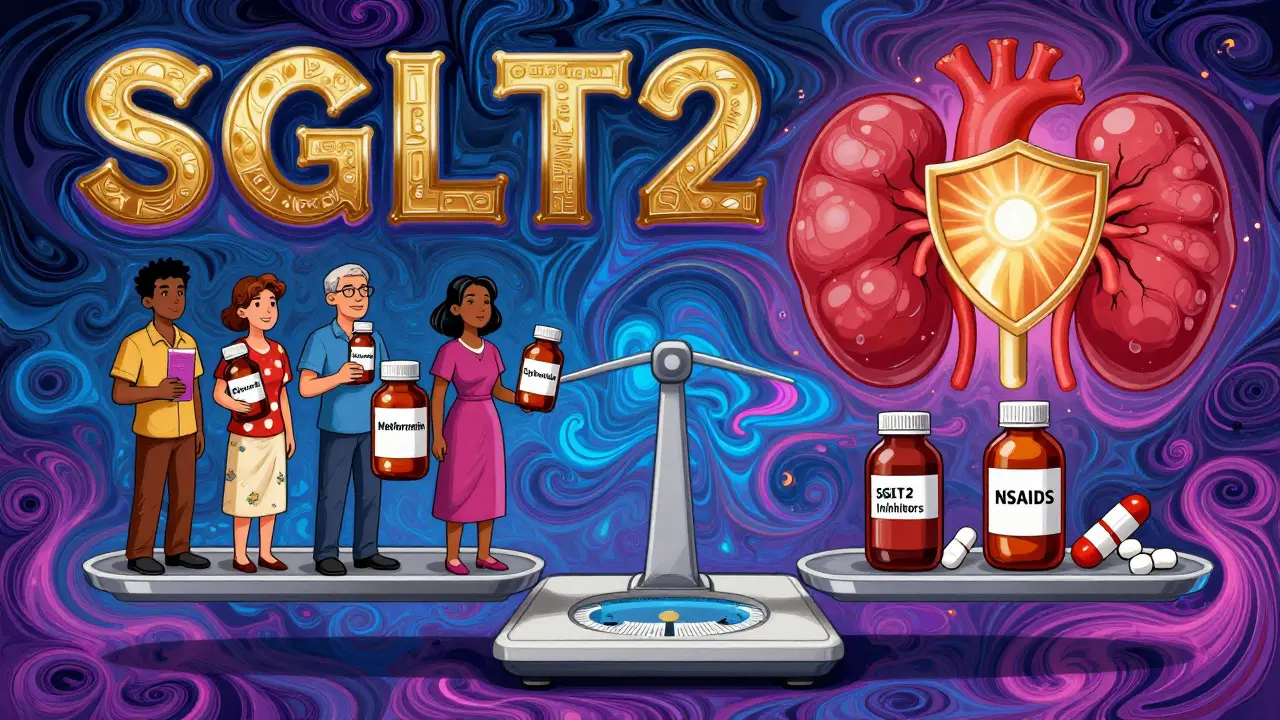
The real game-changers? SGLT2 inhibitors-drugs like dapagliflozin and empagliflozin. These don’t need any dose adjustment, no matter how low your eGFR is. Even if your kidneys are barely working, you can still take the full 10 mg dose. Studies show they cut the risk of kidney failure by nearly 40%. They’re now recommended even for people without diabetes, if they have CKD with protein in their urine.
GLP-1 receptor agonists like semaglutide are another win. They’re kidney-safe, help with weight loss, and protect your heart. Both are now first-line choices for CKD patients with type 2 diabetes.
ACE Inhibitors and ARBs: More Is Better
For years, doctors held back on ACE inhibitors and ARBs in CKD patients. Why? Because these drugs can raise creatinine slightly. And that scared people.That thinking is wrong-and dangerous. The KDIGO 2024 guidelines are crystal clear: use these drugs at the highest tolerated dose. Even if your creatinine goes up 20-30%, don’t stop them. That rise isn’t kidney damage-it’s the drug working. These medications reduce protein in your urine and slow CKD progression. The benefit? Lower risk of heart attack, stroke, and dialysis.
Dr. Katherine Tuttle from the Institute of Translational Health Sciences says, “Not maximizing ACE inhibitors or ARBs for fear of creatinine rise would be considered suboptimal care.” That’s not opinion. That’s evidence-based medicine.
And if you’re still leaking protein after maxing out an ACE or ARB? There’s a new option: finerenone. It’s a non-steroidal mineralocorticoid receptor blocker that reduces kidney and heart risks even further-when your potassium levels are under control.
How to Stay Safe: Practical Steps
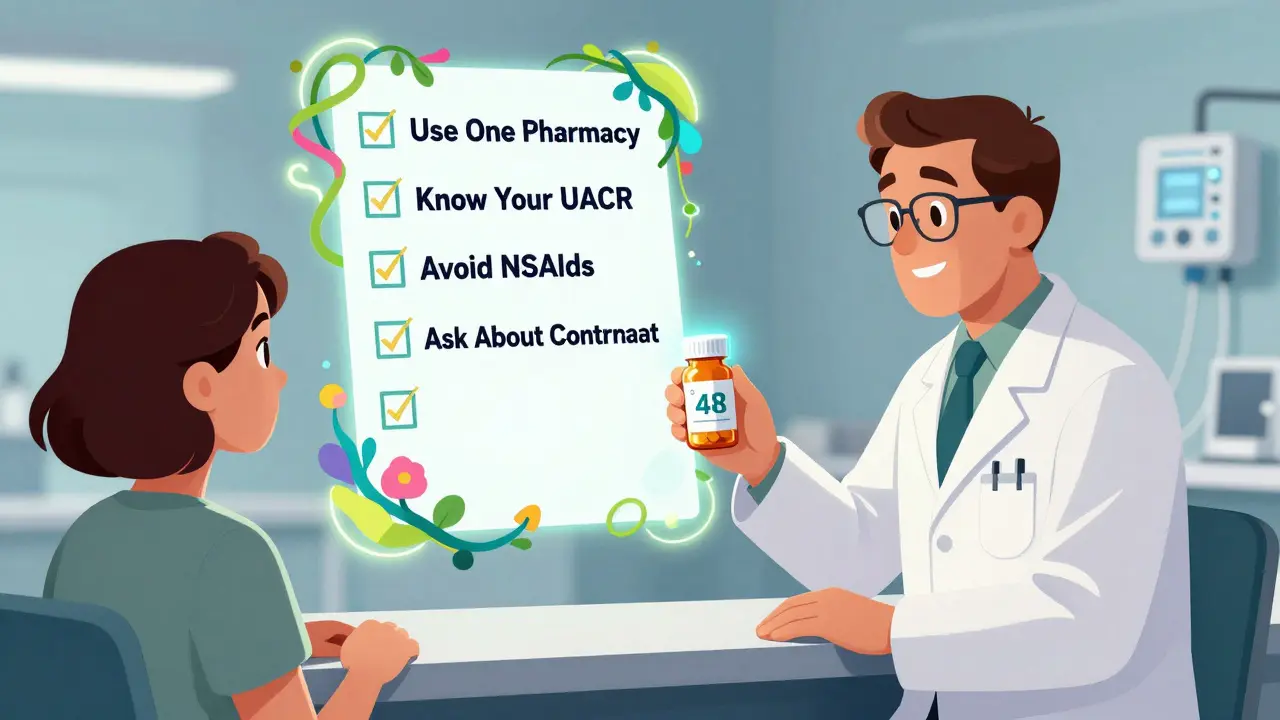
Knowing what to avoid isn’t enough. You need a system.1. Get a medication review every 3 months. If you’re in CKD stage 3 or worse, your meds need checking at least quarterly. That’s not optional. It’s standard of care under KDIGO 2024.
2. Use one pharmacy. A 2023 NIDDK study found that patients who used a single pharmacy had 42% fewer medication-related kidney injuries. Why? Pharmacists can catch dangerous combinations you might miss.
3. Know your eGFR and albuminuria. Don’t just look at creatinine. Ask for your eGFR and urine albumin-to-creatinine ratio (UACR). Your goal? A 50% drop in UACR over time. That’s a sign your treatment is working.
4. Use a dosing app. Apps like Epocrates Renal Dosing are used by 63% of U.S. nephrologists. They tell you exactly how much to take based on your eGFR. If your doctor doesn’t use one, ask why.
5. Tell every provider you have CKD. Even your dentist. Many antibiotics, pain meds, and sedatives need adjustment. If you’re scheduled for a scan, ask if contrast dye is necessary-and if there’s a safer alternative.
What’s Changing in 2025-2026?
The rules keep evolving. In 2024, KDIGO updated its guidelines to recommend SGLT2 inhibitors for all CKD patients with albuminuria-even without diabetes. That’s huge.Also in 2025, the Department of Defense and Veterans Affairs released new protocols for bowel prep: PEG only. No more sodium phosphate. That’s now standard.
By 2026, the FDA plans to update its guidance using real-world data from electronic health records. And KDIGO is working on a free, downloadable medication safety checklist for patients-expected to launch mid-year.
Meanwhile, researchers are studying how your genes affect drug metabolism in kidney disease. Early trials suggest some people break down drugs faster or slower based on CYP450 enzyme variants. That could mean personalized dosing in the near future.
What If You’re on Dialysis?
Once you’re on dialysis, your kidney function is near zero. But that doesn’t mean you’re safe from bad drug choices. Dialysis removes some drugs-but not all. And it doesn’t help with drugs that damage kidneys directly.Vancomycin? Still needs monitoring. Antibiotics? Many need dose changes. Even over-the-counter meds can build up. Many patients on dialysis don’t realize that antacids with aluminum or magnesium can cause toxicity. Your dialysis team should review every medication you take-every time you come in.
Therapeutic drug monitoring is key here. For drugs like vancomycin, your trough level should be 10-15 mcg/mL-not the 15-20 mcg/mL used in people with normal kidneys. Too high? You risk hearing loss and kidney damage. Too low? The infection won’t clear.
Common Mistakes and How to Avoid Them
Mistake 1: Stopping ACE inhibitors because creatinine rose. Solution: If creatinine rises less than 30%, keep going. If it goes higher, check for dehydration or blockage-not the drug.
Mistake 2: Taking NSAIDs for back pain. Solution: Use acetaminophen. If you need more, ask your doctor about physical therapy or gabapentin.
Mistake 3: Assuming “natural” or “herbal” means safe. Solution: Many herbal supplements (like licorice, creatine, or certain Chinese herbs) are nephrotoxic. Always tell your doctor what you’re taking-even if it’s “just a tea.”
Mistake 4: Skipping medication reviews. Solution: Set a calendar reminder every 90 days. Bring a full list of everything you take-prescriptions, OTC, vitamins, supplements.
Mistake 5: Not knowing your numbers. Solution: Write down your eGFR and UACR. Ask your nephrologist what your target is. Keep a small notebook or use your phone.
Can I still take ibuprofen if I have kidney disease?
No. Ibuprofen and other NSAIDs can cause sudden kidney injury in people with CKD-even if you’ve taken them for years. They reduce blood flow to the kidneys, which can lead to acute kidney failure. Use acetaminophen (Tylenol) instead, but don’t exceed 3,000 mg per day. Always check with your doctor before taking any pain reliever.
Is metformin safe for kidney disease?
Metformin is safe if your eGFR is above 45. Between 30 and 45, use it with caution and monitor for side effects. Below 30, it’s contraindicated because of the risk of lactic acidosis-a rare but life-threatening buildup of acid in your blood. If your eGFR drops below 45, your doctor should switch you to a safer option like an SGLT2 inhibitor or GLP-1 agonist.
Do I need to change my blood pressure meds if my kidneys get worse?
No-usually the opposite. ACE inhibitors and ARBs should be increased to the highest tolerated dose, even as kidney function declines. These drugs protect your kidneys and heart by reducing protein leakage and lowering blood pressure. A slight rise in creatinine is normal and not a reason to stop them. Only stop if you develop high potassium or dangerously low blood pressure.
What’s the best way to track my medications?
Keep a written or digital list of every medication, supplement, and over-the-counter drug you take. Include the dose and how often. Share this with every doctor, pharmacist, and ER provider. Use apps like Epocrates or Medisafe to get renal dosing alerts. And use one pharmacy-this helps them spot dangerous interactions before they happen.
Are new kidney-safe diabetes drugs worth switching to?
Yes-if you have CKD and type 2 diabetes, SGLT2 inhibitors (like dapagliflozin) and GLP-1 agonists (like semaglutide) are now first-line treatments. They protect your kidneys, lower your risk of heart failure, and don’t require dose changes as your kidney function declines. Many patients see fewer hospital visits and better energy levels. Talk to your doctor about switching if you’re still on older drugs like sulfonylureas or insulin without these benefits.
Can I still get a CT scan with contrast if I have kidney disease?
Yes, but only if it’s absolutely necessary. Contrast dye can cause acute kidney injury in people with CKD. Your doctor should first check your eGFR and consider alternatives like ultrasound or MRI. If contrast is needed, you’ll likely be given IV fluids before and after, and your nephrologist may delay the scan if your kidney function is unstable. Never agree to contrast without asking about the risks and alternatives.
Final Thoughts: You’re Not Alone
Medication safety in kidney disease isn’t about fear. It’s about awareness. You don’t need to memorize every drug name or dosing chart. You just need to ask the right questions: Is this safe for my kidneys? Has my dose been checked since my last eGFR test? Is there a better option?With the right tools, the right team, and the right mindset, you can take control. Use your pharmacy. Know your numbers. Review your meds. Push for the latest guidelines. Your kidneys can’t tell you when something’s wrong-but you can learn to listen.


Brittany Wallace
January 3, 2026 AT 01:00veronica guillen giles
January 3, 2026 AT 06:48Tiffany Channell
January 4, 2026 AT 11:47Joy F
January 4, 2026 AT 15:00Haley Parizo
January 5, 2026 AT 13:59Shruti Badhwar
January 5, 2026 AT 20:33Neela Sharma
January 6, 2026 AT 08:03Ian Ring
January 6, 2026 AT 16:27Angela Fisher
January 7, 2026 AT 23:11Ian Detrick
January 8, 2026 AT 10:13erica yabut
January 10, 2026 AT 07:08