Warfarin & NSAID Interaction Risk Calculator
Select Medication Details
Based on European Society of Cardiology analysis.
Risk Assessment
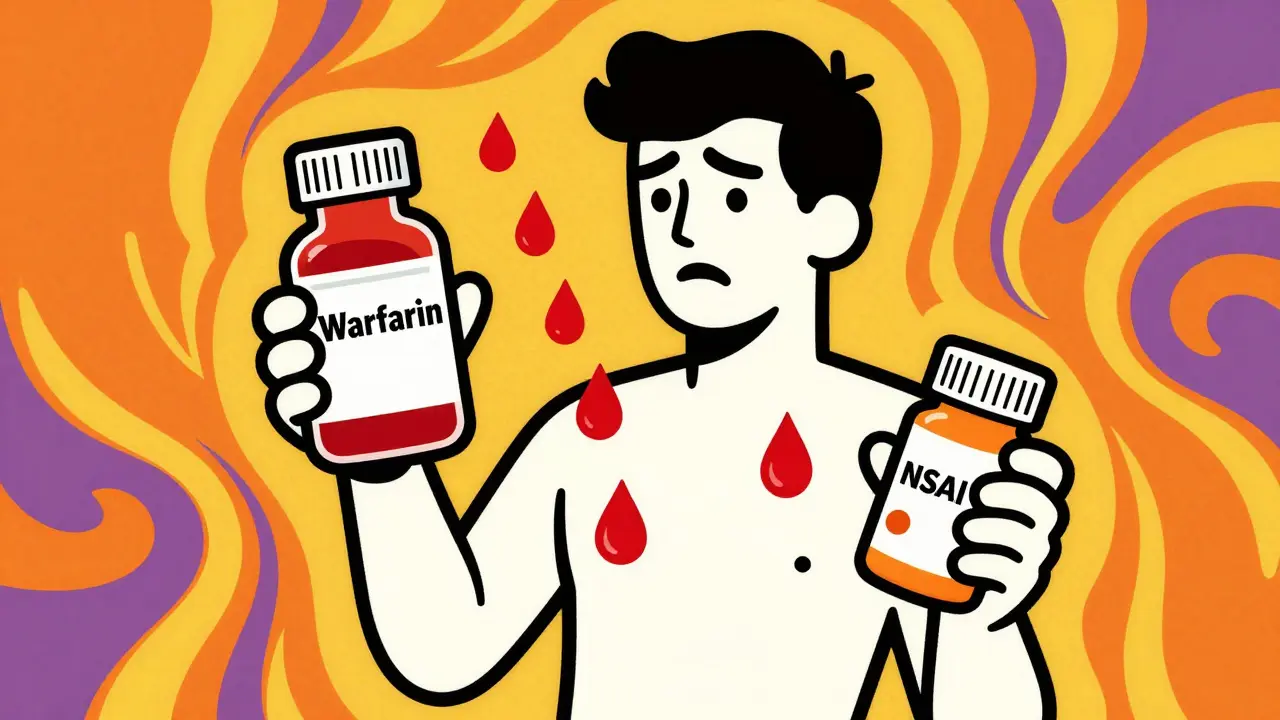
Imagine taking a blood thinner to protect your heart, only to pop an over-the-counter painkiller for a headache, and suddenly face a life-threatening bleed. It sounds like a medical nightmare, but it is a reality for thousands of patients every year. The combination of Warfarin, a widely prescribed oral anticoagulant, and nonsteroidal anti-inflammatory drugs (NSAIDs) is one of the most dangerous drug interactions in modern medicine. If you are on warfarin, understanding this risk isn't just helpful-it could save your life.
The Double Threat: How Warfarin and NSAIDs Work Against You
To understand why this mix is so risky, you have to look at how each drug affects your body’s ability to stop bleeding. They attack hemostasis-the process that clots blood-from two completely different angles. When you combine them, you create a perfect storm.
Warfarin works by blocking vitamin K-dependent carboxylation. In simple terms, it stops your liver from making active coagulation factors II, VII, IX, and X. Without these factors, your blood cannot clot effectively. This is why doctors monitor your International Normalized Ratio (INR) regularly; it measures how long it takes your blood to clot. A higher INR means thinner blood and a higher bleeding risk.
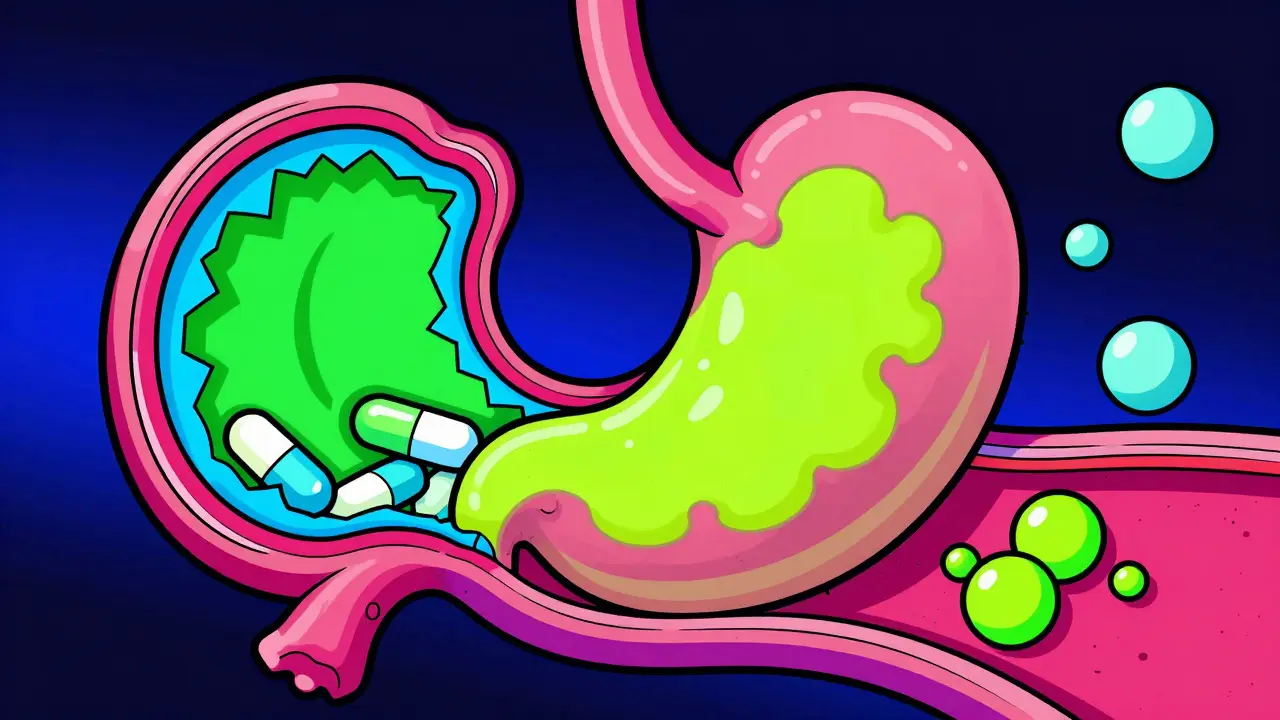
On the other side, NSAIDs like ibuprofen, naproxen, and diclofenac work by inhibiting cyclooxygenase-1 (COX-1). This enzyme produces thromboxane A2, which tells platelets to stick together and form a plug at the site of injury. By blocking this, NSAIDs prevent platelets from aggregating. Additionally, NSAIDs reduce prostaglandins that protect your stomach lining, making your gut more susceptible to erosion and bleeding.
When you take both, you aren't just adding risks; you are multiplying them. Warfarin slows down the chemical cascade that forms a clot, while NSAIDs disable the cellular "band-aids" (platelets) and damage the vessel walls. As Harvard Health notes, this dual mechanism significantly raises the risk of bleeding, especially in the digestive tract.
By the Numbers: Just How Dangerous Is It?
You might think that occasionally taking an ibuprofen won't hurt. However, large-scale studies tell a different story. The data is clear: combining these drugs drastically increases your chances of serious complications.
A comprehensive analysis presented by the European Society of Cardiology found that the overall risk of bleeding was 2.09 times higher when people took an NSAID alongside a blood thinner compared to those taking a blood thinner alone. But not all NSAIDs are created equal. The study highlighted significant variations:
- Naproxen: Increased bleeding risk by 4.1-fold.
- Diclofenac: Increased bleeding risk by 3.3-fold.
- Ibuprofen: Increased bleeding risk by 1.79-fold.
This isn't limited to stomach issues. The same research documented that the risk of intracranial hemorrhage (bleeding in the brain) jumped by 3.22-fold, lung bleeding by 1.36-fold, and urinary tract bleeding by 1.57-fold. Furthermore, there was almost a tripling of the risk of anemia caused by chronic, slow bleeding.
A pivotal 2010 study by Choi et al. evaluated 98 patients on warfarin therapy. They found that 39.8% of patients showed an INR elevation of ≥15.0% after adding an NSAID. An INR spike of this magnitude requires immediate clinical intervention because it signals a critical loss of clotting ability.
Gastrointestinal Bleeding: The Most Common Danger Zone
While bleeding can happen anywhere, the gastrointestinal (GI) tract is the most frequent victim. A January 2024 meta-analysis in Gut and Liver concluded that concurrent use of warfarin and NSAIDs increased the risk of GI bleeding by 2.0 folds compared with warfarin alone.
Why the gut? NSAIDs strip away the protective mucus layer in your stomach. Warfarin ensures that if a small ulcer or erosion starts bleeding, it doesn't stop. A landmark 2005 study in JAMA Internal Medicine found that patients taking warfarin with selective COX-2 inhibitors had an increased risk of hospitalization for upper GI hemorrhage, similar to those taking nonselective NSAIDs. This means even "safer" alternatives within the NSAID class do not eliminate the danger when combined with warfarin.
| NSAID Type | Bleeding Risk Increase | Risk Level |
|---|---|---|
| Naproxen | 4.1x | Very High |
| Diclofenac | 3.3x | High |
| Ibuprofen | 1.79x | Moderate-High |
Who Is at Highest Risk?
Not everyone reacts the same way, but certain factors make you much more vulnerable to this interaction. Choi et al. identified four significant predictors for a dangerous INR increase after starting an NSAID:
- High Warfarin Dose: Patients taking >40 mg/week of warfarin were at significantly higher risk (P=0.001). These patients often have less stable anticoagulation control.
- Polypharmacy: Taking other medications that interact with warfarin compounds the problem (P=0.024).
- Specific NSAID Choice: The use of meloxicam was identified as an independent risk factor for significant INR elevation (P=0.025).
- Low Baseline INR: Paradoxically, patients with lower baseline INRs may have less physiological reserve against further anticoagulation effects (P=0.03).
Age also plays a role. Older adults naturally have thinner skin, more fragile blood vessels, and often take multiple medications, stacking the odds against them.
Safer Alternatives for Pain Management
If you are on warfarin, you still need relief for headaches, arthritis, or muscle pain. The key is choosing the right tool for the job. The American College of Chest Physicians' 2021 Antithrombotic Therapy Guidelines recommend avoiding NSAIDs whenever possible. Here are safer strategies:
1. Acetaminophen (Paracetamol)
Acetaminophen is generally considered the first-line option for mild to moderate pain in patients on warfarin. Unlike NSAIDs, it does not inhibit platelet function or damage the stomach lining. However, caution is still needed. High doses (above 3,000 mg/day for most adults) can potentially raise INR levels slightly. Stick to the recommended dose and inform your doctor if you use it regularly.
2. Topical Analgesics
For joint or muscle pain, topical creams containing diclofenac or lidocaine can be effective. Because they are absorbed locally, systemic absorption is minimal, meaning less impact on your overall blood clotting. Always check with your pharmacist before using any topical medication.
3. Physical Therapy and Non-Drug Interventions
Physical therapy, heat/cold packs, and gentle exercise can reduce inflammation and pain without any drug interaction risks. These methods address the root cause of musculoskeletal pain rather than just masking symptoms.
4. Proton Pump Inhibitors (PPIs)
If you absolutely must take an NSAID, doctors may prescribe a PPI like pantoprazole 40 mg daily. PPIs reduce stomach acid and help protect the gastric mucosa, lowering the risk of GI bleeding. However, this does not mitigate the risk of bleeding elsewhere in the body, such as the brain or kidneys.

What To Do If You Already Took Them Together
Did you accidentally take ibuprofen while on warfarin? Don't panic, but do act. One single dose is unlikely to cause immediate catastrophe in most healthy individuals, but it can destabilize your INR.
- Monitor for Symptoms: Watch for unusual bruising, nosebleeds that won't stop, blood in urine or stool (black, tarry stools), severe headaches, or dizziness.
- Contact Your Clinic: Call your anticoagulation clinic or doctor. They may advise you to check your INR sooner than scheduled-typically within 3-5 days of starting the NSAID.
- Do Not Stop Warfarin: Never stop your blood thinner abruptly without medical advice, as this could put you at risk for stroke or blood clots.
Direct Oral Anticoagulants (DOACs): Are They Safer?
Many patients switch from warfarin to newer drugs like dabigatran (Pradaxa) or apixaban (Eliquis), hoping for fewer interactions. While DOACs have some advantages, the NSAID risk remains. A 2018 study in the Journal of the American College of Cardiology found that NSAID use significantly elevated major bleeding rates in patients on dabigatran, even if the relative risk wasn't statistically different from warfarin in some metrics. Non-GI bleeding represented 60% of major events, while GI bleeding accounted for 40%. So, switching to a DOAC does not give you a free pass to use NSAIDs freely.
Frequently Asked Questions
Can I take aspirin with warfarin?
Aspirin is technically an NSAID, but it is often prescribed intentionally with warfarin for specific conditions like recent stent placement. However, low-dose aspirin (81mg) has a different risk profile than high-dose NSAIDs. High-dose aspirin has a direct hypoprothrombinemic effect. Never add aspirin to your regimen without explicit instruction from your cardiologist, as the bleeding risk is substantial.
Is Tylenol (acetaminophen) safe with warfarin?
Yes, acetaminophen is generally the safest OTC pain reliever for warfarin users. It does not affect platelet function. However, consistent use of high doses (more than 3,000 mg per day) can slightly elevate INR. Use it sparingly and keep your doctor informed.
Which NSAID is the least dangerous with warfarin?
Among traditional NSAIDs, ibuprofen appears to have the lowest relative risk multiplier (1.79x) compared to naproxen (4.1x) and diclofenac (3.3x). However, "least dangerous" still means significantly increased risk. Meloxicam should be avoided as it was linked to significant INR spikes. Ideally, avoid all NSAIDs.
How quickly does the interaction happen?
The pharmacodynamic effects on platelets happen immediately upon taking the NSAID. Changes in INR due to metabolic interactions may take several days to manifest. This is why guidelines recommend checking INR within 3-5 days of starting any new medication, including NSAIDs.
What are the signs of internal bleeding I should watch for?
Watch for black or tarry stools, red or coffee-ground vomit, unusual or large bruises, prolonged bleeding from cuts, blood in urine, severe headaches, confusion, or weakness. If you experience any of these, seek emergency medical attention immediately.

Jonhnnie john13
May 23, 2026 AT 17:57the data is clear but people ignore it because they think they are special and won't bleed out in their sleep naproxen is basically a suicide pill for warfarin patients yet everyone buys it at the corner store without thinking twice about the cox-1 inhibition messing with their platelets while the warfarin kills their clotting factors it is a perfect storm of stupidity and pharmacology that doctors warn about every single day but nobody listens until they end up in the er with a subdural hematoma
Anthony Padilla
May 24, 2026 AT 08:01hey guys i know this sounds scary but its really important we all look out for each other especially if u have family on blood thinners i always tell my mom to just use tylenol instead of advil because i read somewhere that ibuprofen can mess with her meds even though she says her back hurts less with the ibuprofen so maybe there is a middle ground? i want everyone to be safe and happy and not bleeding internally lol jk but seriously check with ur doc before mixing stuff cause i heard some ppl get sick from it
Elizabeth Fandry
May 25, 2026 AT 12:33Oh, how delightfully pedestrian of you to reduce complex pharmacokinetics to mere "scary" anecdotes 🙄 One would assume that individuals possessing even a modicum of intellectual curiosity would grasp the profound implications of COX-1 inhibition without needing such condescending hand-holding. The intersection of hemostasis and anti-inflammatory therapy is not merely a "risk"; it is a delicate ballet of molecular interactions that the uninitiated fail to comprehend. To suggest that acetaminophen is simply "safe" ignores the nuanced reality of hepatic metabolism and potential INR fluctuations, which only the enlightened few truly understand. Do try to keep up with the discourse, shall we? 🧐✨
Madeline Petes
May 27, 2026 AT 05:38you guys need to chill out a bit its not the end of the world if someone takes one pill by accident sure the stats are high but life goes on and we gotta manage pain somehow i mean who wants to live in constant agony just because of a chart saying 4.1x risk? thats pretty harsh honestly just talk to your doctor and find what works for you dont let fear control your life totally worth trying topical creams or physical therapy first tho
Ramanath Rao
May 27, 2026 AT 05:56this article is completely missing the point of why western medicine fails patients by forcing them into these dangerous combinations without proper education in india we understand balance but here you just throw drugs at symptoms and wonder why people bleed out the fact that naproxen increases risk by 4 times is criminal negligence by pharmaceutical companies pushing these otc drugs without warning labels big pharma cares about profit not your life stop trusting these guidelines and start listening to your body before it shuts down completely
irine sabrina
May 28, 2026 AT 03:57I truly appreciate this detailed breakdown as it sheds light on a very serious issue that many overlook in our daily routines. It is heartening to see such comprehensive information shared openly to help others navigate their health challenges with greater awareness and care. Let us continue to support one another in making informed decisions that prioritize safety and well-being above all else.
Gary Helminiak
May 29, 2026 AT 05:18Hey there! 👋 I wanted to dive a little deeper into the mechanism because understanding the 'why' helps with compliance. So, when you take Warfarin, you're essentially turning off the production of Factors II, VII, IX, and X in the liver, which are crucial for the common pathway of the coagulation cascade. Meanwhile, NSAIDs like Ibuprofen or Naproxen inhibit COX-1, which reduces Thromboxane A2, thereby preventing platelet aggregation. When you combine these two, you are attacking both the primary hemostasis (platelet plug) and secondary hemostasis (fibrin clot). This is why the bleeding risk isn't just additive; it's synergistic. Also, don't forget that NSAIDs can cause gastric mucosal damage, creating a portal of entry for bleeding that the anticoagulated blood cannot effectively seal. 😊💊
dane thorp
May 30, 2026 AT 11:26The distinction between selective and non-selective COX inhibitors is often misunderstood by laypeople. While celecoxib was marketed as safer for the stomach, the cardiovascular risks remain significant, and the interaction with warfarin regarding INR stability is still present. Patients should not assume that switching to a COX-2 inhibitor eliminates the need for caution. The data presented regarding intracranial hemorrhage is particularly alarming and warrants strict adherence to alternative pain management strategies.
Michael Schurmann
May 30, 2026 AT 15:09It is frankly astonishing that the general public continues to treat over-the-counter medications as harmless candy when combined with prescription anticoagulants. The arrogance of assuming one can self-medicate while on warfarin is a testament to the declining level of medical literacy in society. Those who ignore these warnings are not victims of circumstance but architects of their own misfortune. The statistics provided are not suggestions; they are empirical facts that demand respect. If you cannot manage your own basic pharmacological safety, perhaps you should reconsider your reliance on complex medical regimens entirely.
Christina Mitchell
June 1, 2026 AT 08:31This brings to mind the broader philosophical question of autonomy versus safety in healthcare. How do we empower individuals to make choices about their bodies while ensuring they are fully aware of the consequences? The tension between freedom and responsibility is evident here. Perhaps the solution lies not in prohibition but in enhanced education and dialogue between patients and providers. We must strive for a balance where knowledge liberates rather than restricts.
Christopher Laver
June 2, 2026 AT 00:53boring