
For millions of people, breathing isn’t just something you do-it’s something you struggle with. If you wake up with a stuffy nose, cough at night, or feel your chest tighten when you vacuum, you’re not alone. In the UK alone, over 21 million people live with allergies, and the biggest triggers aren’t outside-they’re in your home. The good news? You don’t need to move out. You just need to change how you live inside.
Why Your Home Is the Real Allergy Battlefield
Your home isn’t just a shelter. It’s a breeding ground for allergens you can’t see. Dust mites, pet dander, mold spores, and cockroach particles cling to your bedding, carpets, and even your couch. These aren’t just dirt-they’re powerful triggers that set off your immune system like a fire alarm. And unlike pollen, which comes and goes with the seasons, these allergens are there every single day.The most common indoor allergen? House dust mites. They live in warm, humid places-your mattress, pillows, and upholstered furniture. One gram of dust can hold up to 1,000 mites and millions of their droppings. And yes, that’s what you’re breathing in while you sleep. Studies show that 80% of allergy sufferers in the US are allergic to dust mites. In the UK, where damp weather is common, the problem is even worse.
Bedding: Your First Line of Defense
Your bed is ground zero for allergens. If you’re not protecting your mattress and pillows, you’re exposing yourself to allergens for 8 hours a night. The most effective fix? Dust-proof encasements. These aren’t just zippered covers-they’re made of tightly woven fabric that blocks mites and their waste from escaping. Look for ones labeled "allergen-impermeable" and certified by organizations like the Asthma and Allergy Foundation of America.Pair this with weekly hot water washing. Cold water won’t kill mites. You need water at least 130°F (54.4°C). That means washing sheets, pillowcases, and even stuffed toys every 7 days. If you can’t wash everything at that temperature, freeze soft toys for 24 hours-it kills mites too.
Replace feather or down pillows with synthetic ones. Down traps moisture and attracts mites. Synthetic pillows are easier to clean and don’t hold allergens as tightly. And don’t forget your comforter. Even if you use a cover, wash it every month.
Humidity Control: The Silent Game-Changer
Mold and dust mites both thrive in moisture. Keep your indoor humidity between 30% and 50%. Above 50%, mites multiply. Above 60%, mold starts growing on walls, in bathrooms, and behind furniture.Buy a hygrometer-it costs less than £20 and tells you exactly how humid your home is. If it’s too high, use a dehumidifier. You don’t need a fancy one. A basic 20-pint unit in your bedroom or living room can cut mold spores by 70-85%. Run it daily during winter when heating systems dry the air, and in summer when dampness creeps in.
Fix leaks within 24 hours. A dripping tap under the sink or condensation on windows can grow mold in days. Clean bathrooms weekly with a bleach-based cleaner or hydrogen peroxide. Don’t just wipe-scrub grout and shower curtains. Mold hides in the cracks.
Pet Dander: Can You Keep Your Pet?
If you’re allergic to cats or dogs, the idea of giving up your pet is heartbreaking. But you don’t have to. You just need boundaries.Keep pets out of bedrooms. That’s the single most effective step. Pet dander sticks to fur, then floats into the air. In rooms where pets aren’t allowed, allergen levels drop by 30-55%. Wash your pet weekly. For cats, this reduces Fel d 1 (the main cat allergen) by 41%. Use a damp cloth or pet wipes if bathing is stressful for them.
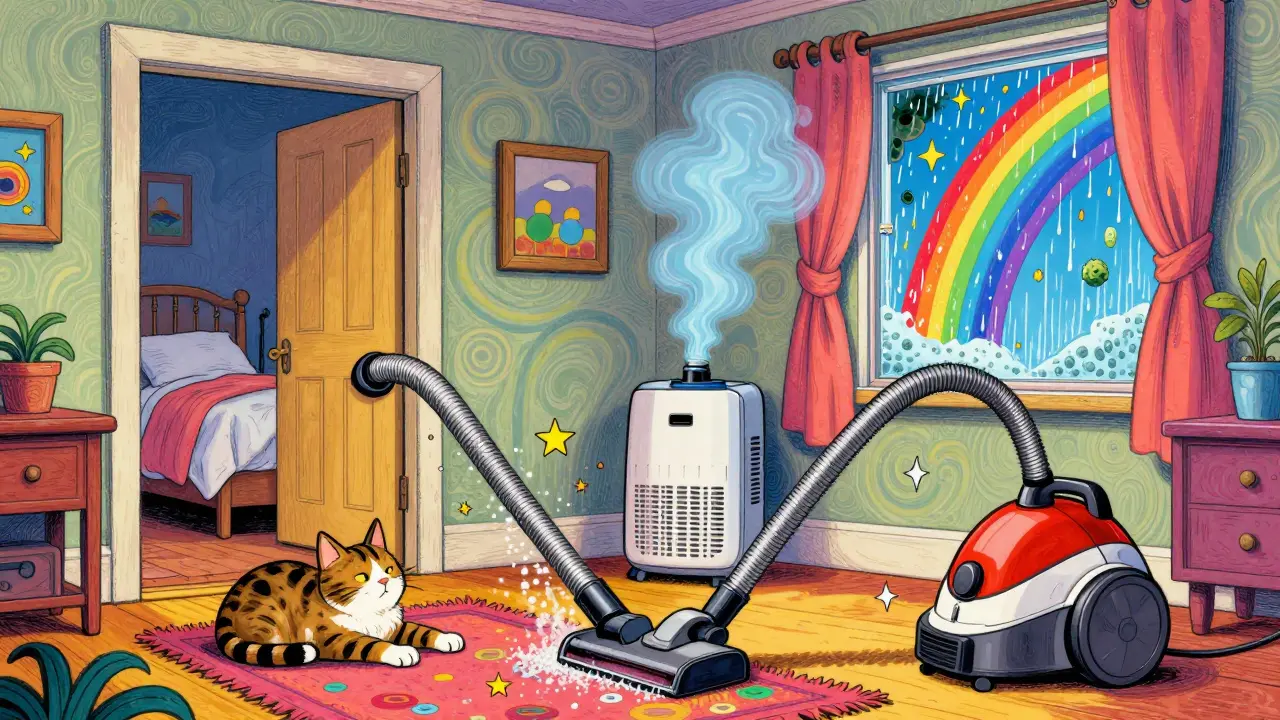
Use a vacuum with a HEPA filter. Regular vacuums blow allergens back into the air. HEPA vacuums trap 99.97% of particles as small as 0.3 microns. Vacuum at least twice a week, and wear a mask while you do it. After vacuuming, leave the room for 30 minutes so dust settles.
Consider a HEPA air purifier in the bedroom. Look for one that cycles the air 4-6 times per hour. A unit rated for your room size will cut airborne dander by up to 60%. Don’t buy cheap filters-they don’t meet HEPA standards.
Air Filtration: Not All Purifiers Are Equal
Air purifiers are everywhere. But most are useless if they don’t have a true HEPA filter. Check the label. If it says "HEPA-type" or "HEPA-like," skip it. Only "true HEPA" meets the standard.Place the purifier in your bedroom. That’s where you spend the most time and where allergen exposure matters most. Don’t rely on your HVAC system unless it has a MERV 13 filter or higher. Most home systems use MERV 8-fine for dust, not for allergens.
Replace filters every 6-12 months. A clogged filter doesn’t work. Some smart models now have sensors that alert you when it’s time. These cost more upfront but save you from guesswork.
Multi-Strategy Approach: Why One Fix Isn’t Enough
Trying to solve allergies with just a new vacuum or one air purifier? You’re wasting time. Studies show that single interventions-like only using mattress covers-reduce allergens by 40-65%, but symptoms barely improve.When you combine three or more strategies-bedding covers, humidity control, HEPA filtration, and pet management-you cut allergen levels by 75-90%. And here’s the kicker: 83% of people who stick to this combo report fewer symptoms, less medication use, and better sleep.
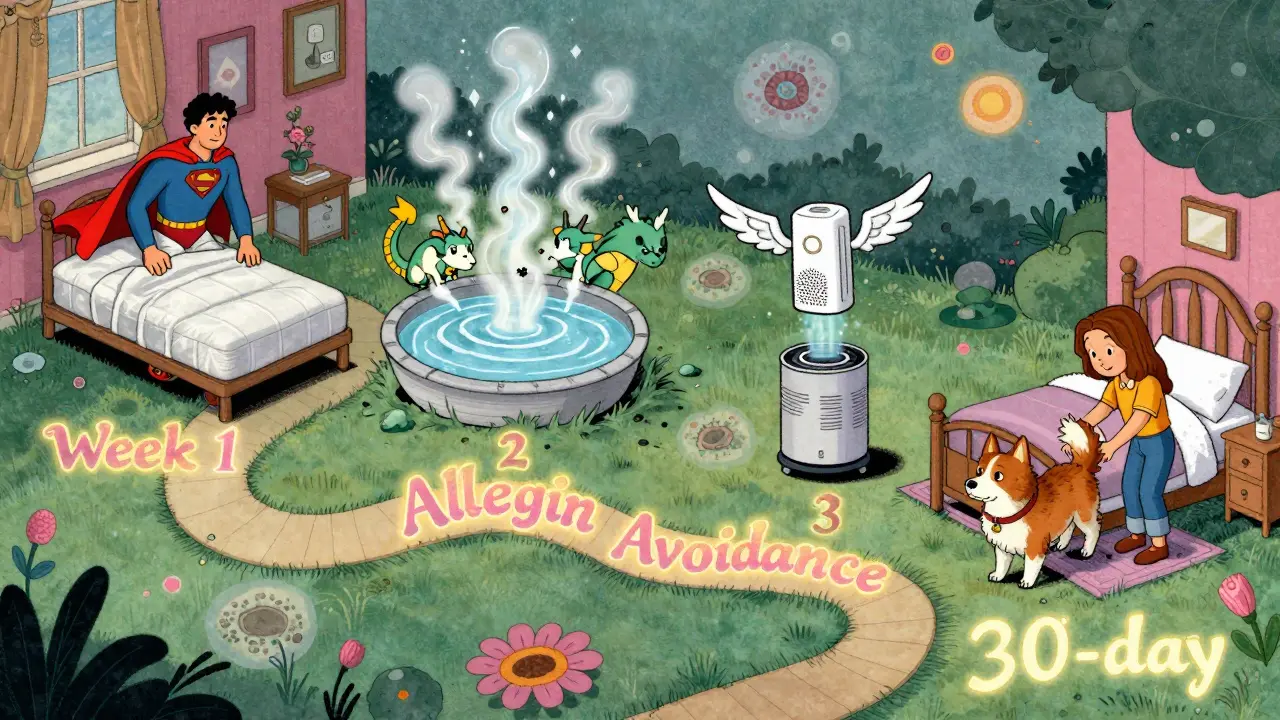
Start simple. Week 1: Buy mattress covers and a hygrometer. Week 2: Get a HEPA vacuum and start washing bedding weekly. Week 3: Add a small air purifier to your bedroom. By week 6, you’ll see a difference. Don’t try to do everything at once. Pick one area-your bedroom-and master it.
Cost vs. Benefit: What’s Worth the Investment?
You don’t need to spend thousands. Here’s what actually delivers value:- Dust-proof encasements: £30-£100 per set (lasts 5+ years)
- Basic dehumidifier: £100-£150
- HEPA vacuum: £200-£400
- Small HEPA air purifier: £150-£300
Whole-house air purifiers cost £800-£2,500. They’re overkill unless you have severe asthma or live in a very polluted area. Professional pest control for cockroaches? Only needed if you’re in an older building with infestations. For most people, sealing food containers and emptying trash daily is enough.
The biggest cost? Time. Washing bedding weekly, cleaning bathrooms, running a dehumidifier-these take effort. But compared to monthly inhalers, antihistamines, or ER visits, the upfront work pays off.
What Doesn’t Work (And Why)
Not everything marketed as "allergy-friendly" actually helps.- Ultraviolet (UV) air purifiers: They kill germs, not allergens. Dust mites and dander aren’t alive in the way viruses are.
- Essential oil diffusers: They irritate airways. Many allergy sufferers report worse symptoms after using them.
- Chemical sprays for dust mites: They’re temporary. Mites come back. Focus on removing their habitat instead.
- Houseplants: They hold moisture and mold. Avoid them in bedrooms.
Also skip extreme measures like removing pets entirely unless you’ve tried everything else. For most, it’s about management-not elimination.
Getting Started: Your 30-Day Plan
You don’t need a perfect home. You need a better one. Here’s how to start:- Week 1: Buy allergen-proof mattress and pillow covers. Install a hygrometer in your bedroom.
- Week 2: Start washing all bedding in hot water (130°F+). Get a HEPA vacuum.
- Week 3: Buy a small HEPA air purifier for your bedroom. Set it to run overnight.
- Week 4: Keep pets out of the bedroom. Clean bathroom surfaces with a mold-killing cleaner.
By day 30, you’ll notice fewer morning sneezes, less nighttime coughing, and better sleep. Track your symptoms in a notebook. You’ll see the pattern.
When to Call a Professional
If you’ve done all this and still struggle, it’s time for help. See an allergist. Get tested. You might be allergic to something you didn’t know-like mold in your basement or cockroach allergens in your kitchen.Some local health services offer free home assessments for people with asthma. Ask your GP. In the UK, the NHS sometimes refers patients to environmental health officers who can check for damp, mold, or ventilation issues.
And if you’re on a tight budget? Start with what’s cheapest: bedding covers and humidity control. They’re the most effective for the least money.
The Bigger Picture
Allergies are rising. Climate change is making pollen seasons longer. Damp homes are becoming more common as insulation traps moisture. But we’re not powerless. The science is clear: reducing allergen exposure works.You don’t need to live in a sterile bubble. You just need to be smart about your space. Your home doesn’t have to be perfect. But it should be safe. And with a few smart changes, it can be.
Can allergen avoidance really improve asthma symptoms?
Yes-but only if you do it right. Studies show that when allergen levels are reduced by 100-fold or more through multiple strategies, asthma symptoms improve significantly. Single changes like just using mattress covers rarely make a difference. The key is combining several methods: encasements, humidity control, HEPA filtration, and pet management. People who stick to a full plan report fewer attacks, less medication use, and better sleep.
Do air purifiers really help with allergies?
Only if they have a true HEPA filter. Many cheap models are just fans with a filter that doesn’t capture fine particles. Look for "true HEPA" on the label and check that it’s rated for your room size. A good unit should cycle the air 4-6 times per hour. Place it in your bedroom, where you spend the most time. It won’t fix everything, but it cuts airborne allergens by up to 60%.
How often should I wash bedding to control dust mites?
Weekly. Cold water doesn’t kill mites. You need water at least 130°F (54.4°C). Wash sheets, pillowcases, and blankets every 7 days. If you can’t wash everything at that temperature, freeze stuffed toys or pillows for 24 hours-it kills mites too. Use allergen-proof covers on your mattress and pillows as a backup.
Should I get rid of my pet if I’m allergic?
Not necessarily. You can keep your pet and still reduce allergens. Keep them out of the bedroom, bathe them weekly, use a HEPA vacuum, and install an air purifier in your main living areas. Pet dander levels drop by 30-55% in pet-free zones. Removing the pet entirely reduces allergens by 100-1000 times, but that’s extreme. Try the less drastic steps first.
Is it worth spending money on a dehumidifier?
Yes, especially if you live in a damp climate like the UK. Mold and dust mites thrive above 50% humidity. A basic dehumidifier costs £100-£150 and can reduce mold spores by 70-85%. Use a hygrometer to monitor levels. Run it daily during winter and summer when moisture builds up. It’s one of the most cost-effective steps you can take.
Can I use essential oils or scented candles to mask allergens?
No. Essential oils and scented candles release volatile compounds that irritate airways. Many allergy sufferers report worsened symptoms after using them. They don’t remove allergens-they add chemical irritants. If you want your home to smell fresh, open a window or use unscented cleaning products.
How long does it take to see results from allergen avoidance?
Most people notice improvements in 2-4 weeks, especially with better sleep and fewer morning symptoms. Full benefits-like reduced medication use or fewer asthma attacks-take 2-3 months. Consistency matters more than speed. Stick with the routine even if you don’t feel better right away.
Are there government programs to help low-income households with allergen control?
In the UK, some local councils and NHS services offer free home assessments for people with asthma or severe allergies. These can identify damp, mold, or poor ventilation. Ask your GP for a referral. Charities like Asthma UK may also offer advice or small grants for equipment. While there’s no national program yet, targeted help exists-especially for children and elderly residents.




Susannah Green
January 24, 2026 AT 06:40I swear by dust-proof encasements-bought mine on Amazon for $45, and my morning sneezing fit? Gone. Also, washing bedding in hot water weekly changed my life. I used to think it was just me being dramatic, but nope-mites were the real villains.
Pro tip: Buy a hygrometer. Mine cost $12. If your humidity’s above 50%, you’re basically hosting a mite rave. Dehumidifier in the bedroom? Non-negotiable.
Sue Stone
January 25, 2026 AT 18:55My cat sleeps on my pillow. I tried everything. Then I just started keeping her out of the bedroom. No vacuum, no purifier, no fancy covers. Just a closed door. My allergies? Cut in half. Sometimes the simplest fix is the one you ignore.
Anna Pryde-Smith
January 27, 2026 AT 17:36HOW IS THIS NOT A NATIONAL EMERGENCY?! People are dying from mold in their bedrooms and the government’s out here selling $200 ‘HEPA-like’ air purifiers that do NOTHING. You think your ‘allergy-friendly’ carpet is helping? IT’S A MITE HOTEL.
Stop being nice to allergens. Fight back. Buy the encasements. Run the dehumidifier. Burn the feather pillows. I’m not sorry.
Oladeji Omobolaji
January 28, 2026 AT 18:11In Nigeria, we don’t have dust mites like you do here-too hot and dry most places. But mold? Oh yeah. That’s the real enemy. I’ve seen people with asthma suffer because their walls were just… wet. Your advice on fixing leaks fast? Spot on. Even here, that’s life-saving.
Also, no one in my village uses HEPA filters. But they all open windows every morning. Maybe that’s the real secret.
Vanessa Barber
January 29, 2026 AT 23:18Studies show 80% of people are allergic to dust mites? Funny-I’ve never been tested. Maybe I’m just allergic to overhyped blog posts. Also, who has time to wash bedding at 130°F? I use cold water and a lint roller. Still breathing. Maybe the problem isn’t the house… it’s the fear of the house.
Stacy Thomes
January 30, 2026 AT 00:21YOU CAN DO THIS!! I was a mess-sneezing every time I sat on my couch, coughing through Netflix, crying because I couldn’t sleep. Then I did ONE thing: bought mattress covers. WEEK ONE: better sleep. WEEK TWO: stopped using my inhaler. WEEK THREE: I danced in my living room like a maniac.
IT’S NOT MAGIC. IT’S JUST SCIENCE. YOU GOT THIS. GO BUY THOSE COVERS RIGHT NOW. I BELIEVE IN YOU!!
dana torgersen
January 30, 2026 AT 03:19you know… i was reading this and i started thinking… like… what if the real allergen… isn’t the dust… but our fear of it? we’ve been conditioned to see our homes as battlegrounds… but what if… they’re just… homes? maybe we’re the ones overreacting… with our 130°f washes and our hepa purifiers and our hygrometers…
maybe… we just need to… breathe…
(also i typoed ‘hepa’ as ‘hepa’ like 3 times… i think my brain is allergic to capital letters)
Dawson Taylor
January 31, 2026 AT 07:54The empirical evidence supporting multi-modal allergen reduction is robust. The confluence of physical barriers (encasements), environmental modulation (humidity control), and particulate filtration (HEPA) yields statistically significant improvements in respiratory outcomes. Individual interventions demonstrate marginal utility; synergistic implementation is the critical variable.
Recommendation: Prioritize evidence over anecdote. Document symptom frequency. Correlate with environmental data. Science, not sentiment, guides outcomes.
Sallie Jane Barnes
January 31, 2026 AT 10:44Thank you for this thoughtful, practical guide. I’ve been managing severe allergies for 12 years, and this is the first time I’ve seen a plan that’s both scientifically sound and actually doable.
I especially appreciate the emphasis on starting small. Trying to overhaul everything at once led to burnout for me. Week 1: covers. Week 2: washing. Week 3: purifier. That’s how I got through it. No guilt, no perfection-just progress.
To anyone reading this: You don’t need to be perfect. You just need to be consistent.
Andrew Smirnykh
February 1, 2026 AT 07:35In Japan, we use futons and air them out daily in the sun. No encasements. No dehumidifiers. Just sunlight and airflow. It’s simple, cheap, and works. Maybe the West overcomplicates this. The core principle is the same: reduce moisture, remove dust, ventilate.
Also, I’ve never heard of a HEPA vacuum costing $400. In Tokyo, you can get a solid one for $120. Maybe the price gap is marketing, not tech.