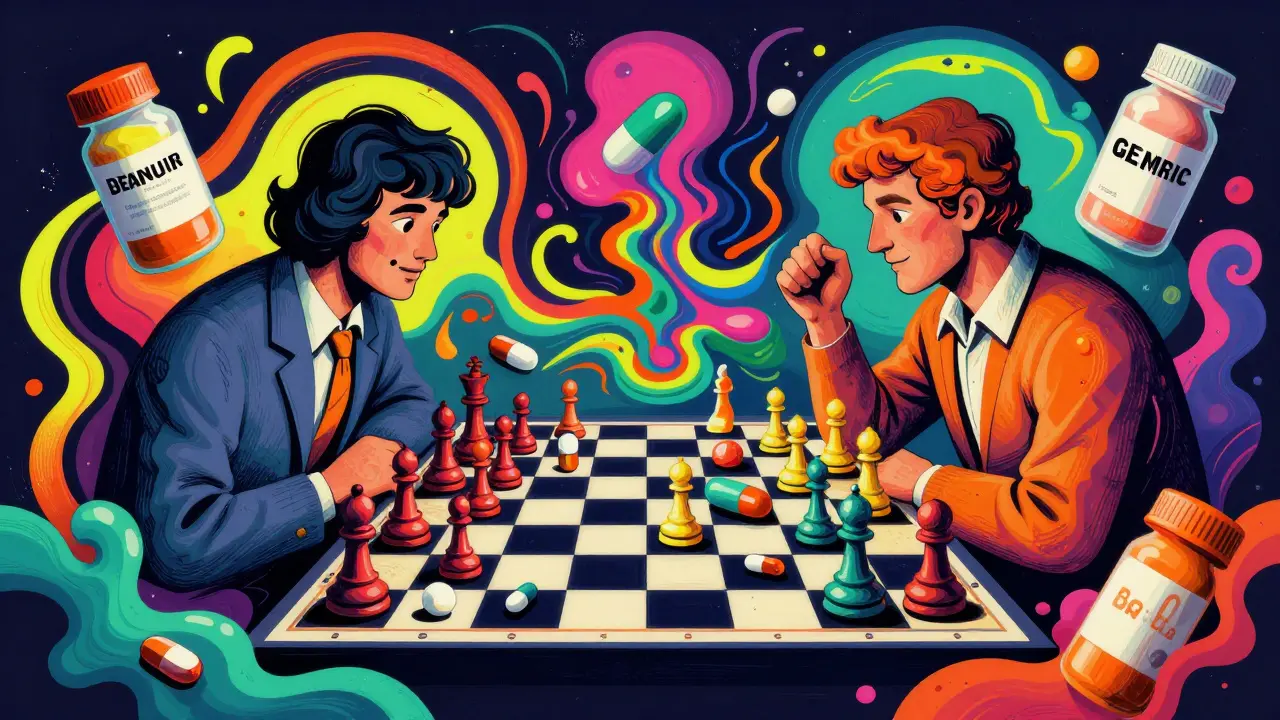
Imagine you're at the pharmacy and you see two different generic versions of the same medication. One is from a company that fought a legal battle to be the first on the market, and the other is essentially the brand-name drug but without the fancy label. Which one is actually cheaper? For most people, the answer boils down to a complex game of pharmaceutical chess between brand-name companies and generic challengers.
When a brand-name drug loses its patent protection, a race begins. The first generic company to successfully file an Abbreviated New Drug Application (or ANDA) often gets a special reward: 180 days of market exclusivity. But there's a twist. The original brand manufacturer can decide to launch their own Authorized Generic (AG), which is the exact same drug they've been selling, just marketed as a generic. This creates a unique battle for your wallet and the pharmacy's profit margin.
| Feature | First-to-File Generic | Authorized Generic (AG) |
|---|---|---|
| Manufacturer | Third-party generic firm | Original brand-name firm |
| Approval Path | ANDA (must prove bioequivalence) | NDA (uses original brand approval) |
| Market Advantage | 180-day legal exclusivity | No ANDA approval needed |
| Price Impact | Lower than brand, higher than multi-generic market | Often drives prices lower during exclusivity |
The Cost Difference: What the Data Says
If you're looking for the lowest price, the simple answer is: the more players in the game, the lower the cost. When only the first-to-file generic is available, the price is lower than the brand, but not by a huge margin. According to a report by the Federal Trade Commission (FTC), retail prices in these "ANDA-only" markets are typically about 14% below the brand-name price.
However, when an authorized generic enters the mix during that 180-day window, the competition heats up. The FTC found that in "ANDA+AG" markets, the discount jumps to about 18%. While 4% might not seem like much, it adds up across millions of prescriptions. Wholesale costs see an even bigger drop, with pharmacy acquisition costs falling to 27% below brand prices when an AG is present, compared to only 20% when the first-to-file generic is flying solo.
In short, the presence of an authorized generic usually makes the drug cheaper for the consumer during the initial launch phase. The FTC's analysis showed that retail generic prices are typically 4-8% lower and wholesale prices are 7-14% lower when an AG competes with the first-filer.
How Market Structure Dictates Your Pharmacy Bill
The cost of your medication isn't static; it changes based on how many companies are fighting for the market share. The FDA analyzed drugs released between 2015 and 2017 and found a clear pattern of price erosion as more competitors joined in.
- One Competitor (First-to-File only): The Average Manufacturer Price (AMP) was roughly 39% lower than the pre-competition brand price.
- Two Competitors (First-to-File + AG): The price drop intensified, with the AMP falling 54% compared to the original brand price.
- Four Competitors: The price plummeted to 79% less than the brand price.
- Six or More Competitors: At this stage, the price crash is nearly total, with reductions exceeding 95%.
This means that while the fight between a first-to-file generic and an authorized generic is important, it's really just the first step in a downward price spiral. Within five years of the first generic's entry, drugs on average cost about 70% less than they did when only the brand existed.
The High Stakes for Manufacturers
While you might save a few dollars, the manufacturers are playing for millions. The 180-day exclusivity period is a goldmine. Dr. Robin Feldman, a pharmaceutical policy expert, has noted that this window can be worth several hundred million dollars to a generic firm. When a brand company launches an authorized generic, they aren't just trying to help consumers-they're attacking that goldmine.
The impact is brutal. The FTC reported that authorized generic competition can slash a first-filer's revenues by 40% to 52% during that exclusivity period. This financial hit doesn't disappear once the 180 days are up; the revenue impact often lingers for up to 30 months. This is why brand companies often use authorized generics as a bargaining chip in patent settlement agreements to keep other generic players at bay.
Does This Strategy Delay Cheaper Meds?
There is a long-standing debate about whether authorized generics actually hurt us in the long run. The worry is that if generic companies know their 180-day payday will be cut in half by an AG, they might stop challenging weak patents. If they don't challenge patents, brand-name drugs stay expensive for longer.
Surprisingly, the FTC's long-term data suggests this isn't actually happening. Their research found no evidence that the number of patent challenges decreased because of AGs. Generic firms are still aggressive enough to take on brand companies, even knowing they might face an authorized generic competitor. So, from a consumer perspective, you get the short-term benefit of lower prices during the exclusivity window without a significant long-term delay in generic availability.
The Pharmacy's Perspective: Profit Margins
Pharmacies aren't just passive observers in this cost war; they actually benefit from the chaos. When a first-to-file generic enters the market, the gross profit per prescription usually spikes. But when an authorized generic joins the fight, those profits can increase even further. This happens because pharmacies can leverage the competition between the two suppliers to get better deals, while still charging a competitive price to the patient.
Modern Shifts: New Versions and Faster Approvals
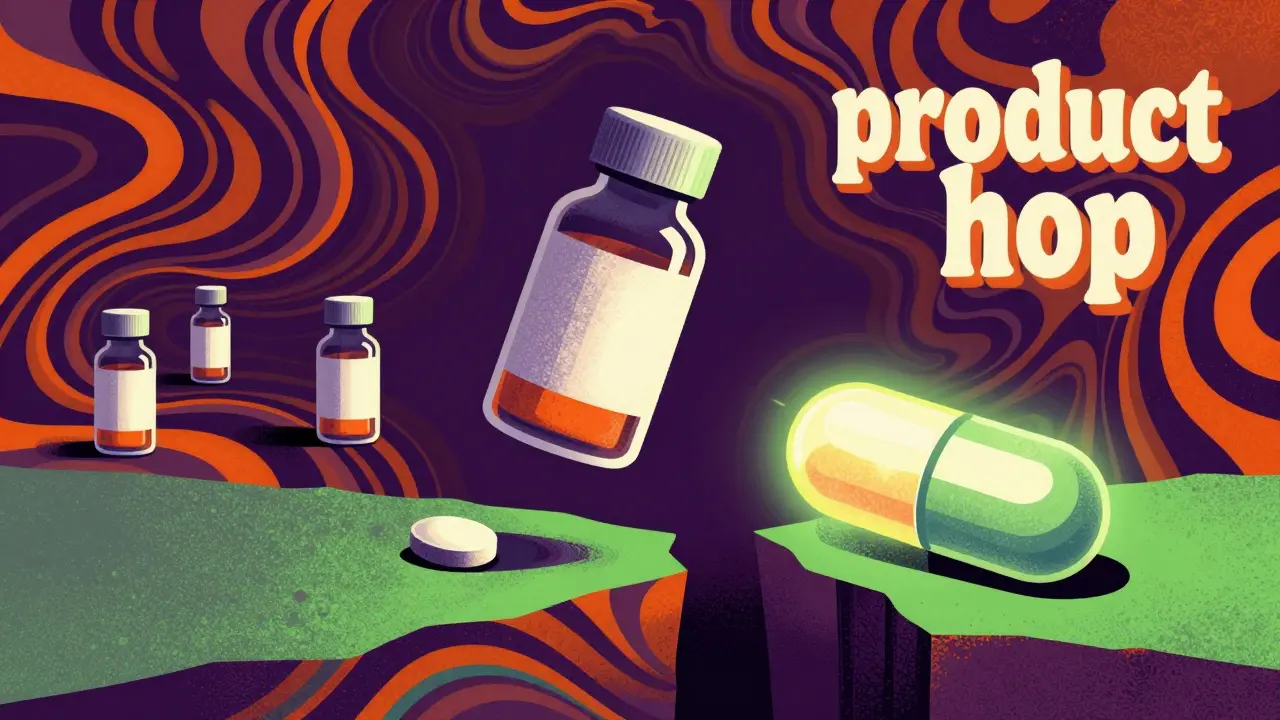
The landscape is shifting. Brand companies have found a new way to protect their revenue: the "product hop." By launching a new, patented version of a drug-like moving from a standard tablet to an extended-release version-they can divert patients away from the cheap generics. Research from the Administration for Strategic Planning and Evaluation (ASPE) found that these new versions can shrink the market for first-to-file generics by up to 29% within a year.
On the flip side, the Generic Drug User Fee Amendments (GDUFA) have made the approval process much faster. First-cycle approval rates jumped from 20% to about 66%, cutting the time to market by 13 months. This speed reduces the "capitalized cost" for generic companies by about $3.5 million, making it more attractive for them to enter the market despite the threat of authorized generics.
What exactly is an authorized generic?
An authorized generic is a brand-name drug that is sold without the brand name. It is manufactured by the original company (or their licensee) and is chemically identical to the brand version, but it is marketed as a generic to compete with other generic versions of the same drug.
Why is the "first-to-file" status so important?
Under the Hatch-Waxman Act, the first generic company to file an ANDA for a drug often receives 180 days of market exclusivity. This means no other third-party generics can enter the market for six months, allowing the first-filer to capture a huge amount of revenue while prices are still relatively high.
Does an authorized generic break the 180-day exclusivity?
Not exactly. The exclusivity prevents other generic companies from entering, but it doesn't stop the original brand manufacturer from launching their own authorized generic. This is why you often see both a first-to-file generic and an authorized generic on the market at the same time.
Which one is typically cheaper for the patient?
In most cases, the competition between the two drives prices down. When both are available, retail prices are typically 4% to 8% lower than if only the first-to-file generic existed. However, the absolute lowest prices only appear once 6 or more different generic manufacturers enter the market.
Do authorized generics lower the quality of the medicine?
No. In fact, authorized generics are the exact same product as the brand-name drug, just in different packaging. First-to-file generics are also required by the FDA to prove bioequivalence, meaning they work the same way in the body as the original.


Dale Kensok
April 27, 2026 AT 18:38The systemic asymmetry here is frankly staggering. We are witnessing a textbook example of regulatory capture where the Hatch-Waxman framework, ostensibly designed to foster competition, actually facilitates a sophisticated rent-seeking mechanism through the 180-day exclusivity window. The "product hop" is simply an exercise in strategic market segmentation to preserve the brand's monolithic pricing power. It is a fascinating, albeit predatory, orchestration of intellectual property arbitrage that renders the concept of a "free market" in pharmaceuticals entirely illusory. The marginal utility of these authorized generics is merely a smokescreen for maintaining a corporate oligopoly under the guise of consumer benefit.
Peter Minto
April 28, 2026 AT 19:26This whole system is rigged by lawyers and suits who dont care about real americans!! Just make em all cheap now and stop with the legal games!! 🇺🇸🇺🇸
Abhishek Charan
April 29, 2026 AT 13:38Actually... the premise that more competitors always equal better outcomes is a fallacy!!! 🙄 One could argue that the extreme price erosion mentioned leads to a lack of quality control in the long run... 📉 Does anyone actually trust a drug that is 95% cheaper than the original??? I highly doubt it!!! 💊🚩
Stephen Johnson
April 30, 2026 AT 02:38It is quite a heavy cycle to think about, how something meant to help us is turned into a tactical battleground. Just a quiet observer here, but it seems like the real victory is just waiting for that sixth competitor to enter the fray.
Amber McCallum
May 1, 2026 AT 18:43The world is just one big game of greed. These companies don't care if you live or die as long as the numbers go up. It's sad that we have to wait for a "price crash" just to afford to breathe.
Steve Grayson
May 3, 2026 AT 04:40The data on the ANDA+AG markets is pretty interesting. It shows that even a small increase in competition has a measurable impact on the retail price.
Kevin Taggart
May 4, 2026 AT 00:36i didnt know they could just change the label and call it a generic... kinda wild :)
Jonathan Hall
May 5, 2026 AT 13:13While I generally try to see the best in all corporate structures and believe in the peaceful coexistence of market entities, it is absolutely infuriating that the "product hop" exists as a predatory tactic to fleece the elderly and the sick who are just trying to maintain their health while the companies hide behind patents that should have been invalidated years ago by any competent court in this country, and frankly, the whole structure feels like a slap in the face to global healthcare equity.
Michael Yoste
May 5, 2026 AT 20:35I've spent years studying these market dynamics and it's honestly heartbreaking to see how the system fails the individual. You can feel the desperation of the patient in these statistics, but the friendly truth is that you're just a pawn in their chess game. It's a spiritual vacuum wrapped in a corporate balance sheet, and we're all just paying the price for their lack of empathy.
a lot of people don't realize that the pharmacy's profit spike actually makes them less likely to push for the absolute cheapest option if it doesn't suit their bottom line.