
Standing up too quickly and feeling a sudden wave of dizziness is a frightening experience for anyone. For older adults taking medication to manage high blood pressure, this sensation can signal a dangerous condition known as Orthostatic Hypotension a sudden drop in blood pressure when standing up from a sitting or lying position. This condition is not just about feeling lightheaded; it is a leading cause of falls and fractures in the elderly. Many people assume that treating high blood pressure aggressively will always lead to these drops, but recent medical research suggests a more complex relationship between medication safety and stability.
Understanding the balance between controlling hypertension and preventing orthostatic hypotension is critical for maintaining independence and quality of life. The goal is not to stop treating high blood pressure, but to manage it in a way that protects the heart and brain without causing dangerous instability when moving around. This guide breaks down the risks, the specific medications involved, and the practical steps you can take to stay safe.
Understanding the Sudden Drop
Orthostatic hypotension occurs when your body fails to adjust blood pressure quickly enough when you change position. Clinically, this is defined as a sustained reduction of systolic blood pressure of at least 20 mm Hg or diastolic blood pressure of at least 10 mm Hg within 3 minutes of standing. While anyone can experience this, the prevalence in older adults ranges from 3% to 26% according to European Society of Cardiology observational data. The numbers rise significantly with age due to natural physiological changes.
As we age, the baroreflex function-the body's automatic system for regulating blood pressure-becomes less sensitive. This means the heart and blood vessels react more slowly to the pull of gravity when you stand up. Additionally, older adults often have reduced renin-angiotensin-aldosterone system activity, which further complicates fluid and pressure regulation. When you combine these age-related changes with antihypertensive therapy, the risk of a sudden pressure drop increases, creating a paradoxical situation where the cure for high blood pressure contributes to low blood pressure upon standing.
Which Medications Carry the Highest Risk?
Not all blood pressure drugs affect stability in the same way. Some classes of medication are more likely to trigger orthostatic hypotension than others. Identifying these agents is the first step in managing safety. The Irish Longitudinal Study on Ageing analyzed data to determine the odds ratios for different drug classes, revealing clear patterns in risk.
Alpha Blockers medications that block alpha receptors to relax blood vessels carry the highest risk profile. Observational data indicates an incidence rate of approximately 28% in elderly hypertensive patients. These drugs are often used for prostate issues but are sometimes prescribed for blood pressure. Their mechanism directly relaxes blood vessel walls, which can lead to significant pooling of blood in the legs when standing.
Beta-Blockers drugs that reduce heart rate and force of contraction present substantial risk as well. Studies show odds ratios of 2.05 for initial orthostatic hypotension and 3.36 for sustained hypotension. These medications reduce the heart's ability to pump faster in response to standing, which can leave blood pressure too low to support the brain immediately.
Calcium Channel Blockers drugs that prevent calcium from entering heart and blood vessel cells demonstrate a variable risk profile. Non-dihydropyridines like diltiazem and verapamil show higher risk due to age-related reduction in liver metabolism. However, dihydropyridines like amlodipine exhibit better tolerability with a 12% lower incidence of orthostatic hypotension compared to other classes in long-term use.
Conversely, ACE Inhibitors and ARBs medications that block the production or action of angiotensin demonstrate the most favorable risk profile. Multiple studies indicate their potential protective effect against orthostatic hypotension episodes, with incidence rates around 8-10%. Some research even suggests a 14-15% reduction in orthostatic hypotension incidence compared to other antihypertensive classes.
| Medication Class | Risk Level | Key Characteristics |
|---|---|---|
| Alpha Blockers | High | ~28% incidence rate; strong association with falls |
| Beta-Blockers | High | Odds ratio 3.36 for sustained hypotension |
| Calcium Channel Blockers | Variable | Amlodipine safer than Diltiazem; slow binding kinetics |
| ACE Inhibitors / ARBs | Low | 8-10% incidence; potential protective effect |

The Paradox of Intensive Treatment
A common belief among patients and even some clinicians is that treating blood pressure more aggressively increases the risk of orthostatic hypotension. However, data from the SPRINT trial and multiple meta-analyses challenge this assumption. The SPRINT trial demonstrated equivalent orthostatic hypotension rates between intensive blood pressure control groups and standard control groups. In fact, an individual participant level meta-analysis of 9 randomized controlled trials involving over 18,000 adults showed that more aggressive antihypertensive treatment actually reduced orthostatic hypotension risk by 17%.
This finding is counterintuitive but vital. It suggests that uncontrolled high blood pressure, specifically supine hypertension, may be the true driver of adverse events rather than the standing blood pressure itself. Dr. Harry Goldblatt from Case Western Reserve University argues that the impetus of adverse events in hypertensive patients with orthostatic hypotension is supine hypertension. De-prescribing antihypertensives to address orthostatic hypotension may inadvertently worsen supine hypertension, potentially increasing cardiovascular risk. The American Heart Association's 2022 analysis concluded that evidence does not support the routine down-titration or discontinuation of antihypertensives in asymptomatic patients.
Practical Management Strategies
Managing the risk of falls while maintaining blood pressure control requires a structured approach. Non-pharmacological interventions should always be the first line of defense. Patient education focuses on gradually coming to a vertical position after a long time lying down, or after meals, as well as after defecation and urination. Clinical protocols recommend that patients practice these position changes multiple times daily to build tolerance, with measurable improvement typically observed within 2-4 weeks.
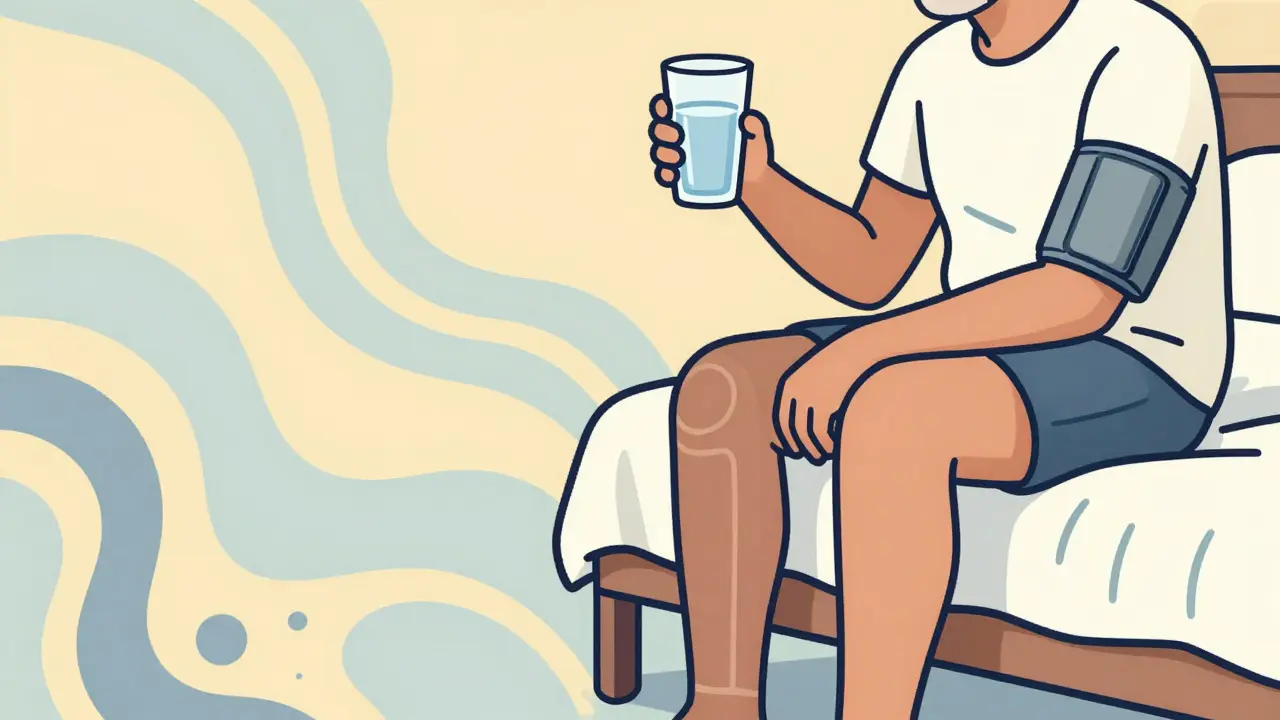
For those who need to stand up quickly, sitting on the edge of the bed for a minute before standing can help. This allows the body's baroreflex to adjust to the change in gravity. Staying hydrated is another critical factor, as dehydration reduces blood volume and makes pressure drops more severe. Compression stockings can also help by preventing blood from pooling in the legs, though they must be fitted correctly to be effective.
When medication adjustment is necessary, the transition from high-risk to lower-risk antihypertensive agents should occur gradually over 4-6 weeks. Close blood pressure monitoring in both supine and standing positions is essential during this period. The American Geriatrics Society Beers Criteria specifically identifies alpha blockers and certain beta-blockers as potentially inappropriate medications for older adults due to orthostatic hypotension risk. This influences approximately 15-20% of hypertension treatment decisions in geriatric care settings.
When to Seek Medical Advice
Most people with orthostatic hypotension can manage symptoms by taking preventive steps, and the condition rarely causes long-term problems if managed well. However, there are signs that indicate a need for professional intervention. If you experience fainting, frequent falls, or confusion upon standing, you should consult your healthcare provider immediately. These symptoms suggest that the current Blood Pressure Medication regimen may need optimization.
Do not stop taking your medication on your own. Suddenly stopping antihypertensive drugs can cause a dangerous rebound in blood pressure. Instead, schedule an appointment to review your medication list. Bring a log of your blood pressure readings taken at different times of the day and in different positions if possible. This data helps doctors understand the pattern of your pressure drops and tailor the treatment plan accordingly.
Recent developments in blood pressure medication safety include the 2023 update to the American Geriatrics Society Beers Criteria, which strengthened warnings about alpha blockers and certain beta-blockers. Market trends show increasing preference for ARBs and ACE inhibitors in elderly populations, with these classes representing 38% of new hypertension prescriptions for patients over 65 in 2023. This shift is partially driven by their favorable orthostatic hypotension risk profile. Future directions include the development of smart antihypertensive medications with position-dependent activity, which may further reduce risks in the coming years.
Can I stop taking my blood pressure medication if I feel dizzy?
No, you should never stop taking your medication without consulting your doctor. Stopping abruptly can cause a dangerous spike in blood pressure. Instead, contact your healthcare provider to discuss adjusting your dosage or switching to a medication with a lower risk of dizziness.
What is the safest time to take blood pressure pills?
For isolated systolic hypertension common in elderly patients, medications with 6-12 hour elimination half-lives taken no earlier than 3 hours before bedtime are recommended to minimize nocturnal hypotension risks. However, timing should always be determined by your doctor based on your specific pressure patterns.
Does drinking water help with orthostatic hypotension?
Yes, staying well-hydrated increases blood volume, which helps maintain blood pressure when standing. Drinking a glass of water quickly upon waking can also trigger a reflex that raises blood pressure temporarily.
Are there foods that affect orthostatic hypotension?
Large meals can cause blood to pool in the digestive system, leading to postprandial hypotension. Eating smaller, more frequent meals can help reduce this effect. Additionally, a diet low in salt may worsen symptoms in some people, so discuss salt intake with your doctor.
How do I measure blood pressure at home correctly?
To check for orthostatic hypotension, measure your blood pressure while lying down, then stand up and measure again after one minute and three minutes. A drop of 20 mm Hg systolic or 10 mm Hg diastolic indicates orthostatic hypotension.


Jefferson Moratin
March 27, 2026 AT 10:19The physiological interplay between baroreceptor sensitivity and pharmacological intervention is a profound example of homeostatic balance in the human organism. We often view medication as a simple switch to toggle pressure, yet the reality involves complex feedback loops that degrade with age. It is essential to recognize that the body's natural regulatory mechanisms are not merely obstacles to be overcome but partners in the therapeutic process. Understanding this dynamic shifts the perspective from control to collaboration with one's own biology.
Agbogla Bischof
March 27, 2026 AT 14:07Exactly!! The baroreflex is key!!! Many people overlook the autonomic nervous system role!!! It is crucial to monitor standing pressure!! You must check both systolic and diastolic values!!! The data supports this approach!!! Do not ignore the time factor!!! Three minutes is the standard window!!!
Kevin Y.
March 28, 2026 AT 15:34One must consider the implications of these findings for the broader geriatric population. The distinction between alpha blockers and ACE inhibitors is particularly noteworthy for clinical practice. It is my sincere hope that healthcare providers utilize this information to tailor treatments more effectively. A collaborative approach between patient and physician yields the best outcomes for stability.
Raphael Schwartz
March 28, 2026 AT 22:04Old people need to stand up slow. This stuff is dangerous for sure.
Katie Putbrese
March 30, 2026 AT 11:56You have a duty to protect the elderly from harm. Ignoring these signs is morally wrong. Families need to step up and monitor their parents closely. It is about respect for life and safety standards. We cannot be so careless with our own health.
Marissa Staples
March 31, 2026 AT 22:49I think it is really interesting how the body changes over time. It makes me wonder about the long term effects of these drugs. Maybe we need to look at lifestyle changes more. It feels like a delicate balance that we are trying to maintain. I hope more people read this and understand the risks.
Stephen Alabi
April 1, 2026 AT 14:27The cited meta-analyses often suffer from selection bias in their cohorts. One cannot simply assume that intensive control is universally beneficial without considering individual comorbidities. The SPRINT trial had specific exclusion criteria that limit generalizability to the frail elderly population. Clinical judgment must supersede broad statistical trends in complex cases.
Aaron Sims
April 3, 2026 AT 06:07Big Pharma wants you on meds forever!!! They do not care about your falls!!! The guidelines are just money grabs!!! You should trust your gut!!! The data is manipulated!!! Wake up people!!!
peter vencken
April 5, 2026 AT 01:29my dad had this issue with his BP meds. we switched him to a diffrent one and it helped. hydration is key man. dont forget to drink water. compression socks work too if u can wear them. just talk to the doc about it. gr8 info here.
Chris Crosson
April 6, 2026 AT 09:02We need to be assertive about asking doctors to review our medication lists. It is not enough to just take the pill and hope for the best. Patients should track their own numbers and bring them to appointments. This empowers you to make better decisions about your health care.
Kevin Siewe
April 7, 2026 AT 11:20Stay hydrated and listen to your body.
Blessing Ogboso
April 8, 2026 AT 02:58It is truly fascinating how our bodies adapt over time. We often forget that aging changes everything about our physiology. The balance between keeping pressure up and keeping it down is delicate. Many families struggle with this without knowing why. I have seen grandparents fall because of this exact issue. It breaks my heart to see them lose independence so quickly. Hydration is something we all talk about but rarely do enough. Drinking water right when you wake up is a game changer. The medical community is finally listening to these older voices. We need more support systems in place for daily monitoring. Family members should be educated on how to help safely. Fear of falling can be just as dangerous as the fall itself. Confidence in movement is key to maintaining quality of life. Medication adjustments should never happen without a doctor. We must advocate for better guidelines in geriatric care. This information saves lives if shared correctly.
Mihir Patel
April 8, 2026 AT 19:41This is so dramatic but true. My mom almost died from this. The doctors were so slow to react. It was a nightmare for the whole family. We thought she was just old but it was the meds. Please be careful out there. It is scary stuff.
Caroline Dennis
April 9, 2026 AT 06:28Baroreflex sensitivity decline is the primary driver here.