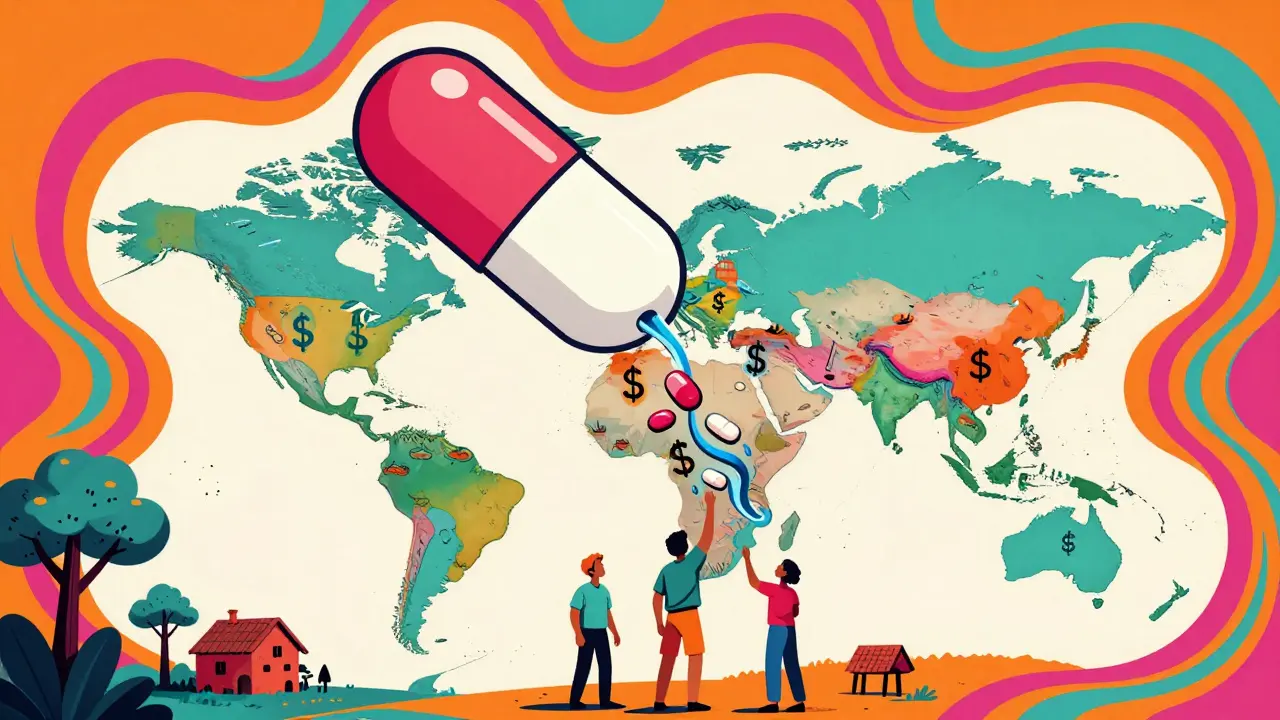
The world is spending more on healthcare than ever before. In 2025, global health spending is projected to hit 1.6 trillion in medicine sales alone, not including the $157 billion spent on COVID-19 vaccines. But here’s the real story: most of that money isn’t going to new drugs. It’s going to the same pills you’ve been taking for years - the generics.
Why Generics Are the Silent Backbone of Global Health
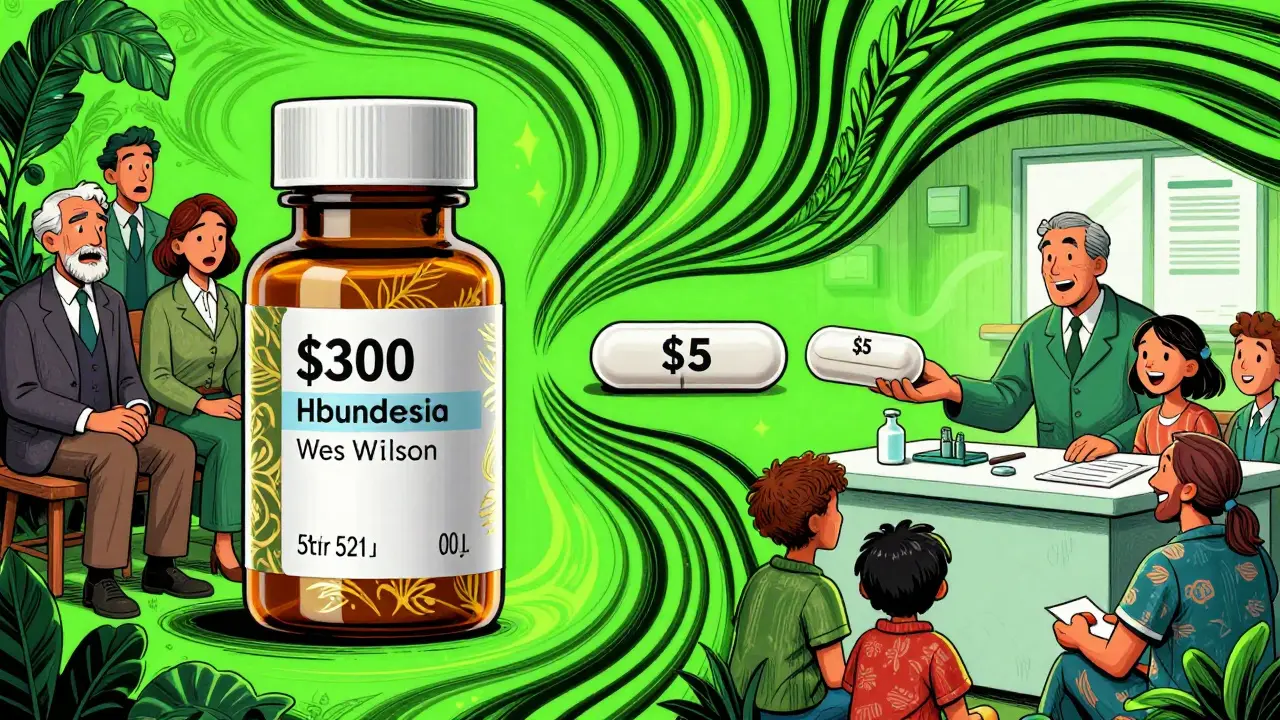
Generics make up 80 to 90% of all prescriptions filled in high-income countries. But they account for less than 20% of total drug spending. That’s because they cost a fraction of brand-name drugs. A 30-day supply of generic statins might cost $5. The brand version? $300. This isn’t just a savings - it’s what keeps millions of people from skipping their medication.
In the U.S., where drug prices are the highest in the world, generics saved patients over $300 billion between 2015 and 2024. Without them, out-of-pocket spending per person would have jumped from $177 in 2025 to over $500 by 2033. Instead, it’s projected to rise to $231 - still steep, but far less catastrophic thanks to generic competition.
The Inequality Behind the Numbers
Not every country benefits equally. While the U.S., Germany, and Japan spend over 5% of their GDP on healthcare, many low-income nations spend less than 1.2%. In countries like Turkmenistan, Afghanistan, and Nigeria, people pay for nearly all their healthcare out of pocket - often more than 75% of their total health spending. That means if a generic isn’t available, affordable, or accessible, people don’t take their medicine.
And it’s not just about money. In 37 countries, real public health spending dropped after the pandemic. Lebanon’s spending fell 71%. Malawi’s dropped 41%. In places like these, generics aren’t a cost-saving option - they’re the only reason people aren’t dying from treatable conditions like hypertension, diabetes, or HIV.
Where the Money Really Goes
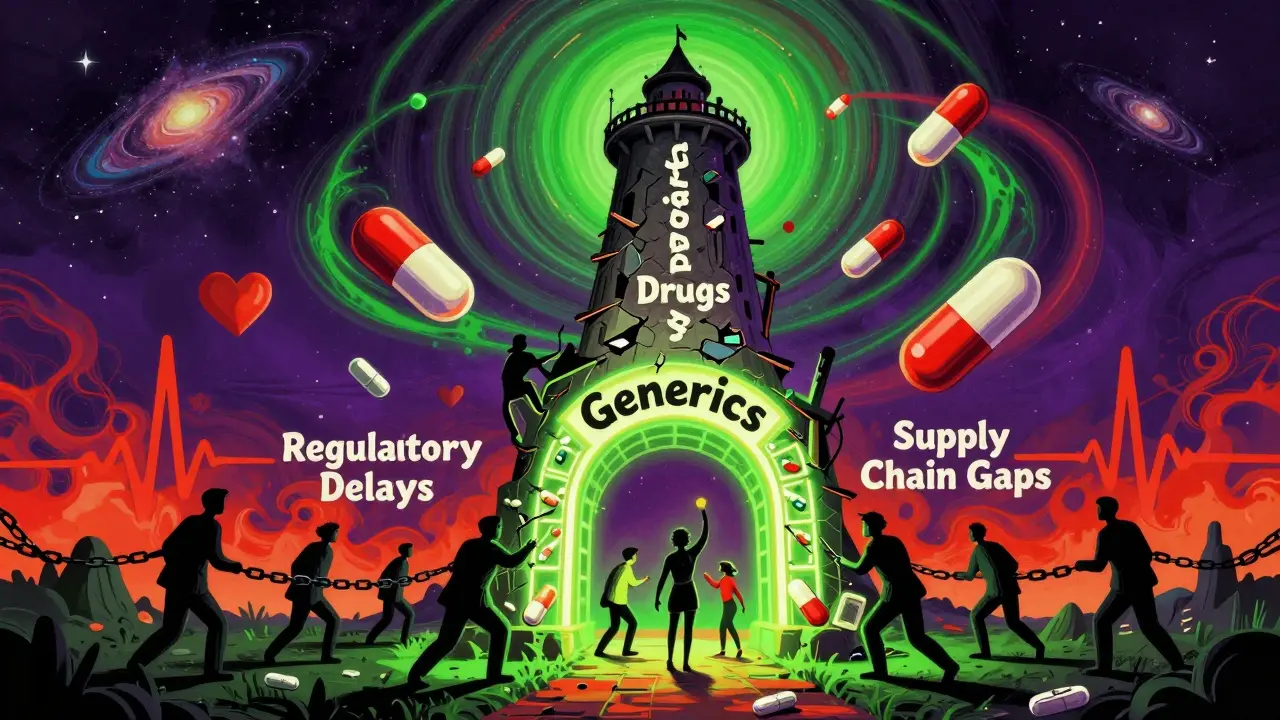
While generics keep costs down, the real spending explosion is happening in specialty drugs. Oncology, immunology, obesity, and diabetes treatments now dominate growth in pharmaceutical sales. In the U.S., drug spending rose $50 billion in 2024 alone - nearly all of it from these high-cost therapies. Many of these drugs have no generic alternatives yet. Biosimilars, the cheaper versions of biologic drugs, are coming, but slowly. Regulatory delays, complex manufacturing, and limited physician adoption mean they’re not making a dent yet.
Insurers in the Middle East, Africa, and the Americas say 55% of rising medical costs come from new drug innovations. In the Americas, 88% of insurers blame new medical technologies. These aren’t abstract trends - they’re forcing people to choose between rent and insulin.
The Generics Paradox in Emerging Markets
China and other "pharmerging" economies are changing the game. Historically, these countries relied heavily on generics because they couldn’t afford anything else. Now, as incomes rise and health systems expand, they’re adopting more innovative medicines. China’s market is accelerating post-COVID, with more people getting access to original brand drugs than ever before.
This creates a paradox: while high-income countries use generics to control costs, emerging economies are using them as a stepping stone to access advanced care. The result? A global split. In Europe, generics are a tool for sustainability. In parts of Africa and Asia, they’re still the primary gateway to basic care - and the lack of them means real human cost.
Why Generic Access Isn’t Just About Price
It’s not enough to make a generic drug. It has to be available where people need it. In rural India, a generic antibiotic might be cheap - but if there’s no pharmacy within 50 miles, it doesn’t help. In sub-Saharan Africa, supply chain gaps mean medicines expire before they reach clinics. Regulatory delays can hold up generic approvals for years. In some countries, doctors aren’t trained to prescribe generics. In others, patients distrust them because they’ve been sold fake versions before.
The WHO Global Health Expenditure Database shows that even when generics are approved, they often don’t make it into public formularies. Why? Because of lobbying, corruption, or simply poor planning. A drug can be approved, but if the hospital doesn’t stock it, it doesn’t exist.
The Future: More Drugs, Fewer Savings?
By 2033, U.S. health spending is projected to hit $8.6 trillion. Drug spending alone will nearly double, from $776 billion to $1.7 trillion. Without generics, it would be worse. But as more blockbuster drugs lose patent protection, the next wave of generics should help. Drugs for Alzheimer’s, rare cancers, and autoimmune diseases are entering the pipeline.
Yet here’s the catch: as biologics become more common, their generic versions - biosimilars - are harder to make, harder to approve, and harder to prescribe. They’re also more expensive to produce. That means even with generics, the overall cost curve may not bend downward. The real challenge isn’t just making cheaper pills - it’s making sure they reach the people who need them.
What’s at Stake
Every year, 100 million people are pushed into extreme poverty because of health costs. Generics are one of the few tools we have to stop that. In countries where public spending is below 2% of GDP, they’re not optional - they’re survival.
Global health spending will keep rising. New drugs will keep coming. But if we don’t strengthen access to affordable generics - through better regulation, fairer pricing, and stronger supply chains - then the gap between who can afford care and who can’t will only grow wider.
It’s not a question of innovation versus affordability. It’s about making sure innovation doesn’t leave half the world behind.

James Moreau
March 23, 2026 AT 22:04Generics are the unsung heroes of global health. I work in a community clinic, and every day I see patients who’d skip their meds if not for $5 statins. It’s not glamorous, but it’s life-saving.
J. Murphy
March 25, 2026 AT 00:51Jesse Hall
March 25, 2026 AT 11:38You’re right, James. 🙌 Generics are quiet legends. I used to think brand names were better until my dad’s diabetes meds switched and he saved $200/month. No more choosing between insulin and groceries. 💙
Donna Fogelsong
March 27, 2026 AT 02:50Sean Bechtelheimer
March 27, 2026 AT 13:27Seth Eugenne
March 28, 2026 AT 09:00Donna and Sean… I get where you’re coming from, but let’s not lose sight of the real issue: access. Even if generics were perfect (and they mostly are), they don’t help if they’re not in the pharmacy. The problem isn’t the pill-it’s the supply chain. 🌍
rebecca klady
March 28, 2026 AT 10:12Namrata Goyal
March 30, 2026 AT 02:08Alex Arcilla
March 31, 2026 AT 09:37Don’t get me wrong-generics are a miracle. But let’s be real: in the US, they’re also a distraction. We fixate on $5 pills while insurers charge $1000/month for ‘coverage’ that doesn’t cover the *pharmacy*. It’s like fixing a leaky roof while the whole house burns down. 🏠🔥
Brandon Shatley
March 31, 2026 AT 09:54Jefferson Moratin
April 2, 2026 AT 01:00The paradox of generics is not economic, but epistemological. We treat medication as a commodity, yet health is a relational state. The pill is not the cure-it is a mediator. When we reduce healing to cost-per-dose, we erase the patient’s agency, the physician’s judgment, and the social context of care. Generics are not the solution-they are the symptom of a system that commodifies survival.
Caroline Dennis
April 3, 2026 AT 08:43