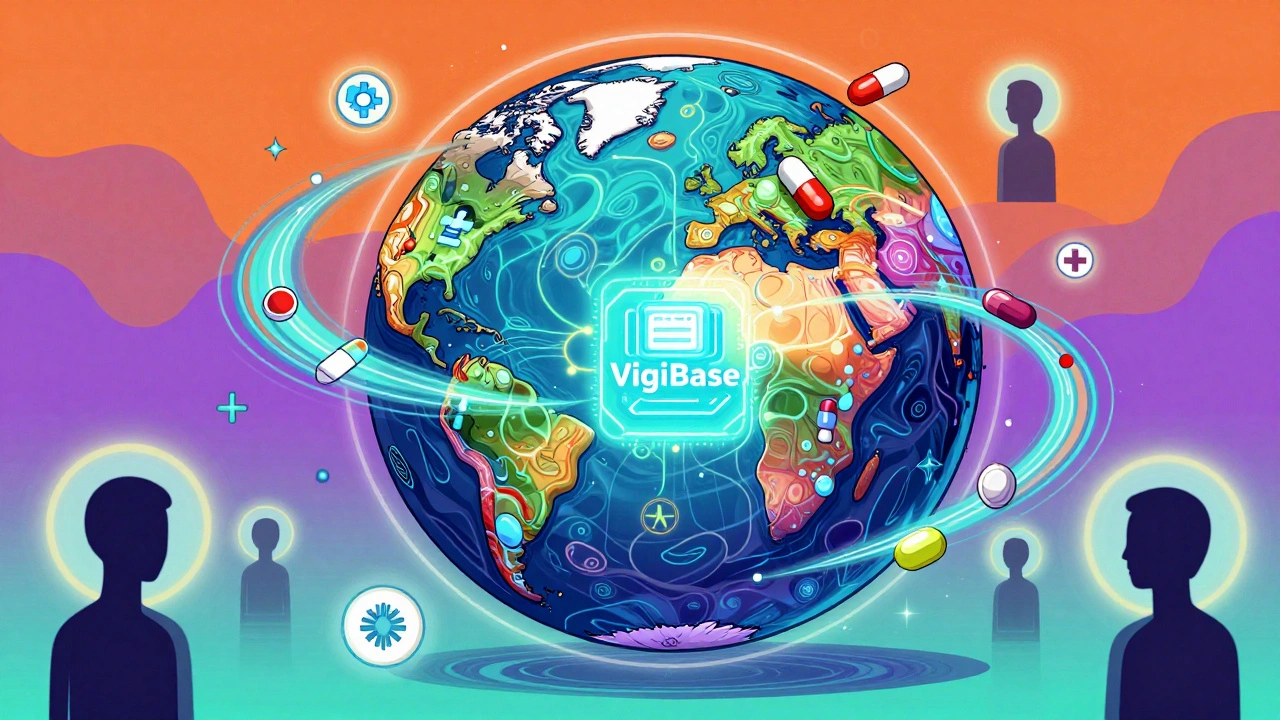
Every time someone takes a medicine, there’s a silent system working behind the scenes to watch for harm. This isn’t science fiction-it’s pharmacovigilance, the global network that tracks adverse drug reactions and keeps millions safe. Since 1968, the World Health Organization has coordinated a system that collects reports from over 170 countries. It’s the reason we know about rare but deadly side effects like blood clots from certain COVID-19 vaccines or liver damage from specific herbal supplements. Without this network, dangerous drugs could stay on shelves for years before anyone realized they were harming people.
How the Global System Works
The backbone of international drug safety monitoring is VigiBase, managed by the Uppsala Monitoring Centre in Sweden. It holds over 35 million individual case safety reports-each one a record of a patient’s adverse reaction to a medicine. These reports come from doctors, pharmacists, patients, and even pharmaceutical companies. But they don’t arrive in random formats. Every report follows strict standards: the E2B(R3) electronic format, MedDRA medical terminology with 78,000+ standardized terms, and WHODrug Global, a dictionary that maps every medicine name to its active ingredient across 60+ therapeutic categories.
Each country has a national pharmacovigilance center. In the UK, it’s the MHRA’s Yellow Card Scheme. In the US, it’s the FDA’s FAERS. These centers collect reports locally, then send anonymized data to VigiBase. The system doesn’t just store reports-it analyzes them. Algorithms scan for patterns: if ten people in different countries report sudden kidney failure after taking the same new painkiller, that’s a signal. A signal doesn’t mean the drug is dangerous-it means someone needs to investigate further.
Regional Systems Compared
Not all systems are built the same. The European Union runs EudraVigilance, a legally binding system where drug companies must report adverse events within 15 days. The EU’s Pharmacovigilance Risk Assessment Committee (PRAC) reviews signals within 75 days on average. That’s fast. In contrast, the WHO system relies on voluntary reporting and has no enforcement power. Countries like Sweden report 1,200 adverse events per 100,000 people each year. Nigeria? Just 2.3 per 100,000. That’s not because Nigerians don’t have side effects-it’s because they lack the infrastructure to report them.
The U.S. system, FAERS, gets about 2 million reports a year and doesn’t feed directly into VigiBase. But many U.S. reports still end up there through voluntary submissions. The EU’s advantage? Active surveillance. They pull data from electronic health records covering 150 million patients. That’s like having a real-time alarm system inside hospitals. The WHO system’s strength? Global reach. It caught the dengue vaccine risk in the Philippines in 2017 because local reports were submitted-even though no other country had seen it yet.
Why Some Countries Struggle
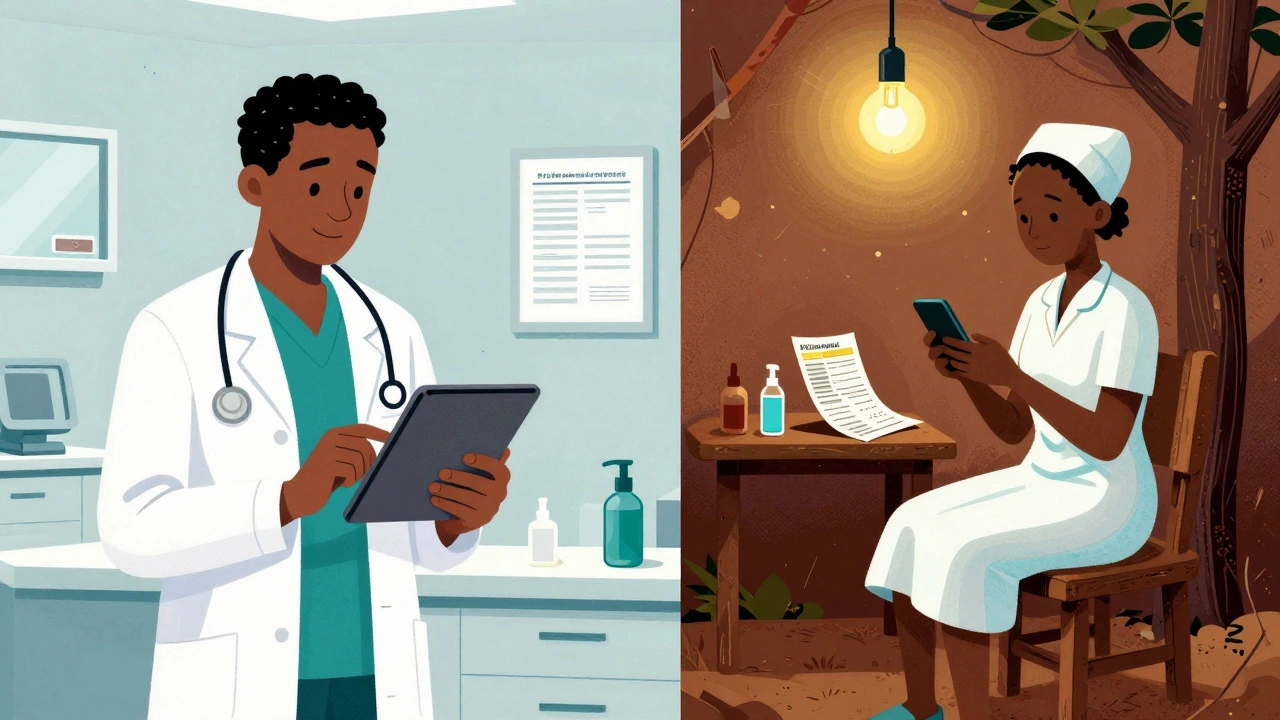
High-income countries spend about $1.20 per person per year on drug safety monitoring. Low-income countries? Around $0.02. That gap shows up in the data. In Africa, only 18 out of 50 nations have dedicated pharmacovigilance budgets. Many clinics don’t have internet. Doctors don’t have time to fill out forms. Nurses don’t know what to report. A 2022 survey found 68% of pharmacovigilance officers in Southeast Asia had less than 15 hours of formal training. WHO recommends 40.
But progress is happening. Ethiopia cut its reporting time from 90 days to 14 after using PViMS, a web-based tool built by MTaPS. Zanzibar joined the WHO network in January 2024. Ukraine restarted its national center in March 2023, despite the war. These aren’t just technical fixes-they’re acts of public health resilience.
Technology and Innovation
Artificial intelligence is now helping sift through millions of reports. UMC’s AI tools cut false alarms by 28% in 2023. That means real dangers get noticed faster. VigiAccess, the public portal to VigiBase, has had 12 million visitors since 2015. Researchers, doctors, and even patients can look up safety data on any drug. It’s transparency in action.
By 2025, the ISO IDMP standards will roll out globally. These standards will make sure every medicine-whether it’s called “Paracetamol,” “Acetaminophen,” or “Tylenol”-is identified the same way across all systems. Right now, mismatched names cause delays and missed signals. With IDMP, that could improve by 40%.
The Human Cost of Gaps
When a country can’t report, people die quietly. In 2021, a WHO review found only 42% of low- and middle-income countries had fully functional pharmacovigilance systems. That means drugs with hidden risks-like liver toxicity from traditional medicines or allergic reactions to cheap antibiotics-can circulate for years without warning. The global market for pharmacovigilance services is growing fast: from $5.4 billion in 2022 to an expected $13.2 billion by 2030. But that money mostly goes to big pharma in rich countries. The systems that need it most-rural clinics in Malawi, remote health posts in Papua New Guinea-still lack basic tools.
One doctor in Kenya told a WHO team: “We see five patients a day with unexplained rashes after taking antimalarials. We don’t know if it’s the drug, the malaria, or something else. We have no way to tell the world.” That’s the real cost of a broken system.
What’s Next?
There’s no single fix. But three things are critical: funding, training, and integration. Donor-funded projects help, but long-term sustainability means governments must budget for pharmacovigilance like they do for vaccines or clean water. Training programs need to be local, practical, and ongoing-not one-off workshops. And systems must talk to each other. Right now, the EU, U.S., and WHO systems are like three islands. They share some data, but not seamlessly.
The goal isn’t just to collect more reports. It’s to act faster. To catch a dangerous drug before it kills ten more people. To give a mother in Laos the same safety net as a grandmother in London. The technology exists. The data is there. What’s missing is the will to make it universal.
What is pharmacovigilance?
Pharmacovigilance is the science of detecting, understanding, and preventing adverse effects from medicines. It’s how we find out if a drug that works well in clinical trials causes unexpected harm when millions of people use it in real life. The World Health Organization defines it as essential for protecting patient safety and supporting public health.
How does VigiBase work?
VigiBase is the WHO’s global database for adverse drug reaction reports. It receives anonymized data from over 170 countries using standardized formats like E2B(R3) and MedDRA. Advanced software looks for patterns-like a spike in heart palpitations linked to a new diabetes drug. When a signal is found, experts investigate and, if needed, issue global safety alerts.
Why do rich countries report more adverse reactions?
It’s not that people in wealthy nations have more side effects-it’s that they have better systems. High-income countries have trained staff, electronic reporting tools, public awareness campaigns, and funding to process reports. Sweden reports 1,200 adverse events per 100,000 people yearly. Nigeria reports 2.3. The difference isn’t biology-it’s infrastructure.
Can the public access drug safety data?
Yes. VigiAccess, run by the Uppsala Monitoring Centre, lets anyone search anonymized data from VigiBase. You can look up a drug and see what side effects have been reported worldwide, how many cases there were, and which countries reported them. It’s a rare example of global health data being openly available to patients and researchers.
What’s being done to fix gaps in low-income countries?
Organizations like WHO and MTaPS are helping countries build basic systems. Tools like PViMS let clinics report via mobile phones, even without stable internet. Training programs are expanding, and vaccine safety monitoring has seen big gains-45 low-income countries now report vaccine reactions in days instead of months. But long-term success depends on governments making pharmacovigilance a funded priority, not just a donor project.
How do new drugs get monitored after approval?
Clinical trials involve a few thousand people over months. Real-world use involves millions over decades. That’s why post-market monitoring is critical. Once a drug is approved, doctors and patients report side effects. These reports go into national systems, then into global databases like VigiBase. Algorithms scan for unusual patterns. If a new risk emerges-like a rare brain bleed linked to a blood thinner-the regulatory agency can update warnings, restrict use, or even pull the drug off the market.
Final Thoughts
Drug safety isn’t just about regulations or databases. It’s about trust. When you swallow a pill, you’re trusting that someone, somewhere, is watching for the hidden dangers. The international system isn’t perfect. It’s uneven. It’s underfunded in places that need it most. But it’s the only thing standing between a new medicine and a global health crisis. The next breakthrough drug might save millions. But without strong monitoring, it could also harm them. The goal isn’t perfection-it’s protection. And that’s worth fighting for.

Pamela Mae Ibabao
December 4, 2025 AT 02:48Joanne Rencher
December 5, 2025 AT 13:07Wendy Chiridza
December 7, 2025 AT 12:54Storz Vonderheide
December 8, 2025 AT 12:06Palanivelu Sivanathan
December 9, 2025 AT 03:25dan koz
December 9, 2025 AT 19:33Michael Bene
December 10, 2025 AT 16:58Ethan McIvor
December 11, 2025 AT 19:33Mindy Bilotta
December 13, 2025 AT 13:47Erik van Hees
December 13, 2025 AT 16:57Josh Bilskemper
December 14, 2025 AT 04:56Paul Corcoran
December 15, 2025 AT 23:31Colin Mitchell
December 17, 2025 AT 18:40Chris Jahmil Ignacio
December 19, 2025 AT 18:27