Serotonin Syndrome Risk Checker
When you're struggling with depression or burnout, it's natural to look for help anywhere you can. That includes herbal supplements like rhodiola. Sold as a natural way to lift mood, reduce fatigue, and fight stress, rhodiola is everywhere-online stores, health food shops, even some pharmacies. But if you're already taking an antidepressant like Lexapro, Zoloft, or Prozac, combining it with rhodiola could be dangerous. And most people have no idea.
What Rhodiola Actually Does in Your Body
Rhodiola rosea is a plant that grows in cold, mountainous regions like Siberia and Scandinavia. For centuries, people there used it to handle harsh climates and physical strain. Today, it's marketed as an adaptogen-a substance that helps your body cope with stress. The main active compounds are salidroside and rosavin. These aren't just flavorings. They actively change how your brain handles mood chemicals.
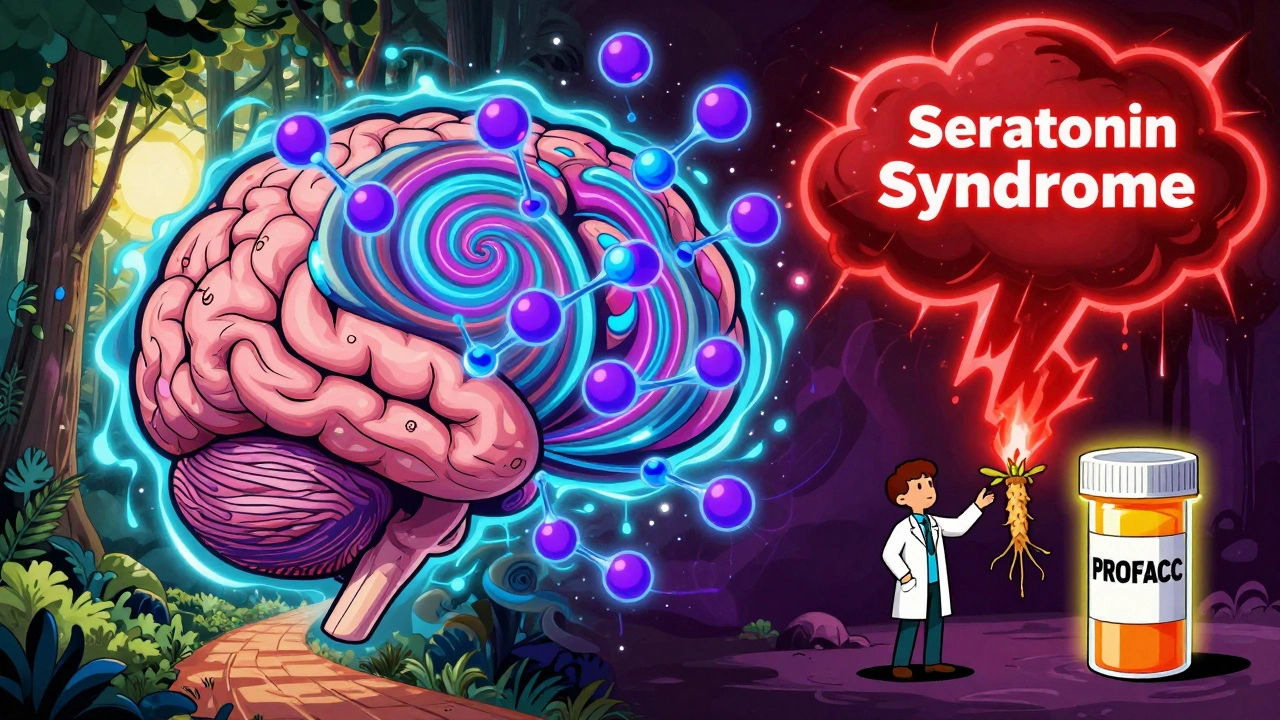
Specifically, rhodiola blocks two enzymes: monoamine oxidase A (MAO-A) and catechol-O-methyltransferase (COMT). These enzymes normally break down serotonin, norepinephrine, and dopamine. When they're inhibited, those chemicals stick around longer in your brain. That’s why some people feel more alert, less anxious, or slightly happier after taking rhodiola. In small doses, it can help with mild low mood. But that same mechanism is what makes it risky when mixed with antidepressants.
The Real Danger: Serotonin Syndrome
Antidepressants like SSRIs and SNRIs work by blocking serotonin reuptake. That means more serotonin stays in the space between your brain cells. Rhodiola does something similar-but even more directly-by preventing serotonin from being broken down in the first place. When you combine the two, serotonin levels can spike dangerously fast.
This isn’t theoretical. In 2014, a 69-year-old woman in the U.S. developed serotonin syndrome after taking rhodiola extract along with paroxetine (Paxil). She ended up in the ER with a fever of 103°F, muscle rigidity, confusion, and a heart rate over 130 beats per minute. She survived, but it was a close call. That case was published in a peer-reviewed journal. It wasn’t an outlier.
Since then, dozens more cases have been reported. One Reddit user described going from feeling fine to having violent muscle spasms and hallucinations within 72 hours of adding rhodiola to their fluoxetine regimen. They were rushed to the hospital. Another person on Amazon wrote: “Developed severe tremors and panic attacks after taking Rhodiola with Lexapro-ER visit confirmed serotonin toxicity.”
Serotonin syndrome isn’t just uncomfortable. It can kill. Symptoms include:
- High body temperature (over 101°F)
- Fast or irregular heartbeat
- Muscle stiffness or twitching
- Agitation, confusion, or hallucinations
- Sweating, shivering, or diarrhea
If you’re taking rhodiola and any antidepressant and notice even one of these, stop immediately and get medical help.
Why Most People Don’t Realize the Risk
The biggest problem? No one warns you.
Unlike prescription MAO inhibitors-which come with thick warning labels and require doctor supervision-rhodiola is sold as a dietary supplement. That means it’s not required to list drug interactions on the bottle. A 2021 FDA review found that only 22% of rhodiola products included any warning about antidepressants. The rest? Silent.
And people are buying it in droves. The global rhodiola market hit $287 million in 2022, growing over 7% every year. Sales jumped 41% in early 2023 alone, mostly because people think it’s a “safer” alternative to pills. But that’s a myth. Rhodiola isn’t safer-it’s just unregulated.
Even worse, a 2023 survey found that 64% of people using rhodiola with antidepressants didn’t know there was any risk. They assumed because it was “natural,” it was harmless. Natural doesn’t mean safe. Willow bark is natural-and it contains aspirin. Rhodiola is pharmacologically active. It changes your brain chemistry. And it doesn’t play nice with prescription drugs.
It’s Not Just About Serotonin
Rhodiola doesn’t just mess with serotonin. It can also:
- Lower blood pressure-by 8-12 mmHg systolic. That’s dangerous if you’re on lisinopril, metoprolol, or other blood pressure meds.
- Reduce blood sugar by 15-20 mg/dL. That can trigger hypoglycemia if you’re taking insulin or metformin.
- Stimulate your immune system. That’s bad news if you have rheumatoid arthritis, lupus, or multiple sclerosis. Studies show it can increase TNF-alpha, a key inflammatory protein, by up to 40%.
So even if you’re not on an antidepressant, rhodiola isn’t a harmless daily pill. It’s a potent substance with multiple system-wide effects. And the quality? It’s a mess.
The Supplement Industry Isn’t Holding Up Its End
Not all rhodiola is the same. In fact, most of it doesn’t even contain what the label says.
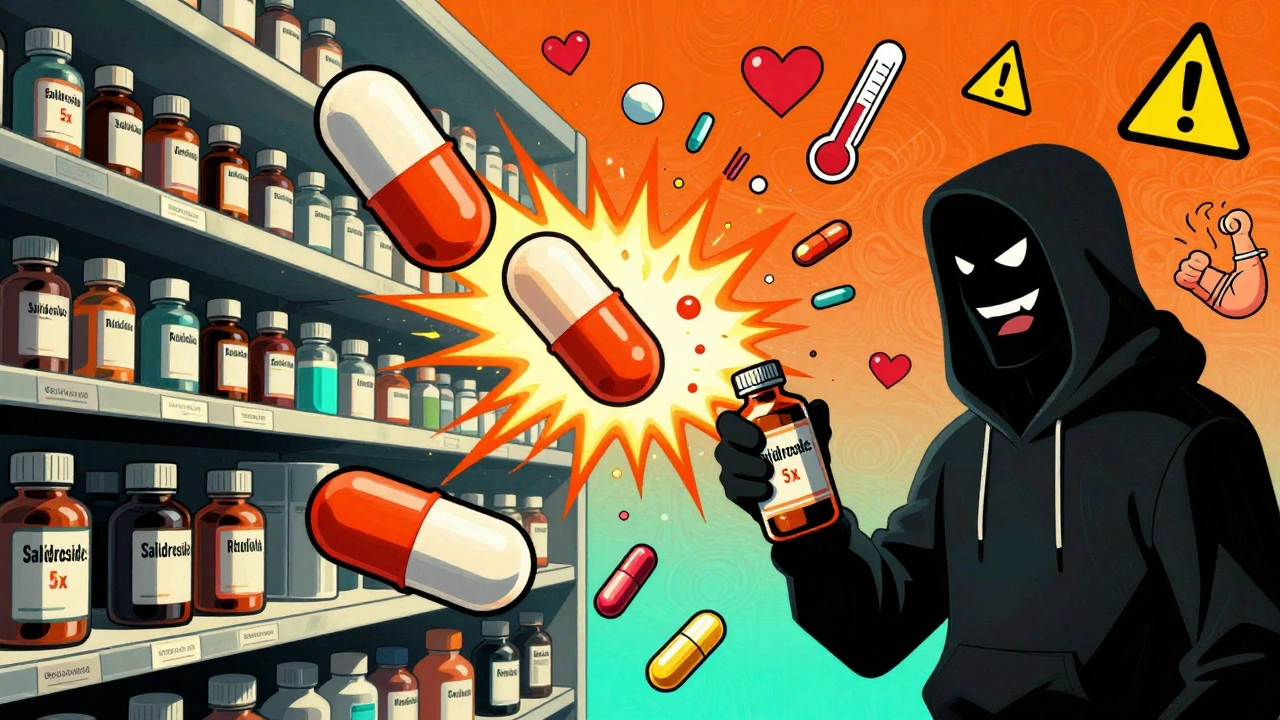
A 2018 study by the U.S. Pharmacopeia tested 42 rhodiola supplements. Only 13.2% met their labeled amount of salidroside. Some had none at all. Others had five times more than claimed. That means one bottle might be too weak to do anything, and the next could send you to the ER.
And there’s no standardization. No FDA approval. No required testing. The industry is basically a Wild West. You’re gambling with your brain chemistry every time you open a bottle.
What Experts Say
Dr. Jun J. Mao, a leading integrative medicine expert at Memorial Sloan Kettering, has studied herb-drug interactions for decades. He says this clearly: “Rhodiola has monoamine oxidase inhibitory activity. It may enhance the serotonergic side effects of antidepressant drugs.” His team lists rhodiola as high-risk in their official database.
The American Psychiatric Association’s 2022 supplement interaction guide flags rhodiola as “Category X: Avoid Combination” with all serotonergic antidepressants. That’s the highest warning level.
Even the few voices suggesting caution over complete avoidance are outliers. One 2015 review hinted that very low doses (under 200 mg/day) might be okay under strict supervision. But there are no clinical trials proving that. No safety data. No long-term studies. Just speculation.
What Should You Do?
If you’re on an antidepressant and thinking about trying rhodiola: Don’t.
If you’re already taking both and feel fine? That doesn’t mean you’re safe. Serotonin syndrome can hit suddenly, even after months of no problems. The risk doesn’t go away just because you haven’t had symptoms yet.
If you want to stop your antidepressant and switch to rhodiola? Talk to your doctor first. Never quit an antidepressant cold turkey. Withdrawal can be brutal-and rhodiola won’t replace it reliably.
If you’ve been using rhodiola alone and now need an antidepressant? Wait at least two weeks after stopping rhodiola before starting the medication. Why? Because rhodiola’s effects linger. Paroxetine, for example, stays in your system for over three weeks. You need time for both to clear.
The Bottom Line
Rhodiola isn’t evil. It’s not a poison. But it’s not a gentle herbal tea either. It’s a powerful substance with real, measurable, and sometimes deadly interactions. And the supplement industry doesn’t care enough to warn you.
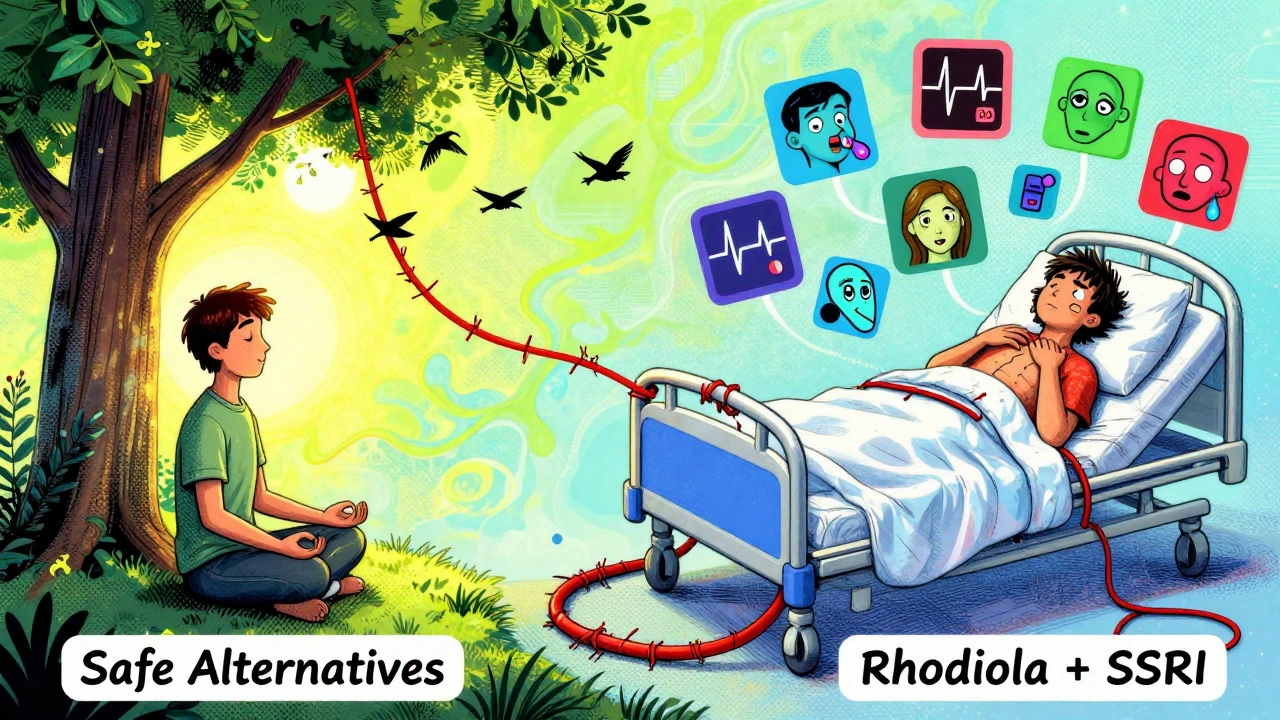
If you’re looking for natural ways to support your mental health, there are safer options: regular exercise, sleep hygiene, therapy, mindfulness, even light therapy. These have proven benefits and zero risk of serotonin syndrome.
Don’t gamble with your brain. If you’re on antidepressants, leave rhodiola on the shelf. Your nervous system will thank you.
Can I take rhodiola with SSRIs like Prozac or Zoloft?
No. Combining rhodiola with SSRIs or SNRIs significantly increases the risk of serotonin syndrome, a potentially life-threatening condition. Even if you’ve taken both without issues before, the risk remains and can escalate suddenly. Medical guidelines, including those from the American Psychiatric Association, classify this combination as high-risk and advise against it entirely.
How long should I wait after stopping rhodiola before starting an antidepressant?
Wait at least two weeks. Rhodiola’s active compounds, especially salidroside, can linger in your system and continue inhibiting enzymes that break down serotonin. Some antidepressants, like paroxetine, have long half-lives and stay active for weeks. Waiting two weeks reduces-but doesn’t eliminate-the risk. Always consult your doctor before making any changes to your medication or supplement routine.
Is rhodiola FDA-approved as a treatment for depression?
No. The FDA has not approved rhodiola for any medical use. It’s sold as a dietary supplement under the Dietary Supplement Health and Education Act (DSHEA) of 1994, which means it doesn’t need to prove safety or effectiveness before being sold. Many products make misleading claims about treating depression, but those claims are not backed by FDA review.
Are all rhodiola supplements the same?
No. A 2018 study found that only 13.2% of tested rhodiola supplements contained the labeled amount of salidroside, the key active ingredient. Some had none at all; others had dangerously high levels. There’s no standardization, no mandatory testing, and no reliable way to know what you’re actually getting. This variability makes predicting side effects or interactions nearly impossible.
What are the signs of serotonin syndrome from rhodiola and antidepressants?
Symptoms include high fever (above 101°F), rapid heart rate, muscle rigidity or twitching, confusion, agitation, hallucinations, excessive sweating, shivering, and diarrhea. If you experience any of these after taking rhodiola with an antidepressant, stop immediately and seek emergency medical care. Serotonin syndrome can progress quickly and become fatal if untreated.
Can I use rhodiola if I’m not on antidepressants?
It’s possible, but not without risk. Rhodiola can lower blood pressure and blood sugar, which may interfere with medications for hypertension or diabetes. It can also stimulate the immune system, potentially worsening autoimmune conditions like rheumatoid arthritis. Even without antidepressants, it’s a potent substance with real physiological effects. Talk to your doctor before starting it, especially if you have any chronic health conditions.

iswarya bala
December 8, 2025 AT 12:08omg i just started rhodiola last week n i’m on zoloft 😳 i thought it was just a chill herb like ashwagandha… im gonna stop today fr
Philippa Barraclough
December 9, 2025 AT 14:40This is one of the most clinically grounded pieces I’ve read on supplement interactions in months. The 2018 USP study on salidroside variability alone should be mandatory reading for anyone buying adaptogens online. The fact that regulatory oversight is virtually nonexistent while pharmacological activity is well-documented is a systemic failure, not a personal choice.
Courtney Black
December 10, 2025 AT 05:36They say ‘natural’ like it’s a moral virtue. Willow bark = aspirin. Foxglove = digoxin. Rhodiola = MAOI. Nature doesn’t care if you’re ‘being safe.’ It just has chemistry. And chemistry doesn’t negotiate with your Instagram wellness aesthetic.
I used to take it with sertraline for ‘better focus.’ Then I spent three hours in a Walmart parking lot crying because my hands wouldn’t stop shaking. No one warned me. Not the YouTube influencer. Not the supplement label. Just me, my brain, and a $20 bottle of lies.
It’s not about fear. It’s about respect. You wouldn’t mix bleach and ammonia and call it ‘natural cleaning.’ Why treat your neurotransmitters differently?
Brianna Black
December 10, 2025 AT 10:50As an Indian woman raised on turmeric milk and ayurvedic rituals, I feel this deeply. We’ve been conditioned to trust ‘ancient wisdom’ without questioning biochemistry. But rhodiola isn’t chai-it’s a neuroactive compound with documented interactions. The FDA doesn’t regulate it? Fine. But we must educate our communities. My aunt took it with her blood pressure meds and ended up in the ER. She didn’t know. We have to change that.
Let’s stop romanticizing ‘natural’ and start honoring science-even when it contradicts tradition. Safety isn’t unspiritual. It’s sacred.
Ruth Witte
December 10, 2025 AT 17:40THIS. SO. MUCH. 🙌 I used to think supplements were just ‘gentle boosts’-until I got serotonin syndrome vibes after mixing rhodiola with my SSRI. 🤯 Tremors. Sweating. Like my body was trying to escape my skin. ER visit. 48 hours of pure panic. Now I tell everyone: if it changes your brain chemistry, treat it like a drug. 💊🚫🌿 #SafetyFirst
Lauren Dare
December 11, 2025 AT 05:40It’s fascinating how the supplement industry weaponizes the word ‘natural’ to bypass regulatory scrutiny while selling pharmacologically active compounds with zero quality control. The irony? People think they’re being ‘holistic’-when really, they’re just playing Russian roulette with their serotonin levels. Bravo to the author for calling out the dangerous mythmaking.
Shubham Mathur
December 12, 2025 AT 03:37Stop acting like this is news-this has been known for years. You think your ‘natural’ rhodiola is safe? Go check the label. 87% of them don’t even have the right active ingredient. Half of them have contaminants. You’re not being healthy-you’re being reckless. And if you’re on antidepressants and still taking this? You’re not brave-you’re just lucky so far
Olivia Portier
December 13, 2025 AT 10:58Hey-just wanted to say thank you for writing this. I was one of those people who thought ‘if it’s in a health store, it’s fine.’ I’ve been on citalopram for 3 years. Started rhodiola because I was tired of feeling ‘numb.’ Didn’t realize my anxiety was getting worse until I had a panic attack at work. I stopped. Talked to my doctor. Switched to therapy + walking daily. I’m not cured-but I’m safe. You’re not alone. And you don’t need a supplement to be whole.
Simran Chettiar
December 15, 2025 AT 03:28The philosophical underpinning of this issue lies not merely in pharmacology, but in epistemological negligence: the conflation of tradition with evidence, of marketing with medicine, and of consumer autonomy with biological accountability. The human tendency to ascribe moral virtue to botanical origin-‘natural’ as synonymous with ‘benign’-is a cognitive fallacy of dangerous proportion. Rhodiola, in its biochemical essence, is neither benevolent nor malevolent; it is indifferent. It acts. It inhibits. It accumulates. It interacts. The fault does not lie with the herb, but with the societal structures that permit its commodification without transparency, without warning, without consequence. We have outsourced our biological literacy to corporations whose incentive is profit, not preservation. The responsibility, therefore, must be reclaimed-not through fear, but through rigorous, unflinching education.