
Warfarin and NSAID Bleeding Risk Calculator
Medication Interaction Risk Calculator
This tool calculates the increased bleeding risk when combining warfarin with specific NSAIDs based on clinical studies. Remember: NO NSAID is safe with warfarin - use only as a last resort under medical supervision.
Bleeding Risk Assessment
Relative Risk: times higher than warfarin alone.
- Never take NSAIDs without consulting your anticoagulation clinic
- Take the lowest possible dose for the shortest time
- Check your INR 3-5 days after starting
- Consider proton pump inhibitors for stomach protection
- Watch for bleeding symptoms: dark stools, unusual bruising, dizziness
Every year, millions of people take warfarin to prevent dangerous blood clots-after a stroke, heart attack, or for atrial fibrillation. At the same time, countless others reach for over-the-counter ibuprofen or naproxen for a backache, headache, or arthritic pain. What most don’t realize is that combining these two common medications can turn a simple pain reliever into a silent killer. The risk isn’t theoretical. It’s real, measurable, and often deadly.
Why This Combination Is So Dangerous
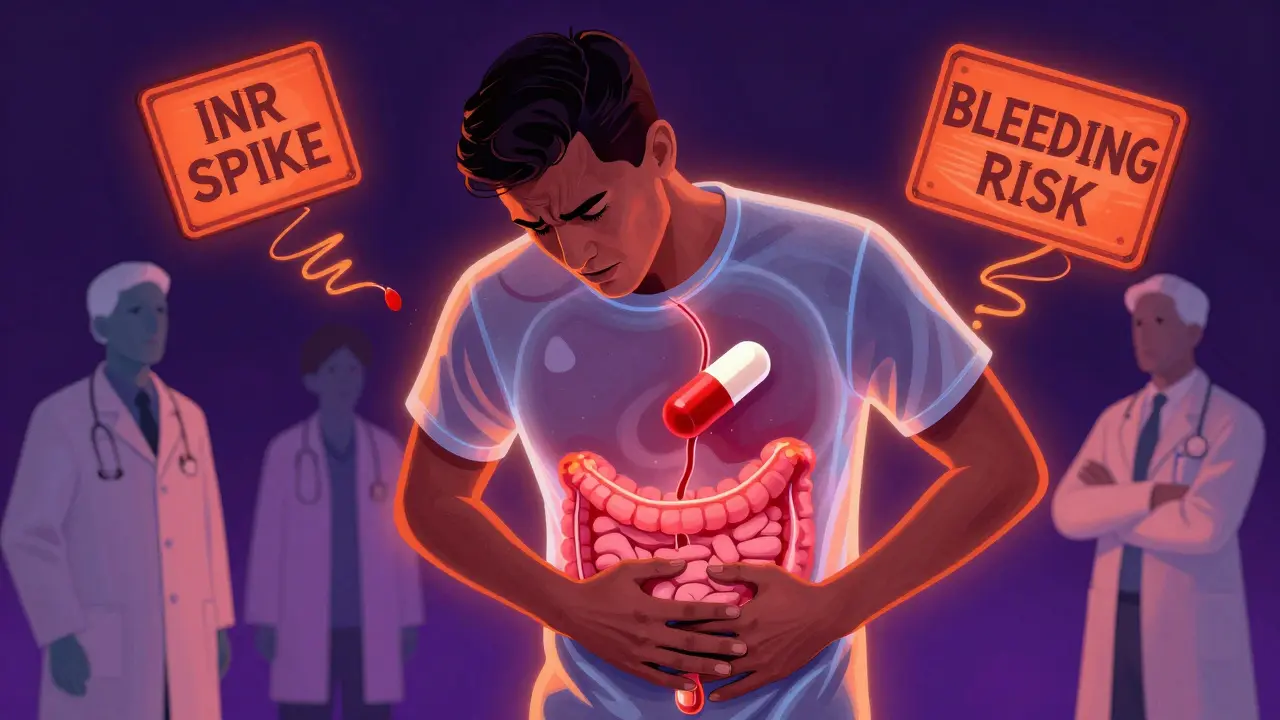
Warfarin works by blocking vitamin K, which your body needs to make clotting factors. Without those factors, blood takes longer to clot. That’s the whole point-it stops clots from forming where they shouldn’t. NSAIDs, on the other hand, don’t just reduce pain and inflammation. They also stop platelets from sticking together. Platelets are the first responders when you cut yourself. When they’re disabled, even a tiny nick can turn into a slow, uncontrolled bleed.
Put them together, and you’re not just doubling the risk-you’re multiplying it. Studies show that people taking both drugs have more than twice the chance of a major bleeding event compared to those taking warfarin alone. The European Society of Cardiology confirmed this in 2023: the risk jumps by 2.09 times. That’s not a small increase. That’s the difference between a manageable side effect and a trip to the emergency room.
Which NSAIDs Are the Worst?
Not all NSAIDs are created equal when paired with warfarin. Some are far more dangerous than others.
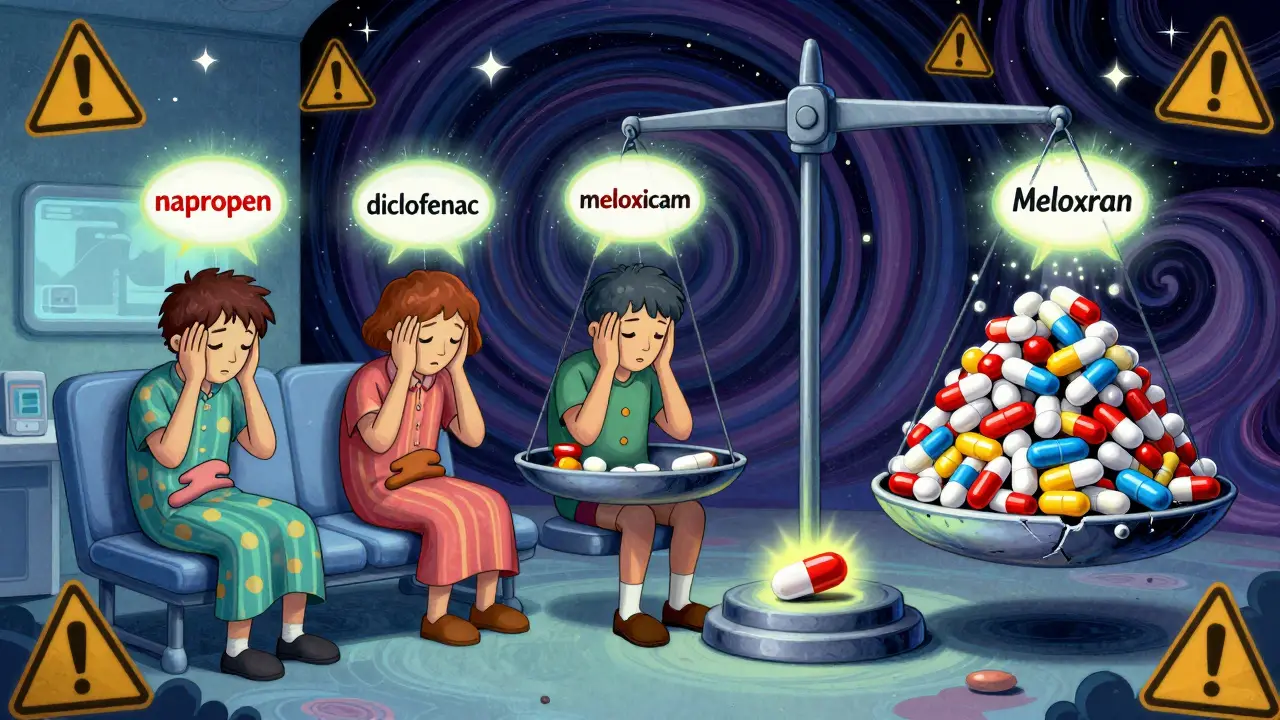
- Naproxen raises bleeding risk by 4.1 times compared to warfarin alone.
- Diclofenac increases it by 3.3 times.
- Meloxicam is especially risky-studies found it caused INR spikes in nearly 40% of warfarin users.
- Ibuprofen is still dangerous, but slightly less so, at 1.79 times higher risk.
Many assume that because celecoxib (a COX-2 inhibitor) is "gentler" on the stomach, it’s safer with warfarin. It’s not. Multiple studies, including one from JAMA Internal Medicine in 2005 and a 2020 meta-analysis, show COX-2 inhibitors carry the same bleeding risk as traditional NSAIDs. The stomach lining still gets damaged. Platelets still get suppressed. The danger remains.
Where the Bleeding Happens
Bleeding isn’t just one thing. It can strike anywhere-and some places are far more deadly than others.
- Gastrointestinal bleeding: 2.24 times more likely. This is the most common, accounting for over 60% of cases reported to the FDA.
- Intracranial bleeding: 3.22 times more likely. A brain bleed from this combo can be fatal within hours.
- Pulmonary bleeding: 1.36 times more likely. This can mimic pneumonia or a heart attack.
- Urinary tract bleeding: 1.57 times more likely. Often mistaken for a UTI or kidney stone.
One patient on Reddit described it this way: "Took ibuprofen for a headache. 24 hours later, my hemoglobin dropped from 14 to 8. I was in the ER, hooked to a bag of blood. I didn’t even feel sick until I passed out." That’s not rare. A 2021 study of over 5,000 warfarin users found that 78.4% of those who bled while on NSAIDs needed hospitalization. Their average stay? More than five days.
It’s Not Just Warfarin
For years, people thought switching from warfarin to a newer anticoagulant like apixaban or dabigatran would solve the problem. It doesn’t. A 2018 JACC study showed NSAIDs increase bleeding risk with all oral anticoagulants. The ARISTOTLE trial found that even apixaban users on NSAIDs had significantly higher bleeding rates. A 2020 study showed dabigatran had slightly lower risk than warfarin when paired with NSAIDs-but rivaroxaban had the same risk. The bottom line? No anticoagulant is safe with NSAIDs. The myth that "newer is safer" here is dangerously wrong.
Real-World Consequences
The numbers don’t lie. Between 2015 and 2020, the FDA’s adverse event database recorded 1,842 bleeding events tied to warfarin and NSAID use. Over 62% were gastrointestinal. The economic cost? $1.87 billion a year in hospital bills, ER visits, and blood transfusions. And it’s not just older adults. A 2022 JAMA study found that people over 75 have a 3.7 times higher risk of bleeding from this combo. Many are prescribed NSAIDs for arthritis, not realizing their blood thinner is already pushing them to the edge.
Patients often don’t even tell their doctors they’re taking OTC painkillers. A University of Michigan study found that in 68.2% of warfarin-related bleeding cases, the patient hadn’t mentioned NSAID use. Why? Because they think it’s "just Advil." But in the eyes of your body, it’s not.
What Should You Do Instead?
There are safer ways to manage pain if you’re on warfarin-or any anticoagulant.
- Acetaminophen (Tylenol) is the go-to alternative. It doesn’t affect platelets or the stomach lining. It’s not perfect-too much can hurt your liver-but at normal doses, it’s far safer than NSAIDs.
- Topical pain relievers (gels, patches, creams with menthol, capsaicin, or lidocaine) can target joint or muscle pain without entering your bloodstream.
- Physical therapy and heat/cold therapy reduce reliance on pills entirely.
- Low-dose aspirin is sometimes used for heart protection, but never combine it with NSAIDs or assume it’s safe with warfarin. It’s another antiplatelet drug.
Even if you’ve been taking NSAIDs for years without issue, that doesn’t mean it’s safe. Warfarin’s effect changes with diet, other meds, illness, and even time of year. One small change-like starting naproxen-can send your INR through the roof overnight.
What If You Absolutely Need an NSAID?
Some doctors may consider a short-term, low-dose NSAID if no other option exists. But this requires extreme caution:
- Use the lowest possible dose-for the shortest time possible. Never take it daily unless absolutely necessary.
- Avoid naproxen, meloxicam, and diclofenac. If you must use an NSAID, ibuprofen is the least risky-but still risky.
- Check your INR before starting, then again 3 to 5 days later. After that, check weekly until you stop.
- Take a proton pump inhibitor (like omeprazole) to protect your stomach lining.
- Watch for signs of bleeding: black or tarry stools, unusual bruising, blood in urine, headaches with dizziness, or vomiting blood.
And never, ever assume your pharmacist or doctor knows you’re taking OTC NSAIDs. Always tell them. Write it down. Say it twice.
The Bigger Picture
Despite decades of warnings, 42.6% of warfarin users still get NSAID prescriptions each year. Electronic health records in 41.7% of U.S. hospitals still don’t flag this dangerous combo. Patients don’t know. Doctors don’t always know. And the result? Thousands of preventable hospitalizations every year.
The trend is shifting-warfarin use is declining as more people switch to NOACs. But here’s the new danger: NSAID use with NOACs is rising. A 2023 study found a 34.8% increase in NSAID co-prescribing with dabigatran and rivaroxaban. People think, "It’s not warfarin, so it’s fine." It’s not.
The message is clear: if you’re on any oral anticoagulant, NSAIDs are not a safe choice. There’s no safe dose. No safe duration. No safe exception. The risk isn’t worth it.
Can I take ibuprofen with warfarin if I only use it once in a while?
No. Even a single dose of ibuprofen can raise your INR and increase bleeding risk. The effect isn’t always immediate, but it’s real. One study found INR spikes within 3 days of taking ibuprofen. There’s no safe "occasional" use when you’re on warfarin.
Is Tylenol (acetaminophen) completely safe with warfarin?
Acetaminophen is the safest OTC pain reliever for people on warfarin. It doesn’t affect platelets or stomach lining. But don’t exceed 3,000 mg per day. Higher doses can damage your liver, especially if you drink alcohol or have liver disease. Always check with your doctor before using it long-term.
Why don’t pharmacies warn me about this interaction?
Many OTC NSAID labels only say "may increase bleeding risk" without mentioning warfarin specifically. Pharmacists aren’t always alerted by computer systems-41.7% of U.S. hospitals don’t flag this combo. It’s your responsibility to tell your pharmacist and doctor about everything you take, including aspirin, cold medicines, and herbal supplements.
What should I do if I accidentally took an NSAID while on warfarin?
Call your anticoagulation clinic or doctor right away. Don’t wait for symptoms. Ask for an INR test within 72 hours. If you develop any signs of bleeding-unusual bruising, dark stools, dizziness, or vomiting-go to the ER immediately. Early detection can save your life.
Are there any NSAIDs that are safe with warfarin?
No. All NSAIDs-whether prescription or over-the-counter, traditional or COX-2 inhibitors-carry the same risk. Even topical NSAIDs can be absorbed into the bloodstream and affect clotting. The only safe option is to avoid them entirely and use alternatives like acetaminophen or non-pill pain relief methods.





Alex Ogle
February 7, 2026 AT 21:20Man, I’ve been on warfarin for years after my AFib diagnosis, and I never realized how dangerous OTC painkillers were. I used to pop ibuprofen like candy for my back pain. Now I stick to Tylenol and a heating pad. Scary how something so common can sneak up on you. Glad this post laid it all out.
Ritteka Goyal
February 9, 2026 AT 20:50OMG I CANT BELIEVE I DIDNT KNOW THIS!!! I TOOK NAPROXEN FOR MY KNEE PAIN LAST MONTH AND I’M ON WARFARIN TOO!!! I’M SO SCARED RN!!! I JUST WENT TO THE DR AND THEY SAID MY INR WAS 5.8!!! I THOUGHT IT WAS JUST A FLU OR SOMETHING!!! THIS POST SAVED MY LIFE LITERALLY!!! THANK U!!!
Brandon Osborne
February 10, 2026 AT 12:33Of course the system fails us again. Pharmacies don’t warn you? Hospitals don’t flag it? You’re telling me that after decades of evidence, we’re still relying on patients to remember to mention they took Advil? This isn’t negligence-it’s systemic malpractice. People die because we treat medical advice like a game of telephone. Someone needs to sue every drug manufacturer who doesn’t put a skull-and-crossbones label on NSAID bottles when warfarin is involved.
Lyle Whyatt
February 12, 2026 AT 11:55Just wanted to add that in Australia, we’ve got this cool program called 'Medicine Check' where pharmacists proactively review all your meds-including OTCs-every 6 months. It’s not perfect, but it’s a start. I’ve seen people get flagged for this exact combo and get switched to acetaminophen before anything bad happens. Maybe we need more of this everywhere. Also, topical capsaicin cream? Game changer for arthritis. No systemic effects. I use it daily. No more pills.
Sam Dickison
February 13, 2026 AT 15:47INR spikes aren’t just numbers-they’re ticking time bombs. I work in anticoagulation clinic. Saw a guy last week who took one dose of diclofenac for a sprained ankle. His INR went from 2.8 to 8.4 in 72 hours. He had a GI bleed. He’s lucky he made it. Bottom line: if you’re on any OAC, NSAIDs = red alert. Even if you feel fine. Always check INR after any NSAID exposure. No exceptions.
Brett Pouser
February 14, 2026 AT 15:35My grandma was on warfarin. She took ibuprofen for her arthritis because her doctor 'never mentioned it.' She ended up in the ER with a rectal bleed. They had to transfuse her. She’s fine now, but she’s terrified of painkillers. I made her a little card: 'NO NSAIDs. ONLY TYLENOL.' She keeps it on her fridge. Simple. Clear. Life-saving. Maybe we should all make these for our loved ones.
Simon Critchley
February 15, 2026 AT 07:04So let me get this straight: the pharmaceutical industry knows this interaction is lethal, yet the labeling says 'may increase bleeding risk' like it's a weather advisory? LOL. Meanwhile, every OTC bottle has a tiny footnote that no one reads. I’m calling it: 'The Great NSAID Cover-Up.' And don’t even get me started on COX-2 inhibitors being marketed as 'gentler.' They’re just stealth killers. 🤡💊🩸
John McDonald
February 15, 2026 AT 07:41Hey, I get it-you’re scared. But don’t panic. This isn’t doom-and-gloom. It’s a wake-up call. You can still live well on warfarin. Switch to Tylenol. Try physical therapy. Use heat wraps. Talk to your doc. This isn’t about giving up pain relief-it’s about smarter pain relief. You’ve got this. One small change at a time. 💪
Chelsea Cook
February 16, 2026 AT 13:42Oh honey, you took naproxen and didn’t tell anyone? Sweetie, you’re not 'just being casual'-you’re playing Russian roulette with your blood. And now you’re mad at the system? Nah. You’re mad because you didn’t get a gold star for being 'responsible.' Newsflash: medicine doesn’t care about your intentions. It cares about your INR. Next time? Ask. Write it down. Say it twice. I believe in you. Now go get your INR checked.
Andy Cortez
February 18, 2026 AT 02:43Y’all are overreacting. I’ve been on warfarin for 10 years and take ibuprofen every weekend for my golf ache. I’m fine. This is just fearmongering. The real problem is people who think every drug interaction is a death sentence. Maybe if you stopped being so paranoid, you wouldn’t have anxiety attacks every time you sneeze. 😴
Jacob den Hollander
February 18, 2026 AT 22:53Just want to say… I’m so glad someone finally put this out there. My dad almost died because he didn’t know. I cried for three days. Now I make sure every family member on anticoagulants has a printed list: 'NO NSAIDs. EVER.' We put it on the fridge, in the medicine cabinet, even on the car dashboard. It’s not about being dramatic-it’s about being alive. If you’re reading this… please, share this. Someone’s life depends on it.
Andrew Jackson
February 20, 2026 AT 11:44It is an inescapable fact, grounded in empirical clinical data and bioethical principles, that the concomitant administration of nonsteroidal anti-inflammatory agents with vitamin K antagonists constitutes a gravely irresponsible therapeutic practice. The absence of mandatory, system-wide pharmacovigilance protocols reflects a profound dereliction of duty by regulatory institutions. One cannot, in good conscience, permit laypersons to self-administer pharmacologically incompatible agents under the assumption of benignity. This is not merely a medical error-it is a societal failure of epistemic humility. We must demand structural reform.