
When your child comes home from school with red, oozing sores around the nose, or you wake up with a swollen, hot patch of skin on your leg that’s spreading fast, it’s not just a rash. It’s a bacterial skin infection-and time matters. Two of the most common types you’ll see are impetigo and cellulitis. They look different, act differently, and need totally different treatments. Get it wrong, and what starts as a small sore can turn into something dangerous.
What Is Impetigo? The Contagious Sores You Can’t Ignore
Impetigo is the classic ‘school sore.’ It’s not serious, but it spreads like wildfire. You’ll see it most often in kids between 2 and 5 years old, especially in summer when skin is exposed and kids are in close contact. It starts as tiny red bumps or blisters, usually around the nose and mouth, and within a day or two, they burst and form that unmistakable honey-colored crust. The crust isn’t just gross-it’s infectious. Touch it, share a towel, or rub your eye after scratching, and you’ve passed it on.
There are two forms. Nonbullous impetigo makes up 70% of cases and is what most people picture. Bullous impetigo is rarer, mostly in babies under 2, and shows up as larger, flimsy blisters that pop and leave behind a ring-like border. In about 5% of cases, it turns into ecthyma, a deeper, painful ulcer that scars. And then there’s the scary one: staphylococcal scalded skin syndrome (SSSS). It looks like a burn. The skin peels off in sheets. It’s rare, but if your child has a high fever and skin that looks like it’s been scalded, call an ambulance immediately. Mortality is low, but it’s a medical emergency.
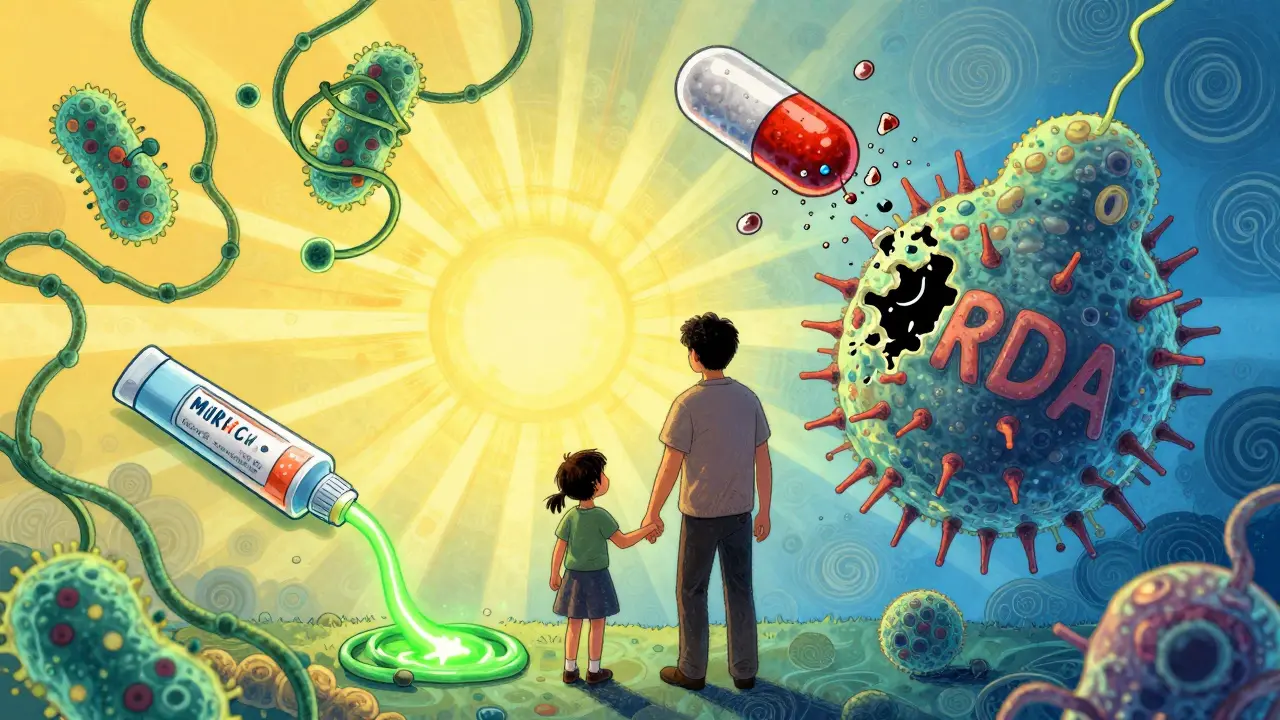
Here’s the big shift: for decades, doctors thought impetigo was mostly caused by strep. Now we know it’s almost always Staphylococcus aureus-and 85% of those strains make an enzyme called penicillinase that breaks down penicillin. That’s why penicillin often fails. Even worse, 50% of community staph infections in the U.S. now involve MRSA, the methicillin-resistant kind. This isn’t just theory-it’s why your doctor won’t give you amoxicillin anymore.
What Is Cellulitis? The Deep Infection That Can Kill
Cellulitis is the opposite of impetigo. It’s not on the surface. It’s deep. It invades the fat layer under your skin and can spread fast. You’ll notice a red, swollen, warm area-usually on the lower leg-that doesn’t have a clear edge. It feels tight. It hurts when you press it. You might have a fever. Unlike impetigo, it’s not contagious. You didn’t catch it from someone. It came from inside you.
It often starts after a break in the skin: a cut, a bug bite, a crack between your toes from athlete’s foot, even a scratch you didn’t notice. About 65% of cases begin this way. In adults, 70% of cellulitis hits the legs. In kids, it’s often the face or arms. And it’s not rare. In the U.S., it sends 2.3 million people to the ER every year. For people over 65, the risk is 24.6 cases per 1,000 people each year. If you have diabetes, your risk is over three times higher. Obesity? Nearly three times higher. Poor circulation? More than four times higher.
What makes it dangerous? It can turn into sepsis. Or necrotizing fasciitis-the flesh-eating bug. Or it can spread to your bloodstream. About 5-9% of cases lead to bacteremia. That’s why you can’t just wait it out. If the redness keeps spreading more than 2 cm a day, or you start feeling dizzy or feverish, you need antibiotics now.
Antibiotics: What Works, What Doesn’t, and Why
Impetigo and cellulitis need different antibiotics because they’re different infections. You can’t treat one with the other.
For impetigo, if it’s just a few spots, topical treatment is all you need. Mupirocin (Bactroban) applied three times a day for five days cures 92% of cases. You gently wash off the crusts with warm soapy water first. That’s it. No pills. No side effects. Kids are no longer contagious after 24 hours of treatment. But if it’s widespread, or if it’s bullous impetigo, you need oral antibiotics. Cephalexin (Keflex) is the go-to-25 to 50 mg per kg of body weight, split into doses over seven days. Newer options like retapamulin (Altabax) show 94% cure rates in recent trials and are becoming popular for kids.
Cellulitis? You need oral or IV antibiotics-topical won’t reach deep enough. For mild cases, cephalexin or dicloxacillin (500 mg four times a day) for 5 to 14 days works. But if MRSA is suspected-common in areas with high community resistance-doxycycline or trimethoprim-sulfamethoxazole (Bactrim) are better first choices. They kill MRSA. Cure rates are 85-90%.
Severe cellulitis? Hospitalization. IV antibiotics like cefazolin every 8 hours. You’ll need to be monitored. Elevation helps. Painkillers like acetaminophen or ibuprofen ease the swelling. But don’t skip the antibiotics. Even if you feel better in 48 hours, finish the full course. Stopping early breeds resistant bugs.

Why Penicillin Fails and What to Use Instead
Penicillin used to be the answer. Now? It’s mostly useless. Nearly all staph bacteria that cause impetigo make penicillinase, an enzyme that destroys penicillin. Studies from the 1990s showed 68% failure rates. Today, with MRSA rates hitting 50% in some areas, it’s worse.
That’s why guidelines changed. The Infectious Diseases Society of America now recommends doxycycline or Bactrim for suspected MRSA skin infections. For impetigo, mupirocin bypasses resistance because it works differently. It sticks to the bacteria’s protein-making machinery and shuts it down. That’s why it’s still effective.
But resistance is growing. Globally, 65% of staph strains are now resistant to erythromycin. 45% resist clindamycin. Even newer drugs are under pressure. That’s why the NIH is funding research into point-of-care tests that can identify the exact bacteria and its resistance profile in under 30 minutes. Imagine walking into a clinic, getting a quick swab, and walking out with the right antibiotic-not a guess.
When to See a Doctor and What Not to Do
Don’t wait. If you see:
- Red, crusty sores on a child’s face-especially if they’re spreading
- A red, hot, swollen patch on the leg that’s getting bigger
- Fever with skin changes
- Skin peeling like a burn
Go to a doctor. Don’t try home remedies. Don’t pop blisters. Don’t share towels, bedding, or clothes. Wash everything in hot water. Keep nails short. Clean minor cuts with antiseptic right away.
For impetigo, keep kids home from school or daycare until 24 hours after starting antibiotics-or until the sores are dry and crusted. That’s usually 48 to 72 hours. For cellulitis, monitor closely. If the redness spreads after 48 hours of antibiotics, go back. You might need a stronger drug or IV treatment.
Prevention: Stop It Before It Starts
Most bacterial skin infections start with a tiny break in the skin. Preventing them is simpler than treating them.
- Wash hands often, especially after touching infected areas.
- Don’t share razors, towels, or clothing.
- Treat athlete’s foot quickly-it’s a common doorway for cellulitis.
- Keep skin moisturized to prevent cracks.
- Clean scrapes and cuts immediately with soap and water, then cover.
- If you have diabetes or poor circulation, check your feet daily for sores.
During outbreaks in schools or daycare centers, daily washing with antibacterial soap helps. It’s not magic, but it cuts transmission by half in some settings.
Complications: What Happens If You Ignore It
Impetigo usually clears without scars-but in 1-5% of cases, especially with strep involvement, it can trigger post-streptococcal glomerulonephritis, a kidney condition. It’s rare, but it can cause high blood pressure and swelling.
Cellulitis? The stakes are higher. Without treatment, it can lead to:
- Bacteremia (bacteria in the blood)
- Sepsis (body-wide inflammation)
- Necrotizing fasciitis (rapid tissue death)
- Permanent swelling (lymphedema)
These aren’t hypothetical. They happen. In the U.S., 2-4% of hospitalized cellulitis patients die from complications. It’s preventable with timely antibiotics.
There’s no magic bullet. But understanding the difference between impetigo and cellulitis-and knowing which antibiotics actually work-can save you from unnecessary illness, hospital visits, and even death.
Is impetigo contagious?
Yes, impetigo is highly contagious. It spreads through direct skin contact or by touching objects like towels, toys, or bedding that have been contaminated. Children in daycare or school are most at risk. Once antibiotic treatment starts, they’re no longer contagious after 24 hours, or when the sores are dry and crusted.
Can cellulitis spread from person to person?
No, cellulitis is not contagious. It develops when bacteria enter through a break in your own skin-like a cut, bite, or fungal infection. You can’t catch it from someone else. But if you have a weakened immune system or skin condition, you’re more likely to get it.
Why won’t my doctor prescribe penicillin for impetigo?
Most staph bacteria that cause impetigo produce an enzyme called penicillinase that destroys penicillin. Studies show up to 68% of cases won’t respond. Even worse, half of community staph infections now involve MRSA, which is resistant to many common antibiotics. Doctors now use mupirocin for mild cases or oral antibiotics like cephalexin or Bactrim for more serious ones.
How long does it take for antibiotics to work on cellulitis?
You should start seeing improvement in 48 to 72 hours-less swelling, less redness, less pain. If the area keeps spreading after two days of antibiotics, or if you develop a fever, you need to go back. You might need a stronger antibiotic or IV treatment. Don’t wait.
Can I treat impetigo at home without antibiotics?
For very mild, isolated cases, keeping the area clean and dry may help it heal, but it’s risky. Without treatment, impetigo can spread to others or to other parts of your skin. It can also lead to deeper infections like ecthyma. Antibiotics cut healing time from 10-14 days to under 5 days and prevent complications. It’s not worth the risk.
What’s the difference between impetigo and eczema?
Eczema is a chronic inflammatory skin condition that causes dry, itchy, flaky patches. It doesn’t have pus or honey-colored crusts. Impetigo is a bacterial infection that forms blisters and crusts. Sometimes eczema can get infected with bacteria and turn into impetigo-so if your eczema suddenly becomes wet, oozing, or crusty, see a doctor.
Antibiotic resistance is real. So is the power of knowing what you’re dealing with. Whether it’s your child’s face or your own leg, recognizing the signs early and using the right treatment can make all the difference.


Naomi Keyes
January 18, 2026 AT 11:44Let me be perfectly clear: this article is dangerously oversimplified. You mention MRSA prevalence at 50%-but you fail to cite the CDC’s 2023 surveillance data, which shows regional variation from 18% to 72%. In urban centers like Chicago and Atlanta, MRSA now dominates community-acquired skin infections, yet guidelines still default to cephalexin as first-line. That’s not evidence-based medicine-it’s institutional inertia. And don’t get me started on the omission of clindamycin’s role in toxin suppression for SSSS. This reads like a pharmaceutical brochure, not a clinical guide.
Max Sinclair
January 19, 2026 AT 06:18Really appreciate this breakdown. I’m a nurse in a rural ER, and I see this every week-parents panicking over a few crusty spots, not realizing it’s impetigo, not eczema. The part about washing off crusts before applying mupirocin? Game-changer. So many try to scrub it off like a scab. Gentle cleaning makes all the difference. Thanks for the clarity.
Danny Gray
January 20, 2026 AT 05:48What if the real issue isn’t antibiotics at all? What if we’ve been chasing bacteria while ignoring the root: our collective immune collapse from glyphosate-laced food, fluoridated water, and EMF exposure? The rise in MRSA coincides with the rise of glyphosate use in agriculture-correlation isn’t coincidence. The medical industry profits from treating symptoms, not healing the terrain. Mupirocin? Just another bandage on a bullet wound.
rachel bellet
January 21, 2026 AT 17:13Let’s be honest: this is the same tired playbook. Topical mupirocin? Only works if compliance is perfect-which it never is. Oral cephalexin? Prescribed like candy. And yet, we still see treatment failures. The real problem? Overprescribing in primary care, under-resourcing microbiology labs, and the complete absence of rapid diagnostics. We’re flying blind. The NIH’s 30-minute point-of-care test? It’s been ready since 2021. Why isn’t it mandated? Because hospitals don’t want to lose their antibiotic revenue streams.
Stacey Marsengill
January 22, 2026 AT 22:30My daughter had impetigo last year. I cried for three nights. I felt like a terrible mom because I didn’t catch it sooner. The way the crusts looked… like caramelized sugar on her skin. And then the shame-other parents avoiding her. No one told me it wasn’t her fault. No one said it was just bacteria, not bad hygiene. This article? It didn’t just inform me. It unshamed me. Thank you.
Joni O
January 24, 2026 AT 08:17Just wanted to say-you nailed it. I’m a diabetic and I check my feet every night. Last month, I ignored a tiny crack between my toes. Three days later? Red, hot, swollen. I went in, they gave me Bactrim, and I’m fine now. But I almost didn’t go because I thought it was just a rash. Please, if you have diabetes-don’t wait. Even a little cut can turn into a nightmare. You’re not overreacting. You’re being smart.
Wendy Claughton
January 24, 2026 AT 22:00❤️ Thank you for writing this with such care. I’ve been a nurse for 22 years, and I’ve seen too many people dismissed because their infection "doesn’t look bad." But cellulitis doesn’t care how you look-it cares how fast it spreads. I keep a copy of this on my phone to show patients. You’ve given us a tool to fight fear with facts. 🙏
Tyler Myers
January 26, 2026 AT 12:34They’re lying about penicillin. It’s not resistance-it’s a cover-up. The same labs that test for MRSA are owned by the same companies that make vancomycin. They want you dependent on expensive drugs. Penicillin still works if you use it with zinc and garlic extract. But they banned natural alternatives because they can’t patent them. Look up the 1988 NIH memo on antibiotic suppression. It’s all there.
Aysha Siera
January 27, 2026 AT 14:53impetigo is a sign of spiritual imbalance. the crust is not bacteria-it is the body’s attempt to seal off toxic energy. modern medicine ignores this. traditional indian healers use neem oil and chanting. no antibiotics needed. you are being manipulated.
Andrew McLarren
January 29, 2026 AT 14:34While the article presents clinically accurate information, I would respectfully suggest that the framing of "antibiotics as the sole solution" may inadvertently reinforce a reductionist model of care. The microbiome’s role in skin defense, the importance of nutritional status, and the psychological stressors that impair immune function are all relevant, if underemphasized, factors. A truly integrative approach would acknowledge both the necessity of antimicrobials in acute settings and the value of adjunctive, systemic support in prevention and recovery.
Ryan Otto
January 30, 2026 AT 14:47Let us not delude ourselves. The entire paradigm of bacterial skin infection management is a product of pharmaceutical lobbying, CDC consensus-building, and institutional confirmation bias. The data on mupirocin efficacy? Funded by GlaxoSmithKline. The MRSA prevalence metrics? Aggregated from hospitals with profit-driven billing incentives. The real epidemic is not infection-it is the erosion of clinical autonomy. Doctors are no longer diagnosticians; they are algorithmic enforcers. The only true solution? Decentralized, patient-led microbiome restoration. But you won’t find that in any guidelines.
Pat Dean
January 31, 2026 AT 04:52Why are we treating kids with antibiotics like they’re disposable? In my day, we washed it with soap and salt water. Now? Pills, creams, hospital visits. It’s not medicine-it’s a money machine. And now we’re scared of our own skin. This country’s gone soft. If your kid gets a little sore, tough it out. Build immunity. Stop coddling them with drugs. We raised generations without Bactroban-and we didn’t die.