Buprenorphine Dose Safety Calculator
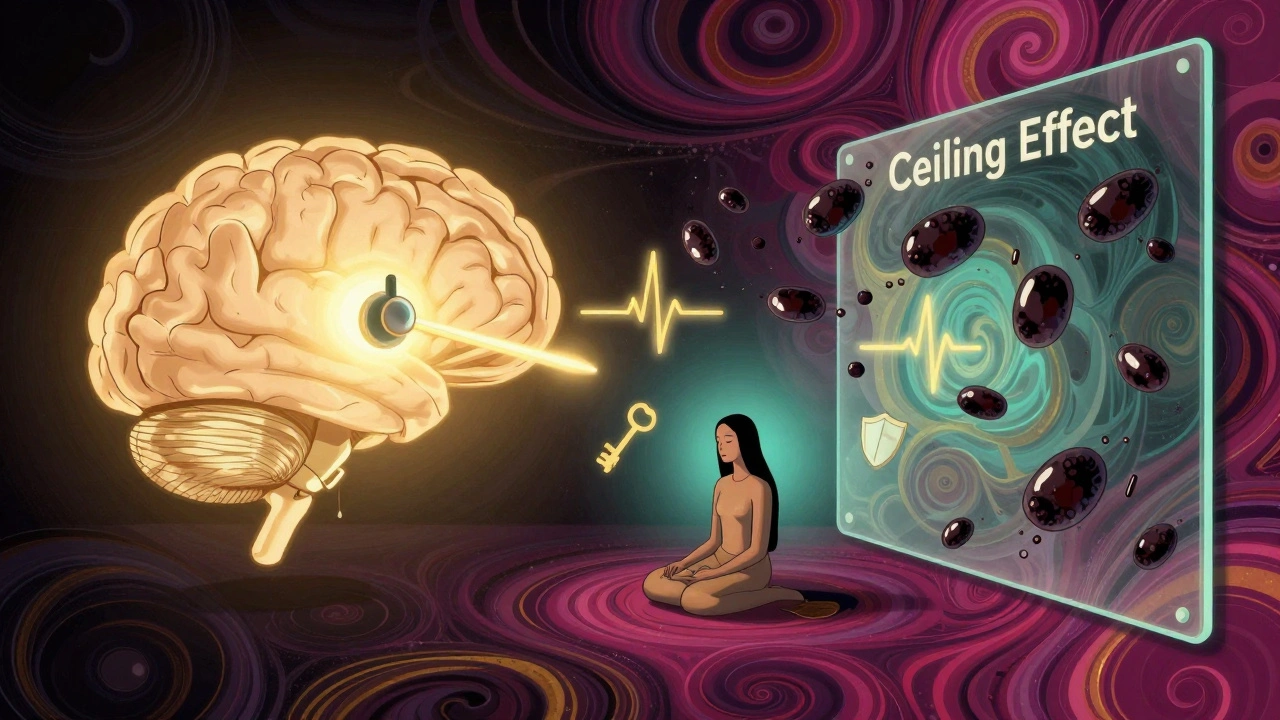
The ceiling effect prevents respiratory depression above 24 mg of buprenorphine. This tool helps you understand your dose's safety and effectiveness profile.
When someone is trying to get off opioids, the fear of withdrawal and overdose can be paralyzing. That’s where buprenorphine comes in - not as a cure, but as a tool that changes the game. Unlike full opioid agonists like heroin or oxycodone, buprenorphine doesn’t keep pushing harder the more you take. It hits a wall. That wall is called the ceiling effect, and it’s what makes buprenorphine one of the safest options available for treating opioid use disorder.
What Is the Ceiling Effect, Really?
The ceiling effect isn’t magic. It’s pharmacology. Buprenorphine binds tightly to the same opioid receptors in your brain that drugs like heroin and fentanyl target - but it doesn’t turn them all the way on. Think of it like a dimmer switch instead of an on/off toggle. At low doses, it relieves cravings and withdrawal. At higher doses, it doesn’t make you higher, and it doesn’t slow your breathing more.
Studies show that respiratory depression - the main cause of opioid overdose death - plateaus at around 24 mg per day. Go beyond that, and your lungs keep working just fine. That’s not true for methadone or oxycodone. Those drugs keep depressing breathing the more you take. Buprenorphine doesn’t. This is why overdose deaths from buprenorphine alone are extremely rare.
But here’s the catch: the ceiling effect doesn’t apply to everything. Pain relief? That can still increase with higher doses. Cravings? They keep dropping until you hit around 16-24 mg. So if someone says, “Buprenorphine doesn’t work well,” they’re probably not on a high enough dose. The ceiling isn’t a limit on effectiveness - it’s a safety guardrail.
Why It’s Safer Than Methadone
Methadone has saved countless lives since the 1960s. But it’s a full agonist. That means it can still cause dangerous respiratory depression, especially when doses are mismanaged. In 2022, methadone accounted for nearly 30% of prescription opioid overdose deaths in the U.S., even though it’s prescribed to fewer people than buprenorphine.
Buprenorphine? Not even 1%.
Why? Because of the ceiling. Even if someone takes 50 mg of buprenorphine - which is way more than anyone should - their breathing won’t shut down like it would with the same dose of methadone. That’s why the FDA and SAMHSA both say buprenorphine can be prescribed in a doctor’s office. Methadone? You need a special clinic. The safety profile is that different.
And it’s not just about overdose. People on buprenorphine report feeling clearer-headed. Less sedated. Able to drive, work, and take care of their kids. One user on Reddit put it simply: “I can take my 16mg and go to work without feeling like I’m on something, which methadone never allowed.” That’s not anecdotal - it’s backed by clinical data showing fewer cognitive impairments compared to full agonists.
Common Side Effects - And What to Expect
Yes, buprenorphine has side effects. But they’re usually mild and fade over time. The most common ones?
- Headache - affects about 18% of users in early treatment. Usually goes away in a week or two.
- Constipation - reported by 12%. Still less severe than with full opioids.
- Nausea - happens in about 10%, especially if you take it on an empty stomach.
- Sweating or mild insomnia - temporary, often linked to early withdrawal as your body adjusts.
There’s one side effect that catches people off guard: precipitated withdrawal. This happens if you take buprenorphine too soon after your last opioid. Your body is still full of other opioids clinging to receptors. Buprenorphine kicks them out - and boom, you feel sick. That’s why doctors tell you to wait until you’re in mild withdrawal before starting. It’s not a mistake - it’s a timing issue. About 25% of people who start too early experience this. But it’s avoidable.
And yes, some people still feel withdrawal symptoms even on buprenorphine. That’s not failure. It means their dose might be too low. Many patients stabilize at 8 mg. Others need 16 mg. A small group - often those with severe, long-term dependence or chronic pain - need up to 24 mg. There’s no one-size-fits-all dose. The goal isn’t to take the least amount possible. It’s to take enough to feel normal.
The Blockade Effect - How It Keeps You Safe
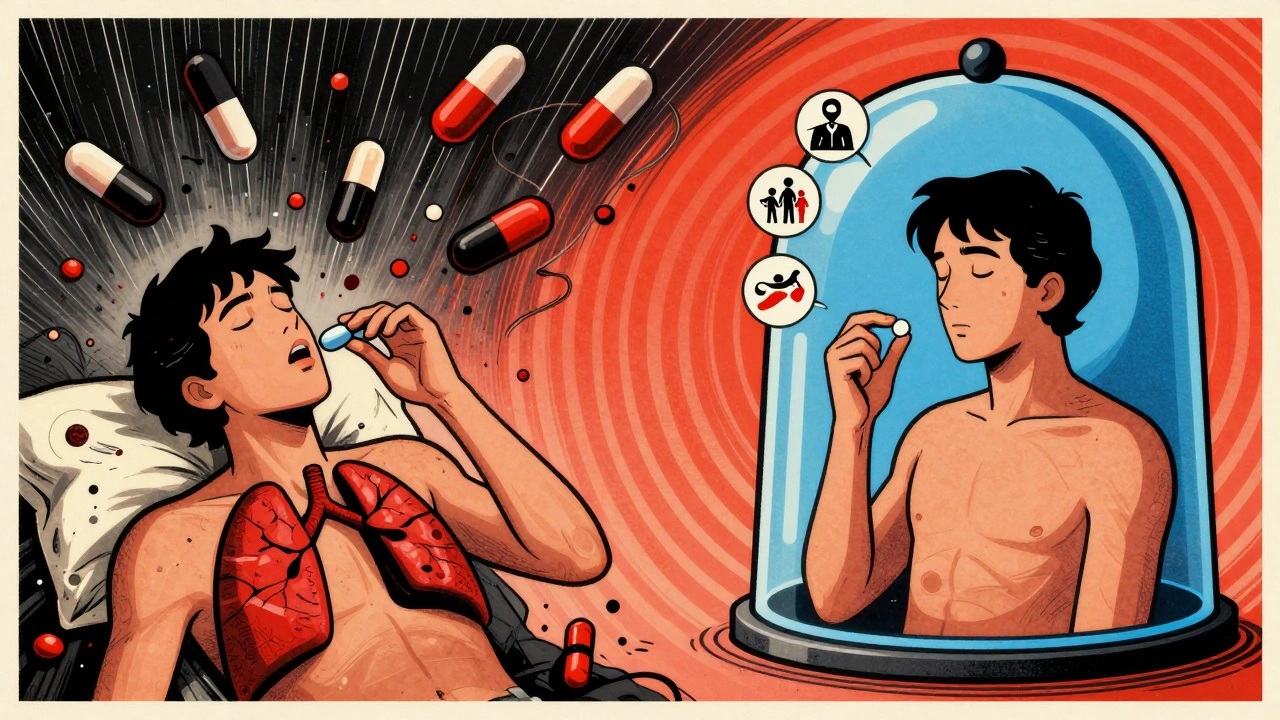
Buprenorphine doesn’t just help you feel better. It protects you. Because it binds so tightly to opioid receptors - about 50 times more strongly than morphine - it blocks other opioids from getting in. If you’re on 16 mg daily and someone offers you heroin? It won’t touch you. Not because you’re immune. Because your receptors are already occupied.
This is why buprenorphine reduces relapse. You don’t get high from other opioids anymore. That’s huge. One study showed that 16 mg of buprenorphine blocked heroin’s effects better than 8 mg. So dose matters - not just for comfort, but for protection.
And here’s something counterintuitive: the longer you stay on buprenorphine, the more stable your brain becomes. The craving doesn’t vanish overnight. But over months, the urge to use weakens. That’s not because buprenorphine is a “crutch.” It’s because your brain is healing. The drug gives you space to rebuild.
When Safety Isn’t Absolute
Let’s be clear: buprenorphine is not risk-free. The ceiling effect protects you from overdosing on buprenorphine alone. But it doesn’t protect you from mixing it with other depressants.
Between 2019 and 2021, 18 fatal overdoses in the U.S. involved buprenorphine. Every single one also involved benzodiazepines, alcohol, or other sedatives. That’s the real danger. Not buprenorphine. Not even high doses. But combining it with anything that slows your breathing.
That’s why doctors ask: “Are you taking Xanax? Klonopin? Sleeping pills? Alcohol?” If you are, you need to talk. That’s not judgment. That’s survival.
And yes, there are people who don’t respond well. Some with severe, long-term addiction need more than 24 mg. But buprenorphine’s ceiling stops there. For them, methadone might be a better fit - even if it’s riskier. Treatment isn’t about picking the “safest” drug. It’s about picking the one that works for you.
New Forms, Same Safety
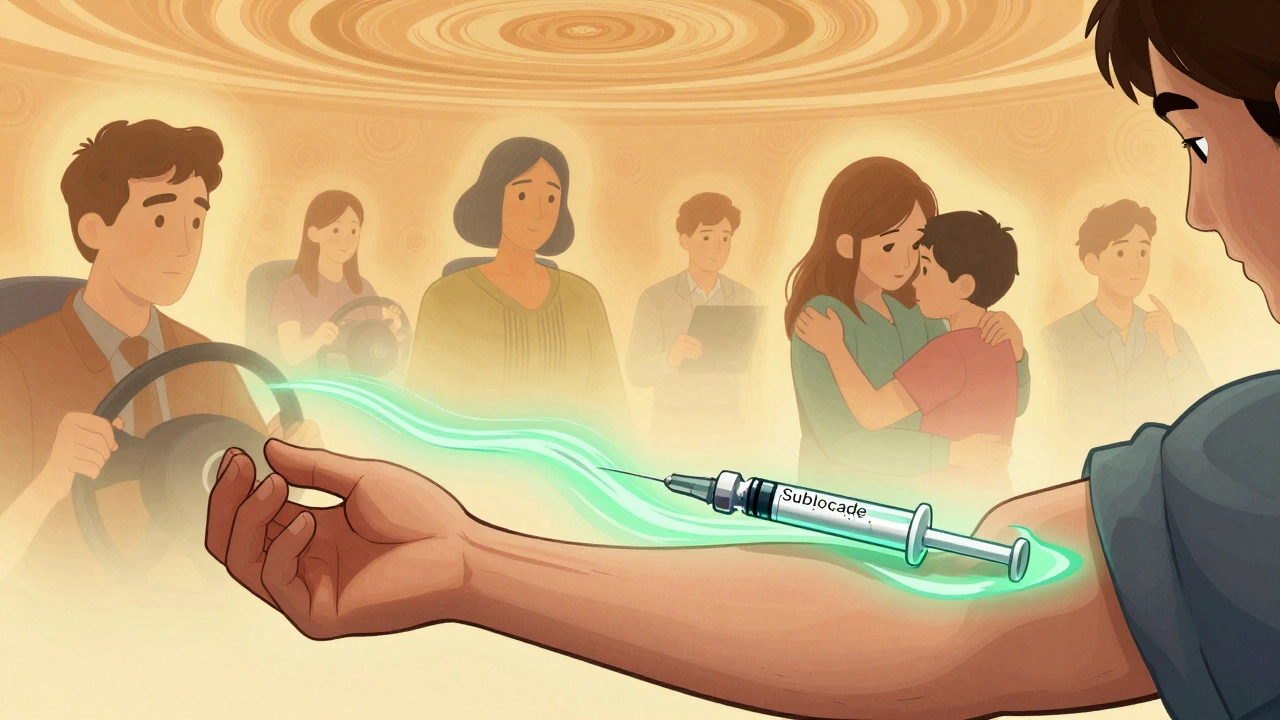
In 2023, the FDA approved Sublocade - a monthly injection of buprenorphine. No more daily pills. No more forgetting. No more stash-building. Just one shot a month that keeps your levels steady.
Clinical trials showed 49% of people on Sublocade stayed abstinent for six months. That’s better than daily sublingual buprenorphine. And because it’s a slow-release form, the ceiling effect remains intact. No spikes. No crashes. Just steady relief.
This is the future. More options. More access. More safety.
Who Shouldn’t Use It?
Buprenorphine isn’t for everyone. If you’re allergic to it, obviously not. If you have severe liver disease, your doctor will need to monitor you closely - it’s processed by the liver. And if you’re pregnant? It’s still one of the safest options. The American College of Obstetricians and Gynecologists recommends it over detox or no treatment.
But here’s the thing: you don’t need to be “ready” to start. You don’t need to have hit rock bottom. You don’t need to have failed every other treatment. If you’re tired of being sick, tired of hiding, tired of choosing between using and surviving - buprenorphine can help. You don’t need to earn it. You just need to ask.
Final Thoughts: It’s Not Perfect. But It’s Life-Saving.
Buprenorphine isn’t a miracle drug. It won’t fix your trauma, your anxiety, or your past. But it gives you the physical stability to start fixing those things. It lets you sleep. Eat. Work. Be present with your kids. It gives you back your life - without the fear of dying from a single dose.
The ceiling effect isn’t just a pharmacological quirk. It’s a revolution in addiction treatment. For the first time, we have a medication that reduces harm without requiring daily clinic visits, without constant supervision, without the risk of fatal overdose.
And that’s why, as of 2022, half of all medication-assisted treatments for opioid use disorder in the U.S. used buprenorphine. Not because it’s cheap. Not because it’s trendy. But because it works - and it keeps people alive.


Helen Maples
December 7, 2025 AT 08:41The ceiling effect isn't just a pharmacological detail-it's the reason people are still alive today. I've seen too many friends die from methadone overdoses because their doses were adjusted too fast. Buprenorphine doesn't play that game. It holds the line. No drama. No escalation. Just steady, safe relief. If you're still skeptical, ask someone who's been on it for two years. They won't tell you it's perfect. But they'll tell you it gave them back their life.
Ashley Farmer
December 8, 2025 AT 05:05I appreciate how this breaks down the science without jargon. For anyone afraid to start because they think they'll be 'dependent'-that's not dependence, that's stability. I was on 8mg for six months and felt like I was floating in fog. At 16mg, I could finally hear my own thoughts again. It’s not about being clean. It’s about being present.
David Brooks
December 8, 2025 AT 06:29THIS. THIS IS THE FUTURE. I used to think recovery meant suffering. I was wrong. Buprenorphine didn’t take away my pain-it gave me the space to heal from it. I went from hiding in my apartment to coaching little league. I’m not ‘on drugs.’ I’m living. And if anyone tells you otherwise, they’ve never stood where I stood.
Jennifer Anderson
December 8, 2025 AT 18:47so i started on 4mg cause i was scared, then went to 8, then 16… and honestly? the headache and nausea went away after like 10 days. now i just feel… normal. like i can wake up and not want to die. that’s not addiction. that’s just being human again.
Sadie Nastor
December 10, 2025 AT 07:17thank you for writing this. i’ve been on sublocade for 8 months and i can’t believe how much easier life is. no more daily pills, no more shame, no more hiding the box in my sock drawer. i still get cravings sometimes, but they don’t own me anymore. 🌱
Nicholas Heer
December 11, 2025 AT 01:57they want you hooked on this so you don’t ask why your meds cost $800 a month. the feds love this stuff because it keeps you docile. you think this is treatment? it’s corporate control wrapped in science jargon. and don’t get me started on how they banned the old methadone clinics to push this. it’s not about healing-it’s about profit. and don’t tell me about the ceiling effect, i’ve seen people on 40mg still nodding off. they’re lying to you.
Sangram Lavte
December 11, 2025 AT 13:24In India, access to buprenorphine is still very limited. Most clinics don’t even offer it. But I’ve seen patients who switched from heroin to this-suddenly they’re working again, feeding their kids. The ceiling effect isn’t just science. It’s dignity. I wish more doctors here understood that.
Oliver Damon
December 13, 2025 AT 05:55What’s fascinating is how the ceiling effect redefines the entire framework of addiction treatment. We’ve spent decades framing recovery as abstinence, but buprenorphine shifts the goal to functionality. It doesn’t erase the past-it decouples the biological drive from the behavioral spiral. The blockade isn’t just chemical; it’s psychological. You stop chasing because you can’t get there, and over time, the chase loses its meaning. That’s neuroplasticity in action, not just pharmacology.
Kurt Russell
December 13, 2025 AT 18:49If you’re reading this and still scared to start-just do it. One pill. One day. One chance. You don’t need to be ready. You just need to want to breathe again. I’ve seen people come back from the edge. Buprenorphine doesn’t fix everything. But it fixes the part that lets you fix the rest. You’ve got this.