Daptomycin Muscle Toxicity Risk Checker
This tool helps assess your risk of daptomycin-related muscle toxicity based on CK levels and symptoms. Remember: Always consult your healthcare provider for medical decisions.
When you're fighting a serious bacterial infection like MRSA or infective endocarditis, daptomycin can be a lifesaver. But there's a hidden risk that many patients and even some doctors don't talk about enough: daptomycin muscle toxicity. It doesn't show up in fever charts or blood cultures. It creeps in quietly-muscle pain you write off as fatigue, weakness you blame on being sick. By the time it's obvious, your creatine phosphokinase (CK) levels could already be through the roof.
Why Daptomycin Can Hurt Your Muscles
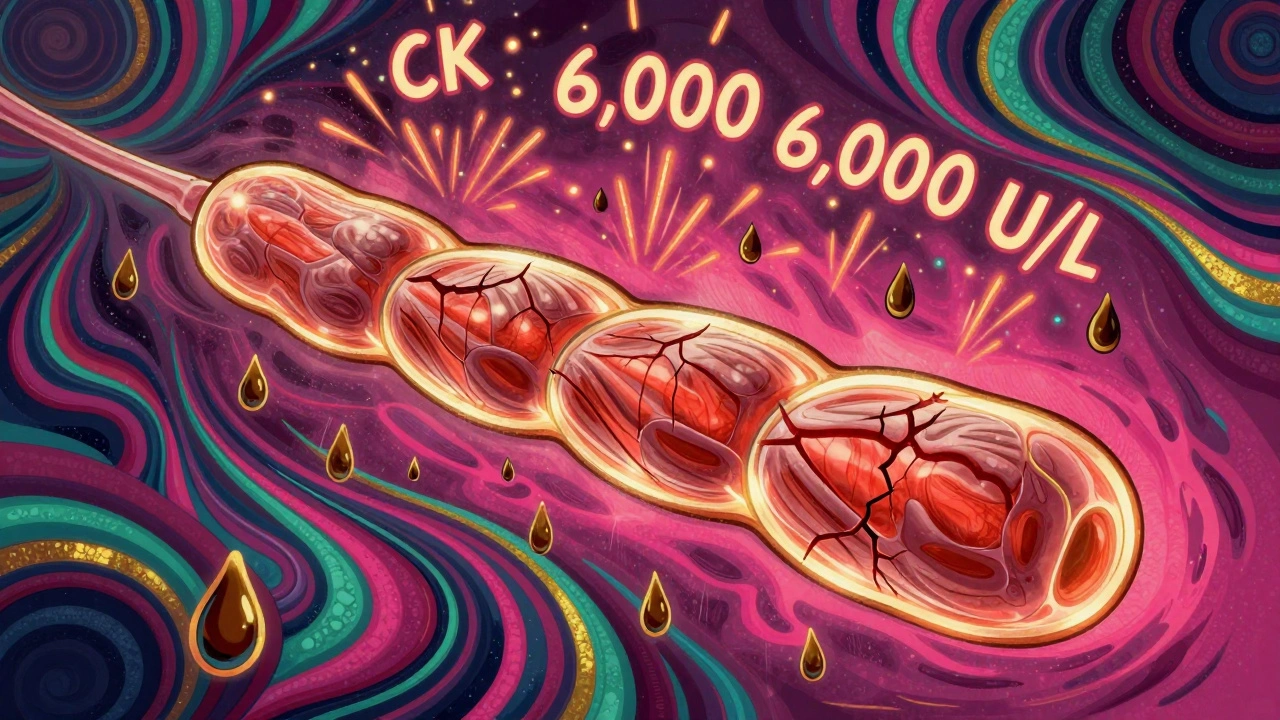
Daptomycin works by punching holes in the cell membranes of Gram-positive bacteria like MRSA. That’s great for killing infections. But here’s the problem: it doesn’t just target bacteria. In some people, it also damages human skeletal muscle cells. Research from 2020 showed that even in lab-grown muscle cells under normal oxygen conditions, daptomycin caused visible membrane damage and cell death. And if you’re already low on oxygen-because you have heart disease, sepsis, or poor circulation-that damage gets worse. Your muscles are already stressed. Daptomycin adds fuel to the fire.This isn’t theoretical. Real patients have shown CK levels over 6,000 U/L after daptomycin treatment. For reference, normal CK is under 200 U/L for most adults. That’s not just elevated-it’s dangerous. At that level, you’re at risk of rhabdomyolysis, where muscle breaks down and floods your kidneys with toxic proteins. It can lead to kidney failure, hospitalization, or worse.
What Symptoms Should You Watch For?
The signs aren’t always dramatic. Many people assume muscle soreness after a long hospital stay is normal. But if you notice any of these, don’t brush them off:- Unexplained muscle pain, especially in the thighs, shoulders, or lower back
- Weakness that gets worse over days, not better
- Tenderness when you press on your arms or legs
- Dark, tea-colored urine (a red flag for muscle breakdown)
- Fatigue that doesn’t improve with rest
These symptoms often show up after 5-10 days of treatment, but they can appear anytime-even after weeks of therapy. And here’s the catch: some people feel fine but still have dangerously high CK levels. That’s why checking your numbers isn’t optional-it’s essential.
CK Monitoring: When and How Often
The University of Nebraska Medical Center and other leading guidelines say this: check your CK level every week while you’re on daptomycin. Not every other week. Not just before you start. Every week.Here’s what to do based on your results:
- If your CK is under 250 U/L: keep going, no changes needed.
- If your CK is between 250-1,000 U/L: watch closely. No symptoms? Keep monitoring. Muscle pain? Talk to your doctor-dose adjustment or stopping may be needed.
- If your CK exceeds 1,000 U/L and you have muscle pain: stop daptomycin immediately.
- If your CK is over 10 times the upper limit of normal (around 2,000 U/L for most labs) even if you feel fine: stop the drug. You’re in danger zone.
Some patients get daptomycin for bone or joint infections and stay on it for weeks or even months. That’s when the risk climbs. Longer exposure = higher chance of muscle damage. That’s why weekly CK checks are non-negotiable in these cases.

Dose Matters-Higher Isn’t Always Better
The FDA-approved dose for bloodstream infections is 6 mg/kg once daily. For skin infections, it’s 4 mg/kg. But doctors are increasingly using higher doses-8 mg/kg, even up to 12 mg/kg-for stubborn bone and joint infections. Why? Because higher doses work better in those hard-to-treat areas.But here’s the trade-off: studies show that doses above 6 mg/kg increase the risk of muscle toxicity. One 2023 study found that 5-10% of patients on standard doses had muscle issues. That number jumped to 15-20% in those getting higher doses for orthopedic infections. And the longer you’re on it, the higher the risk. A patient on 12 mg/kg for 8 weeks? That’s a ticking clock.
There’s a smarter way. New research suggests tracking something called AUC24h-how much drug your body is exposed to over 24 hours. The sweet spot for safety and effectiveness is between 666 and 939 mg·h/L. If your doctor has access to therapeutic drug monitoring, ask about it. It’s not routine everywhere, but it’s becoming the gold standard for high-risk cases.
Statins and Daptomycin: The Real Risk
For years, doctors were told: if you’re on a statin, don’t give daptomycin. The fear was that the two would team up and cause catastrophic muscle damage.Turns out, that fear was overblown. A 2014 study of 220 patients found that those on statins had slightly higher CK levels and more muscle pain-but the difference wasn’t statistically significant. In plain terms: statins didn’t reliably make daptomycin more dangerous.
Still, many hospitals continue to pause statins during daptomycin therapy. Why? Because it’s safer to be cautious. If you’re on a statin and start daptomycin, your doctor might ask you to hold it for a few days. If your CK stays normal, they might restart it later. But don’t stop your statin on your own. Talk to your provider. The decision depends on your heart health, your CK trend, and your overall risk.
Who’s at Highest Risk?
Not everyone gets muscle toxicity. But some people are far more vulnerable:- Patients with heart disease, especially those with poor circulation or low oxygen levels
- People with kidney problems (daptomycin is cleared by the kidneys, so levels can build up)
- Those on higher doses (above 6 mg/kg)
- Anyone on daptomycin for more than 10 days
- Patients with pre-existing muscle disorders or recent trauma
- People with hypoxia from sepsis, pneumonia, or COPD
If you fall into any of these groups, your doctor should be extra vigilant. Weekly CK checks aren’t just a formality-they’re your safety net.
What Happens If You Stop Daptomycin?
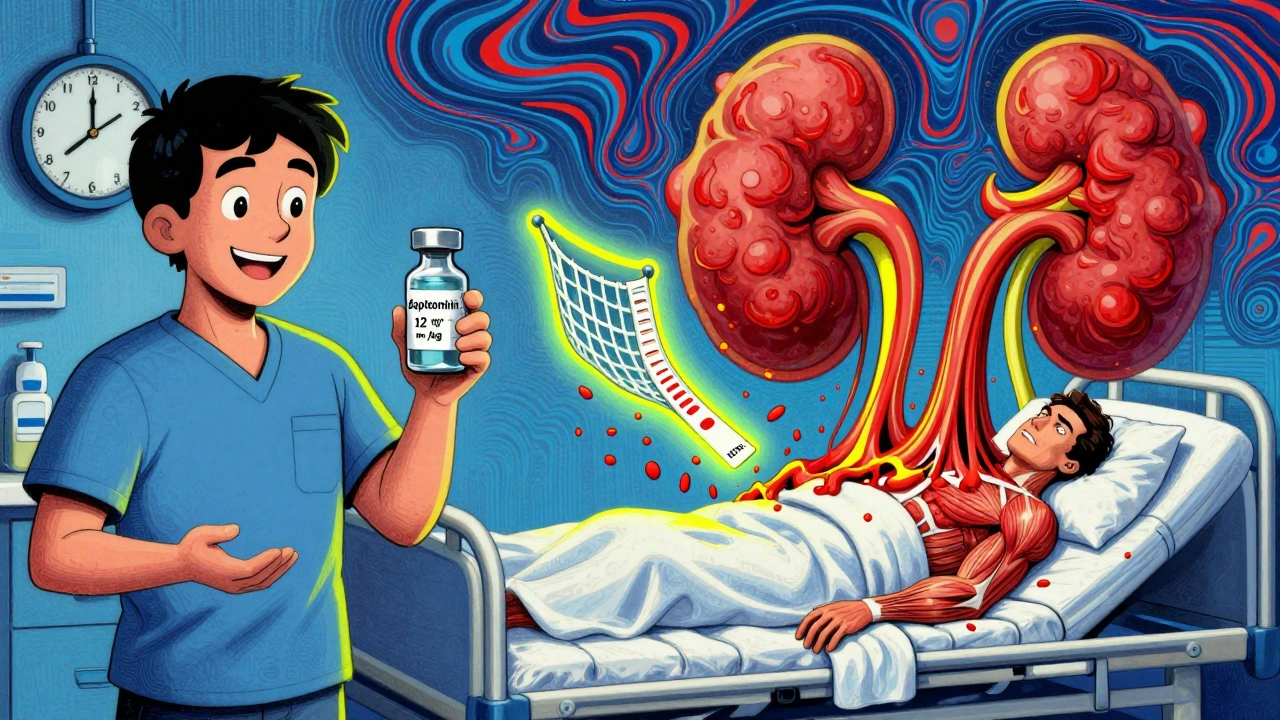
Good news: the muscle damage from daptomycin is almost always reversible. Once you stop the drug, CK levels start dropping within days. Muscle pain fades. Strength returns. In most cases, full recovery happens within 2-4 weeks.But here’s the catch: if you ignore the warning signs and keep going, you can cross into rhabdomyolysis. That’s when muscle cells explode, releasing myoglobin into your blood. It clogs your kidneys. You might need dialysis. You could end up in the ICU. That’s why early detection matters more than anything.
What About Other Antibiotics?
Vancomycin is the usual alternative. It’s cheaper-about $120 for a two-week course versus over $1,100 for daptomycin. But vancomycin needs frequent blood tests to check its levels, and it can still cause kidney damage. Fluoroquinolones like ciprofloxacin can cause tendon ruptures. Daptomycin doesn’t do that. Its main risk is muscle toxicity, and it’s manageable-if you’re watching for it.There’s no perfect antibiotic. But daptomycin remains one of the best tools we have for resistant infections. The key isn’t avoiding it. It’s using it wisely-with monitoring, awareness, and clear communication with your care team.
Final Takeaway: Don’t Wait for Pain
Daptomycin is powerful. But power without caution is dangerous. If you’re on this drug, make sure:- Your CK is checked every week
- You report any new muscle pain or weakness right away
- You understand your dose and how long you’ll be on it
- You know the signs of trouble-dark urine, extreme fatigue, inability to stand up
Most people tolerate daptomycin just fine. But for those who don’t, the difference between a safe recovery and a life-threatening complication often comes down to one thing: catching it early. Don’t assume your symptoms are just from being sick. Ask for your CK numbers. Speak up if something feels off. Your muscles are counting on it.
Can daptomycin cause permanent muscle damage?
In almost all cases, no. Daptomycin-induced muscle toxicity is reversible once the drug is stopped. CK levels drop, muscle strength returns, and symptoms resolve within weeks. Permanent damage is extremely rare and usually only occurs if rhabdomyolysis is severe and untreated, leading to kidney failure and complications.
How often should CK be checked during daptomycin therapy?
Weekly. Guidelines from major medical centers like the University of Nebraska Medical Center recommend checking creatine phosphokinase (CK) levels every 7 days throughout the entire course of treatment. This is especially critical for patients on higher doses (above 6 mg/kg) or those receiving therapy for more than 10 days.
Should I stop taking statins if I’m on daptomycin?
It depends. Early concerns suggested combining statins with daptomycin greatly increased muscle toxicity risk. However, a 2014 study of 220 patients found no statistically significant increase in CK elevation or muscle pain when statins were continued. Still, many clinicians choose to temporarily hold statins as a precaution, especially if CK levels begin to rise. Always consult your doctor before stopping any medication.
What CK level means I should stop daptomycin?
Stop daptomycin immediately if you have muscle pain and your CK is above 1,000 U/L. If you have no symptoms but your CK is more than 10 times the upper limit of normal (typically over 2,000 U/L), you should also stop the drug. These thresholds are based on clinical guidelines to prevent progression to rhabdomyolysis.
Can daptomycin cause kidney damage?
Not directly. Daptomycin is cleared by the kidneys, but it doesn’t damage kidney tissue the way vancomycin or aminoglycosides can. However, if daptomycin causes rhabdomyolysis (severe muscle breakdown), the released muscle proteins can overwhelm the kidneys and cause acute kidney injury. That’s why monitoring CK is critical-it prevents the chain reaction that leads to kidney problems.
Are there alternatives to daptomycin for resistant infections?
Yes. Vancomycin remains the most common alternative for MRSA infections. Linezolid and ceftaroline are also options, especially for skin and soft tissue infections. For complicated cases, newer agents like oritavancin or telavancin may be used. The choice depends on the infection site, your kidney function, cost, and whether you’ve had side effects from other drugs. Daptomycin is often chosen when other antibiotics fail or aren’t suitable.
How long does it take for muscle symptoms to go away after stopping daptomycin?
Most patients notice improvement in muscle pain and weakness within 3-7 days after stopping daptomycin. CK levels typically begin to drop within 48 hours. Full recovery of muscle strength usually takes 2-4 weeks, though it can take longer in older adults or those with pre-existing muscle conditions. Rest, hydration, and avoiding strenuous activity during recovery help speed up healing.



Webster Bull
December 14, 2025 AT 10:56Scott Butler
December 15, 2025 AT 12:21Ronan Lansbury
December 16, 2025 AT 14:03sharon soila
December 18, 2025 AT 08:17nina nakamura
December 20, 2025 AT 06:19Tom Zerkoff
December 20, 2025 AT 18:44Sheldon Bird
December 22, 2025 AT 17:54Karen Mccullouch
December 22, 2025 AT 20:48Michael Gardner
December 24, 2025 AT 10:16John Fred
December 25, 2025 AT 17:38