Medication Dry Eye Risk Checker
Check if your medications might be contributing to dry eye symptoms. This tool identifies potential risk factors based on medications you take and suggests evidence-based relief strategies.
Your Medications
Select medications you're currently taking that might contribute to dry eyes:
Why Your Medications Might Be Making Your Eyes Dry
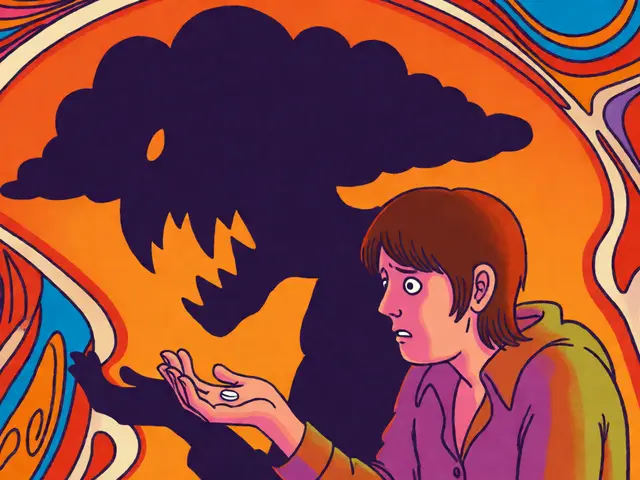
You’re not imagining it. If your eyes feel gritty, burning, or like they’re full of sand-even when you’re not staring at a screen all day-your meds could be the cause. It’s more common than you think. About one in four people with chronic dry eyes are dealing with it because of their prescriptions. For those over 65, that number jumps to nearly 4 in 10. You’re not alone, and you don’t have to just live with it.
Medications don’t just work on the problem you’re treating. They ripple through your whole body. And your eyes? They’re surprisingly sensitive to changes in fluid balance, nerve signals, and chemical exposure. Even something as simple as an allergy pill or a blood pressure tablet can quietly shut down your tear production or mess up the oily layer that keeps tears from evaporating too fast.
Which Medications Are Most Likely to Cause Dry Eyes?
Not all drugs affect your eyes the same way. Some block the signals your brain sends to tear glands. Others dry you out systemically. A few even contain chemicals that irritate your eye surface directly. Here’s what’s most commonly linked to dry eye symptoms:
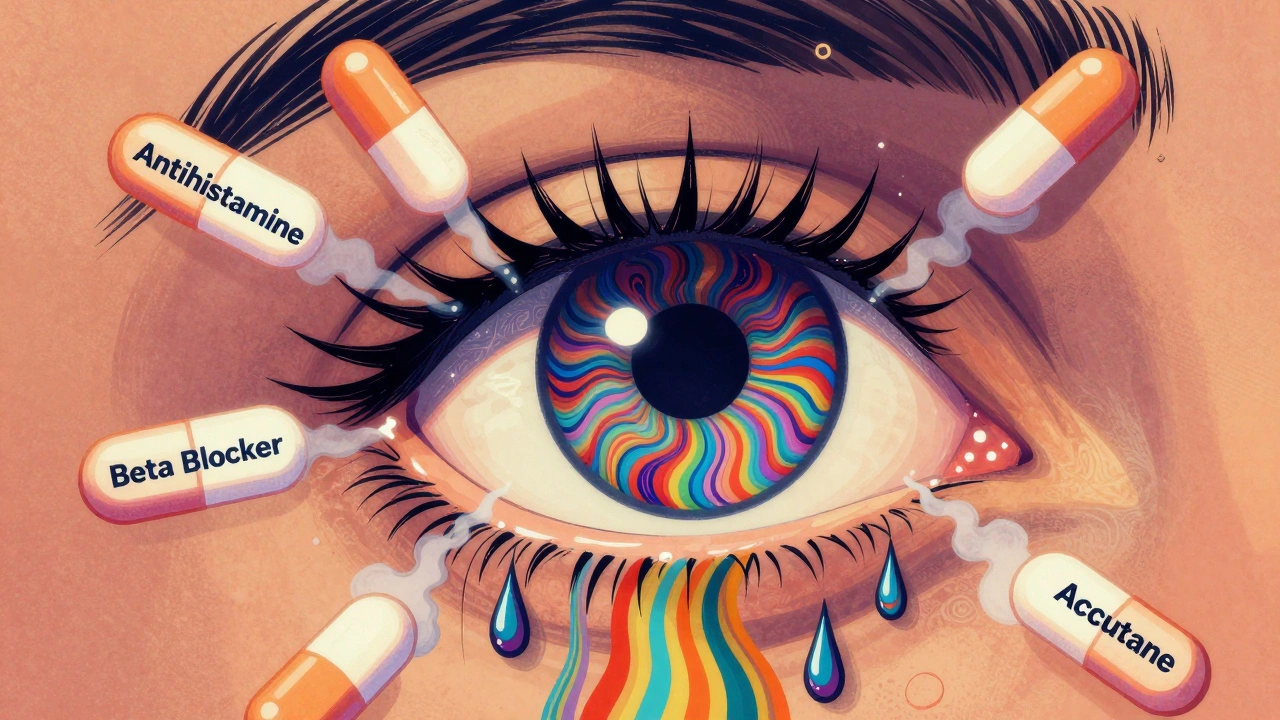
- Antihistamines like Benadryl, Claritin, and Zyrtec: These stop allergy symptoms but also stop your eyes from making tears.
- Antidepressants including Zoloft, Prozac, amitriptyline: These alter brain chemicals-and often reduce tear output as a side effect.
- Blood pressure meds like metoprolol, atenolol, hydrochlorothiazide, and Lasix: Diuretics make you pee more, which pulls fluid from your eyes too.
- Glaucoma eye drops such as latanoprost and timolol: Many contain benzalkonium chloride (BAK), a preservative that’s toxic to the eye surface. Up to 47% of users report burning and dryness. Switching to preservative-free versions cuts that in half.
- Acne treatments like Accutane (isotretinoin): This one hits the meibomian glands-the tiny oil glands in your eyelids-hard. It can permanently damage them if not managed early.
- Chemotherapy drugs and newer cancer treatments like EGFR inhibitors: These target fast-growing cells, including those in your tear-producing glands.
If you’re on any of these and your eyes feel worse after starting the med, it’s worth talking to your doctor. Not to stop it-unless they say so-but to explore alternatives or add protection.
Lubrication That Actually Works (And What to Avoid)
Artificial tears aren’t all the same. The kind you buy in a big bottle at the pharmacy? It’s probably full of preservatives. And if you’re using it more than four times a day, those preservatives are doing more harm than good. They irritate your eye surface, making dryness worse over time.
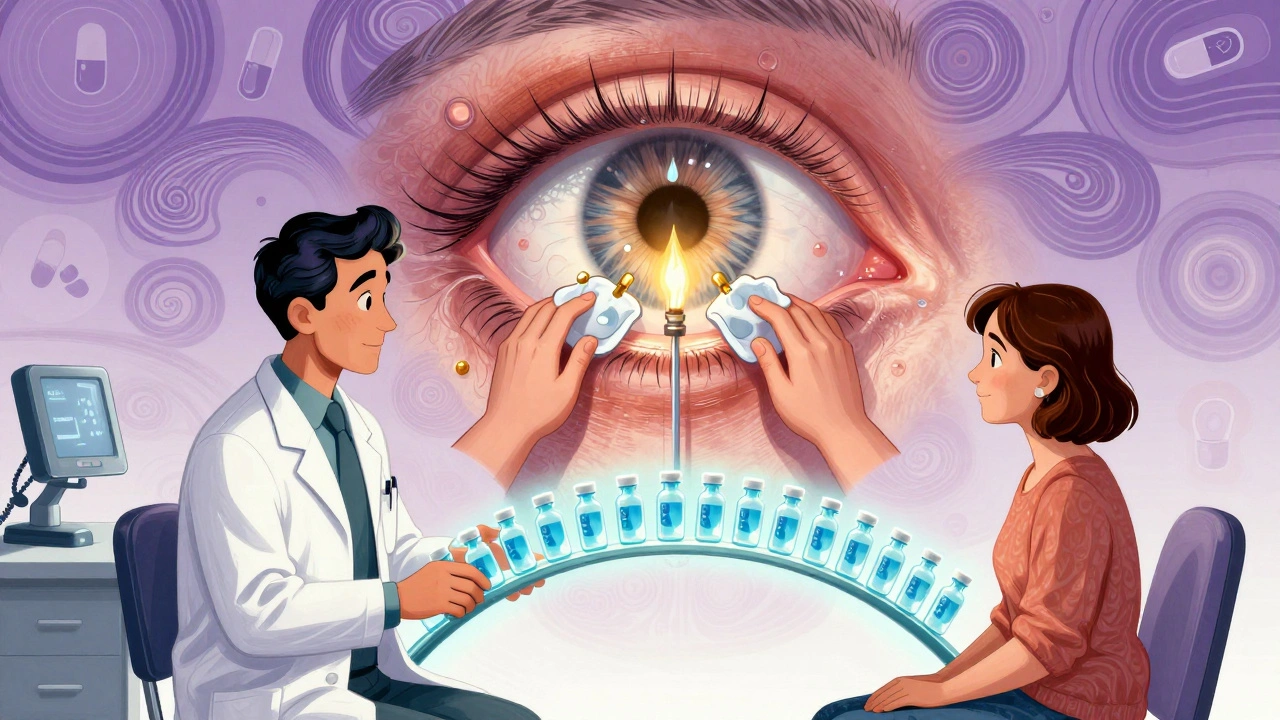
What you want: preservative-free artificial tears. These come in single-use vials. You open one, use it, toss it. No chemicals lingering on your eye. Ophthalmologists recommend using them 4 to 6 times a day-no more, no less. If you’re on glaucoma drops, wait 15 minutes after your prescription before using the artificial tears. That way, your eye gets the full benefit of both.
For stubborn cases, prescription options like Restasis (cyclosporine) and Xiidra (lifitegrast) can help. Restasis boosts natural tear production, but it takes 3 to 6 months to work. Xiidra reduces inflammation and can show results in weeks. Both are pricey-around $550 a month in the U.S.-and insurance doesn’t always cover them. But for people whose dry eye is linked to essential meds, they can be game-changers.
Another option: punctal plugs. These tiny devices are inserted into the tear ducts to keep your tears from draining too fast. Temporary collagen plugs last a few months. Silicone ones are permanent. About 70% of patients see improvement with temporary plugs. It’s a low-risk procedure, done right in the doctor’s office.
Lifestyle Changes That Make a Real Difference
Medications might be the trigger, but your environment and habits can make it worse-or better. Here’s what actually helps:
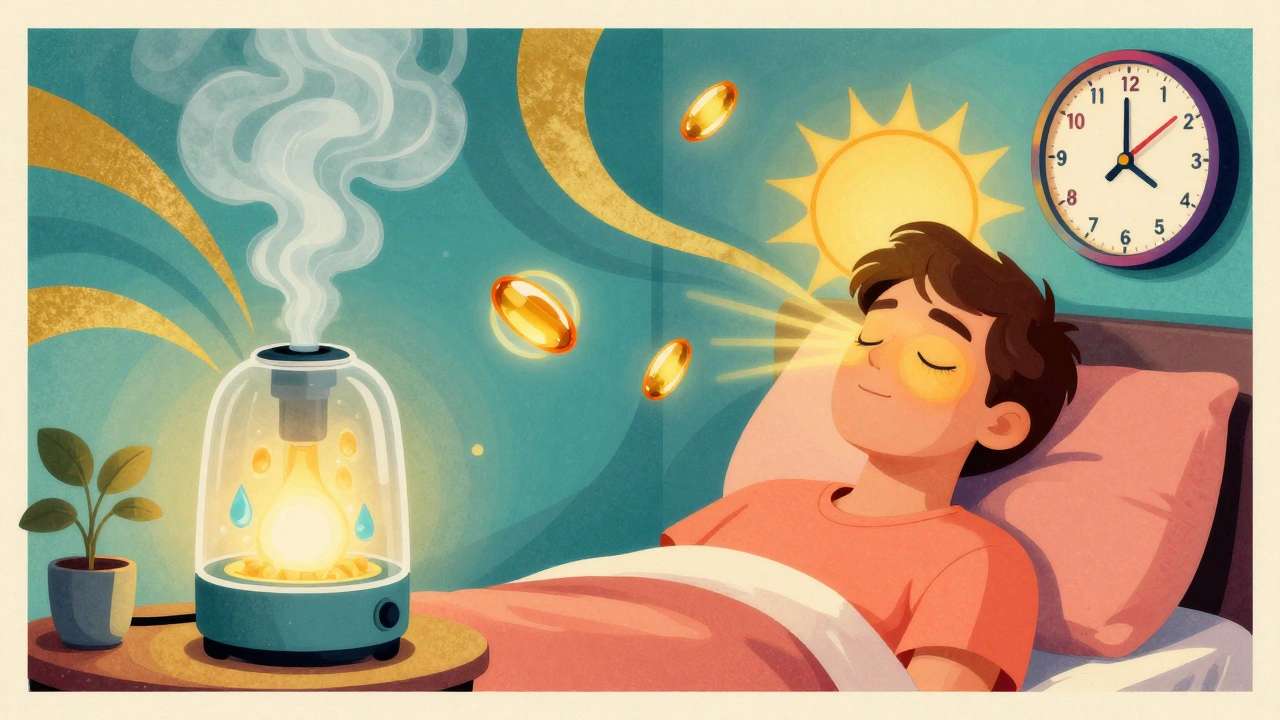
- Use a humidifier. Keep indoor humidity between 40% and 60%. Dry air pulls moisture from your eyes. A simple room humidifier can reduce tear evaporation by 25%.
- Follow the 20-20-20 rule. Every 20 minutes, look at something 20 feet away for 20 seconds. This isn’t just for screen time-it helps your eyes blink fully, which spreads tears evenly. Studies show it cuts digital eye strain symptoms by 35% in people on antidepressants or antihistamines.
- Watch the airflow. Don’t sit directly in front of a fan, car vent, or air conditioner. Air moving faster than 0.15 meters per second near your face dries your eyes out. Adjust your seat, or point vents away.
- Take omega-3s. 1,000 to 2,000 mg of EPA and DHA daily improves tear film stability in 60% of users within three months. Fish oil capsules or algae-based supplements work. This is especially helpful if you’re on diuretics or have oily gland dysfunction from Accutane.
- Quit smoking. Smoke makes dry eye 45% worse. If you quit, you’ll notice less burning and redness in just 2 to 4 weeks.
- Apply warm compresses. Do this twice a day for 10 to 15 minutes. Use a clean washcloth soaked in warm (not hot) water. Then gently massage your eyelids. This melts clogged oils in your meibomian glands. It works in 65% of cases, especially with Accutane or aging-related dry eye.
Don’t Stop Your Meds-Talk to Your Doctor
Some people panic and stop their meds cold turkey. That’s dangerous. Stopping blood pressure pills or antidepressants suddenly can cause serious health risks. But you don’t have to suffer in silence.
Work with your doctor and your eye specialist together. Ask: Is there an alternative medication with fewer eye side effects? Can the dose be lowered? In 55% of cases, reducing the dose improves dry eye without losing the treatment’s benefits.
For glaucoma patients, switching to preservative-free drops can cut symptoms from 47% down to 16%. For people on antidepressants, some doctors switch from SSRIs to bupropion, which has a lower risk of dry eye. It’s not always possible-but it’s worth exploring.
What to Expect and How to Stay on Track
Improvement doesn’t happen overnight. With preservative-free tears and warm compresses, you might feel better in 2 to 4 weeks. But if you’re using Restasis or Xiidra, give it 3 to 6 months. Patience matters.
Here’s how to get the most out of your drops:
- Tilt your head back slightly.
- Pull down your lower eyelid to make a pocket.
- Hold the dropper above your eye-don’t touch your eye or eyelashes.
- Squeeze one drop in.
- Close your eye gently for 30 seconds. Don’t blink hard.
Getting the technique right improves effectiveness by 25%. And don’t use more than 6 doses a day of preservative-free drops. More isn’t better-it just wastes money.
Adherence is everything. Studies show 60% of dry eye success comes from sticking to the full plan-not just the drops, but the humidifier, the omega-3s, the screen breaks. It’s a lifestyle shift, not a quick fix.
What’s New in Dry Eye Treatment
There’s real progress happening. In early 2023, the FDA approved a new version of cyclosporine called Cequa, which uses nanomicelles to deliver the drug more effectively. It’s 300% more bioavailable than older versions. That means better results, possibly at lower doses.
Researchers are also testing new lipid-based eye drops specifically for people on Accutane. Early results show 40% improvement in tear film stability after just 8 weeks. And more eye clinics now use advanced imaging to check your meibomian glands-so treatment can be tailored to your exact problem.
The global dry eye market is growing fast-projected to hit nearly $8 billion by 2030. That’s because doctors and patients are finally recognizing this isn’t just ‘annoying’-it’s a real condition that needs real care.
When to See an Eye Specialist
If you’ve tried preservative-free tears, warm compresses, and lifestyle changes for 4 to 6 weeks with no improvement, it’s time to see an eye doctor who specializes in dry eye. General optometrists can help, but specialists have access to advanced tests like tear osmolarity and meibography (imaging of your oil glands). These tools show exactly what’s going wrong-and guide better treatment.
Also, if your dry eye came on suddenly, is only in one eye, or is paired with vision loss, pain, or light sensitivity, don’t wait. These could be signs of something more serious.
Can dry eyes from medication be reversed?
Yes, in many cases. If the medication causing the dry eye can be stopped, switched, or lowered in dose, symptoms often improve significantly-up to 70-80% of the time. Even if you can’t stop the med, consistent use of preservative-free tears, warm compresses, and omega-3s can restore comfort and protect your eye surface. The key is early action. The longer the glands are damaged, the harder they are to repair.
Are preservative-free tears worth the extra cost?
Absolutely-if you’re using artificial tears more than 3 or 4 times a day. Preservatives like benzalkonium chloride build up on your eye surface and cause inflammation, which makes dry eye worse. Single-dose, preservative-free vials cost more per drop, but you’re not poisoning your eyes over time. For people on long-term meds, it’s an investment in eye health, not just a convenience.
Can I use over-the-counter eye drops with my prescription glaucoma drops?
Yes, but not right after. Wait at least 15 minutes between your glaucoma drop and your artificial tear. If you apply them too close together, the second drop can wash out the first. That reduces the effectiveness of your glaucoma treatment. Always use preservative-free tears if you’re using glaucoma drops daily.
Why do my eyes feel worse in the morning?
Nighttime tear production drops, and your eyelids may not close fully while sleeping-especially if you have dry eye. This causes your eyes to dry out. Morning grittiness is common. Try using a thicker gel-based lubricant before bed (preservative-free) and keeping your bedroom humid. Warm compresses first thing in the morning also help melt clogged oils.
Is dry eye from medication permanent?
Not always. For most people, symptoms improve once the trigger is managed. But some medications-like Accutane-can cause lasting damage to meibomian glands. In those cases, the goal shifts from reversal to long-term management. Treatments like intense pulsed light (IPL) or iLux thermal pulsation can help restore gland function, even years after starting the drug. Early intervention is key.
Final Thoughts: You Have Control
Dry eyes from medication feel like a dead end. But they’re not. You’re not powerless. You can ask for alternatives. You can change how you use your eye drops. You can adjust your environment. You can add simple habits that protect your eyes every day.
The goal isn’t to eliminate your meds-it’s to protect your eyes while you take them. And with the right mix of lubrication, lifestyle tweaks, and smart communication with your doctors, you can do exactly that.


ashlie perry
December 6, 2025 AT 11:02Philip Kristy Wijaya
December 6, 2025 AT 20:43Jennifer Patrician
December 8, 2025 AT 08:25Mellissa Landrum
December 9, 2025 AT 07:24Mark Curry
December 10, 2025 AT 04:11Manish Shankar
December 10, 2025 AT 06:29Mark Ziegenbein
December 12, 2025 AT 02:04Juliet Morgan
December 13, 2025 AT 09:24Deborah Jacobs
December 14, 2025 AT 00:18James Moore
December 15, 2025 AT 01:46Kylee Gregory
December 16, 2025 AT 10:32Stephanie Fiero
December 16, 2025 AT 10:45Laura Saye
December 17, 2025 AT 17:08sean whitfield
December 17, 2025 AT 18:58