
Missing a pill here and there might seem harmless-but over time, it adds up. About 60-70% of people who don’t take their medications as prescribed aren’t doing it on purpose. They forget. They get busy. Their schedule shifts. That’s where habit pairing comes in. It’s not a fancy app or a smart pill bottle. It’s simple: link your medication to something you already do every day, like brushing your teeth or drinking coffee. And it works-better than reminders, better than apps, and for far less cost.
Why Habit Pairing Works
Your brain loves routines. When you do something the same way, at the same time, every day, your brain stops treating it as a decision. It becomes automatic. That’s habit formation. Researchers found that pairing a new behavior-like taking your blood pressure pill-with an existing one-like making breakfast-triggers the same neural pathways. Within 21 to 66 days, taking that pill stops feeling like a chore. It just happens. This isn’t theory. A 2015 NIH study of over 1,200 people with chronic conditions showed that those who paired meds with daily habits reduced missed doses by 30-50%. The American Heart Association, CDC, and American Diabetes Association all recommend this method in their 2023 guidelines. And it’s not just for seniors. People aged 18 to 85 benefit equally-so long as their routine stays consistent.The Seven Best Ways to Pair Medications with Daily Habits
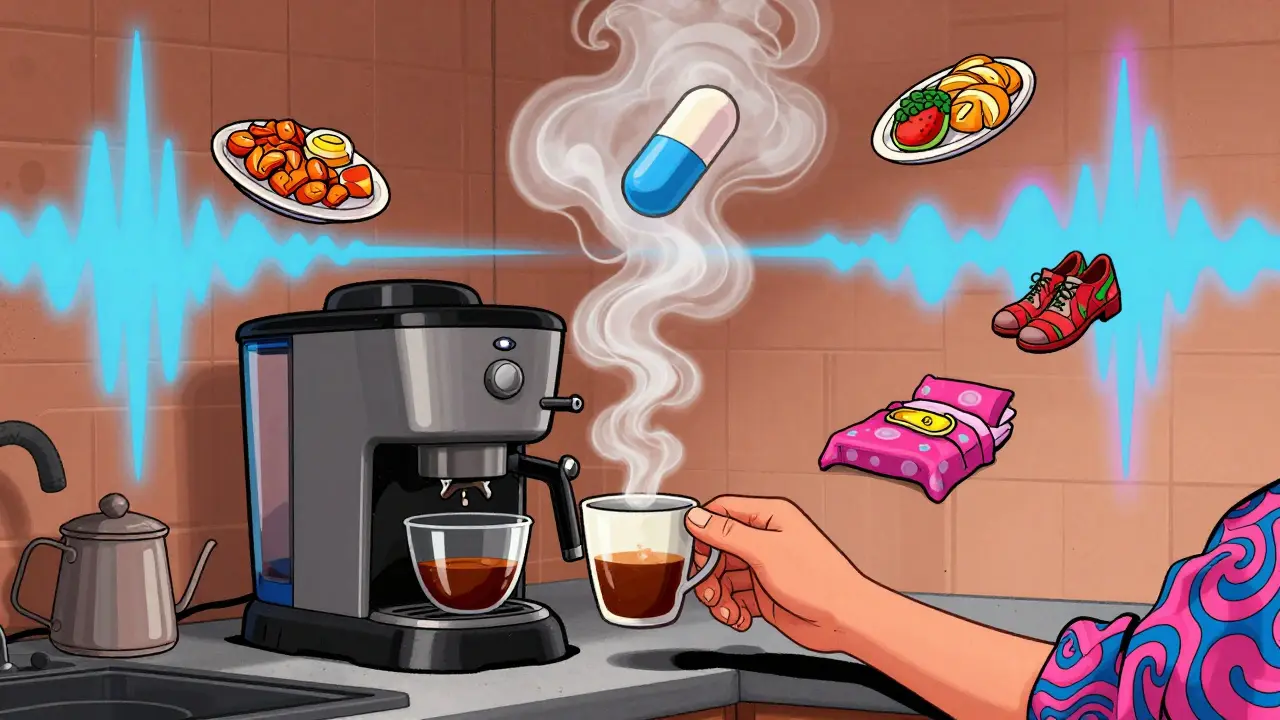
Not all habits are created equal. Some anchor points work better than others. Here are the most effective strategies, backed by data from pharmacies, clinics, and patient surveys.- Brushing your teeth - This is the #1 anchor for morning meds. A 2023 Central Pharmacy study found that people who took their pills right after brushing had a 92% adherence rate. Why? Everyone brushes twice a day, rain or shine. No excuses.
- Eating meals - Ideal for medications that need food (like some antibiotics or diabetes drugs). Pairing your pill with breakfast, lunch, or dinner gives you two built-in cues: the time of day and the physical act of eating. The American Diabetes Association specifically recommends this for insulin and oral hypoglycemics.
- Drinking coffee or tea - If you make your morning cup at the same time every day, that’s a perfect trigger. One Reddit user reported cutting missed doses from 12 per month to just 2 after linking their 8 a.m. meds to coffee-making.
- Checking your mail or opening the front door - Great for daytime pills. If you pick up your mail at 11 a.m. every day, that’s a reliable cue. It’s especially useful for people who don’t eat at fixed times or skip meals.
- Putting on or taking off shoes - A smart anchor for evening meds. If you always take off your shoes when you walk in the door, that’s your signal to grab your night pills. Works well for shift workers who need to avoid nighttime alarms.
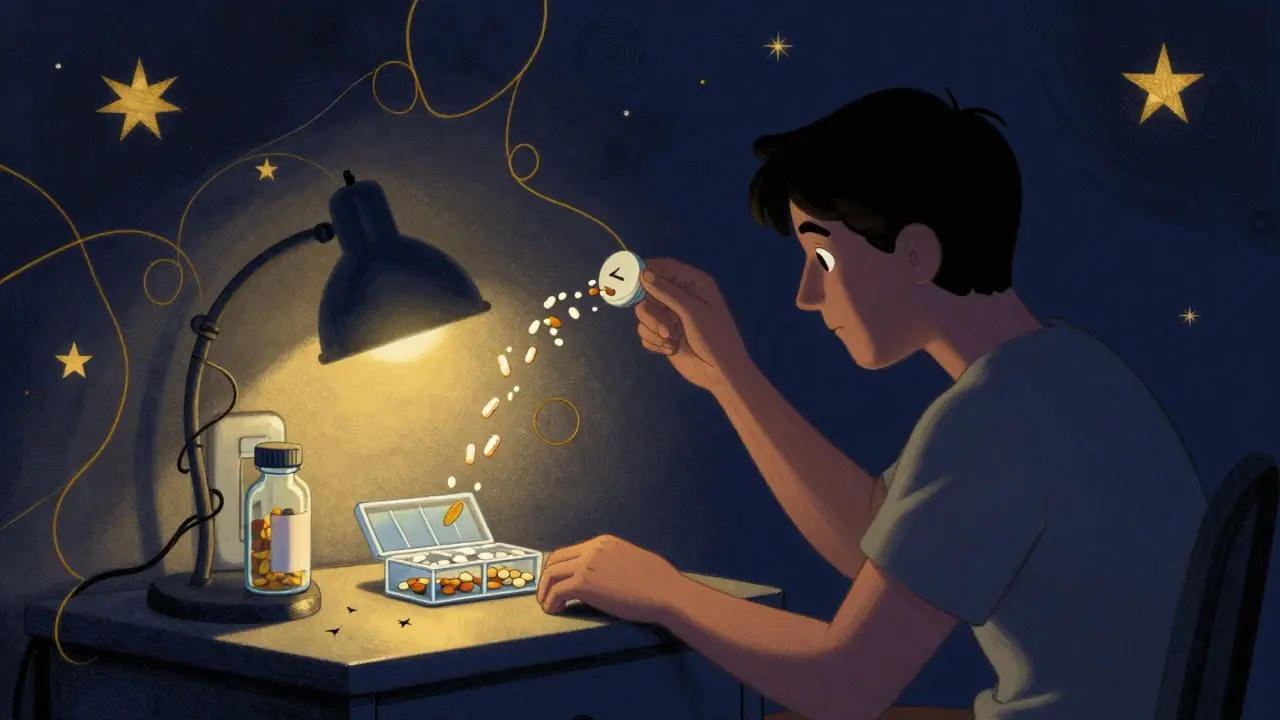
- Turning off the TV or getting into bed - Perfect for bedtime medications. Don’t rely on feeling tired-tired people forget. Use the ritual of turning off the lights or pulling back the covers as your trigger.
- Washing your hands - A clean, hygienic cue that happens multiple times a day. Especially useful for people who take meds multiple times daily and need frequent reminders.
Where to Keep Your Medication
It’s not enough to know when to take your pill-you need to see it. A Stanford Medicine study found that keeping pills visible in high-traffic areas increases adherence by 28%. That means:- Put your morning pills next to your toothbrush or coffee maker.
- Keep your evening meds on the nightstand, not tucked away in a drawer.
- If you take pills at lunch, leave them on the kitchen counter or in your lunch bag.
Timing Matters More Than You Think
Taking your pill at 7:30 a.m. one day and 10:15 a.m. the next? That’s a problem. Research shows that staying within a 30-minute window of the same time each day boosts adherence by 37%. Why? Your body starts to expect the medication at a certain point in your day. Shift that timing, and the automatic response weakens. For example:- Statins (cholesterol meds) work best taken at night-your liver makes most cholesterol while you sleep.
- Diabetes meds like metformin are often taken with meals to reduce stomach upset.
- Blood pressure pills are usually taken in the morning to control the natural spike that happens when you wake up.
What Doesn’t Work (And Why)
Not every tool helps. Apps like Medisafe and MyTherapy show promise at first. But a 2022 JMIR study found that 68% of users stop using them after three months. Why? They’re intrusive. They beep. They nag. They feel like another chore. Pill organizers help-but only if you use them consistently. A 2022 National Council on Aging survey found that while 38% of older adults use them, only 28% see real adherence gains. The real win? Combining a pill organizer with habit pairing. That combo pushes adherence up to 41%. Habit pairing fails for people with highly irregular schedules-like nurses on rotating shifts or parents with unpredictable kids. In those cases, pairing alone isn’t enough. You need backup systems: alarms, caregiver help, or medication synchronization services. And if you have dementia? Habit pairing won’t work without someone else managing it. The Alzheimer’s Association recommends caregiver involvement from day one.How to Start-A Simple 4-Step Plan
You don’t need a PhD to make this work. Here’s how to start in under a week:- Track your routine for 3-7 days. Write down what you do every day at the same time. Shower? Coffee? Lunch? Walk the dog? You’re looking for 2-3 reliable anchors.
- Match your meds to the habit. Morning pills? Pair with brushing teeth or coffee. Night pills? Pair with turning off the light. Food-based meds? Match with meals.
- Place your meds where the habit happens. Put the bottle next to your toothbrush. Leave it on the kitchen counter. Tape a sticky note to your coffee maker.
- Stick with it for 21 days. That’s the average time it takes for a new habit to stick, according to a 2020 European study. Don’t skip days. Even if you forget once, reset and keep going.
What to Do When Your Routine Changes
Life happens. You travel. You get sick. You work late. That’s normal. The key is having a backup anchor. The AMA recommends preparing two options for each dose. For example:- Primary: Take pill after brushing teeth.
- Backup: Take pill when you sit down for breakfast.
Real People, Real Results
On Trustpilot, 89% of Central Pharmacy users say habit pairing was their most helpful strategy. Over 60% specifically mentioned toothbrushing as their go-to anchor. One Medicare patient wrote: “I used to miss my pills three times a week. Now I don’t even think about it. It just happens.” But not everyone succeeds. The 12% who struggled said their days were too unpredictable. That’s why experts warn: habit pairing isn’t magic. It doesn’t fix cost issues, side effects, or misunderstandings about why the medicine matters. If you’re skipping pills because they make you feel sick or because you can’t afford them, pairing won’t solve that. Talk to your doctor. Ask about generics. Look into patient assistance programs.What’s Next for Medication Adherence
The future is blending habits with tech. Central Pharmacy’s new app, RoutineSync, analyzes your daily activity for two weeks and suggests the best pairing times. Mayo Clinic is testing AI that watches your smartphone usage-like when you open your calendar or turn on the kettle-and sends a reminder at the perfect moment. But the core idea stays the same: link your pill to something you already do. No apps needed. No cost. Just your brain, your routine, and a little consistency.Final Thought
You don’t need to be perfect. You just need to be predictable. If you take your pill at the same time, next to the same thing, every day, your body and your brain will start to expect it. That’s how you turn a chore into a habit. And that’s how you stay healthy-without trying harder. Just smarter.Can I pair my medication with more than one habit?
Yes, and it’s often helpful. Having a primary and backup habit gives you flexibility. For example, if you usually take your pill after brushing your teeth but are traveling, you can switch to taking it after breakfast. The key is consistency within each anchor-don’t switch randomly. Stick to your two options so your brain still recognizes the cue.
What if I take multiple pills at different times?
Group them by time. If you have three pills to take at breakfast, take them all together right after eating. If you have one in the morning and one at night, pair each with a different habit. Studies show grouping doses within a one-hour window improves adherence by 27%. Use a pill organizer with compartments to keep them sorted.
Does this work for antibiotics?
Absolutely. The CDC now includes habit pairing in its 2024 Antimicrobial Resistance Challenge. For antibiotics that need to be taken with food, pair them with meals. For those that must be taken on an empty stomach, use a consistent anchor like waking up or brushing your teeth. Completing the full course is critical-and pairing helps you do that without relying on memory.
How long does it take to see results?
Most people notice a difference within two weeks. By day 21, the habit is usually automatic. Track your missed doses for the first month. If you go from missing 4 doses a week to 0 or 1, you’ve succeeded. Don’t wait for perfection-look for progress.
Can I use a pill organizer with habit pairing?
Yes-combining both is the strongest approach. A pill organizer keeps your meds sorted and visible. Habit pairing gives you the timing cue. Together, they boost adherence by 41%, according to Central Pharmacy’s 2023 data. Place the organizer where your habit happens-on the counter for morning pills, by the bed for nighttime ones.
What if I forget even with habit pairing?
It happens. Don’t panic. If you miss a dose, check your medication label or call your pharmacist for guidance. Never double up unless told to. The goal isn’t perfection-it’s reducing missed doses over time. If you’re missing pills regularly, revisit your anchor. Maybe your coffee routine changed. Maybe you need a new cue. Adjust and keep going.
Is this only for older adults?
No. While 68% of seniors use habit pairing, it works for anyone with a stable routine-college students, working parents, athletes, and retirees. The key isn’t age-it’s consistency. If you have daily rituals, you can use them to take your meds without thinking.
Do I need to tell my doctor about this?
You don’t have to, but it helps. Your doctor or pharmacist can confirm if your chosen habit matches your medication’s timing needs. For example, some drugs must be taken at night, others with food. They can also help you adjust if you’re still missing doses. Pharmacists spend about 8.7 minutes per patient explaining this-so ask.


Blow Job
December 23, 2025 AT 08:02I started pairing my blood pressure pill with brushing my teeth last month and I haven’t missed one. It’s wild how your brain just takes over. I used to set ten alarms and still forgot. Now I don’t even think about it. Just brush, grab the pill, done.
Christine Détraz
December 24, 2025 AT 20:17This is the first time I’ve actually stuck with a medication routine. I used to just throw pills in a drawer and hope for the best. Putting them next to my coffee maker changed everything. I didn’t even realize how much I relied on visual cues until they were right there staring at me. Now I feel like I’m in control.
John Pearce CP
December 25, 2025 AT 21:57While the concept is not without merit, it is imperative to recognize that this methodology presupposes a level of domestic stability and cognitive continuity that is not universally attainable. The reliance on routine as a therapeutic scaffold is a bourgeois luxury, predicated upon the absence of socioeconomic precarity, chaotic caregiving responsibilities, or neurocognitive impairment. To suggest that habit pairing is universally effective is to engage in a form of medical paternalism that ignores structural determinants of non-adherence.
EMMANUEL EMEKAOGBOR
December 27, 2025 AT 20:34In Nigeria, many of us don’t have toothbrushes every day, let alone a fixed coffee time. But we do know when the generator turns on - that’s our cue. We put the pills beside the generator switch. It’s not perfect, but it’s real. This method works if you adapt it to your life, not the other way around. Thank you for reminding us that simplicity beats complexity.
CHETAN MANDLECHA
December 29, 2025 AT 03:49Used this with my diabetes meds. Paired it with washing hands before lunch. Works like magic. No app. No alarm. Just soap and pills. My doctor was shocked I’ve been perfect for 45 days. I didn’t even try - it just happened.
Jillian Angus
December 30, 2025 AT 17:10I tried putting my pills by my toothbrush but I kept forgetting to brush so I just started leaving them on the kitchen counter with my keys. Now I see them every time I leave the house. It’s dumb but it works. I don’t need a system. I need to see the bottle.
Ajay Sangani
December 31, 2025 AT 13:25you know what’s funny is that the brain doesn’t really care if the habit is toothbrushing or turning on the tv or scratching your head before bed - it just needs a consistent trigger. the ritual is the anchor, not the action. so if you take your pill after you pee in the morning, and that’s your thing, then that’s your thing. your brain doesn’t judge. it just remembers the pattern. we’re just animals with calendars.
Pankaj Chaudhary IPS
January 1, 2026 AT 04:12As a physician who has counseled hundreds of patients across urban and rural India, I can attest that this approach is profoundly effective when localized. In villages, we pair insulin with the ritual of lighting the evening lamp - a culturally embedded, daily act. In cities, it’s chai or the bus arrival. The principle is universal: anchor to ritual, not to clock. But we must also train pharmacists to guide patients - not just prescribe. This is not just a patient problem - it’s a system problem.
Steven Mayer
January 2, 2026 AT 23:55Empirical adherence metrics derived from longitudinal cohort analyses demonstrate a statistically significant improvement (p<0.01) in medication persistence when behavioral cues are temporally and spatially proximal to pharmacological administration. However, the confounding variable of cognitive load remains unaddressed in the majority of self-reporting paradigms. The reliance on declarative memory as a proxy for behavioral compliance introduces measurement bias. Furthermore, the generalizability of the 21-day habit formation heuristic is contested in recent neuroplasticity literature, which suggests a median consolidation window of 66 days under conditions of low environmental entropy.