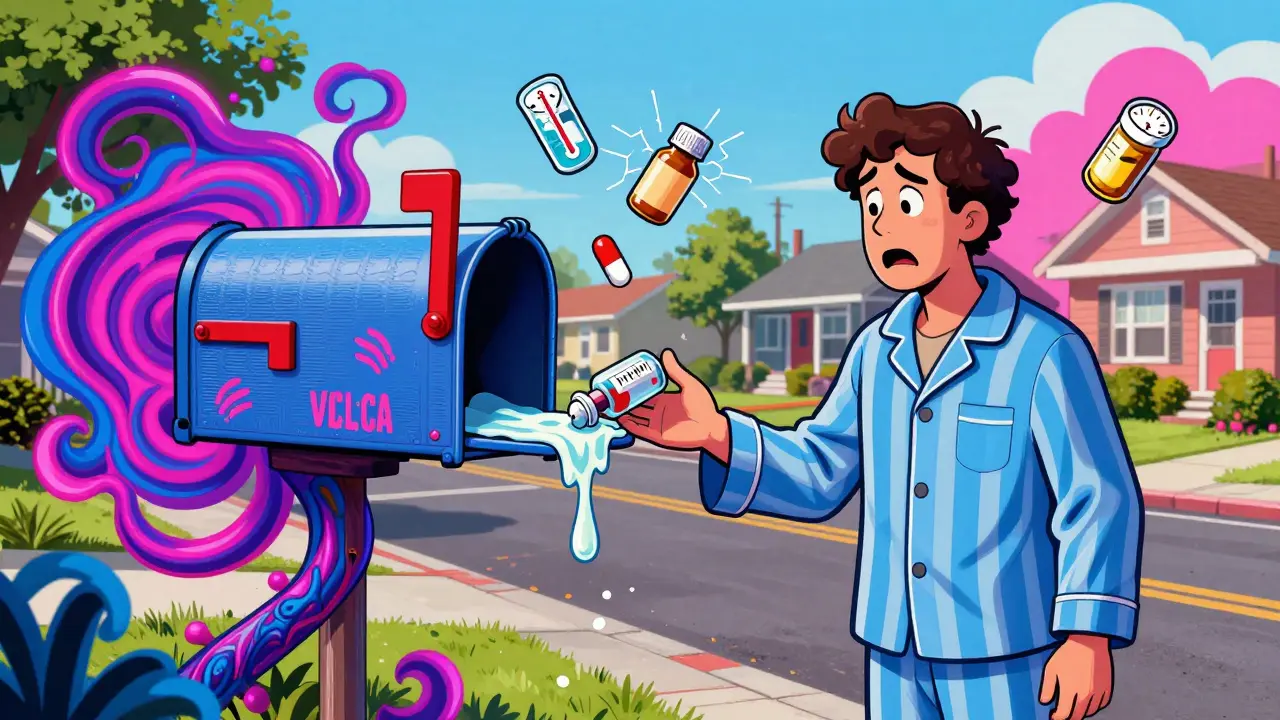
Buying your monthly blood pressure pill or diabetes medication through the mail sounds simple: order online, get it delivered, save money. For millions of Americans, especially those managing chronic conditions, mail-order generics have become the default way to get prescriptions. But behind the convenience and low copays lies a system with serious gaps - from melted insulin to hidden price hikes that make no sense.
Why Mail-Order Generics Are So Popular
The rise of mail-order pharmacies isn’t random. It’s driven by three things: insurance incentives, convenience, and the need for steady access to long-term meds. If you’re on Medicare Part D, your plan likely pushes you toward 90-day supplies through mail-order. Why? Because it’s cheaper for them. Many plans charge just $10 for a 90-day supply of a generic drug, compared to $30-$50 at your local pharmacy for a 30-day refill. That’s a huge savings on paper.For people with diabetes, high blood pressure, or high cholesterol, taking medication every day for years isn’t optional. Mail-order removes the hassle of driving to the pharmacy, waiting in line, and remembering to refill every month. Automatic refills and home delivery help people stick to their regimens. Studies from the National Institutes of Health show that patients using mail-order pharmacies are more likely to take their meds as prescribed - and that leads to better control of heart disease risk factors.
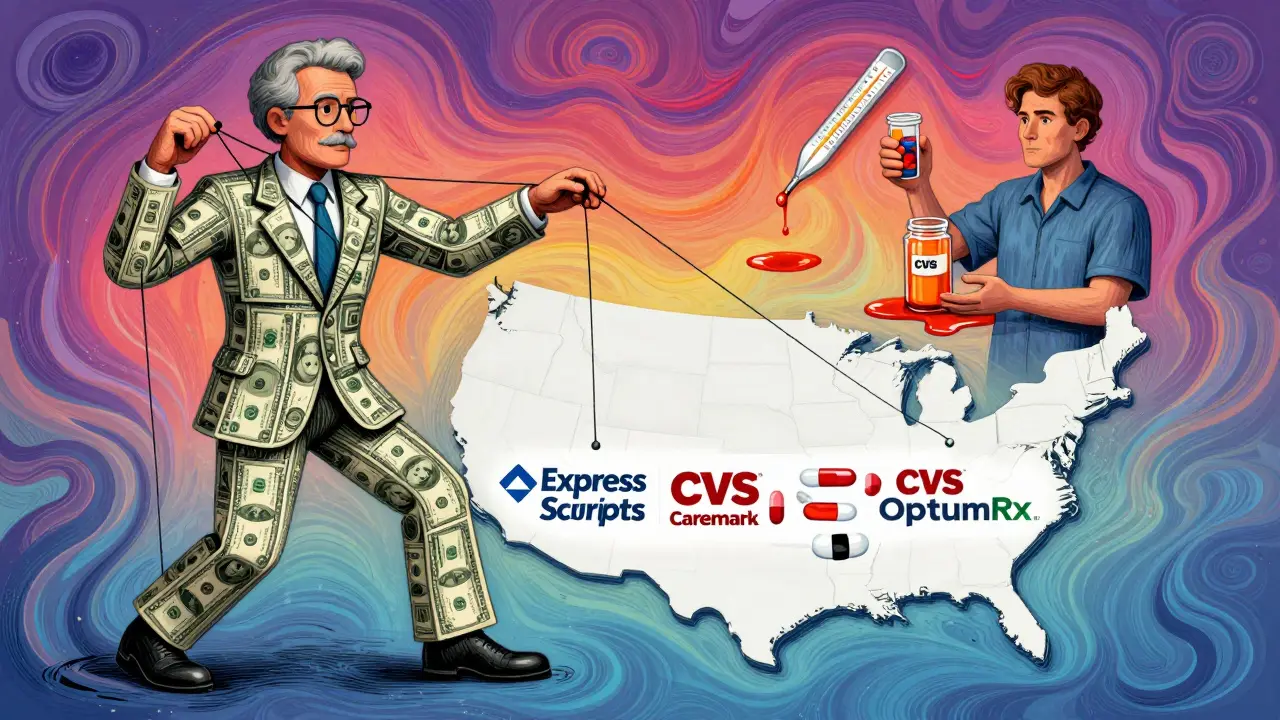
Three big companies control most of this market: Express Scripts (owned by Cigna), CVS Caremark, and OptumRx. Together, they handle nearly 8 out of 10 mail-order prescriptions in the U.S. And adoption is growing fast. In 2023, 31% of chronic medication prescriptions went through mail-order. By 2027, that number could hit 45%, according to McKinsey.
Where the Savings Disappear
Here’s the catch: what looks like a bargain isn’t always a bargain. The $10 copay sounds great - until you realize the real cost of the drug might be $12 at a retail pharmacy. Mail-order services often bill insurers $100 for that same generic antidepressant. That’s an 800% markup. Brand-name drugs? Sometimes they’re marked up 35 times over retail prices.How does this happen? It’s because mail-order pharmacies are usually owned by pharmacy benefit managers (PBMs) - middlemen who negotiate drug prices between insurers and drug makers. They profit from the spread between what they pay the manufacturer and what they charge the insurer. You, the patient, may pay less out of pocket, but the system is rigged to inflate the total cost of care.
And if you’re uninsured? Forget the $10 copay. Direct-to-consumer mail-order pharmacies can charge $500 a month for drugs like semaglutide or tirzepatide. For someone without insurance, that’s impossible to afford. The system works well for insured patients - but leaves others behind.
Temperature Risks: Your Medication Might Be Dead on Arrival
Your insulin, thyroid meds, or certain antibiotics need to stay between 68°F and 77°F during shipping. That’s not a suggestion - it’s a requirement. But a study published in the Journal of the American Pharmacists Association found that only one-third of mail-order shipments kept drugs within that safe range.Real people have reported insulin packages arriving melted after sitting in hot delivery trucks or mailboxes during summer heatwaves. The FDA has received over 1,200 reports of temperature-related medication failures between 2020 and 2023. That number is likely way too low - most people don’t report it unless they get sick.
One Reddit user described opening a box of insulin that had turned cloudy after being left in 90°F weather for two days. The medication was useless. No warning. No refund. Just a life-threatening gap in treatment.
There are no federal rules requiring mail-order pharmacies to monitor or guarantee temperature control. No labels. No tracking. No accountability. That’s not an accident - it’s a loophole.
Medication Mix-Ups and Safety Gaps
Generic drugs are supposed to be identical to brand-name versions. The FDA requires them to have the same active ingredients, strength, and effectiveness. But here’s the problem: generics can look different. Different color. Different shape. Different size. Different packaging.For people taking multiple meds, switching between generic brands - even if they’re the same drug - can cause confusion. One study found that patients who switched between different generic versions of topiramate (used for seizures and migraines) ended up with more hospital visits and longer stays. Why? Because they thought they were getting a new drug. They stopped taking it. Or they took too much.
And if you’re juggling prescriptions from different pharmacies - say, one for blood pressure through mail-order, another for pain meds at your local pharmacy - your pharmacists can’t see all your meds at once. That means drug interactions go unnoticed. A pharmacist at your corner store might not know you’re also getting a new antidepressant from a mail-order service. That’s a recipe for dangerous side effects.
Lost, Delayed, or Never Arrived
One in six negative reviews on Trustpilot mention delivery problems: packages lost, delayed, or damaged. For people who need daily medication, even a few days without it can be risky. Blood thinners, seizure meds, heart medications - missing doses can lead to strokes, seizures, or heart attacks.People on Reddit and in Consumer Reports surveys say they’ve had to call customer service five times just to get a replacement. No one answers on weekends. No live person to talk to. Automated systems don’t understand urgency.
And the lack of face-to-face interaction is a real issue. A 2023 Consumer Reports survey found that 68% of users worried about missing the chance to ask a pharmacist questions. At a local pharmacy, you can ask, “Does this make me dizzy?” or “Can I take this with my grapefruit juice?” At a mail-order center? You get a printed insert.
When Mail-Order Doesn’t Work
Mail-order is great for chronic conditions. It’s terrible for anything you need right now. Antibiotics for a sudden infection? No. Pain meds after surgery? No. Inhalers for an asthma attack? Absolutely not.If you’re starting a new medication, you should always get a 30-day supply from your local pharmacy first. That way, you know how your body reacts before committing to a three-month supply shipped across the country.
Also, not all generics are available through mail-order. Some rare or limited-market drugs simply aren’t stocked. You might find your prescription isn’t covered - and then you’re stuck waiting weeks for a switch, or paying full price at a retail pharmacy.
How to Use Mail-Order Safely
If you’re using mail-order generics, here’s how to protect yourself:- Order early. Set up refills at least two weeks before you run out. Don’t wait until your bottle is empty.
- Check the package. When your meds arrive, inspect them. Are they discolored? Melted? Smell wrong? Don’t take them. Call the pharmacy immediately.
- Keep a list. Write down every medication you take - including doses and which pharmacy fills them. Share this with your doctor and local pharmacist.
- Use one pharmacy for most meds. Try to get all your chronic meds through the same mail-order service so your pharmacist can check for interactions.
- Know your rights. If your medication arrives damaged, you’re entitled to a free replacement. Insist on it.
For people on insulin or other temperature-sensitive drugs, ask if the pharmacy uses cold packs and insulated shipping. If they don’t, switch providers. Your life depends on it.
What’s Next?
Lawmakers are starting to pay attention. H.R. 4892, the Pharmacy Delivery Safety Act, was introduced in July 2023. It would require mail-order pharmacies to monitor temperatures, notify patients if meds are compromised, and report failures to the FDA.Until then, the system remains a gamble. Mail-order generics can save money and improve adherence - but only if you know the risks. Don’t assume the system has your back. Stay informed. Stay vigilant. And never let convenience make you careless.


Tony Du bled
December 22, 2025 AT 07:53Mail-order generics saved my life after I lost my job and insurance. I was paying $80 a month for metformin at the pharmacy. Now I pay $12 shipped to my door. But yeah, I’ve had insulin arrive warm once. Didn’t take it. Called them. Got a new box in two days. Still worth it.
Kathryn Weymouth
December 23, 2025 AT 23:19The temperature control issue is not just a concern-it’s a public health failure. The FDA has documented over 1,200 incidents, yet no federal regulations require shipping standards. This isn’t negligence; it’s systemic abandonment of vulnerable populations who rely on these medications daily.
Julie Chavassieux
December 25, 2025 AT 01:06My mom’s blood pressure med came in a box that looked like it survived a hurricane. The pills were stuck together. She took one anyway. Ended up in the ER. Now I track every shipment. No more trust.
Herman Rousseau
December 25, 2025 AT 05:24Don’t sleep on this. If you’re on insulin, ask your mail-order pharmacy if they use cold-chain shipping. If they say no, switch. It’s not worth risking your life for $10. Also, keep a 7-day supply at home. Always. I learned this the hard way when my package got stuck in Texas heat for three days. I was sweating bullets.
Vikrant Sura
December 26, 2025 AT 10:24Why are we even talking about this? Just go to the pharmacy. It’s not that hard. People need to stop being lazy.
Candy Cotton
December 27, 2025 AT 07:27It is an absolute disgrace that American citizens are forced to rely on third-party logistics corporations for their life-sustaining pharmaceuticals. This is a direct consequence of the erosion of American healthcare sovereignty and the commodification of human health under corporate oligarchies.
Jeremy Hendriks
December 28, 2025 AT 11:50Convenience is the opiate of the modern patient. We’ve outsourced care to algorithms and warehouse workers who don’t know your name. We trade human connection for a 90-day supply. And then we wonder why we feel more alone than ever. The real cost isn’t in the copay-it’s in the silence.
Gabriella da Silva Mendes
December 29, 2025 AT 15:06Y’all are acting like this is new. 😒 I’ve been getting my meds shipped since 2018. I’ve had 3 packages melt, 2 lost, and 1 sent to the wrong address. I just call and scream until they fix it. Also, I use emojis now to vent: 🧊💊🔥🤯. It’s therapeutic.
Kiranjit Kaur
December 30, 2025 AT 03:54As someone from India who’s seen how pharmacy systems work here, I’m shocked this is even an issue in the US. We have no mail-order, but we also don’t have the infrastructure to make it safe. Maybe the solution isn’t just regulation-it’s community. Local pharmacists who know their patients by name. That’s the real safety net.
Sai Keerthan Reddy Proddatoori
December 30, 2025 AT 15:26Big Pharma owns the PBMs. The PBMs own the mail-order. The mail-order owns your life. This is all planned. They want you dependent. They want you too scared to switch. They want you too tired to fight. Wake up. This is not healthcare. This is control.
Sam Black
December 31, 2025 AT 12:40My cousin in Melbourne gets his insulin shipped in a cooler with a temperature logger that texts him if it goes above 77°F. Why can’t we have that here? We have drones that deliver pizza in under 10 minutes. But your life-saving meds? Left in a truck under the sun. That’s not innovation. That’s betrayal.
Aliyu Sani
January 1, 2026 AT 15:01bro the real issue is the system dont care if u live or die. i got my antihypertensive shipped and it was all dusty. i took it anyway. no biggie. we dont need to overthink this. just take the pill. life is short anyway.
Art Van Gelder
January 1, 2026 AT 17:56I used to think mail-order was a win until I saw my neighbor’s insulin package-melted, leaking, and wrapped in a plastic bag that looked like it came from a gas station. He didn’t know it was bad until his blood sugar spiked. He almost died. And the pharmacy sent him a ‘thank you for your patience’ email. No apology. No explanation. Just a new box. That’s not service. That’s a death sentence with a return label.
Nader Bsyouni
January 1, 2026 AT 19:46Why are we even discussing this? If you can't afford your meds, you shouldn't be taking them. The market will sort it out. People need to stop expecting healthcare to be a right. It's a privilege. And if you're lucky enough to get $10 generics, shut up and be grateful.
Ajay Brahmandam
January 2, 2026 AT 18:25Big tip: always check the pill color and shape when it arrives. My generic lisinopril changed from white oval to blue round last month. I thought I got scammed. Called the pharmacy. Turns out they switched suppliers. No warning. Just a new pill. I keep a photo of my meds on my phone now. Saves headaches.