Imagine a scenario where your drug manufacturing facility is flagged for a minor deviation. Weeks later, you find out that the public-or at least your competitors-can access detailed reports about your internal processes. It sounds like a privacy nightmare, but it’s the reality of modern manufacturing transparency under the watchful eye of the U.S. Food and Drug Administration (FDA).
For years, there has been a tug-of-war between the need for public safety and the desire of companies to protect their intellectual property and internal quality cultures. If you are involved in pharmaceutical or medical device production, understanding exactly what the FDA can see, what they keep private, and how new regulations in 2025 and 2026 are changing the game is not just helpful-it’s critical for your survival.
What Exactly Can the FDA See?
The foundation of this relationship lies in Section 704(a)(1) of the Federal Food, Drug, and Cosmetic Act (FD&C Act). This law gives the FDA broad authority to inspect facilities and review records related to Current Good Manufacturing Practices (CGMP). But here is the twist: not all records are created equal.
Under the Compliance Policy Guide (CPG) Sec. 130.300, issued back in 1996, the FDA generally does not review or copy internal quality assurance (QA) audit reports. Why? Because the agency wants to encourage honest, candid internal reviews. If a company knows its internal critics will be judged by regulators, they might stop reporting problems altogether. Dr. Jane Axelrad, former FDA Deputy Center Director for Policy, explained that this policy creates a "safe space" for meaningful audits.
However, this protection has limits. The FDA maintains full access to records necessary to determine CGMP compliance. This includes:
- Production records
- Validation protocols
- Deviation investigations
- Corrective and Preventive Action (CAPA) documentation
- Quality control investigations of product failures
If a product fails, the investigation into why it failed is fully accessible. The distinction between a protected "audit report" and a mandatory "investigation record" is often blurry, leading to confusion on the ground. In fact, Pfizer Manufacturing Director Susan Martinez noted that this confusion leads to over-disclosure in 63% of cases among surveyed professionals.
The Changing Landscape: 2025 and Beyond
The rules aren't static. If you were operating under the assumption that inspections are predictable and scheduled, think again. In May 2025, the FDA announced a major strategic shift: expanding unannounced inspections for foreign facilities. Previously, only 12% of foreign facility inspections were unannounced in 2023. By the end of 2025, that target jumps to 35%.
This move addresses concerns raised in a 2024 Government Accountability Office (GAO) report regarding foreign facility compliance. For domestic facilities, the approach remains more traditional, with 92% of inspections still following scheduled protocols according to McGuireWoods' 2025 analysis.
Simultaneously, the FDA finalized guidance on Remote Regulatory Assessments (RRAs) in July 2025. RRAs allow for virtual evaluations, including read-only database access and remote interactive assessments. While these don’t constitute formal inspections and don’t generate Form 483 observations, they represent a significant expansion of digital transparency. Facilities equipped with RRA-ready systems saw a 65% reduction in inspection-related downtime, driving 73% of Fortune 500 pharma companies to upgrade their documentation systems by Q1 2025.
Understanding Key Documents: Form 482 vs. Form 483
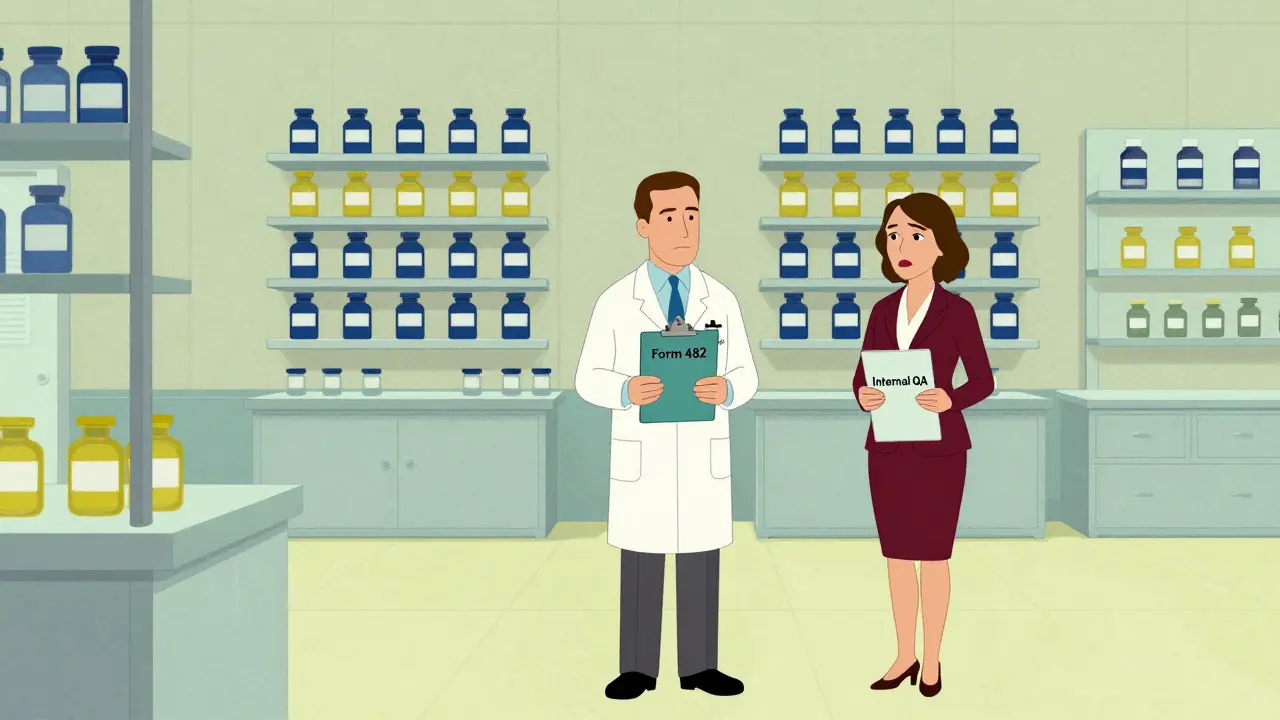
When an inspector walks through your doors (or logs into your system), two forms define the interaction.
| Form Number | Official Name | Purpose | Action Required |
|---|---|---|---|
| Form FDA 482 | Notice of Inspection | Announces the start of the inspection | Cooperate with inspectors; provide requested records |
| Form FDA 483 | Notice of Inspectional Observations | Lists specific violations found during the inspection | Respond within 15 business days with a corrective action plan |
The 15-day response window for Form 483 is tight. Merck QA Manager David Chen reported that this timeline creates significant pressure, especially during peak business periods. Getting it wrong can lead to warning letters. In 2024, 22% of warning letters cited violations of "contemporaneous records" standards-meaning data wasn’t recorded in real-time as required.
How to Prepare for Increased Scrutiny
Preparation is no longer optional. Industry surveys show that 78% of pharmaceutical manufacturers now maintain dedicated inspection readiness teams. These teams spend an average of $385,000 annually on preparation, according to a 2025 benchmarking study by TheFDAGroup.
Here is how you can build a robust defense:
- Clarify Document Classifications: Establish clear protocols distinguishing between protected QA audit reports (CPG Sec. 130.300) and mandatory QC investigation records (21 CFR 211.192). This process typically requires 200-300 hours of quality system documentation updates.
- Train Your Team: New quality personnel need 6-9 months of specialized training. Certification through the Regulatory Affairs Professionals Society (RAPS) has been shown to increase preparedness by 37%.
- Adopt Root Cause Analysis: When responding to Form 483 observations, use the FDA’s recommended root cause analysis methodology. Companies doing so achieve closure rates of 89% within 6 months, compared to just 62% for those using simplified approaches.
- Implement Digital Readiness: Ensure your systems support Remote Regulatory Assessments. Real-time data capture is essential to avoid "contemporaneous record" violations.
The Debate: Safety vs. Privacy
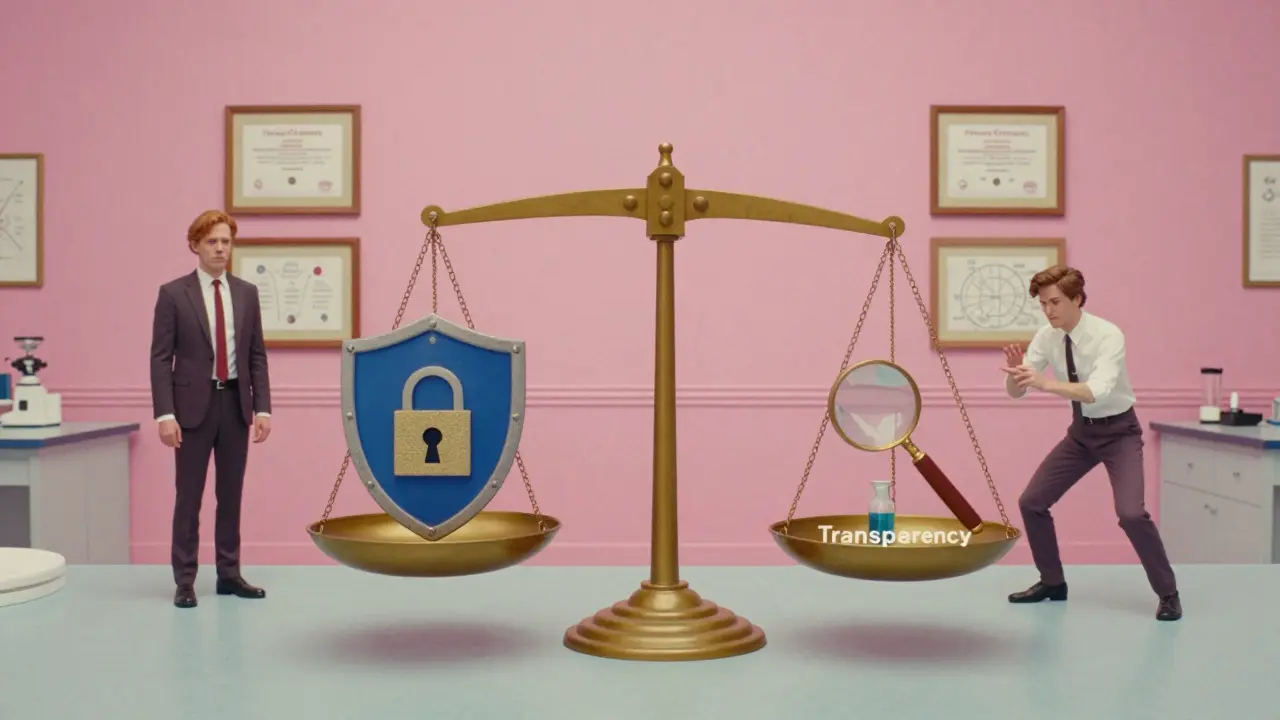
Is the current level of transparency enough? Experts are divided. Professor Daniel Troy, former FDA Chief Counsel, argues that the policy protecting internal audits creates "regulatory blind spots" where systemic issues could be hidden. On the other hand, PhRMA opposes proposed legislation like the 2024 Pharmaceutical Supply Chain Transparency Act (S. 2884), which would mandate public disclosure of certain findings. They argue that forcing public disclosure would undermine the protected space needed for continuous improvement.
For now, the balance tips toward regulated access rather than full public openness. However, the trend is clear: the FDA is moving toward greater visibility, faster responses, and less tolerance for delays. With enforcement actions against facilities denying access up 17% year-over-year in Q1 2025, the message is loud and clear: transparency is non-negotiable.
Can the public access FDA inspection records for pharmaceutical facilities?
Generally, no. While the FDA conducts inspections and issues Form 483s, these documents are not automatically made public. However, if a facility receives a Warning Letter or is subject to legal action, those documents become public record. The proposed Pharmaceutical Supply Chain Transparency Act aims to change this, but as of 2026, most inspection details remain confidential unless they escalate to enforcement actions.
Does the FDA review internal quality assurance audit reports?
Under CPG Sec. 130.300, the FDA generally does not review or copy internal QA audit reports to encourage candid internal reviews. However, this protection does not extend to quality control investigations of product failures, deviation investigations, or CAPA documentation, which must always be made available.
What is the difference between a routine inspection and a for-cause inspection?
Routine surveillance inspections account for about 75% of all inspections and follow standard protocols, including the policy of not reviewing internal QA audits. For-cause inspections, triggered by complaints or adverse events, give the FDA full access to all records, including internal audit documentation, regardless of the CPG Sec. 130.300 protections.
How long must pharmaceutical manufacturers retain CGMP records?
According to 21 CFR 211.180, pharmaceutical manufacturers must retain CGMP records for at least one year after a drug product's expiration date. Medical device manufacturers, under 21 CFR 820.180, must maintain records for the device lifespan plus two years.
What are Remote Regulatory Assessments (RRAs)?
RRAs are virtual evaluations finalized in FDA guidance in July 2025. They may involve requests for records, read-only database access, or remote interactive evaluations. Unlike physical inspections, RRAs do not generate Form 483 observations but serve as a tool for ongoing compliance monitoring without requiring an on-site visit.