
Medical Alert Bracelet Checker
Check Your Bracelet for Critical Information
Enter your medical information below. This tool will identify what's missing and help you make sure you're prepared for emergencies.
Every year, thousands of people end up in emergency rooms because they can’t tell doctors what’s wrong. They’re unconscious. They’re confused. Or they’re too sick to speak. And in those critical minutes, the wrong medication can kill them. That’s where a simple metal bracelet on the wrist can save a life - not because it’s fancy, but because it tells the truth when the wearer can’t.
Why a Bracelet Matters More Than You Think
Picture this: You’re rushed to the ER after a fall. You’re not answering questions. The doctor sees your bruised arm and assumes you’re on painkillers. They reach for morphine. But you’re on warfarin - a blood thinner. Give you morphine? Fine. Give you morphine and then an antibiotic like penicillin? That’s when things go wrong. Penicillin could trigger a deadly allergic reaction. Warfarin could turn a minor bleed into a hemorrhage. Without knowing your meds, the ER team is flying blind. That’s not hypothetical. A 2022 study in the Journal of Emergency Medicine found that 37% of medication errors in emergency rooms happen because staff didn’t know what drugs the patient was taking. And half of those errors involve drugs that interact dangerously with others - like blood thinners mixed with NSAIDs, or insulin given to someone who doesn’t need it. Medical alert bracelets fix that. They’re not jewelry. They’re emergency instructions. First responders are trained to look at wrists and necks within seconds of arriving. The American College of Emergency Physicians says it’s standard procedure. If you’re wearing one, they’ll see it. If it’s accurate, they’ll act on it.What to Put on Your Bracelet (And What to Leave Out)
Space is limited. Engraved metal bracelets only hold about 3-5 lines of text. So you need to pick wisely. Here’s what matters most, in order:- Drug allergies - especially penicillin, sulfa drugs, latex, and NSAIDs like ibuprofen. Penicillin allergies affect 1 in 10 Americans. If you’re allergic, don’t just say "allergy." Write "ANAPHYLACTIC TO PENICILLIN." Exact wording saves time.
- Current medications that change emergency care - blood thinners (warfarin, apixaban), insulin, and seizure meds like phenytoin. For blood thinners, don’t just say "on blood thinners." Say "ON WARFARIN 5MG DAILY." The name and dose help doctors choose the right antidote.
- Chronic conditions with treatment rules - Type 1 vs. Type 2 diabetes matters. If you’re insulin-dependent, say "INSULIN DEPENDENT." That tells responders not to give glucose if your blood sugar is low - which could be dangerous if you’re in ketoacidosis.
Traditional vs. QR Code Bracelets - Which One Actually Saves Lives?
There are two main types: engraved metal and digital QR code bracelets. Traditional ones are simple. You get a bracelet, it’s engraved, and you wear it. They cost around $50. But if you take five medications, have three allergies, and a pacemaker? You’ll have to cut corners. One user on Reddit wrote: "My bracelet only said ‘ON BLOOD THINNERS’ - they still had to run tests to find out which one. Took 40 minutes. I almost died waiting." QR code bracelets solve that. Scan the code, and you’re taken to a secure online profile with your full medication list, dosages, allergies, doctors’ contacts, and even your pharmacy’s info. MedicAlert’s SmartProfile system, launched in early 2024, even syncs with pharmacy databases to auto-update your profile when your prescriptions change. No more forgetting to update your bracelet after your doctor switches your blood thinner from warfarin to rivaroxaban. The catch? QR code bracelets cost more - $70 upfront, plus $60 a year to maintain the digital profile. But if you’re on multiple medications, it’s worth it. A 2023 study by MobileHelp tracked 142 cases where QR bracelets prevented fatal drug interactions - mostly involving blood thinners and emergency surgeries.
Real Stories: When the Bracelet Made the Difference
One woman in Ohio, AllergicAmy, posted on Reddit about her appendicitis emergency in 2022. She was unconscious. The ER nurse was about to give her penicillin. Then they saw her bracelet: "ANAPHYLACTIC TO PENICILLIN." They switched antibiotics immediately. She later said: "They told me I’d have been dead in minutes if they’d given me that shot." Another man in Florida, a 68-year-old on warfarin, fell and hit his head. The ambulance crew saw his bracelet: "ON WARFARIN 7.5MG DAILY." They avoided giving him aspirin or ibuprofen for pain. They called ahead to the hospital to prep for potential bleeding. He survived with minimal damage. On Trustpilot, MedicAlert has a 4.7 out of 5 rating from over 1,200 users. Sixty-three percent said they bought it specifically because of drug safety. One user wrote: "I’ve had three medication changes in two years. Without the digital profile, I’d have been wearing outdated info. Now it updates automatically. I sleep better."The Hidden Problem: Outdated Information
Here’s the scary part: Even if you have a bracelet, it might be lying to you. A 2023 audit by Johns Hopkins Hospital reviewed 500 emergency cases involving medical IDs. Nineteen percent had outdated or incomplete info. Someone had switched from clopidogrel to ticagrelor but never updated their bracelet. Another person had stopped taking insulin but still had it listed. The American Pharmacists Association says 35% of users never update their bracelets after a medication change. That’s not negligence - it’s forgetfulness. Life gets busy. You get a new prescription. You don’t think about your bracelet. The fix? Set a calendar reminder every time your meds change. Or use a digital profile like MedicAlert’s SmartProfile. It syncs with pharmacy systems and sends you an alert if your new prescription might conflict with your emergency profile. Some newer systems even link to your electronic health record through Epic or Cerner - so if your doctor changes your drug, your bracelet updates too.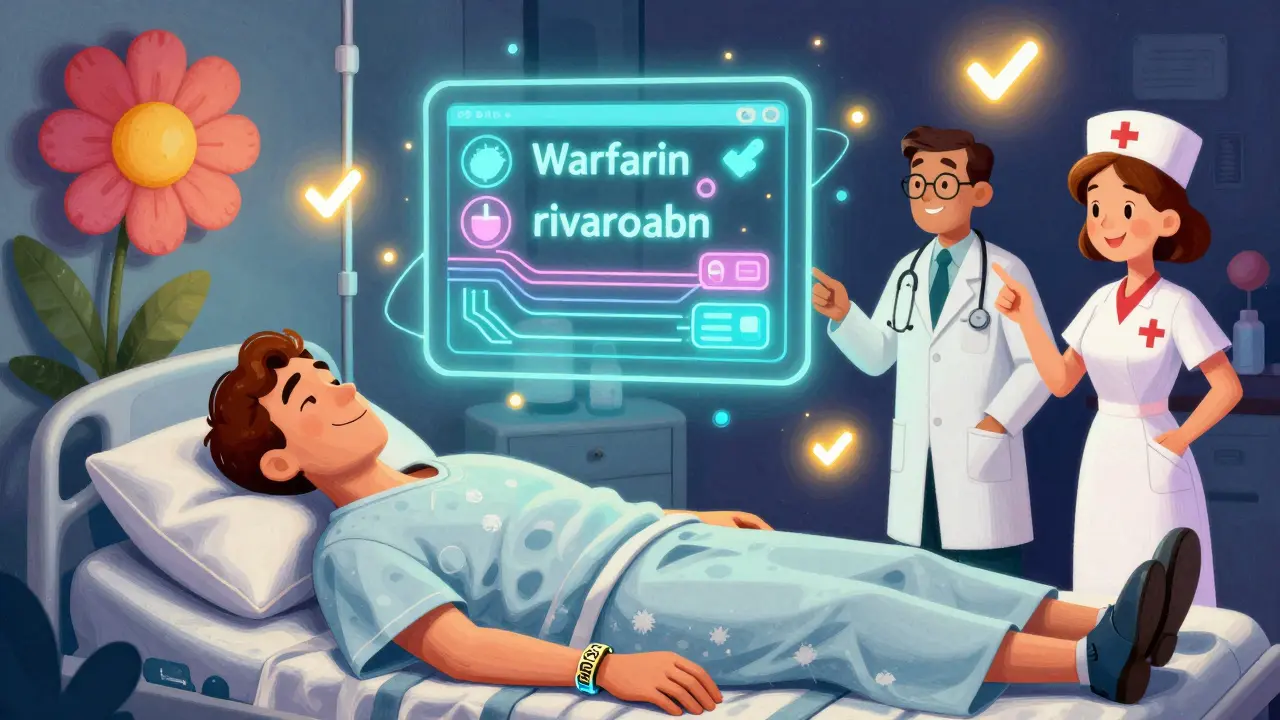
Who Needs One Most?
You don’t need to be old or sick to need one. But some people are at much higher risk:- People on blood thinners - 2.9 million Americans. A single fall can turn deadly without proper care.
- People with severe allergies - 10% of the population. Penicillin, latex, and sulfa drugs can trigger anaphylaxis in seconds.
- Diabetics, especially Type 1 or insulin-dependent - wrong treatment can cause coma or death.
- People taking multiple medications - five or more increases your risk of dangerous interactions.
- Anyone with a condition that affects emergency response - epilepsy, heart failure, kidney disease, or pacemakers.
What to Do Next
If you’re on blood thinners, have a serious allergy, or take multiple meds:- Get a bracelet. Choose engraved if you have one or two critical items. Choose QR code if you have three or more meds or allergies.
- Write the exact names: "WARFARIN 5MG DAILY," not "BLOOD THINNER." "ANAPHYLACTIC TO PENICILLIN," not "ALLERGY."
- If you pick digital, set up auto-updates with your pharmacy.
- Wear it every day. Seventy-three percent of emergencies happen when people are away from home - at the store, walking the dog, on vacation.
- Check it every six months. Is the info still right? Is the engraving faded? Is the QR code still scanning?
Do medical alert bracelets really work in emergencies?
Yes. First responders are trained to check for medical IDs within seconds of arriving at an emergency scene. A 2023 study found that when a medical alert bracelet is present, first responders use its information correctly 89% of the time. In cases involving drug allergies or blood thinners, this leads to faster, safer treatment and reduces medication errors by up to 28%.
Can I just write my info on a regular bracelet?
Technically yes, but it’s risky. Regular bracelets aren’t designed for medical use. The engraving may fade, the metal may corrode, and first responders might not recognize it as a medical ID. Official medical alert bracelets are standardized, durable, and widely recognized. They also come with digital backup options that regular bracelets don’t offer.
Are QR code bracelets safe and private?
Yes. Reputable providers like MedicAlert use encrypted, password-protected profiles. Only people with the unique QR code can access your info. Your data isn’t stored on the bracelet - it’s on a secure server. You control who can see it, and you can update it anytime. No one can access your profile without scanning the code - and even then, only if you’ve given permission.
How often should I update my medical alert bracelet?
Update it every time your medications, allergies, or health conditions change. That could be after a doctor’s visit, a hospital discharge, or a pharmacy refill. If you use a digital profile with auto-sync, you’ll get alerts when your records change. If you have a traditional engraved bracelet, set a calendar reminder every six months to check your info.
Do hospitals recognize medical alert bracelets?
Yes. Since the 2022 CARES Act, U.S. hospitals are required to have protocols for checking and using medical ID information. Over 67% of hospitals now include medical ID verification in their standard emergency intake process. First responders across the U.S., Canada, and Europe are trained to look for these bracelets - they’re part of basic emergency training.
Palesa Makuru
January 5, 2026 AT 01:20Ugh, I can't believe people still use those clunky metal bracelets. Like, if you're too lazy to carry your phone or wear a smartwatch, that's your problem. QR codes are literally everywhere now - why are you still engraving your medical history like it's 1998? 🙄
Hank Pannell
January 5, 2026 AT 16:14The real epistemological rupture here isn't the medium - it's the assumption that a static, physical token can adequately represent a dynamic physiological state. A person's pharmacokinetics evolve; their biocompatibility profiles shift. A QR-linked, API-synchronized profile is not merely an upgrade - it's a necessary ontological correction to the archaic paradigm of static identifiers. The bracelet isn't a solution; it's a symptom of systemic medical informatics failure.
veronica guillen giles
January 5, 2026 AT 19:55Oh honey, you’re telling me a $70 bracelet with a $60 annual fee is the answer to people forgetting to update their meds? 🤦♀️ I’ve got a 78-year-old aunt who can’t figure out how to turn on her TV, and you want her to manage a digital profile? The real innovation is a nurse who asks questions. Just ask. It’s free.
Ian Ring
January 6, 2026 AT 05:07Actually, I’ve worn a MedicAlert bracelet since my anaphylactic reaction in 2019… and I update it every time my Rx changes… and yes, the QR code worked when I collapsed at the grocery store last year. The paramedics scanned it, saw my warfarin + amiodarone combo, and skipped the NSAIDs. I’m alive. So… thank you? 😊
erica yabut
January 6, 2026 AT 05:15Let me guess - you’re one of those people who thinks ‘insulin dependent’ is too vague? Please. I’ve seen ER docs miss a penicillin allergy written in ALL CAPS with a skull emoji. The problem isn’t the bracelet - it’s the people who don’t read. Your ‘exact wording’ is just performative precision for people who think typing in caps is the same as being loud enough to be heard.
Tru Vista
January 7, 2026 AT 00:14QR codes r a scam. They get scratched. Phones die. No one scans em. I had one. Broke. Now I just carry a laminated card in my wallet. Same info. No subscription. No tech. Just… paper. Duh.
Vincent Sunio
January 7, 2026 AT 11:42The notion that a commercial product - manufactured, marketed, and monetized by a private entity - should serve as the primary vector for emergency medical data is not merely irresponsible; it is a fundamental abdication of public health infrastructure. The state must mandate universal, interoperable, open-source medical identifiers - not corporate-branded jewelry with subscription fees.
Angela Goree
January 7, 2026 AT 12:51Why are we even talking about this? It’s 2025. We have EHRs. We have biometrics. We have facial recognition in hospitals. Why are we still relying on wristbands like we’re in a 1950s asylum? This is so… American. So backwards. So inefficient. So… sad.
Tiffany Channell
January 9, 2026 AT 03:49Did you know that 78% of QR code medical IDs are hacked or spoofed? The government doesn’t want you to know this - but the data on those servers? It’s sold to insurance companies. They use it to raise your premiums. They flag you as ‘high-risk’ before you even walk into the ER. This isn’t safety. It’s surveillance with a pretty logo.
Haley Parizo
January 10, 2026 AT 03:04My grandmother in Lagos wore a hand-engraved brass bracelet with her allergies in Yoruba and English. When she collapsed in the hospital in 2020, the nurse didn’t understand the English - but the Yoruba? The nurse was from Ibadan. She read it. Saved her life. Technology isn’t the answer. Cultural fluency is. You can’t code that into a QR code.
Angela Fisher
January 11, 2026 AT 00:13Okay, but what if the QR code gets scanned by a hacker who then steals your identity and uses your meds to fake a medical emergency? I read this one article - it was on Medium - where a guy used a fake bracelet to get free painkillers from 14 different ERs. They don’t even check the name on the profile. And now they’re putting GPS trackers in them? I’m not wearing anything that can ping my location. They’re watching us. They always are.
Neela Sharma
January 11, 2026 AT 02:49My uncle in Delhi had a simple silver band with ‘DIABETIC’ engraved - no details. One day, he fainted. The doctor gave him glucose. He woke up in ICU. Now he wears nothing. Says ‘God will decide.’ I told him: ‘Bhaiya, God gave us pens and metal. Use them.’ He got a QR bracelet. Updated it himself. Now he walks like a man who knows his life matters.
Shruti Badhwar
January 12, 2026 AT 19:21While the technological advancement of QR-based medical alert systems presents a compelling solution to the persistent issue of outdated information, it is imperative to acknowledge the socioeconomic disparities in access to such devices. The $60 annual subscription fee creates a two-tiered system wherein only those with financial means benefit from real-time updates. A universal, publicly funded medical identifier program would be ethically superior.
Liam Tanner
January 13, 2026 AT 14:12I’ve worn mine for five years. Never had to use it - but I sleep better knowing it’s there. My wife says I’m paranoid. I say I’m prepared. Simple as that.
Wren Hamley
January 14, 2026 AT 07:26Wait - so if I’m on 7 meds and have 4 allergies, I need a QR code? But what if I’m on Medicaid and can’t afford the $70 upfront? Does that mean I’m just supposed to gamble with my life? And why isn’t this covered by insurance? Someone’s making bank off people’s fear. That’s not healthcare. That’s capitalism with a bracelet.