MAOI Food Safety Checker
Check Your Food Safety
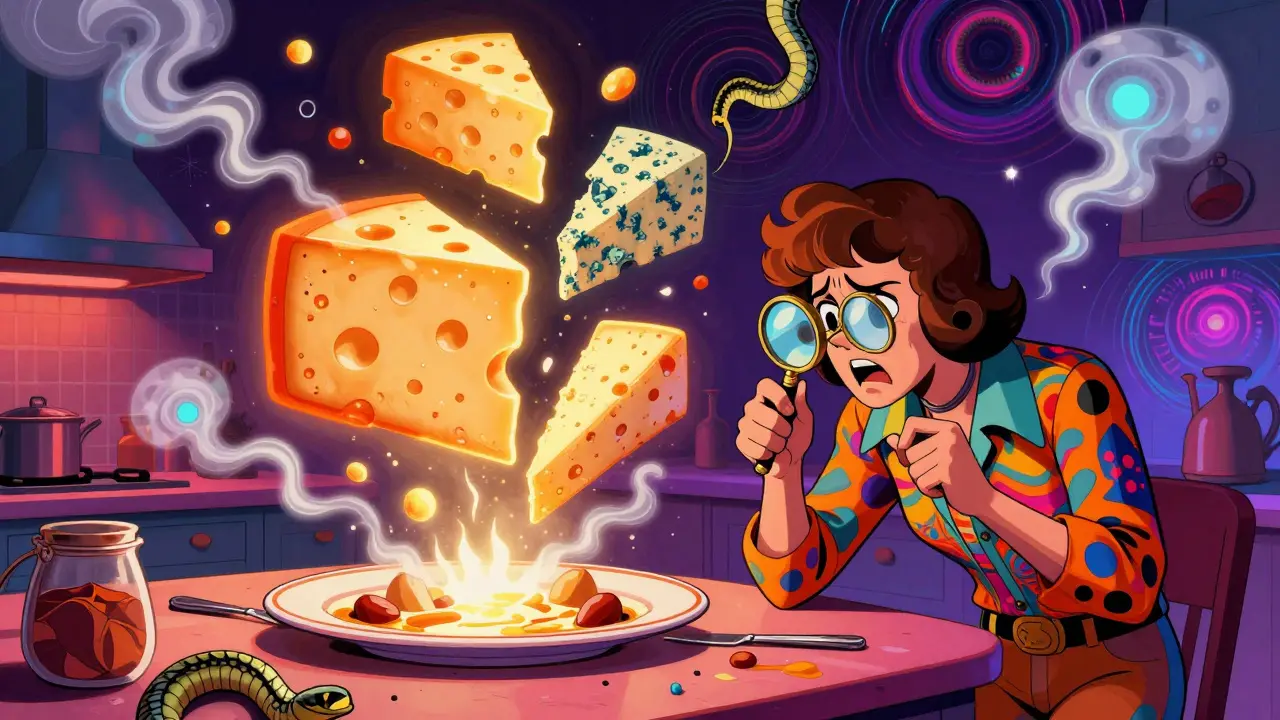
This tool helps you determine if specific foods are safe to consume while taking MAOIs (Monoamine Oxidase Inhibitors). Remember: some foods contain tyramine which can cause dangerous blood pressure spikes when combined with MAOIs.
When most people think of antidepressants, they think of SSRIs like Prozac or Zoloft. But for some people who’ve tried everything and still feel stuck, there’s another option: Monoamine Oxidase Inhibitors, or MAOIs. These aren’t the first choice anymore. They’re not prescribed often. But when they work, they can change everything.
Why MAOIs Are Different
MAOIs don’t just tweak one chemical in the brain. They stop an enzyme called monoamine oxidase from breaking down serotonin, norepinephrine, and dopamine-all the mood-lifting chemicals your brain needs. That means more of these chemicals hang around longer, which can lift depression in ways other drugs can’t.They were the first antidepressants ever made, back in the 1950s. Iproniazid, originally a tuberculosis drug, accidentally made patients feel happier. That’s how we got here. Today, drugs like phenelzine (Nardil), tranylcypromine (Parnate), and the transdermal patch selegiline (Emsam) are still used-but only for people who haven’t responded to at least two other antidepressants.
Studies show that about half to two-thirds of people with treatment-resistant depression see real improvement on MAOIs. That’s higher than most other drugs. But the trade-off? A list of rules that feel like living under a microscope.
The Tyramine Trap: A Dangerous Food Restriction
This is the big one. If you take an MAOI, you can’t eat certain foods. Not because they’re unhealthy-but because they can kill you.Tyramine is a naturally occurring compound in aged, fermented, or spoiled foods. Normally, your body breaks it down with monoamine oxidase. But when that enzyme is blocked by an MAOI, tyramine builds up. It triggers a massive release of norepinephrine. That sends your blood pressure soaring-sometimes above 200 mmHg. That’s a hypertensive crisis. Stroke. Heart attack. Death.
Here’s what you must avoid:
- Aged cheeses (cheddar, blue, parmesan, Swiss)-fresh mozzarella or cottage cheese are okay
- Cured or smoked meats (salami, pepperoni, pastrami)
- Tap beer, homebrew, and some wines (especially Chianti)
- Fermented soy products (soy sauce, miso, tempeh)
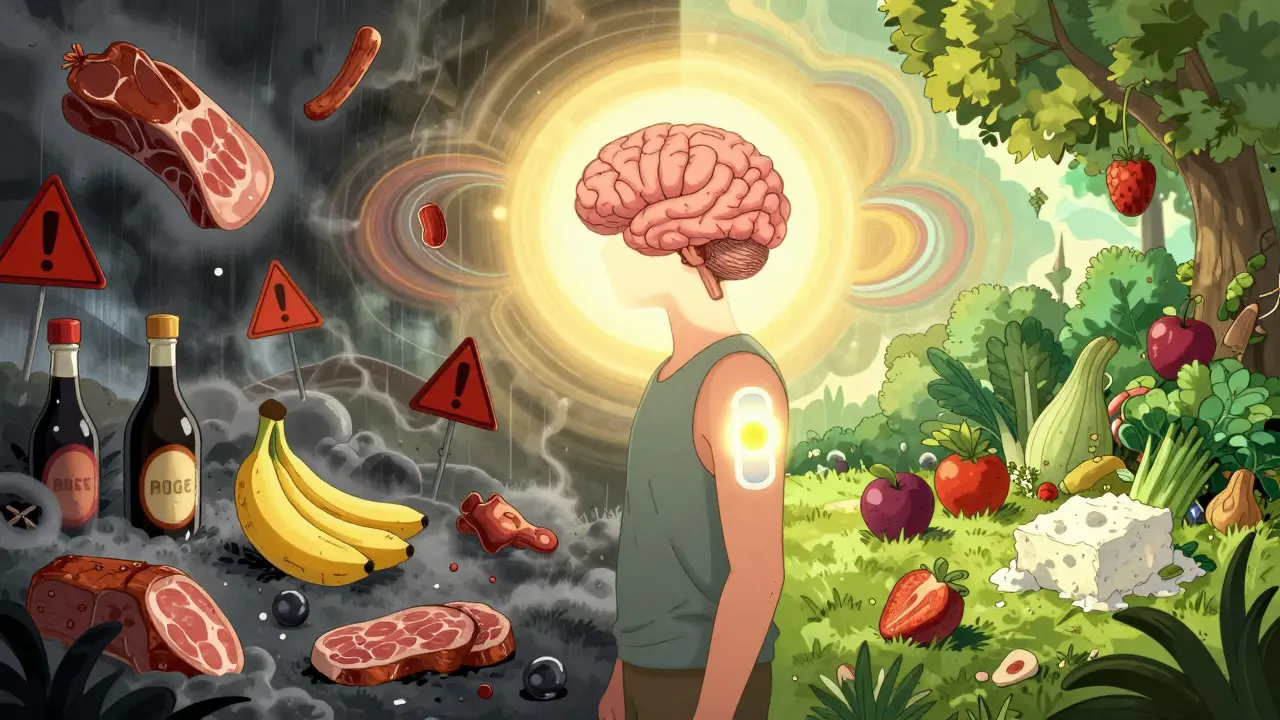
- Overripe fruits, especially bananas and avocados
- Yeast extracts (Marmite, Vegemite)
- Leftovers stored more than 48 hours
It’s not just about avoiding these foods. It’s about knowing how they’re made. A block of cheddar aged six months? No. A block of cheddar aged three days? Maybe okay. You need to check labels, ask restaurants, and track expiration dates. One wrong bite-like a slice of blue cheese on a salad at a dinner party-can land you in the ER.
Drug Interactions: The Silent Killer
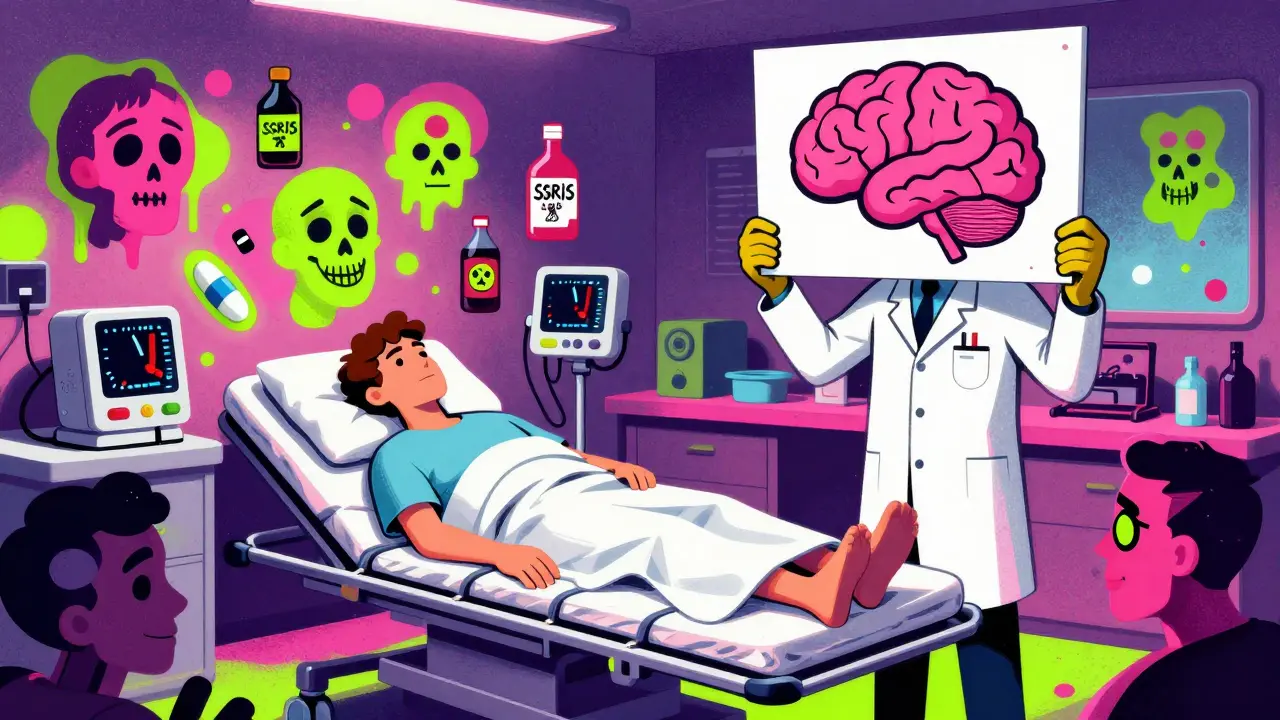
It’s not just food. It’s everything you take.Combining MAOIs with SSRIs, SNRIs, or even some over-the-counter cold meds can cause serotonin syndrome-a life-threatening surge in brain serotonin. Symptoms: high fever, confusion, muscle rigidity, seizures. It can happen in hours.
You need a 2-week washout period before switching from an SSRI to an MAOI. From an MAOI to an SSRI? At least 5 weeks. Many patients skip this. They get impatient. That’s how accidents happen.
Even common things like pseudoephedrine (in Sudafed), dextromethorphan (in cough syrups), or stimulants like Adderall can trigger dangerous spikes in blood pressure. Some painkillers, like meperidine (Demerol), are absolute no-gos. Your pharmacist needs to know you’re on an MAOI before they fill any prescription-even for a toothache.
The Patch That Changed Everything
The selegiline patch (Emsam) is the only real breakthrough in MAOI safety. Instead of swallowing a pill, you wear a patch on your skin. At the lowest dose (6 mg/24 hours), you don’t need to change your diet at all. That’s huge.At higher doses (9 mg and 12 mg), you still need to avoid tyramine-but only about 8% of users on the patch need full dietary restrictions. Compare that to 92% of people on pills. For many, the patch is the only way to tolerate MAOI therapy.
The catch? Cost. A month’s supply of Emsam can run $850 to $1,200. Generic oral MAOIs like phenelzine cost $30 to $50. Insurance often won’t cover the patch unless you’ve tried everything else. But for someone who can’t manage the diet, it’s worth it.
Real People, Real Stories
On Reddit’s r/antidepressants, there’s a thread with over 1,200 comments from people on MAOIs. Most say the same thing: “It saved my life.” But they also say: “I’m terrified of food.”One user, ChronicDepressor87, wrote: “After 12 years of failed meds, Parnate gave me back my energy. Then I ate a piece of blue cheese I thought was fresh. My BP hit 220/110. I spent three days in the hospital.”
Another, NeurochemNerd, said: “Dating is impossible. You can’t say, ‘Hey, I can’t have soy sauce on our first date.’ It’s not romantic.”
On Drugs.com, 63% of negative reviews mention “tyramine anxiety.” People describe constant scanning of labels, panic over leftovers, avoiding restaurants entirely. But 78% of positive reviews say they’d do it again. The relief is that deep.
Who Should Even Consider MAOIs?
Not everyone. But if you’ve tried:- At least two SSRIs or SNRIs
- One or more atypical antidepressants like bupropion or mirtazapine
- And you still feel hopeless, exhausted, or numb
-then MAOIs might be your best shot.
They’re especially effective for atypical depression: mood reactivity (you feel better when something good happens), heavy limbs, oversleeping, overeating, and rejection sensitivity. Studies show MAOIs are nearly twice as likely to help with this subtype as SSRIs.
They’re also used for panic disorder, social anxiety, and treatment-resistant bipolar depression. But only under strict supervision.
Managing the Risks: What Your Doctor Should Do
A good psychiatrist won’t just hand you a prescription. They’ll make sure you:- Get a full dietary counseling session-usually 12 hours minimum
- Have a written list of forbidden foods and safe alternatives
- Carry emergency phentolamine (a blood pressure-lowering drug) in case of crisis
- Keep a food and symptom diary
- Have a plan for when you travel, eat out, or get sick
Some clinics now offer MAOI support groups. The MAOI Information Project has over 5,000 members sharing tips: how to find safe soy sauce, how to cook without yeast, how to explain your diet to family.
What’s Next for MAOIs?
New drugs are coming. In early 2023, a new MAO-A inhibitor called AZD7325 showed up in clinical trials with 70% less tyramine sensitivity. That could mean fewer food rules. The National Institute of Mental Health is pouring $4.2 million into studying MAOIs for bipolar depression.But for now, the old rules still apply. MAOIs are not easy. They’re not convenient. But for some, they’re the only thing that works.
If you’re considering one, ask your doctor: ‘Is this the right tool for my brain?’ Not because it’s trendy. Not because it’s new. But because you’ve run out of other options-and you’re ready to fight for your life.”
Can you drink alcohol on MAOIs?
It depends. Some alcoholic drinks are safe in small amounts-like a glass of wine if it’s fresh and not aged. But tap beer, homebrew, and fortified wines (like sherry or port) are dangerous because they contain high tyramine levels. Even moderate drinking can raise blood pressure. Most doctors recommend avoiding alcohol entirely unless you’ve been on the medication for months and know exactly what’s safe.
Are MAOIs safe during pregnancy?
There’s no clear safety data. MAOIs aren’t first-line in pregnancy, but if a woman is already stable on one and becomes pregnant, abruptly stopping can cause severe relapse. Decisions are made case-by-case with a psychiatrist and OB-GYN. The transdermal patch may be preferred over pills due to lower systemic exposure, but no MAOI is considered risk-free.
How long do you need to take MAOIs?
Most people stay on them for at least 6 to 12 months after symptoms improve. Many stay on for years, especially if they have chronic or recurrent depression. Unlike SSRIs, MAOIs don’t usually cause emotional blunting, so some patients prefer them long-term. Stopping abruptly can cause withdrawal symptoms like anxiety, insomnia, and flu-like feelings. Always taper under medical supervision.
Can you use MAOIs with therapy?
Yes-therapy and MAOIs work well together. In fact, combining them often leads to better outcomes than either alone. Cognitive behavioral therapy (CBT) helps patients manage the stress of dietary restrictions and cope with lingering depressive thoughts. Many patients say therapy made the MAOI experience more sustainable.
Why aren’t MAOIs used more often?
Because of the risks. Doctors fear liability. Patients fear the diet. Pharmacies sometimes won’t fill the script without proof of counseling. Insurance won’t cover the patch unless you’ve tried everything else. But the biggest reason? Most doctors aren’t trained in MAOI management. They don’t know how to guide patients safely. That’s changing slowly-with more specialized clinics and online support groups helping fill the gap.
What’s the difference between MAO-A and MAO-B inhibitors?
MAO-A breaks down serotonin, norepinephrine, and tyramine-so inhibiting it treats depression but requires strict diet control. MAO-B mainly breaks down dopamine and trace amines. Drugs like selegiline at low doses (under 10 mg/day) only block MAO-B, which helps Parkinson’s but doesn’t treat depression. Only when you block MAO-A do you get antidepressant effects-and the dietary risks.
If you’re considering MAOIs, remember: they’re not for everyone. But for those who’ve tried everything else, they can be the light at the end of a very long tunnel. The key isn’t just taking the pill-it’s knowing the rules, respecting the risks, and having the right support. That’s how people survive-and thrive-on MAOIs.

Sue Stone
January 23, 2026 AT 10:54Stacy Thomes
January 23, 2026 AT 16:32Laura Rice
January 25, 2026 AT 03:12Kerry Evans
January 26, 2026 AT 01:18Kerry Moore
January 26, 2026 AT 18:49Anna Pryde-Smith
January 27, 2026 AT 23:41Oladeji Omobolaji
January 29, 2026 AT 08:02Janet King
January 29, 2026 AT 23:40Vanessa Barber
January 30, 2026 AT 01:35dana torgersen
January 31, 2026 AT 10:23Dawson Taylor
February 2, 2026 AT 04:54Sallie Jane Barnes
February 3, 2026 AT 21:14Andrew Smirnykh
February 4, 2026 AT 01:36