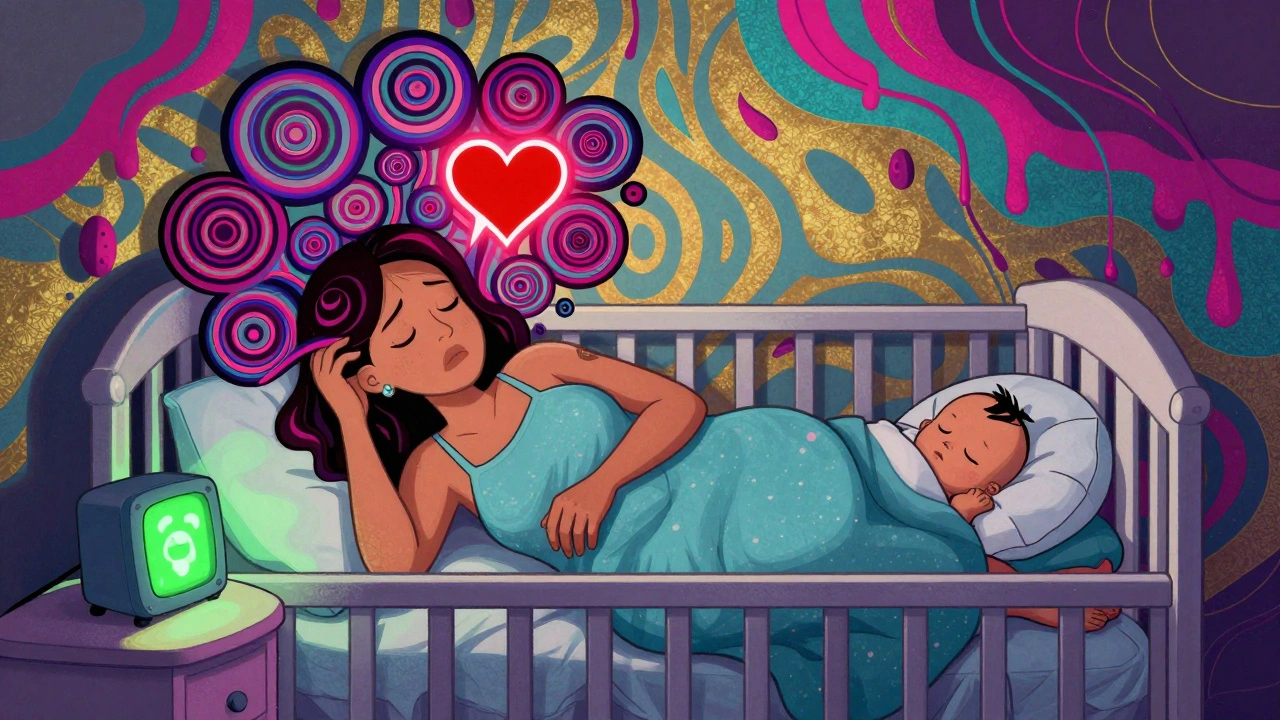
After giving birth, many women expect to feel tired, emotional, or overwhelmed. That’s normal. But what if the worry doesn’t fade? What if you’re lying awake at 3 a.m., heart racing, convinced something terrible will happen to your baby-even when everything looks fine? That’s not just stress. That’s postpartum anxiety.
It’s More Than Just the Baby Blues
The baby blues hit about 70 to 80% of new mothers. They come with crying spells, mood swings, and feeling drained. But they usually fade within two weeks. Postpartum anxiety is different. It doesn’t go away. It gets louder. It shows up as constant dread, racing thoughts, or panic attacks that strike out of nowhere-even when the baby is sleeping peacefully.One in five new mothers experiences this. That’s 20%. And it’s not rare. It’s common. Yet most women don’t talk about it. They think they’re just being "too sensitive" or "not coping well." But this isn’t about weakness. It’s a real, measurable condition recognized by the American Psychiatric Association since 2013 in the DSM-5.
What Does It Actually Feel Like?
Postpartum anxiety isn’t just "worrying too much." It has physical, emotional, and behavioral signs:- Heart racing, even when resting
- Nausea or dizziness without cause
- Loss of appetite, even when hungry
- Insomnia-even when the baby is asleep
- Irritability over small things, like a dirty diaper or a loud cry
- Panic attacks: sweating, trembling, feeling like you’re dying
- Intrusive thoughts: images of harm coming to the baby, even though you’d never act on them
- Constant checking: making sure the baby is breathing, rechecking the car seat, calling the pediatrician for every sneeze
These symptoms aren’t exaggerated. Clinical data shows 62% of women with postpartum anxiety report heart racing. Nearly half feel nauseous. Over a third lose their appetite. And in 28 to 35% of cases, panic attacks are part of the picture.
What makes it worse? You feel guilty. You love your baby. So why can’t you just relax? Why does your mind feel like it’s on fire? That guilt keeps you silent. But silence is dangerous. Untreated, this anxiety can interfere with bonding, sleep, feeding, and even your ability to care for yourself.
How Is It Different From Postpartum Depression?
People often mix up anxiety and depression after birth. They’re not the same. And they often happen together.Postpartum depression is marked by sadness, hopelessness, numbness, and loss of interest. Postpartum anxiety is marked by fear, tension, and hyper-vigilance.
Here’s how they compare:
- Worry: 85% of anxiety cases vs. 22% of depression cases
- Physical symptoms: 76% of anxiety cases vs. 43% of depression cases
- Intrusive thoughts: 68% of anxiety cases vs. 31% of depression cases
- Depressed mood: 92% of depression cases vs. 18% of anxiety-only cases
And here’s the key: nearly half of women with postpartum anxiety also have depression. That’s why screening tools need to catch both.
How Do Doctors Screen for It?
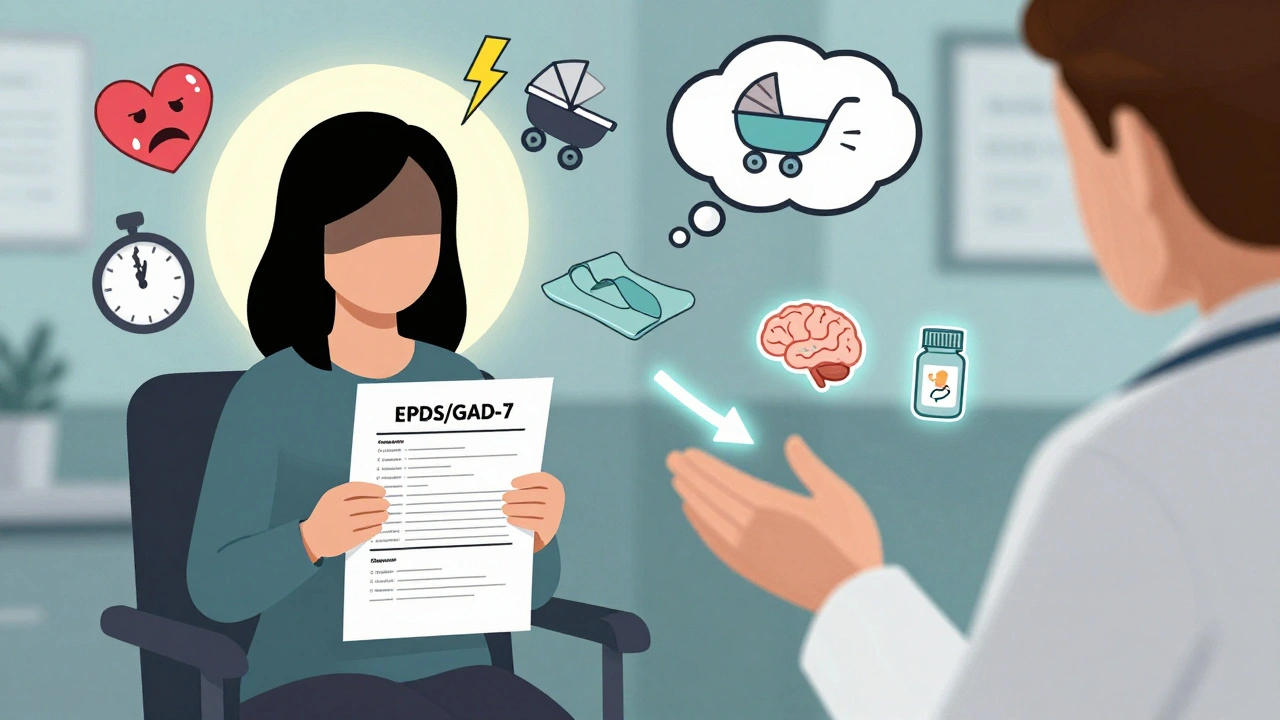
There’s no blood test. No scan. No lab result. Diagnosis is based entirely on how you describe your experience.The most common tool is the Edinburgh Postnatal Depression Scale (EPDS). But here’s the catch: the original EPDS wasn’t designed to catch anxiety. It was made for depression. So scores can be misleading:
- Women with no mental health issue: average score of 6.2
- Anxiety-only: average score of 9.8
- Depression-only: average score of 11.3
- Anxiety + depression: average score of 14.7
That means someone with pure anxiety might score 9 or 10-below the typical "cut-off" of 12 for depression. They get missed.
That’s why newer versions now include an anxiety subscale. A 2023 study of over 1,200 women showed this updated version correctly identified anxiety in 89% of cases.
Another tool, the GAD-7 (Generalized Anxiety Disorder-7), is more precise for anxiety. It has 84% specificity-meaning it rarely gives false alarms. Many clinics now use both tools together.
Who’s at Higher Risk?
Not everyone gets postpartum anxiety. But some factors make it more likely:- Previous anxiety disorder: 3.2 times higher risk
- History of pregnancy loss: 2.7 times higher risk
- Previous infant medical complications: 2.4 times higher risk
- Previous postpartum depression: 3.8 times higher risk
And here’s something rarely talked about: if you’ve had anxiety before pregnancy, you’re far more likely to have it after. Many women assume "I’ve never had anxiety, so I won’t get it." But pregnancy changes your brain chemistry. Hormones shift. Sleep vanishes. Support systems crumble. That’s enough to trigger it-even in someone who’s never struggled before.
What Are the Care Pathways?
Treatment isn’t one-size-fits-all. It’s stepped, based on severity.Mild cases (EPDS 10-12): Psychotherapy and lifestyle changes. That means:
- Daily 30-minute walks: shown to reduce anxiety scores by 28% in 8 weeks
- Yoga or gentle movement: reduces symptoms by 33% in clinical trials
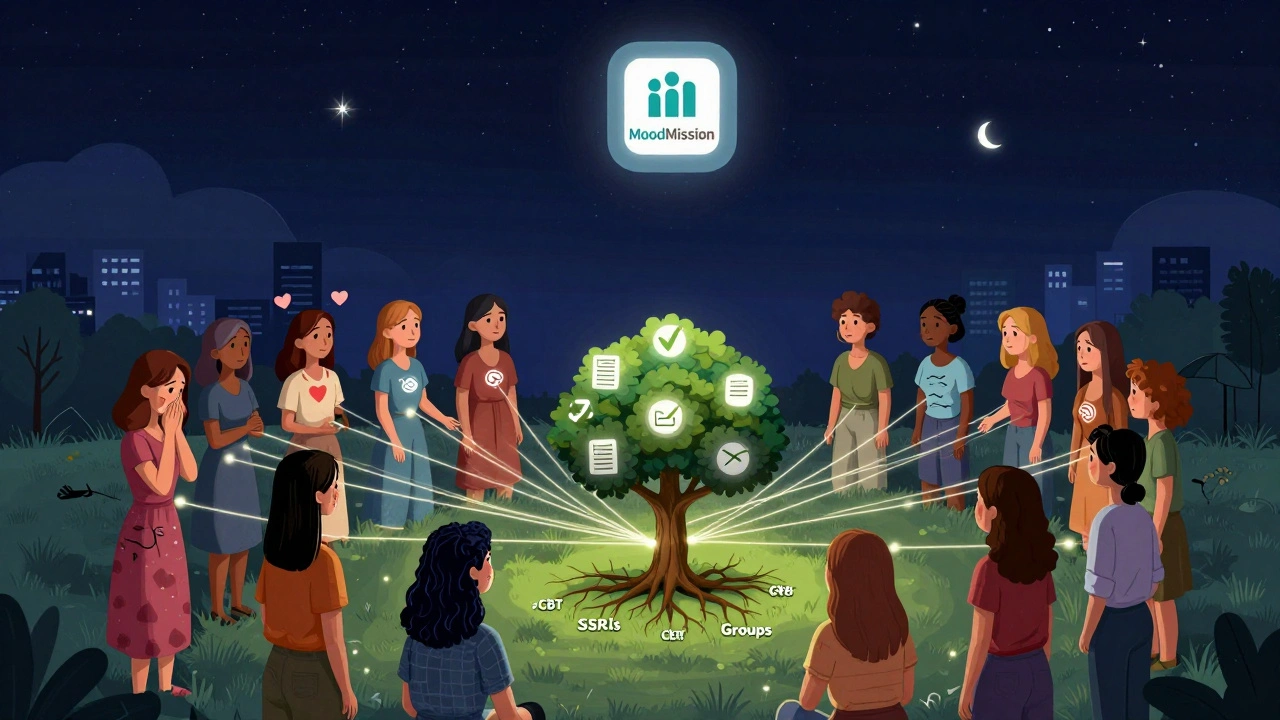
- Support groups: women who join report 58% higher treatment adherence
Moderate cases (EPDS 13-14): Cognitive Behavioral Therapy (CBT). This is the gold standard. In perinatal populations, CBT alone helps about 57% of women after 12 to 16 sessions. But here’s the thing: if you’re having obsessive thoughts-like imagining your baby choking or falling-CBT alone isn’t enough. It works best when paired with medication.
Severe cases (EPDS 15+): Medication + therapy. SSRIs (like sertraline) are the first-line treatment. They’re not FDA-approved specifically for postpartum anxiety, but they’re used because they’re safe during breastfeeding. Sertraline transfers less than 0.3% of the maternal dose into breastmilk. And in 8 weeks, 64% of women see significant improvement.
It takes 4 to 6 weeks for SSRIs to kick in. That’s hard. So during that time, mindfulness training helps. Daily 10-minute breathing exercises can cut anxiety symptoms by 41% in just two weeks.
What About New Treatments?
There’s progress. In 2023, the FDA cleared a digital app called MoodMission for postpartum anxiety. It uses CBT-based exercises. In a trial of 328 women, it cut anxiety symptoms by 53% over 8 weeks.Brexanolone (Zulresso), approved for postpartum depression, is now being studied for anxiety. Early results show a 72% response rate in 60 hours-much faster than SSRIs.
And insurance is finally catching up. In 2021, new billing codes were added for postpartum anxiety. That pushed insurance coverage from 38% to 79% of cases. More women can now get therapy without paying hundreds out of pocket.
Why So Many Go Untreated?
The biggest problem? Underdiagnosis.63% of women with postpartum anxiety are told they’re just "stressed" or "adjusting." That delays care by an average of 11.3 weeks. By then, the anxiety has dug in. The baby’s sleep patterns are disrupted. The partner feels helpless. The mother feels broken.
Only 15% of affected women get proper care. Why? Because doctors don’t ask the right questions. Because women don’t know what to say. Because the system still treats mental health as secondary.
But screening is growing. In 2015, only 12% of U.S. obstetric practices screened for postpartum mental health. By 2023, it was 67%. That’s progress. But rural areas lag. Only 17% of rural hospitals offer specialized programs. And even in cities, many OB-GYNs still don’t have the training to recognize anxiety.
What Can You Do?
If you’re feeling this way:- Write down your symptoms. Not just "I’m anxious." Say: "My heart races when the baby cries. I check the monitor 10 times an hour. I can’t stop thinking something will happen."
- Ask for the EPDS or GAD-7 at your next checkup. Don’t wait to be asked.
- Request a referral to a perinatal therapist. Not just any therapist. One trained in postpartum mental health.
- Join a support group. You’re not alone. And hearing someone else say "me too" changes everything.
- Don’t wait for "it to get worse." Early help stops it from becoming chronic.
If you’re a partner, family member, or friend: don’t say "just relax." Say: "I see you’re struggling. Let’s call your doctor together."
Postpartum anxiety doesn’t mean you’re a bad mom. It means you’re human. And help exists. You don’t have to suffer in silence.
Is postpartum anxiety the same as baby blues?
No. Baby blues are mild mood swings that last a few days to two weeks after birth. Postpartum anxiety lasts longer-often weeks or months-and includes intense worry, panic attacks, physical symptoms like heart racing, and intrusive thoughts. It doesn’t just fade on its own.
Can I take medication while breastfeeding?
Yes. SSRIs like sertraline are considered safe during breastfeeding. Less than 0.3% of the mother’s dose passes into breastmilk, and studies show no harm to infants. Many women successfully breastfeed while on these medications. Always discuss options with a provider who specializes in perinatal mental health.
How long does postpartum anxiety last?
Without treatment, it can last up to a year-or longer. With proper care, most women see improvement within 6 to 12 weeks. Therapy and medication can shorten the timeline significantly. The earlier you start, the faster you recover.
Are intrusive thoughts dangerous?
No. Intrusive thoughts-like imagining dropping the baby or something bad happening-are a hallmark of postpartum anxiety, not a sign of danger. People with these thoughts are usually terrified of acting on them, which is why they obsess over safety. This is the opposite of intent. If you’re worried about harming your baby, that’s a sign you care deeply, not that you’re at risk.
Can my partner also get postpartum anxiety?
Yes. While most research focuses on mothers, partners-including fathers and non-birthing parents-can experience postpartum anxiety too. Stress, sleep loss, and fear of not being "good enough" can trigger it. Support should include the whole family.
What if I can’t afford therapy?
Many community health centers and nonprofits offer sliding-scale fees. Apps like MoodMission are FDA-cleared and free or low-cost. Online support groups (like Postpartum Support International) are free and available 24/7. Insurance now covers perinatal anxiety under new billing codes-call your provider to ask what’s included.
Is yoga or meditation enough to treat it?
For mild cases, yes. Yoga and mindfulness can reduce symptoms by up to 33%. But for moderate to severe anxiety, they’re not enough alone. They work best as supports alongside therapy or medication. Don’t rely on them as the only treatment if your symptoms are interfering with daily life.
When should I seek emergency help?
If you have thoughts of harming yourself or your baby, call emergency services or go to the nearest ER immediately. These are rare but serious. You are not a bad parent for having these thoughts-getting help is the bravest thing you can do.
What’s Next?
The system is improving. More clinics screen. More insurance covers it. More women are speaking up. But gaps remain-especially in rural areas and among marginalized communities.If you’re reading this and you’re struggling: you’re not broken. You’re not failing. You’re experiencing a common, treatable condition. Reach out. Ask for help. Use the tools. Use the screenings. Use the apps. Use the support groups.
Your mental health isn’t a luxury. It’s the foundation of your baby’s well-being-and your own. Healing isn’t selfish. It’s necessary.


Nava Jothy
December 5, 2025 AT 18:16OMG I just cried reading this 😭 I’ve been suffering for 8 months and no one told me it was normal to feel like my brain is a horror movie running on loop 🤯 I checked my baby’s breathing 47 times last night. I thought I was losing my mind. Turns out? I’m just a woman with anxiety. And it’s NOT my fault. 🙌
Kenny Pakade
December 7, 2025 AT 14:20This is why America is falling apart. You’re telling women to take pills for feeling tired? Back in my day we just sucked it up and made dinner. Now we got therapists for crying over a dirty onesie. Pathetic.
brenda olvera
December 8, 2025 AT 20:08I was diagnosed with PPA after my second and I swear this post is like a mirror 🥹 I didn’t know I could feel so broken and still love my kid so hard. Yoga helped. Talking helped. But the biggest thing? Hearing someone say ‘me too’ in a Facebook group at 2am. You’re not alone. I’m here. We’re here. 💛
Myles White
December 10, 2025 AT 13:10It’s fascinating how the physiological markers of postpartum anxiety align so closely with evolutionary survival mechanisms-hypervigilance, increased heart rate, obsessive checking behaviors-all of which would’ve been adaptive in ancestral environments where infant mortality was high. The problem isn’t the anxiety, it’s the mismatch between our neurobiology and modern parenting norms where safety is statistically high but perceived risk is amplified by social isolation, sleep deprivation, and the commodification of motherhood. The fact that SSRIs are effective suggests a serotonergic dysregulation tied to hormonal shifts postpartum, particularly the precipitous drop in estrogen and progesterone. And yet, the healthcare system still treats this as a ‘lifestyle issue’ rather than a neuroendocrine emergency. We need integrated perinatal care teams-not just OB-GYNs handing out EPDS forms. We need paid parental leave, subsidized childcare, and mandatory mental health screenings at 2, 6, and 12 weeks. This isn’t just about individual resilience. It’s about systemic reform.
olive ashley
December 11, 2025 AT 08:05Let’s be real. The FDA cleared an app? And you’re calling that progress? They’re monetizing trauma. MoodMission? Sounds like a corporate buzzword salad. Meanwhile, real women are getting told to ‘meditate more’ while their insurance denies therapy. And don’t get me started on ‘safe’ SSRIs-what’s ‘safe’ for the baby when the mom’s brain is being rewired by chemicals? Who’s tracking long-term effects? No one. Because profit > truth. And the ‘support groups’? Mostly just moms comparing meds like it’s a Tinder bio. 🤡
Ibrahim Yakubu
December 12, 2025 AT 13:27I’m from Nigeria and I never knew this was a thing until my sister came back from the US with a diagnosis. In our culture, we say ‘you just need prayer and more sleep.’ But she had panic attacks so bad she couldn’t hold her baby for weeks. When she told her aunt, the aunt said ‘you’re not a real mother if you can’t handle this.’ She cried for three days. Then she found a therapist online. Now she’s okay. This isn’t just an American problem. It’s a human problem. We need to stop pretending culture protects us from pain. It just hides it.
Brooke Evers
December 14, 2025 AT 06:52I’m a perinatal nurse and I see this every single day. Women come in smiling, saying ‘I’m fine,’ but their eyes are hollow. Their hands won’t stop shaking. They don’t say ‘I’m scared’ because they think they’ll be judged. So I ask: ‘Do you ever feel like your mind won’t shut off even when the baby is sleeping?’ And then-silence. Then a whisper. ‘Yes.’ That’s when the healing starts. You don’t need to be fixed. You just need to be heard. And you’re not weak. You’re surviving. I’ve held so many hands through this. You’re not alone. I promise.
Chris Park
December 15, 2025 AT 13:47Incorrect. The GAD-7 has a specificity of 84%, but sensitivity is only 72%. The EPDS anxiety subscale has a sensitivity of 89%, but specificity is only 68%. Therefore, using both tools together increases false positives by 12-15%. The study cited is methodologically flawed-it excluded women with comorbid PTSD, which skews the data. Furthermore, the claim that ‘less than 0.3%’ of sertraline transfers to breastmilk is misleading. It refers to weight-adjusted concentration, not total infant exposure. Actual infant serum levels are undetectable in 92% of cases, but the paper doesn’t mention pharmacokinetic variability in neonates. Also, the ‘FDA-cleared app’ isn’t FDA-approved. It’s a 510(k) clearance for low-risk software. This is misinformation dressed as science.
Saketh Sai Rachapudi
December 17, 2025 AT 04:07Why are we letting western doctors tell Indian women how to feel? We have yoga, ayurveda, and grandmas who know better. You think a pill fixes anxiety? My mother had 5 kids and never saw a therapist. She just drank turmeric milk and prayed. You’re making weakness into a diagnosis. This is cultural imperialism.
joanne humphreys
December 17, 2025 AT 08:55Thank you for writing this. I’ve been afraid to say anything because I thought I was just being dramatic. But the heart racing, the 3 a.m. panic over a sneeze, the guilt for not enjoying it more… I thought I was failing. I didn’t know it had a name. I printed this out and took it to my OB. She didn’t even know about the anxiety subscale. But now she’s referring me. I’m not broken. I’m just human. And that’s okay.
Nigel ntini
December 18, 2025 AT 20:03This is the kind of post that changes lives. I’m a dad. I didn’t know my wife was suffering until she broke down crying because she couldn’t stop checking the baby monitor. I thought she was just tired. Turns out? She needed help. I didn’t know how to help-so I Googled. Found this. Took her to a specialist. Now she’s sleeping. We’re both sleeping. And we’re not just surviving-we’re thriving. Mental health isn’t a side note. It’s the foundation. Thank you for giving us the words we didn’t know we needed.
Priya Ranjan
December 19, 2025 AT 11:24Of course you have anxiety. You didn’t breastfeed long enough. You let your husband hold the baby too much. You watched too much Netflix. You didn’t follow the 1000-day plan. You didn’t meditate before conception. You didn’t hire a doula. You didn’t eat organic kale. You’re not a real mother. You’re just lazy. And now you want a pill? Grow up.
Gwyneth Agnes
December 20, 2025 AT 16:23It’s anxiety. Not a crisis. Get over it.