Imagine this: you’ve been prescribed a new pill for high blood pressure. You know it’s important. You even set a daily alarm. But after three days, you start feeling dizzy, your stomach churns, and your hands shake. You skip the next dose. Then the one after that. You tell yourself you’ll start again tomorrow. But tomorrow never comes. This isn’t laziness. It’s not ignorance. It’s a very real, very common problem: side effects making you stop taking your medicine.
Why People Stop Taking Their Medication
About half of all people taking long-term medications don’t take them as prescribed. That’s not because they’re forgetful. It’s because they’re afraid. Side effects scare people more than doctors realize. A 2025 report from the British Journal of Clinical Pharmacology found that pharmacists-people who should be the first to catch this-are the least likely to document when patients stop taking their meds. Only 52% of pharmacists note it. Doctors do it 70% of the time. Nurses, 85%. That gap means side effects go unaddressed, and patients suffer in silence. It’s not just physical discomfort. It’s fear. Fear of interactions. Fear that the medicine is making things worse. Fear that the side effects mean something serious is happening. One study found patients with depression were twice as likely to skip their meds because they felt too tired, nauseous, or emotionally numb. And once they skip one dose, it becomes easier to skip the next. The pattern is clear: 30% to 50% of people start their meds, but only 25% to 30% are still taking them correctly six months later. That’s not a failure of willpower. It’s a failure of support.The Real Cost of Skipping Doses
This isn’t just about feeling bad. It’s about dying. In the U.S. alone, up to 125,000 deaths each year are linked to people not taking their medications. That’s more than traffic accidents. And nearly 70% of medication-related hospital stays happen because someone stopped, skipped, or changed their dose without talking to a professional. The economic toll is just as heavy. Every year, nonadherence costs the U.S. healthcare system between $100 billion and $300 billion. For an individual, it can mean extra doctor visits, emergency trips, and even long-term disability. But here’s the thing: if you take your meds as directed, you’re not just protecting your health-you’re saving money. Studies show that with proper pharmacist support, patients can save up to $1,200 a year in avoided hospital visits and emergency care.How Side Effects Break the Chain
Medication adherence isn’t one step. It’s three. First, initiation: Did you fill the prescription? About 30% to 40% of people never pick it up. Maybe the cost was too high. Maybe the side effects sounded scary on the label. Second, implementation: Are you taking it correctly? Of those who fill it, only about half take it as directed. Side effects are the top reason. Dizziness, dry mouth, fatigue-these aren’t minor. They interfere with work, driving, sleep. People think, “This isn’t helping. It’s making me worse.” Third, persistence: Are you still taking it after three months? Here’s where the drop-off is steepest. By six months, only 15% to 20% of people are still refilling as directed. Side effects don’t disappear-they grow. What started as mild nausea becomes constant fatigue. What was a headache turns into brain fog. And without someone to talk to, patients assume the only solution is to stop.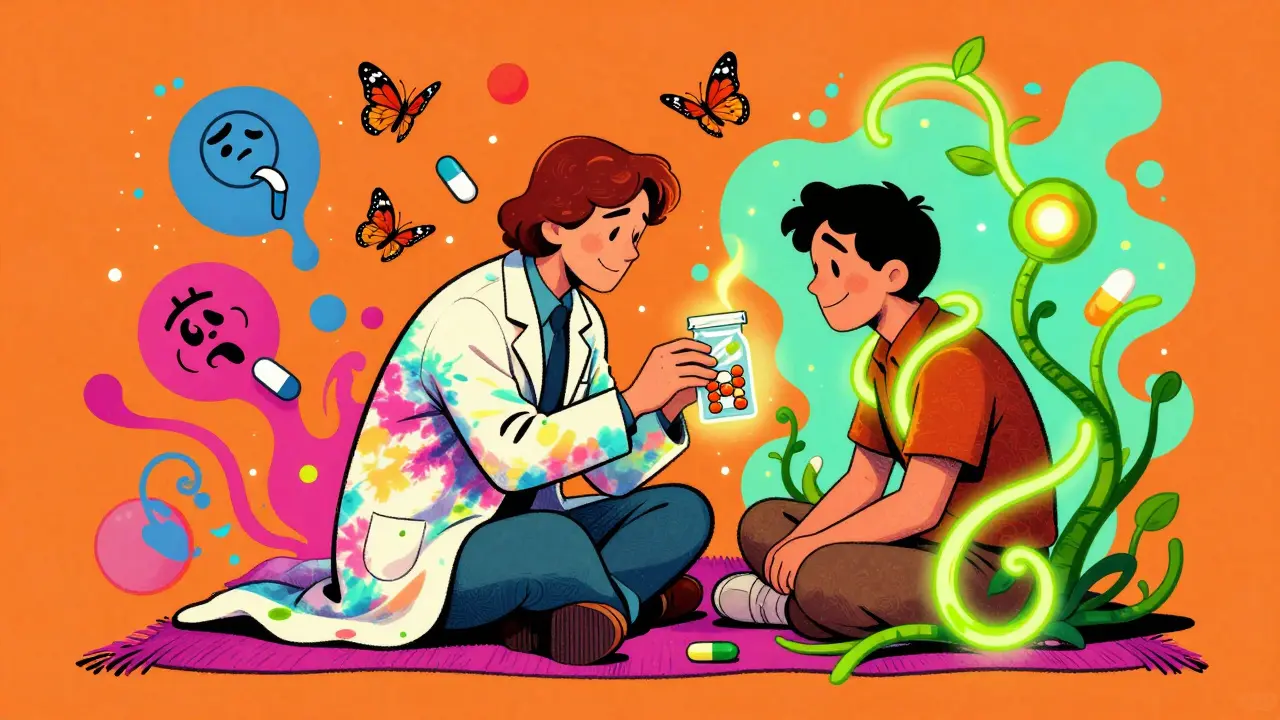
What Actually Works to Fix This
You can’t fix this with a pill reminder app alone. You need human connection. The most effective interventions? Face-to-face. A pharmacist sitting down with you, asking, “What are you feeling?” Not, “Did you take your pill?” But, “Tell me what’s going on.” One study showed that when pharmacists worked directly with patients to manage side effects, adherence jumped from 74% to 89%. That’s a 20% increase-just by listening. Hospital discharge programs also work well. When a patient leaves the hospital, a pharmacist follows up within 48 hours. They check for new side effects, adjust timing, simplify the regimen. Those patients are 67% more likely to stay on track. Phone calls? Less effective. Only 38% success. Mailed brochures? Even lower. The key isn’t the medium. It’s the conversation.What You Can Do Right Now
If you’re struggling with side effects, here’s what to do:- Don’t stop cold. Stopping suddenly can be dangerous. Talk to your pharmacist or doctor first.
- Write down every symptom. Not just “I feel bad.” Be specific: “I get dizzy 2 hours after taking my pill,” or “My mouth is so dry I can’t swallow food.”
- Ask: Can the dose be lowered? Sometimes, cutting the dose in half reduces side effects without losing benefit.
- Ask: Can I take it at night? Some side effects, like drowsiness, are easier to manage if you take the pill before bed.
- Ask: Is there another drug? There are often multiple options for the same condition. One might not cause the same side effects.
- Ask your pharmacist to review all your meds. You might be taking two drugs that clash. A pharmacist can spot that in minutes.
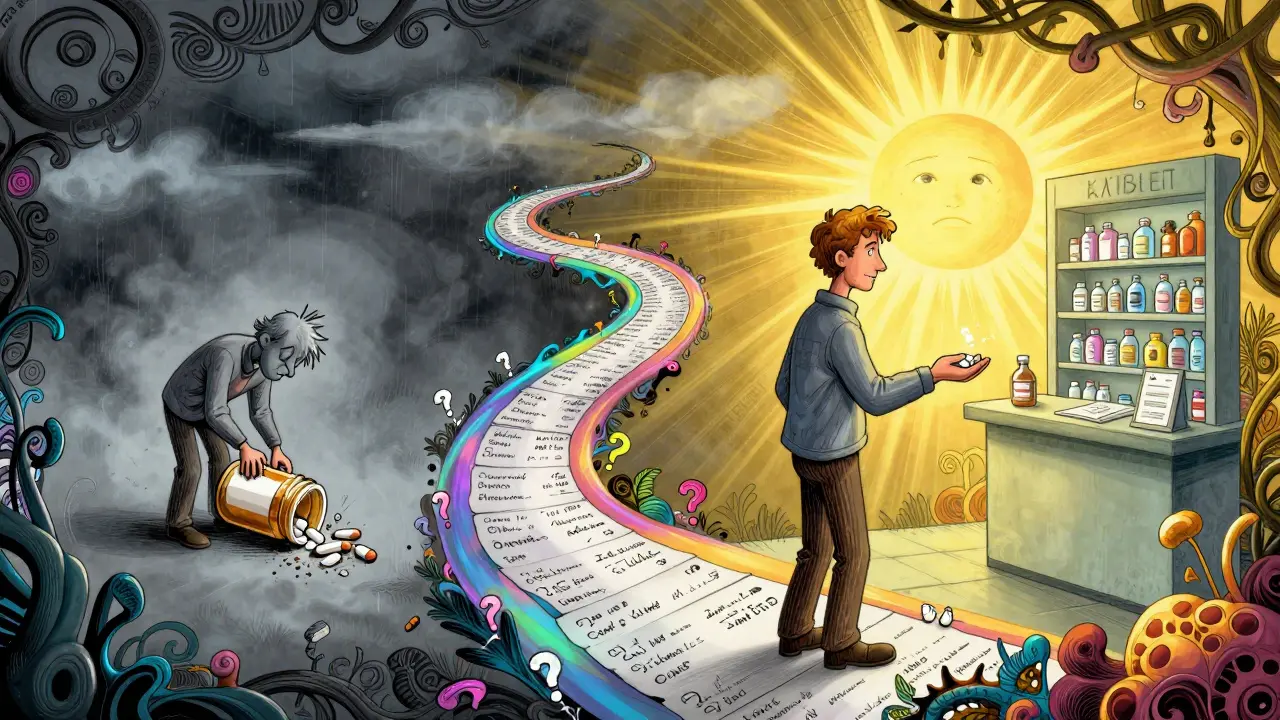
How Your Pharmacist Can Help (And Why They’re Your Best Ally)
Pharmacists aren’t just the people who hand you the bottle. They’re trained to understand drug interactions, side effect patterns, and how to simplify regimens. Yet most people never ask them for help. In the U.K., community pharmacists can now offer Medication Reviews-free, no appointment needed. They’ll look at your entire list of pills, check for overlaps, and suggest adjustments. They can even help you get cheaper alternatives through NHS programs. If you’re on multiple medications, ask for a Medication Use Review. It’s covered by the NHS. Bring your pills in a bag. Don’t worry about being neat. Just show up. They’ve seen it all.What Doctors and Pharmacies Are Doing to Improve
Health systems are starting to catch on. Medicare Star Ratings now include adherence as a key metric. Plans that help patients stay on their meds get higher ratings-and more funding. That means hospitals and clinics are investing in pharmacist-led programs. Some use AI to flag patients at risk. If someone hasn’t refilled their statin in 90 days, the system sends a message: “Your doctor wants to check in. Can we help?” Others are simplifying regimens. Instead of three pills a day, they switch to one combo pill. Fewer pills = fewer side effects to manage = better adherence.It’s Not About Forgetting. It’s About Feeling Heard
The truth? Most people want to take their meds. They just don’t know how to deal with the fallout. They’re not lazy. They’re overwhelmed. If you’re struggling, you’re not alone. Half the people you know are probably doing the same thing. But you can break the cycle. Start by talking to your pharmacist. Don’t wait until you feel worse. Don’t wait until you’re in the hospital. Go now. Bring your pills. Ask the questions. Say, “I’m having trouble with the side effects. Can we fix this?” Your life doesn’t have to be ruled by a pill that makes you feel sick. There are better ways. And they’re closer than you think.Why do people stop taking their medication even when they know it’s important?
People stop because of side effects-dizziness, nausea, fatigue, brain fog-that interfere with daily life. Many assume the medicine is making things worse, not better. Without support, they feel trapped: take the pill and feel awful, or skip it and risk their health. Fear, not forgetfulness, is the main driver.
How common is medication nonadherence due to side effects?
Side effects are the leading cause of nonadherence. About 30% to 50% of patients stop taking their meds within the first few months, mostly because of unpleasant or worsening side effects. For mental health drugs, the rate is even higher-patients are twice as likely to skip doses if side effects are present.
Can I just stop taking my medication if the side effects are too much?
No. Stopping suddenly can cause dangerous rebound effects-like high blood pressure spikes, seizures, or worsening depression. Always talk to your pharmacist or doctor first. They can help you adjust the dose, switch drugs, or change the timing to reduce side effects without risking your health.
What’s the best way to talk to my pharmacist about side effects?
Bring your pills in a bag. Write down exactly what you’re feeling-when it happens, how bad it is, and if anything makes it better or worse. Say, “I’m having trouble with these side effects. Can we find a way to manage them?” Pharmacists are trained to help with this. They can suggest alternatives, check for drug interactions, or help you access cheaper options.
Are there free services to help with medication adherence in the UK?
Yes. The NHS offers a free Medication Use Review with your community pharmacist. You don’t need an appointment. Just walk in with your pills. They’ll review everything you’re taking, check for side effects, and help you simplify your regimen. This service is designed exactly for people struggling to stay on track.
Can switching to a combination pill help with side effects?
Yes. If you’re taking three separate pills, switching to a single combo pill can reduce side effects by cutting down on pill burden and simplifying your routine. Fewer pills mean fewer chances for interactions and less confusion. Ask your doctor or pharmacist if a combination option is available for your condition.
How long does it take for side effects to go away?
Many side effects fade after 1 to 4 weeks as your body adjusts. But if they’re severe or getting worse, don’t wait. Talk to your pharmacist. Some side effects won’t go away without a change in dose or drug. It’s not normal to feel awful for months on end-you deserve better.
Does taking medication at a different time of day help with side effects?
Often, yes. Drowsiness? Take it at night. Stomach upset? Take it with food. Dizziness? Take it before bed instead of in the morning. Small timing changes can make a big difference. Your pharmacist can help you find the best time based on your symptoms and daily routine.