23
Jan

When a brand-name drug’s patent expires, you’d expect generic versions to flood the market right away-lower prices, more choices, savings for patients. But that’s not what usually happens. Instead, one generic company gets a 180-day exclusivity period, blocking everyone else from selling the same drug. This isn’t a mistake. It’s the law. And it’s designed to shake up the system-but often, it does more harm than good.
What Is the 180-Day Exclusivity Rule?
The 180-day exclusivity rule comes from the Hatch-Waxman Act of 1984. It’s a legal tool meant to encourage generic drug makers to challenge weak or overreaching patents on brand-name drugs. If a generic company files the first application to copy a drug and says the patent is invalid or not being infringed (called a Paragraph IV certification), they get 180 days of exclusive rights to sell the generic version. No other generic can enter during that time-even if their application is approved. This isn’t about waiting for the patent to expire. It’s about who gets to be first in court. The first generic to challenge a patent gets a monopoly on the market for half a year. That’s the incentive. Without it, most generic companies wouldn’t risk spending millions on lawsuits just to copy a drug.How Does It Actually Start?
The clock doesn’t start when the FDA approves the drug. It doesn’t even start when the patent expires. It starts on the earliest of two things:- The date the first generic company actually starts selling the drug
- The date a court rules the patent is invalid or not infringed
Who Gets to Be the First Applicant?
Being first sounds simple. But it’s not. The FDA has to decide who submitted the first substantially complete application. That means the paperwork has to be fully filled out-not just a draft. If the application is missing even one form, it doesn’t count. Multiple companies can file on the same day. When that happens, the FDA uses a set of rules to pick the winner. Sometimes it’s based on who submitted the application first by the minute. Other times, it’s about who challenged the most patents. The rules are messy, and companies spend millions on lawyers just to argue over who got there first. There have been court cases like Granutec, Inc. v. Shalala that set the standard: only the first to submit a complete ANDA with a Paragraph IV certification qualifies. That’s why companies race to file. Some even hire consultants to monitor patent filings and submit applications the moment the patent list is updated.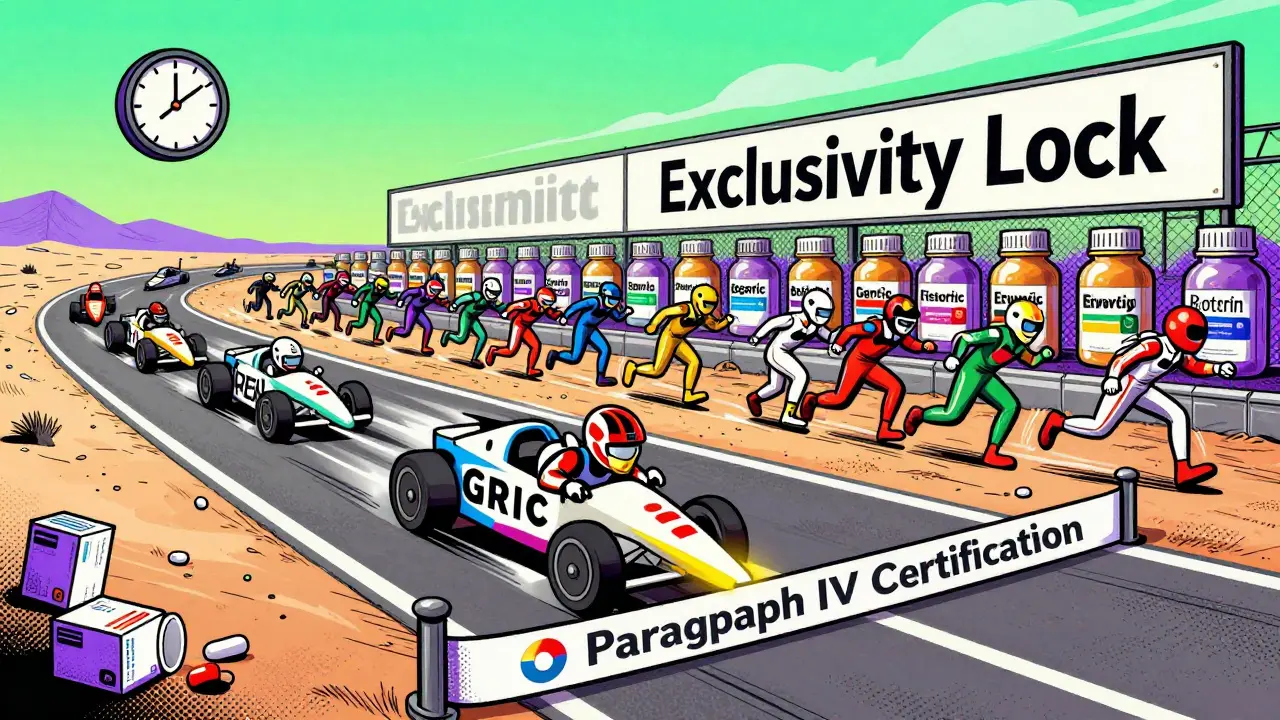
Why Do Generic Companies Lose Their Exclusivity?
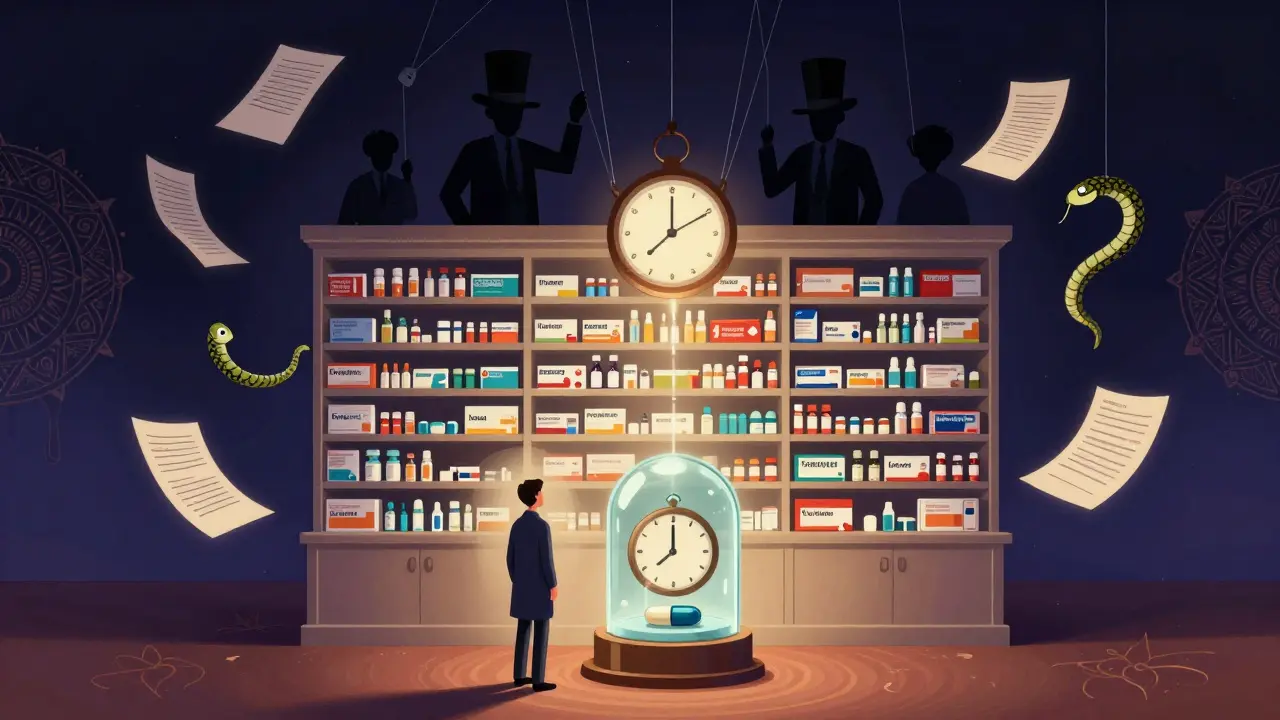
It’s not enough to be first. You have to act. The Medicare Modernization Act of 2003 added forfeiture rules. If the first applicant doesn’t start selling the drug within 75 days of FDA approval-or if they abandon the application-they lose their exclusivity. But here’s the catch: if the company is in the middle of a patent lawsuit and the court hasn’t ruled yet, they can delay commercialization without penalty. That’s where the real abuse happens. A generic company might win the race to file, then sit back and wait for years while the brand-name company files more lawsuits. They never start selling. But they still block everyone else. In 2018, the FDA issued a clarification about buprenorphine and naloxone sublingual film that made it clear: if you don’t market the drug, you can lose exclusivity-even if you’re still in court. But that rule doesn’t apply retroactively, and many companies have already used the delay tactic to lock out competitors for years.How Is This Different From Other Exclusivities?
There are other types of exclusivity for drugs. A new chemical entity gets five years of protection. If a company does new clinical trials, they get three years. Pediatric studies can add six more months. But none of these are like the 180-day exclusivity. Those other protections prevent generics from even applying. The 180-day rule lets generics apply-but only one can win. It’s a winner-takes-all race. And unlike the biosimilar pathway, which lets multiple companies share exclusivity, here only one gets the prize. That’s why the 180-day exclusivity is so powerful. For a blockbuster drug like a cholesterol medication or a diabetes pill, the first generic company can make over a billion dollars in those six months. That’s why companies fight so hard for it.What’s Wrong With the Current System?
The system was built to speed up generic access. But today, it often does the opposite. Here’s how it breaks down:- First generic files a patent challenge
- Brand-name company sues
- Generic company waits for court decision-sometimes for years
- They don’t launch the drug
- No other generic can enter
- Patients pay brand-name prices for years
What’s the Real Impact on Drug Prices?
The Hatch-Waxman Act helped turn generics from 19% of the U.S. market in 1984 to over 90% today. That’s huge. But the 180-day exclusivity is the exception that breaks the rule. For most drugs, generics drop prices by 80-90% within months. But for drugs stuck in this exclusivity trap, prices stay high for years. Patients pay more. Insurers pay more. Taxpayers pay more. A 2021 study found that in cases where the first generic delayed launch, the average price of the drug stayed above 70% of the brand-name price for over three years. That’s $10,000+ per patient in extra costs. Multiply that by thousands of users, and you’re talking billions. The irony? The companies that win the exclusivity often don’t even lower prices much during those 180 days. They charge near-brand prices, knowing no one else can compete. Then, when the exclusivity ends, other generics flood in and prices crash overnight.What’s Next for Generic Drug Competition?
The FDA’s 2022 proposal is the most serious attempt to fix this in decades. If it passes, the 180-day exclusivity will finally work as intended: a short, sharp burst of competition after the drug is actually available. But change is slow. The brand-name drug industry lobbies hard to keep the current rules. They argue that without the long exclusivity, no one would challenge patents. But that’s not true. The threat of a lawsuit alone is enough to get generics to act. Some states are trying to bypass the federal system by allowing pharmacists to substitute generics even when exclusivity is active. Others are pushing for price caps on drugs stuck in this limbo. The bottom line? The 180-day exclusivity rule is a relic of 1984. It worked then. But today, it’s a tool for delay, not competition. Until Congress or the FDA fixes it, patients will keep paying more than they should for drugs that could be cheap.How Do Generic Companies Play This Game?
If you’re a generic manufacturer, here’s how you think:- Is this patent weak? Can we win in court?
- Is the drug profitable enough to justify a $10 million lawsuit?
- Can we file before anyone else?
- If we win, will we launch right away-or wait to maximize profits?
Alexandra Enns
January 24, 2026 AT 22:07This is why America's healthcare system is a joke. A 180-day monopoly? That’s not competition-that’s corporate extortion dressed up as law. And don’t even get me started on how the FDA lets them drag their feet for YEARS while patients bleed cash. Congress wrote this law in 1984, before anyone had smartphones, and now we’re still stuck with it? Someone needs to burn it all down and start over.
Marie-Pier D.
January 26, 2026 AT 10:02I get that the system is broken, but I also feel bad for the generic companies trying to navigate this mess. They’re not villains-they’re just playing the game as it’s written. Maybe the real villain is the lack of clear, modern regulation? 🙏 We need reform, not rage.
Josh McEvoy
January 28, 2026 AT 00:58so like… if you file first but dont sell, you still block everyone? 🤯 like wtf even is this. why does the FDA even exist if they let this happen? 😭
Vatsal Patel
January 29, 2026 AT 10:08Ah yes, the sacred American tradition: turn a public health mechanism into a high-stakes poker game where the only winners are the lawyers and the shareholders. The real tragedy? We all think this is normal. We’ve been conditioned to believe that profit should outweigh access. And yet… we still vote for the people who keep this alive. What does that say about us?
Michael Camilleri
January 29, 2026 AT 22:08people act like this is some new scandal but its been happening for decades and nobody in DC gives a damn. if you want cheap drugs stop voting for the same corrupt oligarchs who get paid by Big Pharma. simple as that. they dont care about your diabetes they care about your monthly payment
Darren Links
January 30, 2026 AT 11:29Let me get this straight: the law was designed to help generics, but now it’s used to delay them? So… we’re rewarding the slowest player? That’s not innovation. That’s sabotage with a law degree. And the fact that this is still legal? That’s not capitalism. That’s feudalism with a corporate logo.
Husain Atther
January 30, 2026 AT 19:50This is a fascinating case study in unintended consequences. The Hatch-Waxman Act was a brilliant compromise for its time-balancing innovation with access. But like many laws from the 1980s, it hasn’t evolved with the market. Perhaps instead of abolishing the exclusivity, we should refine it: tie it strictly to market launch, not legal filings. A small tweak, but it could save billions.
Phil Maxwell
February 1, 2026 AT 12:41Yeah I’ve seen this happen with my dad’s blood pressure med. He paid $400/month for years. Then one day, outta nowhere, it dropped to $10. Took like 5 years for that to happen. Feels like the system is rigged to make us suffer until the last possible second.
Juan Reibelo
February 1, 2026 AT 23:54Let me just say this: the 180-day exclusivity rule, as currently interpreted, is not merely flawed-it is actively harmful. It contradicts the very purpose of the Hatch-Waxman Act. The FDA must act decisively. The courts must intervene. And Congress must stop taking Big Pharma’s money. This is not a political issue. It is a moral one.
asa MNG
February 2, 2026 AT 04:14so like… what if the first generic company is secretly owned by the brand-name company?? 🤔 like… what if this whole thing is a scam?? i mean… think about it. they get the exclusivity, they delay, they make the same money… and no one else can come in… what if this is all just one big puppet show?? 😳
Dolores Rider
February 2, 2026 AT 22:08they told us this was about competition but it’s really about control. i know someone who died because they couldn’t afford the brand-name drug while the generic was stuck in legal limbo. this isn’t policy. it’s murder by bureaucracy. 💔
Jenna Allison
February 3, 2026 AT 13:41Just to clarify: the 180-day exclusivity only applies to ANDA filers who submit a Paragraph IV certification. It’s not a patent extension-it’s a statutory incentive. The problem isn’t the rule, it’s the loophole where companies delay launch without penalty. The FDA’s 2022 proposal fixes that. We just need to push them to finalize it.
Sharon Biggins
February 3, 2026 AT 22:18you’re not alone. i’ve been fighting this for years. my sister has to take this med every day. i’ve called senators, written letters, even went to a town hall. change is slow but it’s possible. don’t give up. we’ve got this 💪
John McGuirk
February 5, 2026 AT 16:08you think this is bad wait till you find out the same companies that own the patents also own the generic labs. same board. same investors. same lawyers. same bank accounts. the whole thing is a single corporation wearing two hats. and you wonder why prices never drop? 🤡