
Imagine feeling a sharp, knife-like pain every time you go to the bathroom. It doesn’t just last a few seconds-it lingers for half an hour or more, sometimes radiating down your thigh or lower back. For many people, this isn’t a rare nightmare. It’s the daily reality of an anal fissure.
What Exactly Is an Anal Fissure?
An anal fissure is a small tear in the lining of the anal canal, usually along the back wall (posterior midline). It’s not a cut you can see with the naked eye, but it’s painfully real. Around 90% of these tears happen in the back, and 10% in the front. They’re most common in adults between 20 and 40, and in babies during their first few months of life. Most fissures start from something simple: straining during a bowel movement. Hard stools, constipation, or even a large, bulky poop can stretch the sensitive tissue beyond its limit. Once the tear happens, the real problem begins-not the tear itself, but what happens after. The internal anal sphincter, a ring of muscle that controls continence, goes into spasm in response to the pain. This spasm raises pressure inside the anus from a normal 15-20 mmHg to 25-30 mmHg or higher. That extra pressure squeezes the blood vessels around the tear, cutting off the oxygen and nutrients needed to heal. So instead of healing, the wound stays open, becomes more irritated, and turns chronic.Chronic vs. Acute: The Difference That Matters
If your fissure heals within six to eight weeks, it’s called acute. About 80-90% of acute fissures heal on their own with simple changes. But if it lasts longer than eight weeks, it’s chronic-and that’s when things get trickier. Chronic fissures don’t just hang around. They develop a signature trio of signs:- The original tear, now with ragged edges
- A small skin tag near the opening (called a sentinel pile)
- A swollen anal papilla inside the canal
What Does It Feel Like?
Patients describe the pain as sudden, intense, and stabbing-like glass or a knife during a bowel movement. Afterward, it doesn’t vanish. It lingers for 30 to 90 minutes. Some say it feels like their insides are on fire. Others report it radiates to their lower back, buttocks, or even thighs. You might also notice bright red blood on the toilet paper or in the bowl. It’s usually minimal, just a few drops. But it’s enough to scare people into thinking it’s something worse-like hemorrhoids or cancer. And the emotional toll? Real. Around 65% of people say they avoid social events for days after a bowel movement. Many delay going to the bathroom, which makes constipation worse. It’s a loop no one talks about-but it’s common.What Causes It? Beyond Just Constipation
Yes, hard stools are the #1 cause. But other factors play a role:- Chronic diarrhea (repeated irritation)
- Childbirth (especially with large babies or tearing)
- Anal intercourse
- Inflammatory bowel disease (like Crohn’s disease)
- Less commonly, anal cancer or infections
Healing Strategies That Actually Work
The good news? Most fissures heal without surgery. But only if you do the right things-and do them consistently.Step 1: Soften Your Stools
This is the foundation. No treatment works if you’re still straining. Aim for 25-35 grams of fiber daily. That’s:- 1 cup of cooked lentils (15g)
- 1 medium pear (6g)
- 1 cup of oatmeal (4g)
- 2 tablespoons of ground flaxseed (4g)
Step 2: Sitz Baths
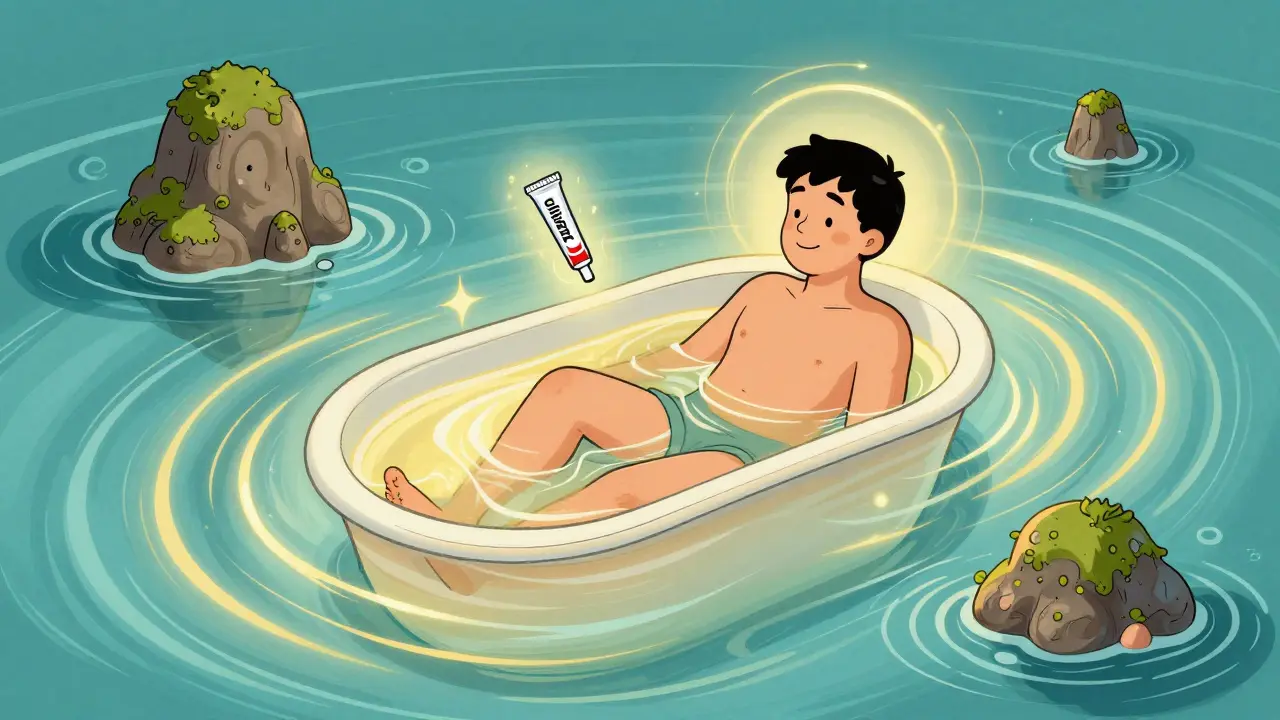
Fill a shallow tub or use a sitz bath basin with warm (not hot) water. Sit in it for 10-20 minutes, 3-4 times a day-especially after bowel movements. It relaxes the sphincter, increases blood flow, and cleans the area gently.Step 3: Topical Medications
If diet and baths aren’t enough, topical ointments help break the spasm cycle.- Diltiazem 2%: First-line choice. 65-75% healing rate. Few side effects. Apply a pea-sized amount (about 1.25 inches on your finger) inside the anus twice daily for 8 weeks.
- Nifedipine 0.3%: Similar success, even fewer headaches than nitroglycerin.
- Nitroglycerin 0.2-0.4%: Works well (45-68% healing), but 1 in 3 people get bad headaches. Not ideal if you’re already prone to migraines.
Step 4: Botox Injections
If ointments don’t work, a doctor can inject botulinum toxin (Botox) directly into the internal sphincter. It temporarily paralyzes the muscle, reducing pressure and allowing healing. Success rates: 50-80%. But in about 40% of cases, the fissure comes back within a year. It’s not permanent, but it’s less invasive than surgery.Step 5: Surgery (Sphincterotomy)
When everything else fails, surgery is the gold standard. A small cut is made in the internal sphincter to reduce pressure permanently. Healing rates? 92-98%. Most people return to work in 3-4 days. But there’s a catch: about 14% of people develop minor fecal incontinence-usually just trouble holding gas or occasional soiling. It’s rare to lose control of stool, but it’s a real trade-off. This option is usually reserved for chronic cases that have lasted months or years.What Doesn’t Work (And Why)
Many people try home remedies that sound logical-but aren’t backed by evidence:- Witch hazel wipes: may soothe, but don’t heal
- Over-the-counter hemorrhoid creams: often contain steroids or numbing agents that mask pain without fixing the root
- Just waiting it out: if you’re still constipated, you’re not healing-you’re just delaying the inevitable
What to Expect During Healing
Healing isn’t linear. You’ll have good days and bad days. Pain might lessen after 3-5 days with diltiazem. Blood should stop within a week. Full healing takes 4-8 weeks-even with treatment. Keep a log: note your fiber intake, bowel movements, pain levels, and medication use. It helps you-and your doctor-see what’s working.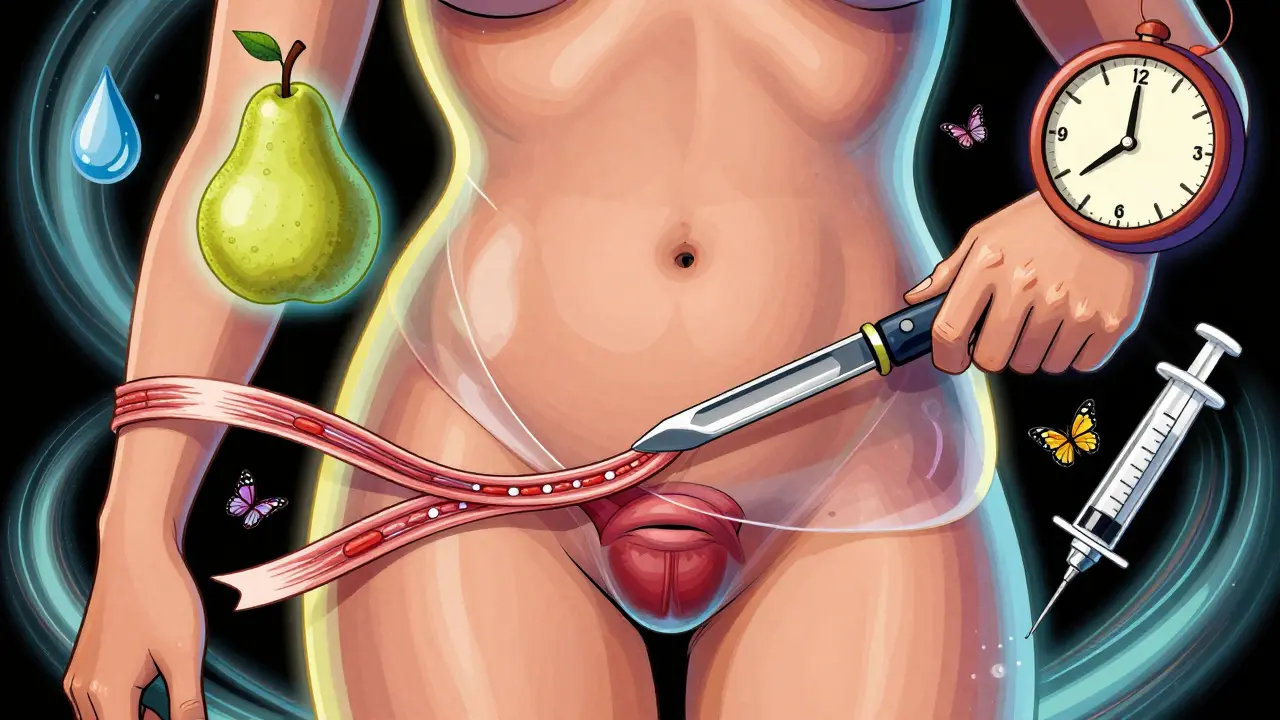
Long-Term Outlook
The good news? Fissure recurrence rates are dropping. In 2010, 12% of patients needed surgery. By 2023, that number fell to 8%. Why? Better topical treatments and more awareness. But experts warn: rising obesity and low-fiber diets could push fissure rates up by 15-20% in the next decade. The fix? Simple: eat more plants, drink more water, and don’t hold it in.When to See a Doctor
Call your doctor if:- Pain lasts more than 6-8 weeks
- You’re bleeding heavily or frequently
- The fissure is on the side, not the back
- You have other symptoms: weight loss, diarrhea, fever, or family history of Crohn’s or colon cancer
Real-Life Tips from People Who’ve Been There
- “I started eating 3 apples a day and drinking a liter of water before bed. Within 10 days, the pain was half as bad.” - Mark, 34, Exeter - “I was so scared to go to the bathroom. My doctor showed me how to apply the diltiazem with my finger. That tiny change made all the difference.” - Sarah, 28, London - “I thought it was hemorrhoids. Took me three doctors and four months to get the right diagnosis.” - James, 41, Birmingham You’re not alone. And you don’t have to suffer in silence.Can anal fissures heal on their own?
Yes, most acute anal fissures heal on their own within 6 to 8 weeks, especially with dietary changes, hydration, and sitz baths. Around 80-90% of cases resolve without medication or surgery. But if it lasts longer than eight weeks, it’s considered chronic and usually needs targeted treatment to break the pain-spasm cycle.
What’s the fastest way to heal an anal fissure?
The fastest path combines three things: high-fiber diet (25-35g daily), daily sitz baths (15 minutes, 3-4 times), and topical diltiazem ointment applied inside the anus twice a day. Most patients see pain relief within 72 hours and full healing in 4-6 weeks. Surgery is the fastest option for chronic cases, with healing in 3-4 weeks-but it’s reserved for when other treatments fail.
Is surgery the best option for chronic fissures?
Surgical sphincterotomy is the most effective treatment for chronic fissures, with 92-98% success rates. It’s often recommended when medications like diltiazem or Botox don’t work. But it carries a 14% risk of minor fecal incontinence-usually just gas leakage or occasional soiling. For many, the trade-off is worth it. However, newer topical treatments have reduced the need for surgery by over 30% since 2010.
Can stress cause an anal fissure?
Stress doesn’t directly cause a fissure, but it can worsen it. Stress affects gut motility, which can lead to constipation or diarrhea-both trigger or aggravate fissures. It can also increase muscle tension, including in the anal sphincter, making spasms more likely. Managing stress through relaxation techniques, exercise, or counseling can support healing by improving bowel regularity.
How do I know if it’s a fissure or hemorrhoids?
Both cause pain and bleeding, but they feel different. Hemorrhoids often cause a lump near the anus, itching, and a feeling of fullness. Anal fissures cause sharp, tearing pain during bowel movements that lasts for minutes to hours afterward. Bleeding from fissures is usually bright red and minimal, while hemorrhoids can cause more bleeding and sometimes clots. A doctor can tell the difference with a simple visual exam.
Are there any new treatments for anal fissures?
Yes. In 2023, early research from Johns Hopkins showed promising results with stem cell injections for stubborn fissures, with 73% healing in 8 weeks among test participants. The European Society of Coloproctology now recommends diltiazem as first-line treatment over nitroglycerin due to fewer side effects. These advances mean more people can avoid surgery and heal with safer, non-invasive options.

Josh josh
January 26, 2026 AT 06:59SWAPNIL SIDAM
January 27, 2026 AT 20:41Conor Flannelly
January 28, 2026 AT 02:53And yet, we still reach for witch hazel wipes like they're holy water. We treat symptoms like sins. But the body doesn't sin. It just... breaks. And we forget how to listen.
Sally Dalton
January 28, 2026 AT 04:15Nicholas Miter
January 29, 2026 AT 07:10Mohammed Rizvi
January 30, 2026 AT 10:48Geoff Miskinis
January 30, 2026 AT 18:15Patrick Merrell
February 1, 2026 AT 03:02bella nash
February 2, 2026 AT 19:34Suresh Kumar Govindan
February 3, 2026 AT 02:55Conor Murphy
February 4, 2026 AT 11:55Betty Bomber
February 5, 2026 AT 12:34Renia Pyles
February 5, 2026 AT 18:50Kipper Pickens
February 6, 2026 AT 14:39Marian Gilan
February 8, 2026 AT 06:33