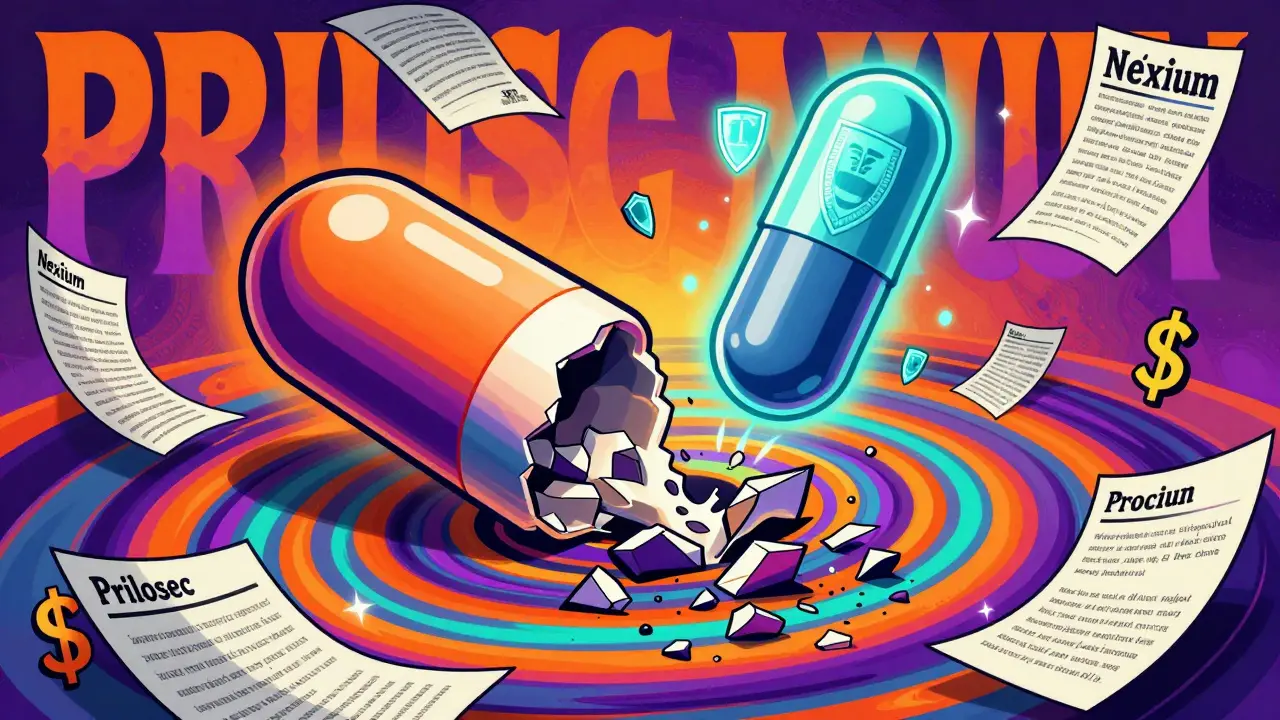
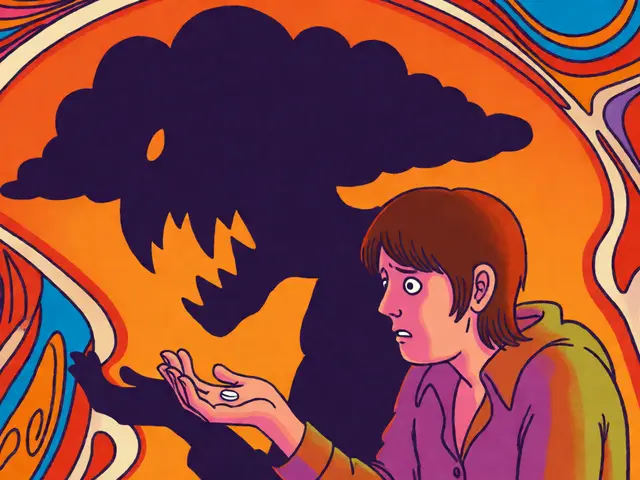
When a blockbuster drug’s patent runs out, the price should drop-fast. Generic versions flood the market, competition kicks in, and patients pay a fraction of what they once did. But in many cases, that doesn’t happen. Not because the science is too complex. Not because manufacturing is too hard. But because the brand company has spent years quietly building a wall of patents around the same drug, just tweaked enough to keep generics out. This is evergreening.
What Evergreening Really Is
Evergreening isn’t about inventing something new. It’s about making tiny changes to an existing drug-changing the pill shape, switching from a tablet to a capsule, adding a new coating, or combining it with another ingredient-and then filing a new patent. These aren’t breakthroughs. They’re tweaks. But under current U.S. patent law, even minor modifications can qualify for a fresh 20-year patent clock, sometimes with extra exclusivity bonuses. Take AstraZeneca’s Prilosec, a heartburn drug. When its patent neared expiration, the company launched Nexium-a drug that was essentially the same active ingredient, but in a different salt form. Nexium wasn’t more effective. It didn’t work faster. But it came with a new patent. And suddenly, patients were paying $300 a month for Nexium instead of $10 for the generic version of Prilosec. The company didn’t cure anything new. They just sold the same medicine under a new name.How the System Lets This Happen
The 1984 Hatch-Waxman Act was meant to balance innovation and access. It gave brand companies 20 years of patent protection, and it created a fast track for generics to enter after that. But it also left loopholes. Companies can earn extra exclusivity time for things like:- Five years for a completely new drug
- Three years if they run new clinical trials for a modified version
- Seven years if the drug treats a rare disease (orphan drug status)
- Six extra months if they test the drug in children
The Cost to Patients and Health Systems
When generics enter the market, prices typically drop by 80% to 85% within the first year. That’s not speculation. That’s data from real-world drug markets. But evergreening blocks that drop. Patients stay locked into expensive brand-name drugs for years longer than they should. Humira alone brings in about $40 million a day in revenue because of its extended patent protection. That’s not because it’s the best drug on the market. It’s because no one else is allowed to sell a cheaper version. For people with rheumatoid arthritis, Crohn’s disease, or psoriasis, that means paying thousands a month-or skipping treatment entirely. The U.S. spends more on prescription drugs than any other country. A big reason? Evergreening. A Harvard study found that 78% of new patents for prescription drugs were for existing drugs-not new ones. That means the system is rewarding tweaking, not discovering.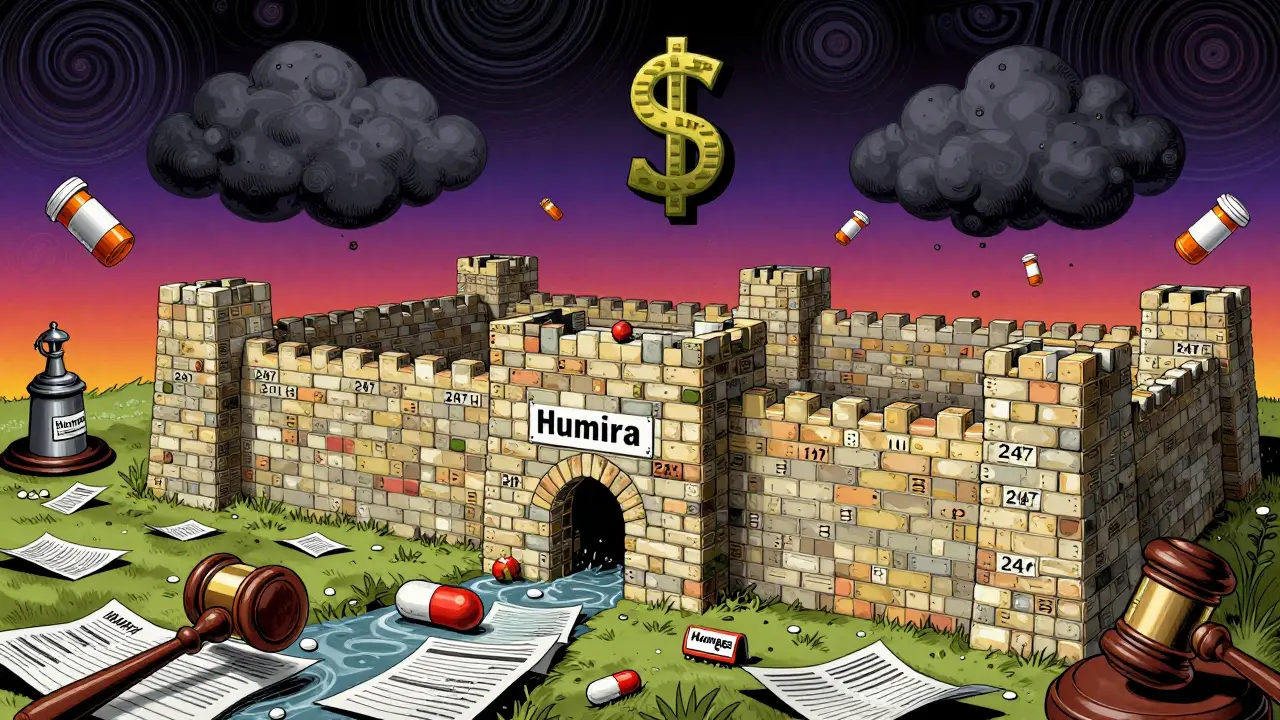
What Companies Do to Keep It Going
Big pharma doesn’t leave this to chance. They have entire teams-lifecycle management units-working five to seven years before a patent expires. Their job? Find a way to repackage, re-formulate, or rebrand the drug so it looks different enough to qualify for a new patent. Common tactics include:- Switching from a pill to a liquid or injectable form
- Changing the release mechanism (extended-release versions)
- Combining two old drugs into one pill
- Launching an “authorized generic”-a version made by the brand company itself, sold at a discount to undercut real generics
- Getting the drug switched from prescription to over-the-counter (OTC), which resets market perception and delays generic competition
Where It’s Working-and Where It’s Failing
Evergreening works best in the U.S., where patent law is loose and regulators rarely step in. But other countries are catching on. The European Medicines Agency now requires companies to prove a modified drug offers “significant clinical benefit” before granting extra exclusivity. That’s a big deal. It means if your new version doesn’t help patients more than the old one, you don’t get more time. In 2022, the U.S. Federal Trade Commission sued AbbVie over Humira’s patent strategy, calling it an illegal monopoly. The case is still ongoing, but it’s a sign that regulators are starting to push back. The Inflation Reduction Act of 2022 also changed the game. For the first time, Medicare can negotiate prices for some of the most expensive drugs. If a drug’s price gets capped, the financial incentive to evergreen it shrinks. Why spend $50 million on patent lawyers if the government will just set a lower price anyway?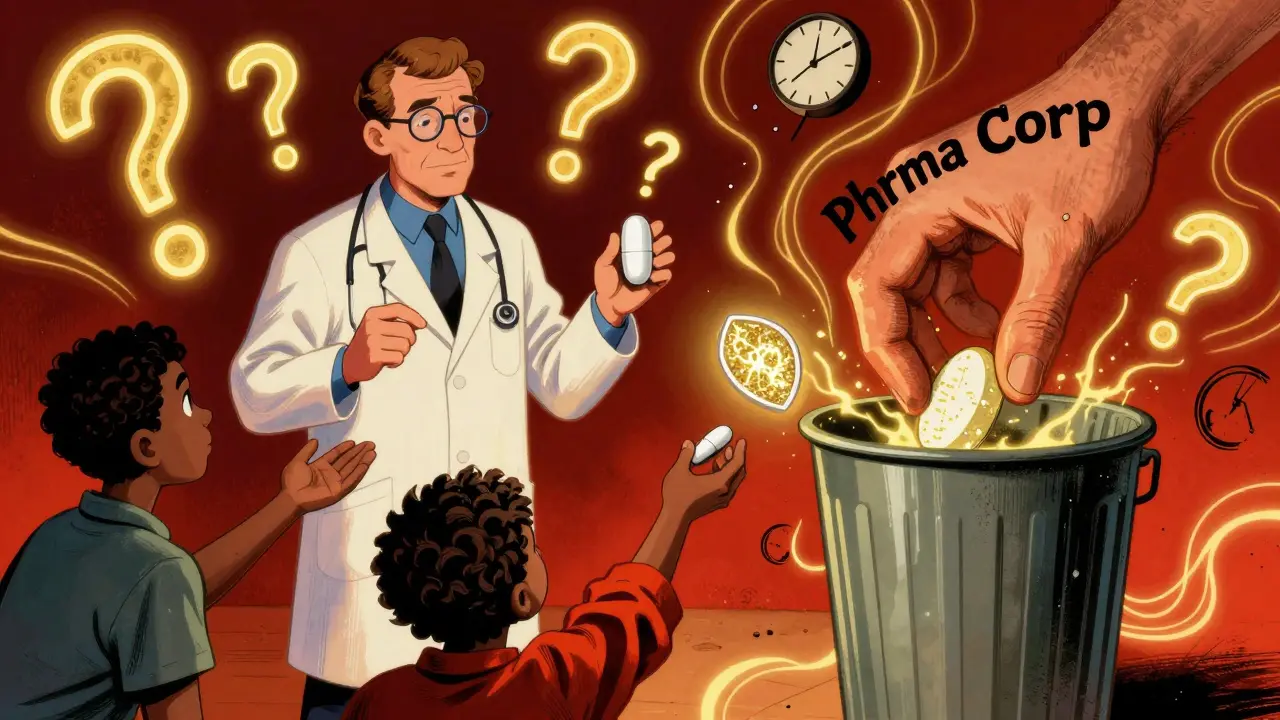
The Bigger Picture: Innovation vs. Profit
Developing a truly new drug costs about $2.6 billion and takes 10 to 15 years. That’s a huge investment. But evergreening? It costs a fraction of that. A few million in chemistry labs, a few clinical trials, and a team of patent lawyers. The return? Billions in extra revenue. Is it innovation? Not really. It’s financial engineering. The real innovation-the new molecules, the cures, the breakthroughs-still happens. But it’s getting drowned out by the noise of companies protecting old profits instead of building new ones. Some argue that evergreening helps fund future research. But the numbers don’t back that up. The profits from evergreened drugs rarely go back into R&D for new drugs. They go to shareholders, executive bonuses, and marketing campaigns.What’s Next?
The next wave of evergreening might not even involve pills. Companies are already experimenting with:- Nanotech versions of old drugs-tiny particles that change how the drug is absorbed
- Pharmacogenomic tests that claim a patient needs the brand version because of their DNA
- Biologic drugs that are so complex, generics can’t replicate them without years of testing
Can Anything Be Done?
Yes-but it takes action on multiple fronts.- Regulators need to stop granting patents for trivial changes. The USPTO should require proof of real therapeutic improvement, not just chemical tweaks.
- Insurers and Medicare should refuse to cover evergreened drugs unless they’re clearly better than the original.
- Doctors need to ask: Is this new version actually helping my patient-or just helping the company’s bottom line?
- Patient groups need to keep pushing for transparency. If a drug has 50 patents, the public should know why.
Is evergreening illegal?
No, evergreening isn’t illegal in most cases. It’s a legal strategy that exploits loopholes in patent law. Companies file patents for minor changes-like a new coating or dosage form-that still qualify as "inventions" under current rules. But regulators and courts are starting to challenge these tactics, especially when they’re used to block competition without offering real benefits to patients.
How does evergreening affect drug prices?
Evergreening keeps drug prices high by delaying generic entry. Once generics enter the market, prices typically drop by 80% to 85%. But when a brand company extends its patent through evergreening, that price drop is postponed for years-sometimes over a decade. Patients end up paying hundreds or thousands more per month for the same medicine.
What’s the difference between evergreening and real innovation?
Real innovation means discovering a new drug with a new active ingredient that treats a disease better, safer, or in a new way. Evergreening means taking an old drug and changing something small-like how it’s released or what it’s combined with-then patenting that version. The new version often works the same way, costs far less to develop, and offers little to no clinical improvement.
Which companies are known for evergreening?
AstraZeneca, AbbVie, and Indivior are among the most aggressive. AstraZeneca extended patent protection on six top-selling drugs by over 90 years combined. AbbVie filed 247 patents on Humira, blocking generics for nearly two decades. Indivior used patent stacking to protect Suboxone for over 16 extra years. These aren’t outliers-they’re industry leaders in lifecycle management.
Are there any countries that stop evergreening?
Yes. The European Medicines Agency requires companies to prove a modified drug offers "significant clinical benefit" before granting extra exclusivity. India and Brazil also reject patents for minor changes. The U.S. is the outlier-where patent offices have historically approved even the most trivial modifications as long as they’re technically new.
How can patients fight back against evergreening?
Patients can ask their doctors if a generic version exists for the same condition, even if the brand is still on the market. They can also check if their insurance covers the older, cheaper version. Advocating for drug price transparency and supporting legislation that limits patent stacking-like the CREATES Act or proposals to reform patent law-can also make a long-term difference.
Every patent extension isn’t a crime. But when the system rewards tinkering over true progress, everyone pays-especially the people who need the medicine the most.


steve rumsford
January 8, 2026 AT 09:04So let me get this straight - we’re paying $300 for a pill that’s basically the same as the $10 version, just with a fancier coating? And this is called innovation? The system isn’t broken. It’s rigged.
Andrew N
January 9, 2026 AT 04:13Actually, the Hatch-Waxman Act was designed to incentivize innovation, not to enable abuse. If generics want to compete, they should do the work to prove bioequivalence. It’s not the system’s fault that companies exploit legal loopholes - it’s the fault of regulators who don’t enforce standards.
LALITA KUDIYA
January 9, 2026 AT 20:13India does this right - no patents for tiny changes. Why can't the US learn? People are dying because of this. 💔
Poppy Newman
January 10, 2026 AT 03:17OMG I had no idea Humira had 247 patents??? 😳 That’s not a drug, that’s a legal maze. And people wonder why meds cost a fortune…
Aparna karwande
January 11, 2026 AT 13:21Western capitalism at its finest - pill-pushing monopolies disguised as science. America lets corporations own life-saving medicine like it’s a luxury car. Meanwhile, in India, we make generics for pennies and ship them globally. You built an empire on exploitation, and now you’re shocked patients can’t afford your tweaks?
Jessie Ann Lambrecht
January 12, 2026 AT 10:52There’s hope though - Medicare negotiating prices is a game-changer. When the government stops overpaying, the incentives shift. Doctors, patients, and insurers need to band together and demand real value, not corporate theater. We can fix this - but only if we stop accepting the status quo.
Mina Murray
January 13, 2026 AT 04:13Big Pharma owns the FDA, the patent office, and half the Congress. This isn’t a loophole - it’s a cartel. You think they’re gonna let generics in? They’ve got the whole damn system on lockdown. Wake up. They’re not selling medicine. They’re selling control.
Rachel Steward
January 14, 2026 AT 18:00Evergreening is the logical endpoint of a capitalist system that values shareholder returns over human life. The patent system was never meant to be a perpetual motion machine for profit. It was meant to reward discovery - not rebranding. When you turn medicine into a financial instrument, you don’t get innovation. You get a very expensive shell game.
And the worst part? The same people who profit from this are the ones screaming about "free markets." Hypocrisy isn’t a flaw here - it’s the business model.
Christine Joy Chicano
January 16, 2026 AT 11:05Did you know that 78% of new drug patents are for existing drugs? That stat alone should make every policymaker blush. We’re not talking about incremental improvements - we’re talking about cosmetic changes that cost millions to develop but deliver zero clinical benefit. This isn’t innovation. It’s intellectual fraud.
And the FDA’s approval process for these "new" versions is laughably lax. If a company changes the pill shape and adds a flavor, they get a new patent. But if a generic wants to prove bioequivalence? They need five years and $10 million. That’s not a level playing field. That’s a rigged race.
Adam Gainski
January 17, 2026 AT 21:54It’s worth noting that some of these "tweaks" do help patients - extended-release forms reduce dosing frequency, which improves adherence. But you’re right that most are just profit-driven. The real solution? Require real clinical superiority before granting extra exclusivity, like the EU does. We’re not asking for perfection - just fairness.
Also, doctors need better education on this. Too many still prescribe the branded version because they don’t know the generic is just as effective. Transparency is the first step.
Anastasia Novak
January 18, 2026 AT 20:27Oh please. You think this is new? Big Pharma’s been doing this since the 70s. They don’t care about your arthritis or your diabetes - they care about their quarterly earnings. And you? You’re just a customer. A walking ATM with a prescription pad. Wake up. The system doesn’t care if you live or die. It only cares if you keep paying.
Jonathan Larson
January 20, 2026 AT 06:03There is a profound moral paradox at the heart of pharmaceutical innovation: the very mechanism designed to incentivize discovery - patent protection - has become the primary tool for suppressing access. We have conflated intellectual property with human dignity, and in doing so, we have sacrificed the most vulnerable on the altar of corporate efficiency.
The solution does not lie in dismantling innovation, but in redefining its purpose. A patent should be a reward for advancing human health - not a license to extract wealth from suffering. We must align legal frameworks with ethical imperatives, or risk becoming a civilization that values profit more than life.
Alex Danner
January 21, 2026 AT 12:18Just saw a study that showed 90% of patients on Humira didn’t know there was a generic coming - because their doctors never told them. That’s not just evergreening. That’s medical gaslighting.