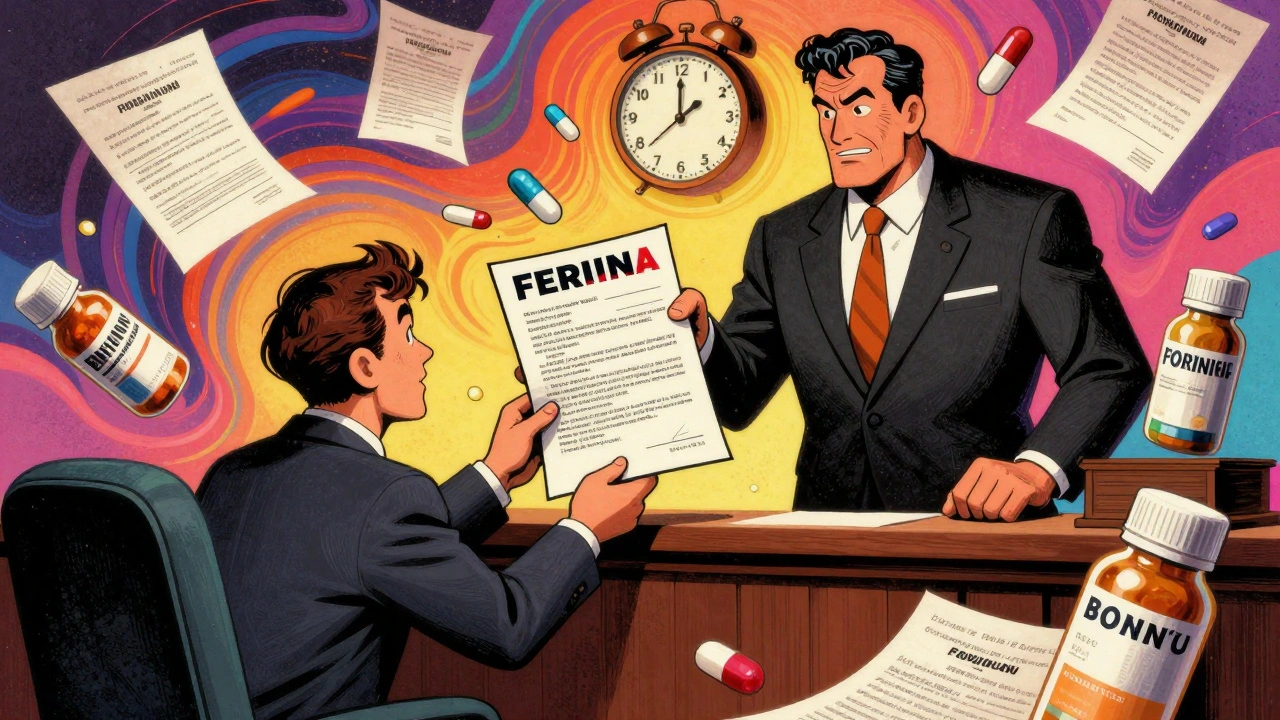
Every year, billions of dollars in drug sales shift from brand-name companies to generic makers. But how does a generic company get permission to sell a cheaper version of a drug that’s still under patent? The answer lies in something most people have never heard of: Paragraph IV certification.
What Exactly Is a Paragraph IV Certification?
It’s not a form you fill out at the pharmacy. It’s a legal notice filed by a generic drug company with the FDA as part of its application to sell a copy of a brand-name drug. This notice says: "We believe your patent is invalid, unenforceable, or our drug won’t actually infringe it." This isn’t a random claim. It’s a formal, legally binding statement made under the Hatch-Waxman Act of 1984. That law was designed to balance two things: letting brand-name companies recoup their R&D costs through patents, and letting generics enter the market quickly to lower prices. Paragraph IV is the tool that lets generics challenge patents before they even make the drug.Why Is This Legal Fiction So Important?
Here’s the weird part: under U.S. patent law, you can’t sue someone for patent infringement unless they’re actually making, selling, or using your invention. But with Paragraph IV, the law says: just filing the application with this certification counts as infringement. That’s called an "artificial act of infringement." It sounds backwards, but it solves a real problem. Without it, brand-name companies would have to wait until the generic drug hit the market before they could sue. By then, the generic might have taken 80% of the sales. The generic company, meanwhile, would be risking millions if they launched and lost the lawsuit. Paragraph IV changes the game. It forces both sides into court before any product is sold. The brand gets to protect its patent. The generic gets a clear path to market-if they win.The Timeline: A High-Stakes Clock
Once a generic company files an ANDA (Abbreviated New Drug Application) with a Paragraph IV certification, the clock starts ticking:- Within 20 days: The generic must notify the brand-name company and patent holder. This letter isn’t a courtesy-it’s a legal requirement. It must explain exactly why they believe the patent doesn’t apply.
- Within 45 days: The brand company can sue. If they do, the FDA is forced to pause approval of the generic for 30 months. That’s the "30-month stay." It’s not automatic. If the court rules earlier, the stay ends. If the brand delays filing, the stay can be shortened.
- After 30 months: The FDA can approve the generic-unless the court rules against the generic before then.
The 180-Day Exclusivity: Why Everyone Is Fighting
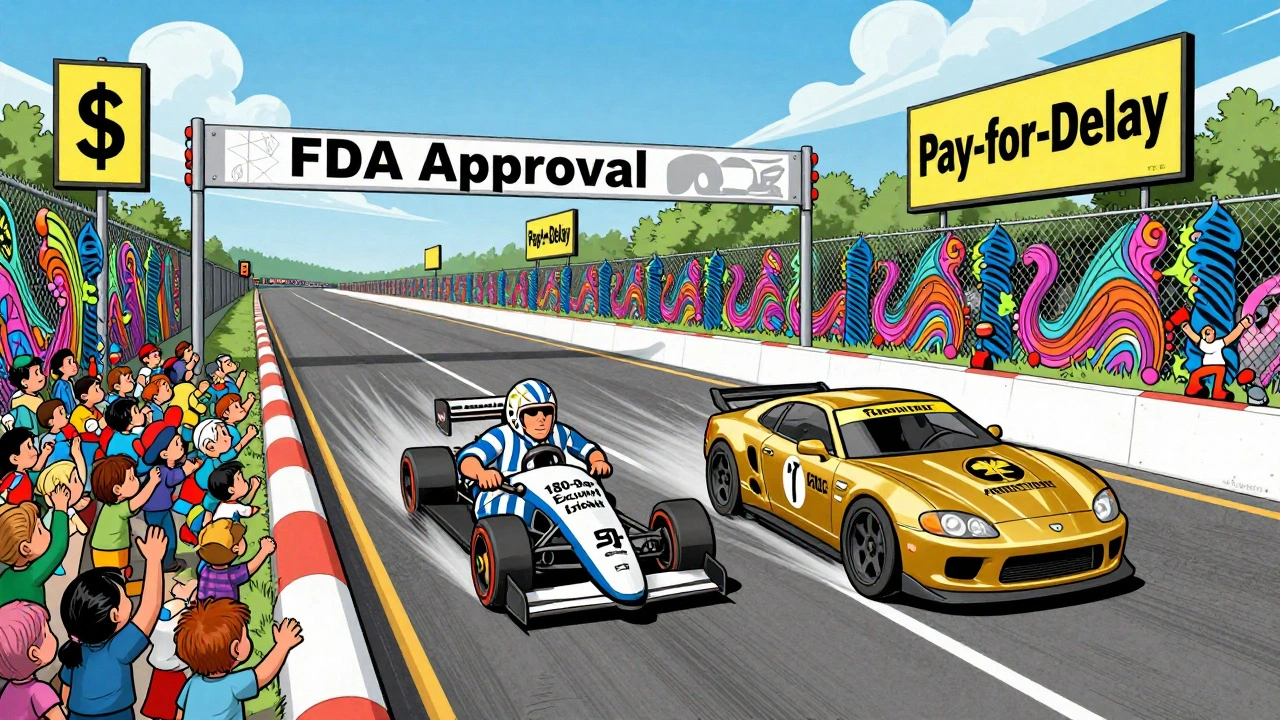
The real driver behind Paragraph IV challenges isn’t just lowering drug prices-it’s money. The first generic company to successfully challenge a patent gets 180 days of exclusive rights to sell its version. No other generic can enter during that time. That exclusivity isn’t theoretical. In 2023, first-filers earned $4.7 billion in extra revenue from just this rule. For a blockbuster drug like Humira, which sold over $20 billion a year, 180 days of exclusivity could mean $10 billion in sales. No wonder companies spend an average of $12.3 million per challenge. But here’s the catch: many of these cases end in settlements. In 2024, 78% of Paragraph IV lawsuits were settled. And many of those settlements include "pay-for-delay" deals-where the brand pays the generic to delay launch. The FTC filed 17 lawsuits in 2023-2024 targeting these deals, which can delay generic entry by nearly two and a half years.How Generic Companies Pick Their Targets
Not every drug is worth challenging. Generic companies are strategic. They look for:- Drugs with only one or two patents: Easier to defeat. Studies show a 27% higher success rate.
- Drugs with high sales volume: The bigger the market, the bigger the payout.
- Drugs with "skinny labels": If a drug treats three conditions but only one is patented, the generic can ask for approval to sell it for the other two. About 37% of Paragraph IV filings use this tactic.
Why Brand Companies Are Filing More Patents
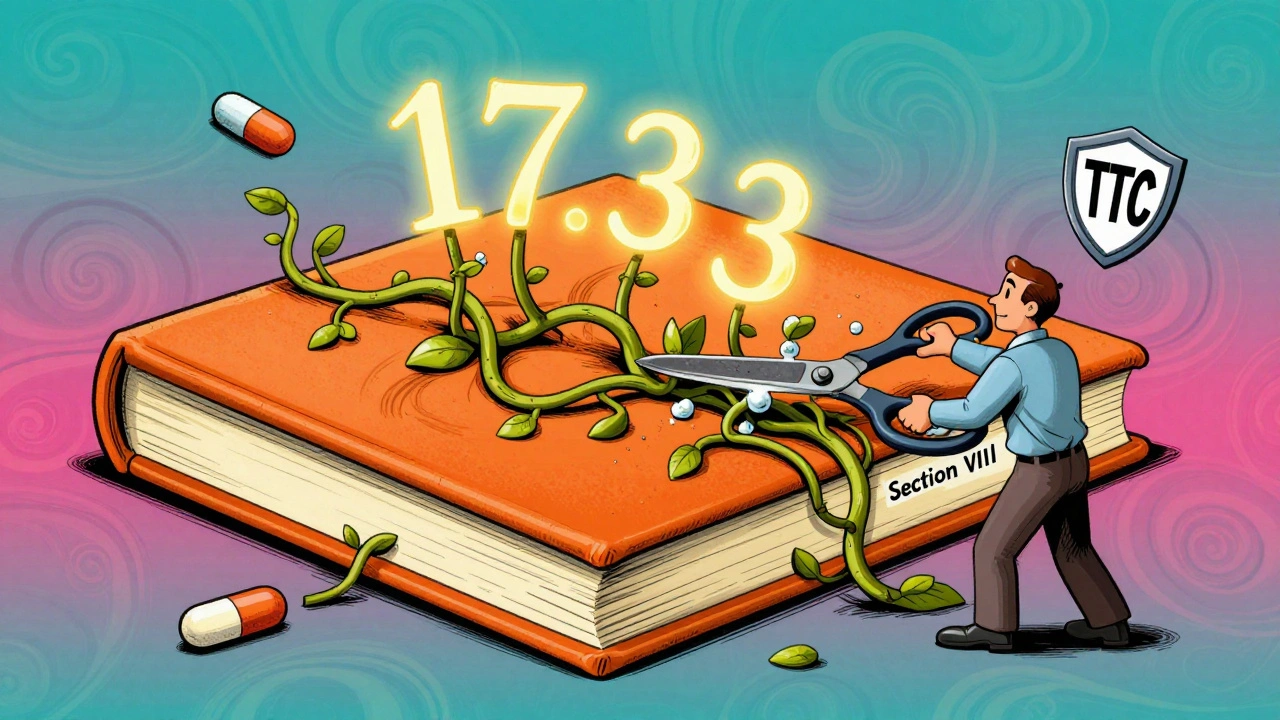
The more patents a brand lists in the FDA’s Orange Book, the harder it is for generics to win. In 2005, the average drug had 7.2 patents listed. By 2024, that number jumped to 17.3. This is called "patent thicketing." It’s not always about protecting real innovation. Sometimes, it’s about delaying competition. A brand might patent a new tablet coating, a minor dosage change, or even a method of using the drug-things that don’t change the drug’s core function. Experts like Dr. Aaron Kesselheim at Harvard call this "evergreening." The goal? Extend monopoly profits beyond the original 20-year patent term. But the tide is turning. Since 2020, generic companies have won 58% of Paragraph IV cases-up from 41% in the previous 16 years. Why? Supreme Court rulings have made it harder to patent obvious or incremental changes.What’s Next for Paragraph IV?
The FDA updated its rules in October 2022 to close loopholes. Now, if a generic company wants to change its application after a court ruling-for example, to adjust the drug’s crystalline structure-it must file a new certification. This prevents "litigation shopping," where companies tweak their applications to avoid losing. In 2026, the FDA plans to require brand companies to justify every patent they list in the Orange Book. If this rule passes, it could cut patent thickets by 30-40%. The FTC is also stepping up. It’s targeting "pay-for-delay" deals with more lawsuits. If successful, generics could enter the market 4-6 months sooner on average.The Bigger Picture: Savings and Access
Since 1984, Paragraph IV challenges have saved U.S. consumers $2.2 trillion in drug costs. In 2024 alone, they saved $192 billion. Generic drugs now make up 90% of all prescriptions filled in the U.S. That number is expected to rise to 94% by 2030-mostly because of Paragraph IV challenges. This system isn’t perfect. It’s expensive, slow, and sometimes manipulated. But without it, many life-saving drugs would still cost hundreds or thousands of dollars a month. The Paragraph IV certification is the legal lever that lets competition work in an industry built on patents.It’s not just law. It’s economics. It’s access. And for millions of people who rely on affordable medication, it’s the difference between taking their pills-or skipping them.
What is the Hatch-Waxman Act and how does it relate to Paragraph IV?
The Hatch-Waxman Act of 1984 created the modern system for generic drug approval in the U.S. It let generic companies file abbreviated applications (ANDAs) without repeating costly clinical trials. Paragraph IV certification is a key part of that system-it lets generics challenge patents before launch, balancing patent protection with market competition.
Can a generic drug be sold while a Paragraph IV lawsuit is ongoing?
Yes-but it’s risky. A generic company can choose to launch "at-risk," meaning they start selling before the court decides. In 2024, 22% of Paragraph IV cases involved at-risk launches. If they win, they keep sales. If they lose, they pay damages-sometimes over $200 million. Most companies avoid this unless the potential profit is huge.
Why do brand companies settle Paragraph IV lawsuits instead of fighting?
Settlements are common because litigation is expensive and unpredictable. A brand might settle to avoid losing a patent entirely, or to delay the generic’s entry by a few months in exchange for a payment. These "pay-for-delay" deals are controversial and now targeted by the FTC as anti-competitive.
What’s the difference between a Paragraph IV and a Section viii certification?
Paragraph IV challenges a patent’s validity or claims of infringement. Section viii lets a generic skip patented uses entirely. For example, if a drug treats arthritis, diabetes, and migraines-but only the arthritis use is patented-the generic can apply to sell it only for diabetes and migraines. This avoids litigation entirely. About 37% of Paragraph IV filings include Section viii carve-outs.
How long does a Paragraph IV challenge typically take?
On average, it takes 28.7 months from filing to resolution. The 30-month FDA stay often extends to 36 months due to court delays. Some cases resolve in under a year; others drag on for five years. The first-filer’s 180-day exclusivity clock doesn’t start until the generic actually enters the market.
Are Paragraph IV challenges only for small-molecule drugs?
Yes. Paragraph IV applies only to traditional chemical drugs approved under the ANDA pathway. Biologics-like insulin, monoclonal antibodies, or cancer treatments-are regulated under a different law (BPCIA) and don’t have an equivalent patent challenge system yet. That’s a growing gap in drug access.
Deborah Jacobs
December 4, 2025 AT 09:12This whole system is wild when you think about it-somebody files a legal notice saying, 'I think your patent is BS,' and suddenly the whole drug market freezes for two years. I’ve been on Humira for five years, and I can’t tell you how much my co-pay dropped the day the first generic hit. It’s not just business-it’s survival for a lot of us.
James Moore
December 4, 2025 AT 21:57Let’s be clear: this isn’t innovation-it’s legalized theft dressed up as ‘competition.’ The Founding Fathers didn’t draft the Constitution so some Indian pharma conglomerate could reverse-engineer a life-saving drug and sell it for pennies while the American scientists who risked everything starve! The 180-day exclusivity? That’s a reward for law-breaking! And don’t get me started on the FTC-these bureaucrats don’t understand that patents are the bedrock of American ingenuity! If you want cheap drugs, move to Canada-but don’t let them dismantle the system that made these drugs possible in the first place!
Chris Brown
December 5, 2025 AT 02:00It is deeply concerning that the legal framework governing pharmaceutical innovation has been perverted into a mechanism for corporate exploitation. The notion that a company may challenge the validity of a patent without having produced a single tablet is not merely a loophole-it is an ethical abyss. The 30-month stay, far from being a protective measure, functions as a procedural shield for litigation abuse. One must ask: who truly benefits when the patent system becomes a weaponized chessboard?
Mark Curry
December 5, 2025 AT 15:09Interesting stuff. I didn’t realize how much of a gamble this is for generics. Launching at-risk? That’s like betting your whole company on one roll of the dice. I guess if you’re confident and the drug’s a blockbuster, it’s worth it. Still, feels like a lot of money and stress just to save people a few bucks on pills. 🤷♂️
Manish Shankar
December 6, 2025 AT 16:53While the Paragraph IV mechanism presents a pragmatic approach to balancing intellectual property rights with public health imperatives, it is imperative to acknowledge the structural disparities inherent in its application. The financial and legal resources required to mount such challenges are disproportionately accessible to large multinational corporations, thereby limiting the potential for equitable market entry by smaller entities. This dynamic, while legally sound, may inadvertently perpetuate economic hierarchies within the pharmaceutical landscape.
Rupa DasGupta
December 8, 2025 AT 15:38Wait… so the brand companies are PAID to delay the generics?? 😳 Like… they literally pay them to NOT sell cheaper drugs?? That’s not capitalism-that’s organized crime with a law degree. And the FDA lets this happen?? I’m starting to think Big Pharma owns Congress. 🤔 #PayForDelay #WhoIsReallyInCharge
Marvin Gordon
December 9, 2025 AT 03:45Real talk: this is how the system should work. If you built something great, you deserve to profit-but not forever. Generics aren’t stealing; they’re finishing the race. The 180-day exclusivity? That’s fair. The 30-month delay? Necessary. The pay-for-delay schemes? Criminal. We need more of this, not less. The people win when competition kicks in. End of story.
ashlie perry
December 9, 2025 AT 12:02